- Company Articles
- Industry articles
- Industry standards
- What Makes 4040C EU Standard Aluminum Profile Ideal for Export-Oriented Manufacturers?

What Makes 4040C EU Standard Aluminum Profile Ideal for Export-Oriented Manufacturers?
Related Product
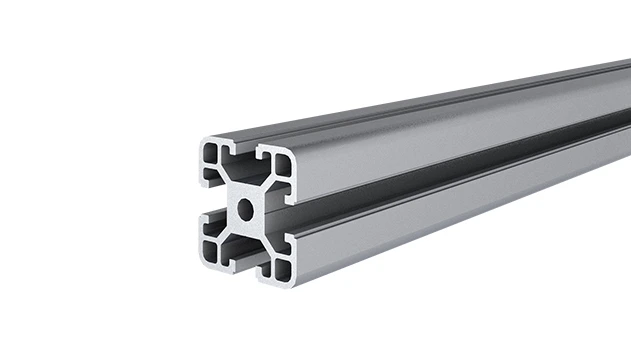
4040C EU Standard Aluminum Profile
4040C is a 4.00x4.00 CM fractional 40 series square extrusion T-slot profile with four open T-slots, each side with 4.00cm face. The profile has align-a-grooves to assist in aligning connecting profiles.
Imagine running a manufacturing business where your products ship to 15 countries, each with its own set of regulations, client demands, and logistical hurdles. One week, a German automotive client needs a custom assembly workbench; the next, a French electronics firm requests a lightweight material rack. Export-oriented manufacturers live this reality daily—balancing quality, compliance, and adaptability while keeping costs in check. In this chaos, one material has emerged as a quiet hero: the 4040C EU Standard Aluminum Profile. More than just a metal bar, it's a versatile building block that simplifies global manufacturing. Let's dive into why this aluminum extrusion profile has become a go-to for manufacturers shipping goods across borders.
First Things First: What *Is* 4040C EU Standard Aluminum Profile?
Before we unpack its benefits, let's get clear on what 4040C actually is. At its core, it's an aluminum extrusion profile—a long, rigid structure created by forcing heated aluminum through a die to form a specific cross-section. The "4040" refers to its dimensions: 40mm in width and 40mm in height, a common size for industrial use. The "C" denotes its position in the EU standard series, which includes variations like 4040A and 4040B, each with slight differences in wall thickness and slot design. What sets the "EU Standard" apart? It means the profile meets strict European union regulations for quality, safety, and dimensional consistency—think CE marking, RoHS compliance, and adherence to DIN standards. For export manufacturers, that compliance isn't just a checkbox; it's a ticket to smooth customs clearance and client trust.
But 4040C isn't just about meeting rules. Its design is a masterclass in practicality. The profile features a T-slot structure—longitudinal grooves running along its length—that allows for easy attachment of aluminum profile accessories: brackets, connectors, shelves, and even wheels. This modularity is a game-changer. Unlike fixed steel structures or one-off plastic components, 4040C lets you build, modify, and repurpose systems with minimal tools and zero welding. Need to add a shelf to a workbench? Slide in a bracket. Want to adjust the height of a conveyor? Swap out a connector. For manufacturers juggling diverse orders, this flexibility cuts lead times and reduces waste—two critical factors in global competition.
Why Export Manufacturers Can't Afford to Overlook 4040C
Exporting isn't just about making a great product; it's about making a product that *works* everywhere. Let's break down how 4040C addresses the unique challenges export-oriented manufacturers face.
1. Compliance That Speaks Global
Nothing kills an export deal faster than a customs hold due to non-compliance. European markets, in particular, are strict about material safety and dimensional accuracy. 4040C EU Standard Aluminum Profile is engineered to meet EN 755-9 (the European standard for aluminum extrusions) and CE requirements, meaning it's pre-vetted for use in machinery, workbenches, and industrial systems across the EU. This isn't just about avoiding fines; it's about building trust. When a Dutch client sees "EU Standard" on your quote, they know you're not cutting corners. One manufacturer in Zhejiang, China, recently shared that switching to 4040C reduced their EU customs delays by 40%—simply because inspectors recognized the profile's compliance credentials.
But compliance isn't limited to Europe. Many global buyers, even in regions like Southeast Asia or North America, prioritize suppliers who use EU-standard materials. Why? Because EU standards are often seen as a benchmark for quality. A Mexican automotive parts manufacturer, for example, might specify 4040C for their assembly lines not because Mexico requires it, but because their German parent company demands consistency across global facilities. For export manufacturers, 4040C becomes a universal language of quality.
2. Versatility That Keeps Up With Client Whims
Export clients are rarely "one-size-fits-all." A medical device company in Italy might need a sterile workbench with antimicrobial properties; a logistics firm in Spain could want a heavy-duty roller track system for warehouse sorting. 4040C's modular design makes it adaptable to these diverse needs—all without overhauling your production process.
Take workbenches, a staple in manufacturing. With 4040C, you can build a basic single-deck workbench (like the "Workbench E" in many catalogs) by combining the profile with aluminum profile accessories: flat brackets for the, adjustable feet for stability, and casters for mobility. Need to upgrade it for an electronics client? Add ESD (electrostatic discharge) panels and grounding clips—no need to redesign the entire structure. A manufacturer in Guangdong told me they once built three versions of the same workbench for three different clients (Germany, France, Poland) using the same 4040C base; the only changes were in the accessories and surface materials. That kind of adaptability lets you serve multiple markets with minimal inventory.
It's not just workbenches, either. 4040C shines in material racks, conveyor systems, and even turnover trolleys. Its T-slot design works seamlessly with roller track accessories, like plastic guide rails or steel wheels, making it easy to build gravity-fed flow racks for warehouses. One UK-based logistics client recently ordered 50 material racks built with 4040C and 3-row, 3-floor shelving—all assembled in under a week because the modular components snapped together like a high-stakes Lego set.
3. Lightweight, Strong, and Shipping-Friendly
Shipping costs can eat into export profits faster than a hungry freight forwarder. Steel structures, while strong, are heavy—and heavy means higher shipping fees. 4040C solves this with aluminum's natural advantage: it's 30% lighter than steel but boasts comparable strength (thanks to its extrusion process, which aligns the aluminum grains for added durability). A 2-meter length of 4040C weighs just 2.8kg, versus 8kg for a similar steel profile. For a manufacturer shipping 100 workbenches to Germany, that weight difference translates to savings of $1,200–$1,500 per container—money that can be reinvested in R&D or client discounts.
But lightweight doesn't mean flimsy. 4040C's wall thickness (typically 1.5–2mm, depending on the variant) and square cross-section give it impressive load-bearing capacity. It can support up to 150kg per linear meter when properly braced—more than enough for most industrial workbenches or material racks. This strength is critical for withstanding the rough-and-tumble of international shipping. Imagine a container bouncing across the Atlantic; 4040C structures hold their shape, while cheaper plastic or thin steel might warp or bend. One exporter in Vietnam shared that a batch of 4040C-based trolleys survived a month-long delay at sea (thanks to port congestion) with zero damage—something their previous steel trolleys couldn't claim.
4. Cost-Efficiency That Boosts Margins
Export manufacturing is a numbers game, and 4040C plays it well. Let's break down the costs:
- Material Costs: Aluminum is more expensive than steel upfront, but 4040C's lightweight design means you use less material per unit. For example, a workbench frame built with 4040C uses 30% fewer kilograms of material than a steel frame—offsetting the higher per-kilogram cost.
- Production Time: Modular assembly cuts labor costs. A team of two can assemble 10 4040C workbenches in a day, versus 3–4 with steel (which requires welding and painting). That's a 60% boost in productivity.
- Waste Reduction: Extruded aluminum profiles are precision-cut, so there's minimal scrap. And because 4040C is modular, leftover pieces can be repurposed for smaller projects (e.g., tool holders or shelf dividers).
- Longevity: Aluminum resists corrosion (no rust, even in humid shipping containers), so products last longer. A 4040C workbench can stay in service for 10+ years, reducing the need for replacements—and keeping clients coming back.
One manufacturer in Jiangsu calculated that switching to 4040C reduced their overall production costs by 18% within a year—enough to lower their export prices by 5% while increasing profit margins. That's the kind of math export businesses thrive on.

How 4040C Stacks Up Against Other Profiles: A Quick Comparison
Not all aluminum profiles are created equal. Let's see how 4040C EU Standard holds up against similar options, including other EU-standard profiles and non-EU alternatives.
| Profile Type | Dimensions (WxH) | Wall Thickness | Key Compliance | Ideal Applications | Best For |
|---|---|---|---|---|---|
| 4040C EU Standard | 40mm x 40mm | 1.5–2.0mm | EN 755-9, CE, RoHS | Workbenches, material racks, conveyors | Export to EU, diverse client needs |
| 4040A EU Standard | 40mm x 40mm | 1.0–1.2mm | EN 755-9, CE | Light-duty shelving, display racks | Low-weight, non-industrial use |
| 4040 National Standard (Non-EU) | 40mm x 40mm | 1.2–1.5mm | Local standards (e.g., GB/T in China) | Domestic manufacturing, fixed structures | Single-market sales, cost-sensitive orders |
*Data based on industry standards and manufacturer specifications as of 2025.
The table tells the story: 4040C hits the sweet spot between strength, compliance, and versatility. 4040A is lighter but less durable, making it better for display racks than industrial workbenches. Non-EU national standards profiles are cheaper but risky for exports—many lack CE marking, which can lead to customs rejections in Europe. For manufacturers targeting global markets, 4040C is the safe, adaptable choice.
Real-World Wins: 4040C in Action
Let's ground this in real stories. Here are two export manufacturers that transformed their operations with 4040C:
Case Study 1: Automotive Workbenches for Germany
A mid-sized manufacturer in Shandong specializes in automotive assembly tools. Their biggest client: a German car parts supplier that orders 200 custom workbenches annually. Before 4040C, they used steel frames, which were heavy (high shipping costs) and required welding (slow production). The client also demanded EN 1090 compliance (for structural steel), which added paperwork and inspection fees.
Switching to 4040C changed everything. The aluminum profiles were lightweight (shipping costs dropped by 25%), modular (assembly time per workbench fell from 4 hours to 1.5 hours), and already CE-compliant (no more EN 1090 headaches). They paired 4040C with aluminum profile accessories like internal rotary joints (for adjustable shelves) and anti-slip leveling feet (to stabilize benches on factory floors). The client was so impressed that they increased their order to 300 workbenches the next year—and recommended the manufacturer to two other German firms.
Case Study 2: Material Racks for France
A logistics equipment exporter in Fujian needed to fulfill a rush order: 50 "Material Rack B" units (3 rows, 3 floors) for a French warehouse chain. The client needed them in 3 weeks—half the usual lead time. With steel, this would have been impossible (steel racks require painting and curing). With 4040C, it was manageable.
The manufacturer used pre-cut 4040C profiles, aluminum guide rails, and plastic roller track (yellow, per the client's color request). The modular design let them assemble racks in batches: 10 racks per day, with a team of 5 workers. The lightweight racks fit 20 units per container (vs. 12 with steel), so they shipped 3 containers instead of 5—saving $3,000 on freight. The client received the order on time, and the racks are still in use 3 years later, with zero reported issues.
The Future of Export Manufacturing: Why 4040C Will Only Grow in Importance
Export markets are evolving. Clients want faster delivery, more customization, and greener materials. 4040C checks all these boxes:
- Sustainability: Aluminum is 100% recyclable, and 4040C's modular design reduces waste. EU clients, in particular, are prioritizing eco-friendly suppliers—4040C helps you meet their ESG goals.
- Industry 4.0: Smart factories need flexible systems. 4040C's adaptability makes it easy to integrate sensors, IoT devices, or robotic arms into workbenches and racks—future-proofing your products.
- Globalization 2.0: As supply chains diversify, manufacturers need materials that work everywhere. 4040C's EU standard is recognized globally, making it a safe bet for exports to Asia, Africa, and the Americas, too.
Final Thoughts: 4040C Isn't Just a Profile—It's a Strategic Tool
Export-oriented manufacturers don't just sell products; they sell solutions. 4040C EU Standard Aluminum Profile is more than a component in those solutions—it's a strategic tool that simplifies compliance, cuts costs, and lets you adapt to any client's needs. Whether you're building workbenches for Germany, material racks for France, or conveyors for Canada, 4040C delivers the strength, versatility, and global appeal that set export winners apart.
So, the next time you're drafting a quote for an international client, ask: *Could 4040C make this project faster, cheaper, and more compliant?* Chances are, the answer is yes. In the world of export manufacturing, that's not just an advantage—it's a necessity.