- Company Articles
- Industry articles
- Industry standards
- Why 2020 EU Standard Aluminum Profile is Ideal for Modular Workstations

Why 2020 EU Standard Aluminum Profile is Ideal for Modular Workstations
Related Product
2020 EU Standard Aluminum Profile
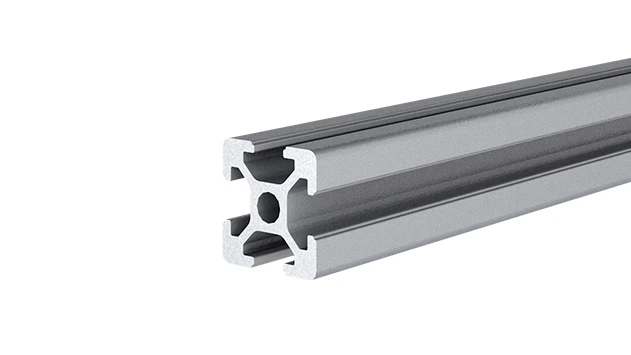
2020 is a 2.00 x 2.00CM fractional 20 series square extrusion T-slot profile with four open T-slots, one on each 2.00 face. The profile has align-a-grooves to assist in aligning connecting profiles.
Walk into any modern manufacturing facility, electronics workshop, or even a bustling garage-based startup, and you'll likely notice a shift: rigid, one-size-fits-all workbenches and racks are slowly being replaced by sleek, adaptable setups that seem to evolve with the needs of the team. These aren't just random upgrades—they're modular workstations, and at the heart of many of them lies a quiet hero: the 2020 EU Standard Aluminum Profile.
If you've ever struggled with a workstation that was too tall, too narrow, or stubbornly fixed in place while your project demands changed, you know the frustration. Modular systems promise flexibility, but not all building blocks are created equal. The 2020 EU Standard Aluminum Profile, though small in size (just 20x20mm), has become a favorite among small businesses, DIY enthusiasts, and large manufacturers alike. Why? Let's dive in.
What Even Is a 2020 EU Standard Aluminum Profile?
First things first: let's demystify the name. The "2020" refers to its dimensions—20 millimeters in width and 20 millimeters in height, forming a square tube. The "EU Standard" tag isn't just a fancy label; it's a guarantee of quality. EU standards for aluminum profiles are strict, ensuring consistent material thickness, precise T-slot measurements (those grooves running along the sides), and durability that holds up to repeated use.
Made from lightweight yet sturdy aluminum alloy, this profile is designed with practicality in mind. Its defining feature? The T-slots—long, narrow grooves that run the length of the profile. These slots aren't just for show; they're the secret to its modular magic. Slide in a bracket, bolt on a shelf, or attach a tool holder, and suddenly you've got a workstation tailored to your exact needs. No welding, no drilling new holes, no headaches.
But why aluminum? Steel is stronger, right? True, steel can handle heavier loads, but it's also heavier to move, prone to rust, and trickier to customize without specialized tools. Aluminum, on the other hand, is corrosion-resistant (no more dealing with rust stains on your workspace), lightweight enough for one person to rearrange, and malleable enough to cut, drill, or shape with basic equipment. For most small to medium-duty tasks—think assembling circuit boards, packing orders, or prototyping—aluminum hits the sweet spot between strength and flexibility.
5 Reasons It's Perfect for Modular Workstations
1. It's Like Building with (Really Strong) Legos
Remember playing with Legos as a kid? The joy of snapping pieces together to create something new, then taking it apart and rebuilding when inspiration struck? That's the 2020 profile experience, but for grown-ups with deadlines. Thanks to those T-slots and a wide range of aluminum profile accessories—think brackets, joints, end caps, and even wheels—you can build a basic workbench one day, add a shelf the next, and convert it into a rolling cart by the end of the week.
Take a small electronics repair shop, for example. They might start with a simple workbench frame using 2020 profiles. As they grow, they add a overhead shelf for tools using angle brackets, attach a LED light strip via T-slot clips, and even mount a small monitor arm to keep repair guides visible. When they expand to servicing larger devices, they can easily swap out the worktop for a thicker one or add side extensions—no need to buy a whole new workstation.
2. It's Lightweight, but Don't Let That Fool You
At first glance, a 20x20mm aluminum profile might seem too delicate for real work. But looks are deceiving. Thanks to its hollow design and high-grade aluminum alloy, it strikes an impressive balance between weight and strength. A single meter of 2020 profile weighs just around 0.3kg, making it easy to carry and assemble by one person. Yet, when properly braced with crossbars and joints, a workstation built with 2020 profiles can comfortably hold 50-80kg on its worktop—more than enough for tools, parts bins, and even small machinery.
This lightweight nature is a game-changer for spaces where flexibility is key. Imagine a workshop that needs to rearrange its layout seasonally, or a pop-up production line for a short-term project. With 2020 profiles, you can disassemble and rebuild your workstations in hours, not days. No heavy lifting equipment required—just a few hex keys and a helper (or even solo, if you're feeling ambitious).
3. It Grows with Your Business (Without Breaking the Bank)
One of the biggest pain points for small businesses is investing in equipment that becomes obsolete as they grow. A custom-built steel workbench might work today, but if next year you need to add a second level or move it to a different corner, you're stuck. The 2020 EU profile solves this with its "build-as-you-go" approach.
Start small: a basic workbench frame with a plywood top, costing a fraction of a pre-made industrial workstation. As your needs change, add accessories piecemeal. Need more storage? Buy a few extra profiles and build a shelving unit that bolts directly to your existing workbench. Expanding into assembly line work? Attach roller track to the side of your workstation to create a smooth material flow from one station to the next. Since aluminum profile accessories are widely available and affordable, you're never locked into a single design—your workstation evolves as you do.
4. It's Low-Maintenance (Because Who Has Time for Rust?)
Let's talk about the elephant in the workshop: upkeep. Steel workbenches rust if you forget to paint them. Wooden ones warp if they get wet. The 2020 aluminum profile? It laughs in the face of daily wear and tear. Aluminum naturally forms a protective oxide layer, so it resists rust and corrosion—even in humid environments or garages where spills happen. A quick wipe with a damp cloth is usually all it takes to keep it looking clean.
And if you do scratch it? Unlike steel, aluminum scratches don't spread or cause structural damage. The oxide layer reforms quickly, so your workstation stays functional and presentable for years. For businesses that can't afford downtime for repairs, this is a huge win.
5. It's a Blank Canvas for Creativity
Modular doesn't have to mean boring. The 2020 EU profile comes in a range of finishes—silver, black, even anodized colors—so you can match it to your workshop's aesthetic. But beyond looks, it's a platform for innovation. Want to add a pegboard for tools? Use T-slot hooks. Need a mobile workbench? Attach casters to the base. Building a test rig for a prototype? Mount sensors or cameras directly to the profiles using custom brackets.
I once visited a small woodworking studio that used 2020 profiles to build a custom jigsaw workstation. They added a dust collection port via a 3D-printed adapter (slotted right into the T-slot), mounted a LED magnifying lamp, and even attached a small vacuum holder—all using off-the-shelf accessories. It was functional, unique, and cost a third of what a pre-made woodworking station would have.

How Does It Stack Up Against Other Profiles? Let's Compare
You might be wondering: why 2020 specifically? There are larger profiles out there—3030 (30x30mm), 4040 (40x40mm)—that can handle heavier loads. Let's break down when to choose 2020 vs. its bigger siblings with a quick table:
| Profile Type | Dimensions (mm) | Weight per Meter (kg) | Typical Load Capacity (Worktop) | Best For |
|---|---|---|---|---|
| 2020 EU Standard | 20x20 | 0.3-0.4 | 50-80kg | Small workbenches, shelving, lightweight assembly, DIY projects |
| 3030 EU Standard | 30x30 | 0.7-0.9 | 100-150kg | Medium-duty workstations, material racks, conveyor frames |
| 4040 EU Standard | 40x40 | 1.2-1.5 | 150-250kg | Heavy machinery bases, industrial shelving, large assembly lines |
As you can see, 2020 profiles excel in scenarios where space and flexibility matter most. If you're working with limited square footage, need to move stations frequently, or don't require ultra-heavy load capacity, 2020 is the sweet spot. It's also the most budget-friendly option, making it perfect for startups or hobbyists.
From Workbench to Wonder: Real-World Uses
Still not convinced? Let's look at how businesses are actually using 2020 EU Standard Aluminum Profiles to transform their workflows.
The Garage Startup Turned Manufacturing Hub
Take "TechTinkers," a fictional (but relatable) startup that began in a garage, building custom Arduino-based gadgets. They started with a rickety folding table, but as orders grew, they needed something sturdier. They invested in a few meters of 2020 profiles, some aluminum profile accessories (corner brackets, end caps), and a plywood top. The result? A compact workbench with built-in storage for components, a shelf for tools, and even a small pegboard for screwdrivers and pliers.
A year later, TechTinkers expanded to a small warehouse. Instead of replacing their workbench, they added more 2020 profiles to build matching stations for new hires, connected with roller track to create a mini assembly line. The roller track, which glides smoothly thanks to its ball bearings, allows parts to move from one workstation to the next without manual lifting—saving time and reducing errors. Today, they've got a fully modular setup that can scale as they add more team members or shift to new product lines.
The Electronics Repair Shop with a Twist
Over at "FixItFast," an electronics repair shop, space is at a premium. They need workstations that can handle laptops one minute and smartphones the next, with easy access to tools and parts. Their solution? Wall-mounted 2020 profile frames that fold down when not in use, paired with foldable worktops. When a repair comes in, they lower the worktop, attach a vice using T-slot clamps, and get to work. When done, the worktop folds up, freeing up floor space for customers or storage.
They also use aluminum guide rail A to create small "runners" on their workbenches, allowing parts bins to slide smoothly from left to right. No more reaching across the table—everything stays within arm's reach. It's these small, thoughtful touches that turn a basic workspace into an efficient, stress-free environment.
Getting Started: What You'll Need
Ready to build your own modular workstation with 2020 EU Standard Aluminum Profiles? You don't need a workshop full of tools—just a few basics:
- Profiles: Start with 2-4 meters of 2020 EU Standard Aluminum Profile. Most suppliers sell it in 1m, 2m, or 3m lengths, which you can cut to size with a hacksaw or miter saw (a metal-cutting blade helps).
- Accessories: Corner brackets (to join profiles at 90° angles), T-slot nuts and bolts (to attach shelves, tools, etc.), end caps (to cover sharp edges), and maybe casters if you want mobility.
- Tools: A hex key set (for tightening bolts), a measuring tape, a level (to keep things straight), and a rubber mallet (to gently tap joints into place).
- Worktop: Plywood, MDF, or even a sheet of aluminum—whatever fits your budget and needs.
Pro tip: Start simple. Build a basic frame first (four legs, two crossbars on top, two on the bottom for stability), then add accessories as you go. You'll be surprised how quickly it comes together!
Final Thoughts: Why It's More Than Just a Profile
At the end of the day, the 2020 EU Standard Aluminum Profile isn't just a building material—it's a tool for adaptability. In a world where businesses need to pivot fast, where workshops change size, and where projects evolve overnight, rigidity is the enemy. Modular workstations built with 2020 profiles don't just save space and money; they save time, reduce frustration, and empower teams to work smarter, not harder.
Whether you're a hobbyist building a DIY workbench in your garage, a small business owner scaling your production line, or a large manufacturer streamlining workflows, this unassuming 20x20mm profile has the power to transform how you work. It's proof that sometimes, the best solutions come in small packages—especially when they're designed to grow with you.
So, the next time you find yourself staring at a workstation that just doesn't "fit," remember: with 2020 EU Standard Aluminum Profiles, you're not just building a desk or a shelf. You're building a workspace that adapts, evolves, and keeps up with you . And in today's fast-paced world, that's priceless.