- Company Articles
- Industry articles
- Industry standards
- Why 2020 National Standard Profile Is a Must for Sustainable Lean Manufacturing

Why 2020 National Standard Profile Is a Must for Sustainable Lean Manufacturing
Related Product
2020 National Standard Profile
45° external bending joint, used for 45° external connection of two aluminum pipes.
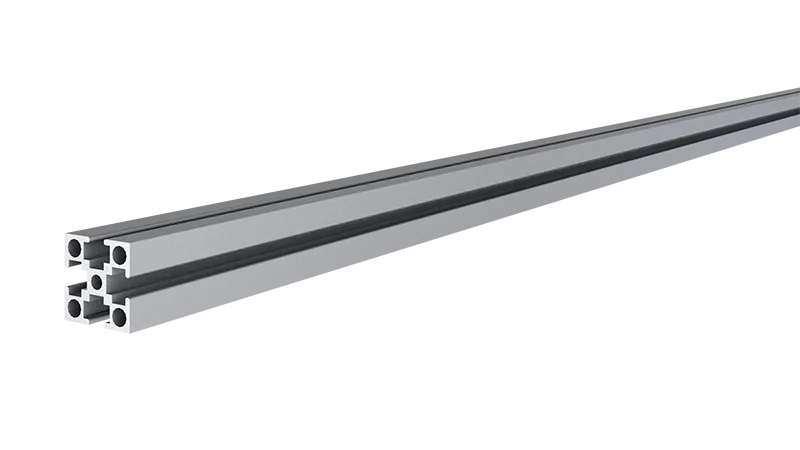
In the fast-paced world of manufacturing, where every second counts and waste feels like throwing money into a shredder, lean principles have become more than just a buzzword—they're the backbone of staying competitive. But here's the thing: lean isn't just about cutting costs or speeding up production. It's about creating systems that respect your team, your resources, and the planet. And that's where the right tools come in. You can't build a lean empire with clunky, one-size-fits-all equipment that fights against change. What you need is something flexible, durable, and designed to grow with you. Enter the 2020 National Standard Profile—a humble yet revolutionary aluminum extrusion profile that's quietly transforming how factories, workshops, and production lines approach efficiency and sustainability.
What Even Is the 2020 National Standard Profile?
Let's start with the basics. If you've ever walked through a manufacturing plant, you've probably seen metal frames holding up workbenches, material racks, or conveyor systems. Most of those are either heavy steel pipes welded into place or generic plastic structures that crack under pressure. The 2020 National Standard Profile is different. It's a lightweight aluminum extrusion with a specific cross-sectional design—20mm by 20mm (hence the "2020" name)—engineered to be both strong and infinitely adaptable. Think of it as the Lego of manufacturing: modular, easy to assemble, and capable of becoming almost anything you need, from a simple workbench to a complex automated workflow station.
But why "national standard"? That term matters because it means consistency. No more guessing if a bracket from Supplier A will fit a pipe from Supplier B. The 2020 profile adheres to strict dimensional standards, so every piece—from the aluminum extrusion itself to the
aluminum profile accessories
like connectors, brackets, and end caps—works seamlessly together. This standardization is a game-changer for small and large operations alike. If you're a startup building your first production line, you don't have to worry about compatibility headaches. If you're a multinational scaling up a new product, you can replicate setups across factories with zero fuss.
Fun fact:
Aluminum extrusion profiles like the 2020 aren't new, but the "national standard" designation elevates their reliability. In China, for example, these profiles are tested rigorously for load-bearing capacity, corrosion resistance, and dimensional accuracy—ensuring they meet the demands of even the most intense manufacturing environments.
Lean Manufacturing's Secret Weapon: Flexibility Without Compromise
Lean manufacturing is all about eliminating waste—whether that's wasted time, wasted space, or wasted materials. Traditional fixed systems (think welded steel workbenches or bolted-down conveyor tracks) are the antithesis of lean. They're built for one purpose, and if your needs change? You either live with inefficiency or tear everything down and start over. That's not lean—that's throwing away resources.
The 2020 National Standard Profile flips that script. Its modular design means you can assemble, disassemble, and reconfigure it in minutes, not days. Let's say your team needs to switch from assembling small electronics to larger appliances. With a traditional workbench, you'd need to order a whole new setup. With 2020 profiles, you just loosen a few
aluminum profile accessories
(like T-slot nuts or corner brackets), adjust the height or width, and you're good to go. No welding, no drilling, no waiting for a contractor. Your team can make changes on the fly, which isn't just efficient—it's empowering. When workers can tweak their own workstations to fit their needs, morale goes up, and so does productivity.
"We used to spend two days reconfiguring our assembly line for new products. Now, with 2020 profiles, two people can do it in an afternoon. And because the accessories are standardized, we never have to hunt for 'mystery bolts' that only existed in the old setup. It's like night and day." — Li Wei, Production Manager at a Shenzhen electronics manufacturer
Lightweight but Tough: The Strength-to-Weight Miracle
One of the biggest myths about aluminum is that it's "weak" compared to steel. Let's bust that now. The 2020 National Standard Profile is made from high-grade aluminum alloy (typically 6063-T5, if you're into specs), which offers an impressive strength-to-weight ratio. It's light enough that two people can carry a 3-meter length without straining, but strong enough to support heavy tools, materials, or even small machinery. This matters for lean manufacturing in two big ways:
First, lighter structures mean easier reconfiguration. You don't need a forklift or a team of to move a workstation—just a couple of workers and a basic understanding of how the connectors work. Second, it reduces ergonomic strain. Heavy steel workbenches or racks force employees to bend, lift, and twist awkwardly, leading to fatigue and injuries. The 2020 profile's lightweight design cuts down on that physical toll, keeping your team healthier and more focused. And healthier teams mean fewer sick days, lower turnover, and a workplace that feels cared for—all of which feed into a lean, sustainable culture.

Sustainability: Lean for the Planet, Not Just the Bottom Line
Lean manufacturing and sustainability go hand in hand. After all, waste is waste—whether it's time, materials, or carbon emissions. The 2020 National Standard Profile shines here, too. Let's break it down:
Aluminum: The Ultimate Recyclable Material
Aluminum is 100% recyclable, and it retains 95% of its original energy when recycled. That's a stark contrast to steel, which loses strength with each recycling cycle, or plastic, which often ends up in landfills. When you invest in 2020 profiles, you're not just buying a tool—you're buying a material that can be repurposed, melted down, and turned into new profiles (or even car parts, beverage cans, or solar panels) at the end of its life. For companies looking to shrink their carbon footprint, this is a no-brainer. And because aluminum extrusion requires less energy than steel production, the 2020 profile starts green and stays green.
Waste Reduction in Assembly (and Beyond)
Traditional manufacturing setups are full of hidden waste. Welded steel frames? If you make a mistake, you cut it apart and start over, wasting metal and labor. The 2020 profile? Since it's assembled with
aluminum profile accessories
(think bolts, nuts, and snap-on connectors), you can take it apart and rebuild without losing a single piece. No scrap, no frustration, no wasted time. Even better, when your needs outgrow a particular setup—say, a small workbench that's now too short—you can reuse the profiles and accessories for something else. That old workbench might become a material rack, or a part of a new conveyor system. Nothing goes to waste.
And let's talk about packaging. Ever ordered a steel workbench? It arrives in a crate the size of a small fridge, wrapped in layers of plastic and foam. The 2020 profile? Because it's lightweight and modular, it ships flat. A single box can hold enough profiles and accessories to build a full workstation, cutting down on packaging waste and transportation emissions. Less fuel used, less cardboard thrown away—lean for your budget, and lean for the planet.
Building a Lean System That Actually Feels Human
Here's a truth about lean manufacturing that often gets overlooked: it's not just about machines and metrics. It's about people. A
lean system
that ignores the needs of the workers using it is destined to fail. The 2020 National Standard Profile gets this because it's designed to adapt to
how people work
, not the other way around.
Take workbenches, for example. A standard fixed-height workbench might be fine for someone 5'10", but a nightmare for someone 5'2" or 6'2". With the 2020 profile, you can adjust the height in minutes using adjustable feet or telescoping leg brackets. Suddenly, every worker has a workstation that fits them, reducing back pain and increasing focus. Or consider material access: in a lean setup, tools and parts should be within arm's reach to eliminate unnecessary movement. The 2020 profile lets you add shelves, tool holders, or even overhead racks exactly where your team needs them. No more stretching, bending, or walking across the shop for a wrench. It's small changes, but they add up to a workspace that feels intentional—and that makes people want to show up and do their best.
"Before we switched to 2020 profiles, our team was constantly complaining about the workbenches—too high, too low, no space for tools. Now, they've taken ownership. One guy added a custom shelf for his soldering iron; another built a little bin for screws right next to his station. It's their space, and they're proud of it. Productivity's up 15% since we made the switch." — Maria Gonzalez, Operations Director at a Texas-based electronics assembler
From Chaos to Calm: How Modularity Reduces Stress
Anyone who's worked in manufacturing knows the stress of sudden change. A rush order comes in, and you need to reconfigure the line yesterday. With traditional setups, that's panic mode: calling in extra help, scrambling for tools, crossing fingers that the new layout works. With the 2020 profile, it's calm. Your team knows the profiles and accessories like the back of their hand. They've done this before. They grab the right pieces, assemble the new station, and get back to work—all without breaking a sweat. That sense of control isn't just good for morale; it's good for quality. Stressed workers make mistakes. Empowered, confident workers? They build better products.
Why It's Not Just Another Fad: The Long-Term Value of 2020 Profiles
Let's be real: manufacturing is full of "revolutionary" tools that promise the moon and deliver a paperweight. So why is the 2020 National Standard Profile different? Because it's not a single product—it's a foundation. It's built to last, adapt, and grow with your business.
Consider cost. Yes, aluminum profiles can cost more upfront than welded steel or cheap plastic. But let's do the math. A steel workbench might cost $200, but if you need to reconfigure it in 6 months, you're looking at $150 in labor and $100 in new materials. The 2020 profile workbench? It costs $300 upfront, but reconfiguring it takes $20 in labor (since you're just moving parts around) and $0 in new materials. Over three years, that steel bench might cost you $500+ in replacements and reworks. The 2020 profile? Still using the same parts, maybe adding a few new accessories here and there. It's an investment that pays for itself in flexibility alone.
And durability? Aluminum doesn't rust. It doesn't corrode. It can handle the humidity of a coastal factory or the dust of a warehouse without breaking a sweat. Unlike steel, which needs painting every few years, or plastic, which fades and cracks in sunlight, the 2020 profile stays strong and looks clean for decades. That means fewer replacements, less maintenance, and a workspace that feels professional and well-cared for—something that matters when you're trying to attract top talent or impress clients.
A Quick Comparison: Traditional vs. 2020 Profile Setups
| Feature | Traditional Steel/Welded Setups | 2020 National Standard Profile |
|---|---|---|
| Assembly Time | Hours (requires welding, drilling) | Minutes to hours (tool-free or basic tools) |
| Reconfigurability | Almost impossible (welded joints) | Easy (disassemble and rebuild with existing parts) |
| Weight | Heavy (requires machinery to move) | Lightweight (movable by hand) |
| Waste | High (scrap from mistakes, one-time use) | Low (reusable parts, no scrap from errors) |
| Sustainability | Poor (steel loses strength when recycled, high carbon footprint) | Excellent (100% recyclable aluminum, low energy production) |
| Long-Term Cost | High (frequent replacements, reworks) | Low (one-time investment, reusable parts) |
Real-World Wins: How Teams Are Using the 2020 Profile
Enough theory—let's talk about real people getting real results. Take a mid-sized automotive parts manufacturer in Germany. They were struggling with a bottleneck in their quality control area: the workbenches were too low, the material racks were too far away, and reconfiguring for new part sizes took days. They switched to 2020 profiles and
aluminum profile accessories
, building adjustable workbenches with integrated tool holders and rolling material racks that glide right up to the stations. The result? Quality checks sped up by 30%, and workers reported less fatigue. Best of all, when a new part line launched, they reconfigured the entire area in a single shift. No downtime, no stress, just progress.
Or consider a small electronics startup in California. They started with a single 2020 profile workbench in a garage. As they grew, they added more profiles to build a conveyor system, then a testing station, then a packaging area. Today, their entire 5,000 sq. ft. facility is built around 2020 profiles. When they moved to a larger space last year, they disassembled everything, loaded it into a van, and reassembled it in the new location in three days. "We didn't have to buy a single new workstation," says the founder. "That saved us over $20,000 in equipment costs. The 2020 profile didn't just help us build products—it helped us build a business."
The Future of Lean: Why the 2020 Profile Is Just the Beginning
Lean manufacturing isn't static. It evolves as technology advances, as customer demands shift, and as we learn more about what works for people and the planet. The 2020 National Standard Profile isn't just keeping up with that evolution—it's driving it. With the rise of automation and Industry 4.0, factories need setups that can integrate with sensors, robots, and smart tools. The 2020 profile's T-slot design (those grooves along the sides) makes it easy to mount cameras, lights, or even small robotic arms. Want to add a barcode scanner to a workstation? Just slide a bracket into the T-slot, tighten a screw, and you're done. No drilling, no custom mounting plates—just seamless integration.
And as sustainability becomes a non-negotiable for consumers and regulators, the 2020 profile's green credentials will only grow more valuable. Companies that can prove their manufacturing processes are low-waste and carbon-efficient will win contracts, attract eco-conscious customers, and future-proof against stricter environmental laws. The 2020 profile isn't just a tool for today—it's a bridge to the lean, sustainable factories of tomorrow.
So, Should You Make the Switch?
If you're still on the fence, ask yourself this: Is your current setup working
with
your team, or against them? Does it adapt when your needs change, or does it fight you every step of the way? And are you proud of how your manufacturing process impacts the planet? If the answers are "against," "fights," or "no," then the 2020 National Standard Profile is worth a look.
It's not about replacing everything at once. Start small—a single workbench, a material rack, or a testing station. See how your team responds. Watch how quickly they adapt, how much less frustration there is when changes are needed, how much cleaner and more efficient the space feels. Chances are, you'll wonder how you ever worked without it.
Lean manufacturing is about creating value—for your customers, your team, and your bottom line. The 2020 National Standard Profile does exactly that. It's not just aluminum and
aluminum profile accessories
. It's a commitment to flexibility, sustainability, and respect for the people who make your business run. And in the end, that's the leanest investment of all.