- Company Articles
- Industry articles
- Industry standards
- Why 2020 National Standard Profile Is Essential for Medical Device Traceability

Why 2020 National Standard Profile Is Essential for Medical Device Traceability
Related Product
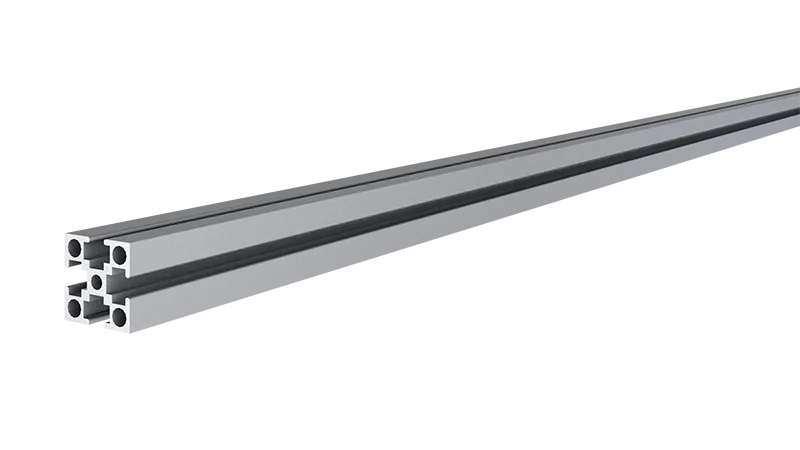
2020 National Standard Profile
45° external bending joint, used for 45° external connection of two aluminum pipes.
In the high-stakes world of medical device manufacturing, where a single misstep can compromise patient safety or trigger costly recalls, traceability isn't just a buzzword—it's the backbone of trust. Imagine a scenario where a pacemaker fails, or a surgical instrument is found to be contaminated. Without clear visibility into every step of production, from raw materials to assembly, identifying the root cause becomes a labyrinthine task. This is where the yet critical components of your production line come into play. Today, we're diving into one such unsung hero: the 2020 National Standard Profile . Far more than just a piece of aluminum, this extrusion profile is a linchpin in building traceable, reliable, and compliant manufacturing systems. Let's explore why it has become indispensable for medical device makers aiming to meet the strictest global standards.
The Stakes of Traceability in Medical Device Manufacturing
Before we unpack the role of the 2020 National Standard Profile, let's ground ourselves in why traceability matters. Regulatory bodies like the FDA (with 21 CFR Part 820) and ISO (with ISO 13485) don't just recommend traceability—they mandate it. For patients, it means that if a device malfunctions, manufacturers can quickly pinpoint which batch was affected, who received it, and how to rectify the issue. For manufacturers, it's a shield against liability, a tool for improving processes, and a prerequisite for entering global markets.
But here's the challenge: medical device production is often a complex dance of multiple components, assembly stations, and supply chain partners. A typical device might involve hundreds of parts, each with its own origin, production date, and quality checks. Without a structured way to track these components as they move through the production line, traceability breaks down. This is where your manufacturing infrastructure—specifically, the systems and tools that organize workflow—becomes critical. Enter the lean system approach: a methodology focused on minimizing waste, streamlining processes, and creating clear, repeatable workflows. And at the heart of many effective lean systems in medical manufacturing? The 2020 National Standard Profile.
What Is the 2020 National Standard Profile?
At first glance, the 2020 National Standard Profile might look like any other aluminum extrusion—a long, slender piece with a consistent cross-section. But its design is anything but arbitrary. The "2020" refers to its dimensions: 20mm in width and 20mm in height, making it a compact yet robust option for building modular structures. As part of the aluminum extrusion profile family, it's crafted through a process that heats aluminum billets and forces them through a die, resulting in a uniform shape with precise tolerances. This isn't just about aesthetics; precision is non-negotiable in medical manufacturing, where even a millimeter of misalignment can throw off assembly steps or compromise component integrity.
But what truly sets the 2020 National Standard Profile apart is its versatility. Unlike fixed, one-size-fits-all structures, this profile is designed with T-slots—longitudinal grooves that run the length of the extrusion. These slots allow for easy attachment of accessories like brackets, joints, and panels using screws or bolts, without the need for welding or drilling. This modularity is a game-changer for medical device manufacturers, who often need to adapt their production lines to new device models, regulatory changes, or shifts in demand. And as we'll see, this adaptability is directly tied to enhancing traceability.

Modularity: The Foundation of Traceable Workflows
Traceability thrives on consistency. If each workstation in your production line is haphazardly constructed—with parts sourced from different suppliers, varying in size or stability—tracking how components move from one step to the next becomes a nightmare. Did that sensor arrive at Assembly Station A via Conveyor Belt X or Y? Was the calibration tool at Workbench B positioned correctly when Batch 123 was processed? Inconsistent setups lead to inconsistent data, and inconsistent data erodes traceability.
The 2020 National Standard Profile solves this by providing a standardized building block. Whether you're constructing a workbench , a material rack, or a conveyor frame, using the same 20mm x 20mm extrusion ensures that every structure adheres to uniform dimensions and mounting points. This standardization means that when an auditor asks, "How was this workstation configured during the production of Lot #456?", you can pull up a diagram of the 2020 profile setup—complete with part numbers for every bracket and joint—and say with confidence, "Exactly like this."
Case in Point: A Neurostimulation Device Manufacturer
Consider a mid-sized company producing neurostimulation devices—small, intricate tools used to treat chronic pain. Their assembly process involves 12 distinct steps, from PCB soldering to final sterilization. Initially, their workstations were a mix of wooden tables, metal shelving, and custom-built racks. When a batch failed a quality check due to misaligned connectors, tracing the issue back to the source was nearly impossible: Workstation 3 had a wobbly shelf that caused components to shift, but because the setup wasn't documented (or standard), the problem went unnoticed for weeks.
After switching to 2020 National Standard Profile workbenches, everything changed. Each workstation was built using the same extrusions and aluminum profile accessories —corner brackets, end caps, and adjustable feet. The T-slots allowed them to mount barcode scanners at precise heights, ensuring operators scanned each component as it arrived. The modular design also made it easy to add dividers and labeled bins, so parts for specific batches never mixed. Six months later, when another quality check flagged a potential issue, the team could instantly review timestamped scanner data and workstation logs, pinpointing the problem to a faulty sensor at Workstation 7—resolved in hours, not weeks.
Integrating with Lean Systems: Reducing Waste, Enhancing Visibility
Lean manufacturing isn't just about cutting costs—it's about creating value by eliminating waste, whether that's wasted time, materials, or motion. And in medical device manufacturing, waste often translates to lost traceability. For example, if operators spend 10 minutes searching for a tool because it's not stored in a standard location, that's 10 minutes where a component might sit unlogged, or a step might be skipped in the rush to catch up. The 2020 National Standard Profile, with its modular design, is inherently lean. It allows manufacturers to build workstations, material racks, and flow systems that are tailored to the specific needs of each production step—no more, no less.
Take material flow, for instance. In a lean system, components should move smoothly from storage to assembly, with minimal handling. The 2020 profile excels here. By combining extrusions with roller tracks (another common accessory), manufacturers can create gravity-fed flow racks that deliver parts directly to the workstation. Each rack can be labeled with batch numbers, and because the 2020 profile's T-slots allow for easy attachment of RFID tags or QR codes, operators can scan the rack itself to log which batch is being used. This seamless integration between physical flow and digital tracking eliminates the "paper trail" gaps that often lead to traceability failures.
Another lean principle is "poka-yoke"—mistake-proofing. The 2020 National Standard Profile supports this by enabling custom tooling and fixture designs. For example, a workbench built with 2020 extrusions can include precision-machined jigs that only allow components to be placed in one orientation. If an operator tries to insert a part backwards, the jig prevents it—eliminating assembly errors that could later trigger a recall. And because the jig is mounted to the standardized profile, its dimensions are documented and repeatable, ensuring that every unit in a batch is assembled the same way. This consistency is gold for traceability: if a defect is found, you can rule out assembly variation as a cause and focus on material or supplier issues.
Aluminum Profile Accessories: The Unsung Enablers of Precision
A profile is only as good as its accessories, and the 2020 National Standard Profile is supported by a robust ecosystem of aluminum profile accessories that elevate its traceability capabilities. Let's break down a few key ones:
- Corner Brackets and Joints: These ensure that 2020 profiles connect at precise angles (90°, 45°, etc.), maintaining structural integrity. When building a workstation, consistent joint placement means that the distance between the scanner and the assembly area is always the same—critical for reliable data capture.
- Adjustable Feet: Medical manufacturing floors aren't always perfectly level. Adjustable feet, which screw into the bottom of 2020 profile structures, keep workstations stable, preventing components from sliding or shifting during assembly. A stable workstation equals consistent processing, which equals traceable results.
- Panel Mounts: These allow for the attachment of documentation holders, LCD screens, or even small printers directly to the profile. Imagine an operator at a workstation: above them, a screen displays the current batch's specifications, and beside them, a printer outputs a label with the batch number and timestamp. All of this is mounted securely via panel mounts, ensuring that critical information is always visible and accessible—no more lost or misplaced paperwork.
Perhaps most importantly, these accessories are standardized. A bracket designed for the 2020 National Standard Profile will fit any 2020 extrusion from a reputable supplier, regardless of when it was manufactured. This standardization means that when you replace a worn bracket or add a new component to a workstation, you don't have to worry about compatibility issues. Your traceability system doesn't skip a beat because the physical infrastructure remains consistent.
Compliance: Meeting FDA and ISO Standards Head-On
Regulatory compliance is non-negotiable in medical device manufacturing, and traceability is a key pillar of standards like FDA's 21 CFR Part 820 and ISO 13485. These regulations require manufacturers to document everything: who did what, when, with which materials, and under what conditions. The 2020 National Standard Profile simplifies this documentation in three critical ways:
- Standardized Part Numbers: Because the 2020 profile and its accessories are mass-produced to national standards, each component has a unique, traceable part number. When you build a workstation, you can log every extrusion, bracket, and joint with its part number, creating a bill of materials (BOM) for your infrastructure. If an auditor asks, "What components were used to build Workstation C?" you can provide a detailed BOM—no guesswork.
- Change Control: Medical device manufacturers often need to modify their production lines, whether to accommodate a new device or update a process. With the 2020 profile, these changes are inherently traceable. Adding a new shelf to a workstation? You'll order a specific length of 2020 extrusion and a set of brackets, each with their own part numbers. Removing a conveyor section? You'll log the date, the reason for the change, and the components removed. This level of detail is exactly what auditors look for when verifying that changes don't compromise product quality.
- Durability and Cleanability: Aluminum is naturally corrosion-resistant, and when anodized (a common treatment for medical applications), it becomes even more durable and easy to clean. Unlike wood or painted steel, which can harbor bacteria or degrade over time, 2020 profile structures maintain their integrity in sterile environments. This durability ensures that your infrastructure doesn't introduce variables into the production process—like flaking paint or rust—that could compromise traceability by contaminating components.
Comparing Profiles: Why 2020 Stands Out for Medical Traceability
You might be wondering: Are there other aluminum extrusion profiles that could work? The short answer is yes—profiles like the 3030 or 4040 are popular in manufacturing. But for medical device traceability, the 2020 National Standard Profile offers a sweet spot of size, strength, and flexibility. Let's compare:
| Feature | 2020 National Standard Profile | 3030 National Standard Profile | 4040 National Standard Profile |
|---|---|---|---|
| Dimensions | 20mm x 20mm | 30mm x 30mm | 40mm x 40mm |
| Weight (per meter) | ~0.5kg | ~1.1kg | ~1.8kg |
| Best For | Compact workstations, precision tools, lightweight material racks | Medium-duty assembly lines, heavier tooling | Heavy machinery, large storage systems |
| Traceability Benefit | Fine-grained modularity for small, intricate components; easy to label and track | Good for larger components but may be overkill for precision tasks | Overly large for most medical device assembly; higher cost and weight |
For medical devices, which are often small and require precise handling, the 2020 profile's compact size is an advantage. A workstation built with 2020 extrusions can have tightly spaced shelves or dividers, ensuring that even tiny components (like microchips or electrodes) have dedicated, labeled spots. This reduces the risk of mix-ups and makes it easier to track which component came from which batch. The 3030 or 4040 profiles, while strong, would create unnecessarily large gaps, increasing the chance of human error.
Future-Proofing: Adapting to Industry 4.0 and Beyond
The future of medical device manufacturing is smart. Industry 4.0 technologies like IoT sensors, AI-driven quality control, and digital twins are transforming how devices are made—and traceability is at the center of this revolution. The 2020 National Standard Profile is uniquely positioned to support these advancements, thanks to its T-slot design and modularity.
Imagine a workstation equipped with IoT sensors that monitor temperature, humidity, and vibration—critical factors for sensitive components like batteries or circuit boards. These sensors can be mounted directly to the 2020 profile using T-slot brackets, with wires routed through the extrusions (via internal channels, in some models) to keep the workspace clean and organized. The data from these sensors feeds into a digital twin of the production line, allowing managers to track not just where components are, but how environmental conditions might be affecting their quality. If a sensor detects a temperature spike at Workstation 5, the system can automatically flag the batch that was being processed, enabling targeted testing instead of a full recall.
Even as devices become more complex—think wearable health monitors with dozens of microcomponents—the 2020 profile can adapt. Need to add a robotic arm to a workstation? Mount it using 2020-compatible brackets. Want to integrate a 3D scanner for real-time part inspection? Attach it to a profile-based frame. The possibilities are endless, and because the profile is standardized, these upgrades don't require a complete overhaul of your production line—just a few new accessories. This adaptability ensures that your traceability system can grow with your needs, rather than becoming obsolete as technology advances.
Conclusion: The Unseen Guardian of Patient Safety
Traceability in medical device manufacturing isn't just about checking boxes for regulators—it's about protecting patients, building trust with healthcare providers, and safeguarding your brand's reputation. And while much of the focus is on software systems and digital tools, the physical infrastructure of your production line plays an equally critical role. The 2020 National Standard Profile, with its modularity, standardization, and integration with lean systems, is more than just a building block—it's a guardian of traceability.
From the neurostimulation device manufacturer that cut recall response time from weeks to hours, to the startup producing wearable sensors that scaled from prototype to full production without sacrificing compliance, the 2020 profile has proven its worth. It's a reminder that sometimes, the most impactful innovations in manufacturing aren't flashy new technologies, but simple, well-designed tools that make consistency and visibility possible.
So the next time you walk through a medical device production line, take a closer look at those aluminum extrusions holding up the workbenches, racks, and conveyors. Chances are, many of them are 2020 National Standard Profiles—quietly ensuring that every component, every step, and every device can be traced back to its roots. And in an industry where lives depend on precision, that's not just essential—it's everything.