- Company Articles
- Industry articles
- Industry standards
- Why 4040C EU Standard Aluminum Profile Is Ideal for Modular Production Lines

Why 4040C EU Standard Aluminum Profile Is Ideal for Modular Production Lines
Related Product
4040C EU Standard Aluminum Profile
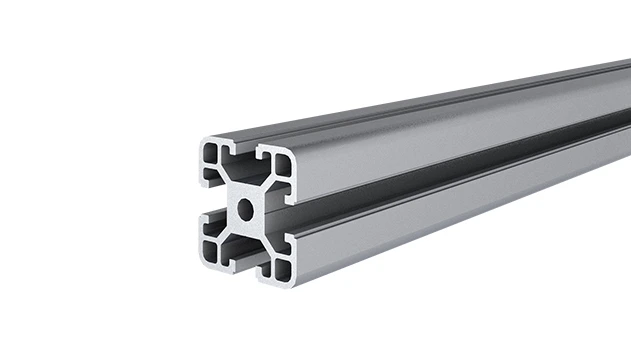
4040C is a 4.00x4.00 CM fractional 40 series square extrusion T-slot profile with four open T-slots, each side with 4.00cm face. The profile has align-a-grooves to assist in aligning connecting profiles.
Walk into any modern manufacturing facility today, and you'll likely notice a shift: gone are the days of rigid, one-size-fits-all production lines bolted to the floor. Instead, you'll find dynamic, adaptable workspaces where stations reconfigure overnight, material flows smoothly between processes, and teams collaborate around setups that evolve with their needs. This transformation isn't magic—it's the power of modular production systems. And at the heart of many of these systems lies a humble yet revolutionary component: the 4040C EU Standard Aluminum Profile.
If you've ever managed a production line, you know the frustration of inflexibility. A sudden order for a new product variant, a need to scale up output, or even a simple ergonomic adjustment for a team member can turn into a logistical nightmare. Traditional steel structures or custom-built workbenches? They're expensive to modify, time-consuming to rebuild, and often end up collecting dust in a corner when needs change. But modular systems, built around aluminum profiles like the 4040C, are changing the game. They're not just tools—they're enablers of agility, efficiency, and continuous improvement.
In this article, we'll dive deep into why the 4040C EU Standard Aluminum Profile has become the backbone of modular production lines worldwide. We'll explore its design, its benefits, and how it integrates with everything from workbenches to material racks. Whether you're a plant manager looking to upgrade your facility, an engineer designing a new line, or simply curious about the mechanics of modern manufacturing, this guide will show you why 4040C isn't just a profile—it's a foundation for the factories of tomorrow.
The Rise of Modular Production: Why Flexibility Matters More Than Ever
Before we jump into the specifics of the 4040C, let's take a step back and understand why modular production lines have become so critical. In today's manufacturing landscape, two trends dominate: customization and speed. Customers demand products tailored to their needs, and competitors race to deliver them faster. This means production lines can no longer be static. They need to pivot quickly, scale up or down, and adapt to new processes without skipping a beat.
Traditional production setups struggle with this. Imagine a automotive parts manufacturer using a welded steel assembly line. When the company wins a contract for a new car model, the line's fixed stations, conveyors, and workbenches can't be easily adjusted. The team might need to hire welders, order custom parts, and shut down production for weeks—costing time, money, and opportunities. Now, contrast that with a modular line built on aluminum profiles. Reconfiguring stations, adding new material racks, or adjusting heights takes hours, not weeks. No welding, no custom fabrication, just a few tools and a vision.
Modular systems also align perfectly with lean manufacturing principles—a methodology focused on minimizing waste and maximizing value. By using reusable, reconfigurable components, factories reduce waste from discarded equipment. They also improve workflow efficiency, as lines can be optimized for each product's unique needs. It's no wonder that companies embracing lean system principles often turn to aluminum profiles as their building blocks.
What Is 4040C EU Standard Aluminum Profile, Anyway?
At first glance, the 4040C might look like just another metal bar. But its design and engineering make it a standout in the world of industrial components. Let's break it down.
The "4040" in its name refers to its cross-sectional dimensions: 40mm by 40mm. That square shape isn't arbitrary—it provides balanced strength in all directions, making it ideal for structural applications. The "C" denotes its specific design within the EU standard range, which includes variations in slot size, wall thickness, and accessory compatibility. EU standards ensure consistency across manufacturers, so a 4040C profile from one supplier will work seamlessly with accessories from another—a critical feature for modular systems.
But what truly sets the 4040C apart is how it's made. Like most aluminum profiles, it's created through extrusion—a process where heated aluminum alloy is forced through a die to create a specific cross-sectional shape. This method allows for incredible precision and complex designs, including the signature "T-slots" that run along its length. These T-slots are the profile's secret weapon: they let you attach accessories, brackets, panels, and other components anywhere along the length, without drilling or welding. Just slide a bolt into the slot, tighten it, and you're done. It's like building with industrial-grade LEGO bricks, but for factories.
The material itself is no slouch, either. 4040C profiles are typically made from 6063-T5 aluminum alloy, a blend known for its excellent strength-to-weight ratio, corrosion resistance, and machinability. It's lightweight enough to be handled by a single person (a 1-meter length weighs around 1.5kg) but strong enough to support heavy loads—think workbenches with tools, material racks stacked with components, or even small conveyor systems. And unlike steel, it won't rust, making it suitable for both indoor and controlled outdoor environments.

Key Features of 4040C Aluminum Profile: Built for Modularity
The 4040C's popularity isn't accidental. Its design is a masterclass in balancing functionality, durability, and ease of use. Let's explore the features that make it indispensable for modular production lines.
T-Slot Design: The Foundation of Flexibility
The T-slots running along each side of the 4040C are its most defining feature. These slots are precision-engineered to accept a wide range of fasteners, brackets, and accessories. Imagine you're building a workbench: with T-slots, you can attach a tool rail at 80cm height on one day, then move it to 90cm the next if a taller team member joins the line. Need to add a shelf for parts bins? Just slide in some brackets, tighten the bolts, and you're ready. No drilling new holes, no welding, no waiting for custom parts. The T-slots turn the profile into a blank canvas for your production needs.
And it's not just about vertical adjustments. T-slots allow for horizontal flexibility too. Want to reposition a conveyor track by 30cm? Loosen the bolts, slide the brackets, retighten. Need to add a crossbar between two profiles? Use a corner bracket in the slot. This adaptability is why 4040C is often called the "Swiss Army Knife" of industrial framing.
Precision and Consistency: EU Standards at Work
EU standards aren't just a label—they ensure that every 4040C profile meets strict tolerances for straightness, slot dimensions, and material quality. This consistency is crucial for modular systems. If one profile is slightly warped or its slots are misaligned, it could throw off an entire assembly. With EU-standard 4040C, you can trust that profiles from different batches or suppliers will fit together perfectly. This reliability reduces downtime during assembly and ensures that your production line stays stable, even under heavy use.
Lightweight Yet Strong: The Best of Both Worlds
Aluminum's biggest advantage over steel is its weight. A 4040C profile weighs roughly 1/3 of a steel profile of the same size, making it easy to handle during assembly and reconfiguration. This is a game-changer for teams that need to adjust their lines frequently. No more needing a forklift or a crew of workers to move a single workbench—one or two people can disassemble and rebuild a station in an afternoon.
But don't let the light weight fool you. 6063-T5 aluminum alloy has a tensile strength of around 200 MPa, which is more than enough for most industrial applications. A properly assembled 4040C frame can support hundreds of kilograms—think of a material rack stacked with metal components or a workbench with a heavy CNC machine on top. It's strong enough to be structural, yet light enough to be agile.
Corrosion Resistance: Built to Last
Manufacturing environments can be tough. Oils, coolants, humidity, and even occasional spills are part of the daily grind. Steel structures rust, wood warps, but aluminum? It forms a natural oxide layer that protects it from corrosion. For even harsher environments—like food processing or pharmaceutical manufacturing—4040C profiles can be anodized, adding a thicker protective layer that's also easy to clean. This durability means your modular system won't degrade over time, even with heavy use, reducing replacement costs and extending its lifespan.
Why 4040C Stands Out: Benefits for Your Production Line
Now that we understand the 4040C's features, let's look at how they translate into real-world benefits for your facility. These aren't just technical specs—they're advantages that impact your bottom line, your team's productivity, and your ability to compete.
Unmatched Flexibility: Adapt in Hours, Not Weeks
The most obvious benefit is flexibility. With 4040C, reconfiguring a production line isn't a project—it's a task. Let's say your electronics assembly line needs to switch from smartphones to tablets. The workbenches, which were once set up for small screens, need taller monitors and wider component trays. With 4040C, you don't need to order new workbenches. Just loosen the bolts on the existing frames, adjust the height, add extension brackets for the trays, and you're ready to go. What would take weeks with steel or custom wood? Done in a day.
This flexibility also extends to scaling. When demand spikes, you can quickly add new workstations or material racks by assembling additional 4040C frames. When demand drops, you can disassemble the extra stations and store the profiles for later use—no waste, no excess inventory.
Cost-Effective: Save Money on Setup and Maintenance
At first glance, aluminum profiles might seem pricier than steel or wood. But look closer, and the math shifts. Steel requires welding, painting, and custom fabrication—all labor-intensive and costly. Wood needs regular replacement as it warps or splinters. 4040C, though, is a one-time investment that pays dividends. Its modularity means components are reusable across projects. Its durability reduces maintenance costs (no rust removal, no repainting). And its ease of assembly cuts down on labor hours—you don't need specialized welders or carpenters, just a basic toolkit and a little training.
Consider this: A mid-sized factory using traditional steel workbenches might spend $5,000 per bench, with no easy way to modify them. A 4040C bench, built with standard profiles and accessories, might cost $3,000 upfront. But when the factory needs to reconfigure, the steel benches are either scrapped or require $2,000 in welding and modifications. The 4040C bench? It's disassembled and rebuilt for $200 in new accessories. Over time, the savings add up.
Ergonomics: Keep Your Team Happy and Healthy
A production line is only as good as the people running it. Poor ergonomics—awkward workbench heights, hard-to-reach tools, cluttered workspaces—leads to fatigue, injuries, and high turnover. 4040C profiles solve this by making ergonomic adjustments simple. Need a workbench higher for a tall operator? Add extension profiles. Want to angle a conveyor to reduce bending? Adjust the brackets in the T-slots. Even small changes, like adding a footrest or tilting a monitor, can be done in minutes.
Happy, healthy workers are more productive, make fewer mistakes, and stay with the company longer. In industries where skilled labor is scarce, this alone makes 4040C a worthwhile investment.
Speed to Market: Get New Lines Up and Running Faster
In manufacturing, time is money. The faster you can launch a new production line, the faster you can start fulfilling orders and generating revenue. Traditional setups require designing custom parts, waiting for fabrication, and coordinating installation. With 4040C, you can skip most of that. Since profiles and accessories are standardized, you can order them off the shelf and assemble the line in-house. What might take 8 weeks with steel could take 2 weeks with aluminum profiles. That's a 6-week head start on production—and in competitive markets, that's the difference between winning and losing a contract.
From Parts to Production: 4040C in Action
The 4040C isn't just a standalone component—it's the core of a vast ecosystem of accessories and systems. Let's look at how it's used in real production environments, from workbenches to material handling.
Workbenches: The Heart of the Assembly Line
Workbenches are where the magic happens—where components become products. And 4040C is the ideal material for building them. A typical 4040C workbench might include adjustable height legs, a plywood or aluminum top, integrated tool rails, and bins for parts. Since it's modular, you can add features like ESD (Electrostatic Discharge) protection for electronics assembly, LED task lighting, or even a small conveyor to feed components directly to the operator.
Take the example of a medical device manufacturer. Their assembly line requires workbenches that are easy to clean, adjustable for different operators, and compatible with ESD mats to protect sensitive circuits. Using 4040C profiles, they built benches with stainless steel tops (easily wiped down), height-adjustable legs (via T-slot brackets), and ESD-safe accessories. When they needed to add a new station for a larger device, they simply extended the bench with additional profiles—no custom fabrication required.
Material Racks and Flow Racks: Keeping Parts Moving
Efficient material handling is critical for a smooth production line. Parts need to be stored close to where they're used, and they need to flow to operators without bottlenecks. 4040C profiles excel here, too. Material racks built with 4040C are lightweight enough to be moved (with casters) but strong enough to hold heavy bins of components. Flow racks, which use gravity to feed parts to the front, are easy to assemble with 4040C frames and roller track accessories (another keyword from our list!).
A automotive parts supplier, for instance, uses 4040C to build flow racks for their assembly line. Each rack holds bins of screws, washers, and gaskets, with roller tracks that let the bins slide forward as the front one is emptied. When a new part size is introduced, they adjust the rack's dividers using T-slot brackets—no need to buy a new rack. This keeps parts organized, reduces picking time, and ensures operators always have what they need at their fingertips.
Conveyors and Turnover Trolleys: Streamlining Material Flow
Moving materials between stations is another area where 4040C shines. Light-duty conveyors, built with 4040C frames and roller tracks, can transport parts between workbenches. Turnover trolleys, used to move batches of components from storage to the line, are also often built with 4040C for their lightweight yet sturdy design. These trolleys can be customized with shelves, bins, or even locking mechanisms to secure sensitive parts.
A furniture manufacturer, for example, uses 4040C to build turnover trolleys that carry upholstery materials to their sewing stations. The trolleys are lightweight enough for a single worker to push, but strong enough to hold 50kg of fabric. When they expanded their product line to include larger sofas, they added extension shelves to the trolleys using 4040C brackets—no new trolleys needed.
Aluminum Profile Accessories: The Glue That Holds It All Together
A profile is only as good as the accessories that connect it. And the 4040C ecosystem is rich with aluminum profile accessories designed to make assembly quick, secure, and versatile. Let's explore some of the most common ones:
- Connectors: 90° brackets, corner joints, and T-connectors let you join profiles at any angle. Most use bolts that tighten into the T-slots, creating a secure connection without drilling.
- End Caps: These simple plastic or aluminum caps fit over the ends of profiles, protecting workers from sharp edges and giving the assembly a clean look.
- Gussets and Reinforcements: For heavier loads, gussets (triangular brackets) add stability to joints, preventing flexing or bending.
- Casters: Attach casters to the bottom of frames to make workbenches, racks, or trolleys mobile. Locking casters keep them stationary when needed.
- Panels and Covers: Aluminum or plastic panels can be mounted to 4040C frames to create enclosures, machine guards, or tool cabinets.
The beauty of these accessories is that they're standardized. A 90° connector from one supplier will work with a 4040C profile from another, thanks to EU standards. This means you're never locked into a single brand—you can mix and match to find the best components for your needs.
4040C vs. the Competition: Why Aluminum Beats Steel, Wood, and Other Profiles
You might be wondering: Why 4040C aluminum, and not steel, wood, or even other aluminum profiles? Let's break down the comparisons.
4040C vs. Steel: Lightweight vs. Heavy-Duty
Steel is strong—there's no denying that. But it's also heavy, prone to rust, and hard to modify. For applications requiring extreme weight capacity (like industrial machinery frames), steel might still be the choice. But for most production lines, 4040C offers enough strength with the added benefits of light weight and flexibility. Plus, steel requires welding, which adds cost and time. 4040C? It assembles with a hex key.
4040C vs. Wood: Durability vs. Disposability
Wood is cheap upfront, but it's a false economy. It warps with humidity, splinters under heavy use, and can't be reconfigured. A wooden workbench might last a year or two; a 4040C bench can last decades with minimal maintenance. And when wood wears out, it goes to the landfill. 4040C? It's 100% recyclable.
4040C vs. Other Aluminum Profiles: The Sweet Spot of Size and Versatility
There are other aluminum profiles out there—2020, 3030, 4080, etc. The 2020 (20x20mm) is great for small projects, but too narrow for structural use. The 4080 (40x80mm) is stronger but bulkier and heavier, overkill for most workbenches or racks. The 4040C hits the sweet spot: 40x40mm is wide enough for stability, narrow enough to keep assemblies compact, and compatible with the widest range of accessories. It's the "Goldilocks" profile—just right for most modular needs.
Technical Specifications: The Numbers Behind the 4040C
To truly appreciate the 4040C, let's look at its technical specs. This table breaks down the key details that make it suitable for modular production lines:
| Feature | Specification | Benefit |
|---|---|---|
| Dimensions | 40mm x 40mm (cross-section) | Balanced strength and compactness; fits most workspaces |
| Material | 6063-T5 Aluminum Alloy | High strength-to-weight ratio; corrosion-resistant; easy to machine |
| Wall Thickness | 1.5mm–2.0mm (varies by supplier) | Lightweight yet rigid; supports typical production loads |
| Weight per Meter | ~1.3kg–1.6kg | Easy to handle and transport; reduces installation labor |
| T-Slot Size | 8mm or 10mm slot width (EU standard) | Compatible with standard M5/M6 bolts and accessories |
| Surface Treatment | Anodized (clear or colored) or mill finish | Enhanced corrosion resistance; easy to clean; aesthetically pleasing |
| Maximum Load Capacity | ~500kg per linear meter (when properly supported) | Strong enough for workbenches, material racks, and light conveyors |
| Standard Lengths | 1m, 2m, 3m, 4m (custom lengths available) | Reduces waste; easy to cut to size for specific projects |
Integrating 4040C with Lean Manufacturing: A Perfect Partnership
We've mentioned lean system principles earlier, and it's worth diving deeper into how 4040C supports lean manufacturing. Lean is all about eliminating waste—whether it's time, materials, or effort. And 4040C's modularity aligns perfectly with this goal.
Take the 5S methodology (Sort, Set in Order, Shine, Standardize, Sustain). 4040C helps with "Set in Order" by allowing you to organize tools, parts, and workspaces exactly where they're needed. No more searching for a tool—with a 4040C tool rail, it's right at the operator's fingertips. "Standardize" becomes easier, too, as workbenches and stations can be replicated exactly across shifts or lines. And "Sustain"? Since the system is easy to adjust, teams are more likely to keep their workspaces organized over time.
Kaizen, or continuous improvement, is another lean principle that thrives with 4040C. If an operator suggests a better way to arrange their workbench, you can test the idea immediately by reconfiguring the profile. If it works, roll it out to other stations. If not, revert back—no cost, no waste. This culture of experimentation is hard to foster with rigid systems, but 4040C makes it simple.
Choosing the Right Supplier: What to Look For
Now that you're convinced 4040C is right for your production line, how do you choose a supplier? Not all aluminum profile suppliers are created equal. Here are key factors to consider:
- EU Standard Compliance: Ensure the supplier's 4040C profiles meet EU standards for dimensions, material quality, and tolerances. This ensures compatibility with accessories.
- Range of Accessories: Look for suppliers that offer a full line of accessories—connectors, casters, panels, etc. It's easier to source everything from one place.
- Customization Options: Can they cut profiles to custom lengths? Offer special surface treatments? Flexibility here can save time and reduce waste.
- Technical Support: A good supplier will help you design your system, recommend accessories, and troubleshoot issues. Look for suppliers with engineering teams or online design tools.
- Lead Times: Modular systems are about speed, so choose a supplier with short lead times for both profiles and accessories.
Conclusion: 4040C—The Foundation of Modern Manufacturing
The 4040C EU Standard Aluminum Profile isn't just a piece of metal. It's a symbol of how manufacturing is evolving—away from rigidity and toward adaptability, away from waste and toward efficiency, away from one-size-fits-all and toward customization. It's the backbone of modular production lines that can pivot with market demands, scale with growth, and evolve with the needs of your team.
From workbenches that adjust to any operator's height to material racks that reconfigure for new parts, from flow racks that keep components moving to conveyors that adapt to new layouts—4040C makes it all possible. It's lightweight yet strong, simple yet versatile, and cost-effective in the long run.
So if you're ready to build a production line that can keep up with the future, start with the foundation: the 4040C EU Standard Aluminum Profile. It's not just an investment in materials—it's an investment in agility, in your team, and in the success of your business. The factories of tomorrow aren't built with steel and wood. They're built with profiles like the 4040C. And tomorrow starts today.