- Company Articles
- Industry articles
- Industry standards
- Why 4080A EU Standard Aluminum Profile is Ideal for Prototyping in Manufacturing

Why 4080A EU Standard Aluminum Profile is Ideal for Prototyping in Manufacturing
Related Product
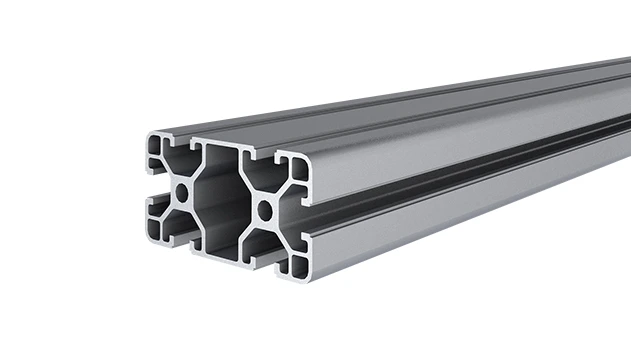
4080A EU Standard Aluminum Profile
4080A is a 4.00x8.00 CM fractional 40 series square extrusion T-slot profile with two side open T-slots, each side with 4.00cm face, two side with 8.00cm face. The profile has align-a-grooves to assist in aligning connecting profiles.
The Prototyping Paradox: Speed, Flexibility, and Reliability
For manufacturers, prototyping is the heartbeat of innovation. It's where ideas transition from sketches on a whiteboard to tangible, testable models—where engineers tweak designs, production teams validate workflows, and stakeholders visualize the final product. But here's the catch: prototyping often feels like a balancing act. You need speed to stay ahead of competitors, flexibility to adapt to last-minute changes, and reliability to ensure the prototype accurately reflects real-world performance. And let's not forget cost—no one wants to sink resources into a prototype that becomes obsolete after one iteration.
In recent years, one material has emerged as a game-changer in solving this paradox: aluminum extrusion profiles. Specifically, the 4080A EU Standard Aluminum Profile has become a go-to choice for prototyping teams across industries. Its unique blend of modularity, strength, and adaptability addresses the core challenges of prototyping, making it more than just a building material—it's a catalyst for faster, smarter innovation.
In this article, we'll dive into why the 4080A profile stands out, how its design aligns with the needs of modern prototyping, and why it's become indispensable for teams aiming to turn ideas into reality without the usual headaches.
What Exactly is 4080A EU Standard Aluminum Profile?
Before we explore its benefits, let's get clear on what the 4080A profile is. At its core, it's a precision-engineered aluminum extrusion designed to meet strict EU standards for quality, dimensional accuracy, and material performance. The "4080" refers to its cross-sectional dimensions: 40mm in width and 80mm in height. The "A" denotes a specific configuration of its T-slot design—the grooves that run along its length, allowing for easy attachment of accessories, brackets, and panels without welding or drilling.
Made from high-grade aluminum alloy (typically 6063-T5, a common choice for extrusions), the 4080A profile strikes an impressive balance between weight and strength. Aluminum 6063-T5 offers excellent corrosion resistance, good thermal conductivity, and a smooth, anodized finish that protects against wear—all critical traits for a material that might be reconfigured, disassembled, and reused multiple times in a prototyping lab.
What truly sets EU standard profiles like the 4080A apart is consistency. Unlike generic aluminum extrusions, EU standards ensure uniform wall thickness, precise slot dimensions, and strict tolerances. This means that when you order a 4080A profile from a reputable supplier, you know it will fit seamlessly with other EU-standard components—no guessing, no mismatched parts, no wasted time.

5 Reasons 4080A is a Prototyper's Dream
So, why has the 4080A become a staple in prototyping workshops? Let's break down its key advantages, each addressing a critical pain point in the prototyping process.
1. Modularity: Build, Break, Rebuild—No Welding Required
Prototyping is all about iteration. A design might need three, five, or ten tweaks before it's right, and each tweak should be quick and low-effort. Traditional materials like steel or wood often require welding, cutting, or gluing—permanent changes that make revisions time-consuming and costly. The 4080A profile's T-slot design eliminates this problem. Those grooves running along its length act as universal attachment points for aluminum profile accessories like brackets, hinges, and fasteners. Need to add a shelf to your prototype workbench? Slide a T-slot nut into the groove, bolt on the shelf bracket, and you're done. Want to reposition a tool holder? Loosen the bolts, slide it to the new location, and retighten. No welding, no drilling, no mess. This modularity turns prototyping into a "LEGO-like" experience. Teams can assemble a basic structure in hours, test it, and then tear it down to rebuild with modifications in minutes. For example, a team prototyping a new assembly line workstation might start with a simple frame, then add roller track for material flow, adjust the height of the work surface, and even integrate a small conveyor—all without specialized tools or skills.2. Lightweight Strength: Easy to Handle, Tough Enough to Test
Prototyping labs aren't industrial factories. They're spaces where engineers and designers often work hands-on, moving components around, adjusting layouts, and transporting prototypes between testing stations. Heavy materials like steel make this process cumbersome; even a small steel frame can require multiple people to move, slowing down progress. Aluminum, by contrast, is lightweight—about one-third the weight of steel. The 4080A profile, despite its 40x80mm cross-section, is easy for one person to carry and maneuver. But don't let its lightness fool you: aluminum alloys like 6063-T5 have impressive strength-to-weight ratios. The 4080A can support significant loads—think tools, equipment, even small machinery—making it suitable for testing real-world conditions. For example, a prototype material rack designed to hold 50kg of parts? The 4080A can handle that. A workbench where operators will stand and work for hours? Its rigidity ensures minimal flex, providing a stable surface for accurate testing. This combination of lightness and strength makes it ideal for both static prototypes (like shelving) and dynamic ones (like mobile carts or adjustable fixtures).3. Compatibility with Aluminum Profile Accessories: Endless Customization
A profile is only as useful as the accessories it works with, and the 4080A shines here. The EU standard ensures it's compatible with a vast ecosystem of aluminum profile accessories, from simple brackets to specialized components like aluminum guide rail A and roller track placon mounts. This means you're never limited by "one-size-fits-all" solutions—you can mix and match parts to create exactly what your prototype needs. Let's say you're prototyping a packaging line and need a smooth material flow system. You could pair 4080A profiles with roller track placon mount brackets to create a sloped roller track, then add aluminum guide rail A along the sides to keep packages aligned. If you later decide to automate part of the process, you can attach a small conveyor using T-slot fasteners—no need to redesign the entire frame. Even better, many suppliers offer pre-cut accessories in standard sizes, so you don't have to waste time machining parts from scratch. Need a corner bracket? A shelf panel? A caster wheel for mobility? Chances are, there's an accessory designed to snap (or bolt) right onto your 4080A profile. This ecosystem of parts turns prototyping from a "build from scratch" project into a "mix and match" puzzle—faster, more creative, and less error-prone.4. Cost-Effective: Reuse, Reduce, Recycle
Prototyping budgets are often tight, and wasting money on single-use materials is a surefire way to derail a project. Wood prototypes warp or break after a few uses; steel prototypes are expensive to modify and hard to recycle. The 4080A profile, however, is built for reuse. Because it's modular and durable, you can disassemble a prototype and reuse the profiles and accessories in the next iteration. That workbench you built for testing? Take it apart, and the 4080A pieces can become part of a material rack next month. The roller track from your packaging line prototype? Repurpose it for a new assembly station. This reusability drastically reduces material costs over time, turning a one-time expense into a long-term investment. And when a profile finally reaches the end of its prototyping life? Aluminum is 100% recyclable, with no loss in quality. Unlike plastic or wood, it doesn't end up in a landfill—it gets melted down and turned into new profiles, aligning with lean system principles of waste reduction and sustainability.5. Speed to Iteration: From Idea to Prototype in Days (Not Weeks)
In manufacturing, time is market share. The faster you can prototype, test, and refine a design, the faster you can bring it to market. The 4080A profile accelerates this timeline by cutting down on assembly and modification time. Traditional prototyping with steel might take days: cutting the steel, welding the frame, grinding down rough edges, painting. With 4080A, assembly is a matter of bolting parts together. A simple prototype workbench can be built in under two hours by a single person. Even complex setups—like a multi-level material handling system—can be assembled in a day or two. This speed matters when deadlines loom. Imagine a client requesting a design change on Monday, with a presentation scheduled for Friday. With 4080A, your team can disassemble the old prototype, make the adjustments, and have a new version ready by Wednesday—leaving time for testing and tweaks before the presentation. In a world where competitors are racing to innovate, this kind of agility is a competitive advantage.How 4080A Stacks Up Against Other Prototyping Materials
To truly appreciate the 4080A's value, it helps to compare it to other common prototyping materials. Let's break down how it measures up against wood, steel, and generic plastic profiles:
The table tells the story: 4080A outperforms alternatives in almost every category that matters for prototyping. It's faster to assemble than steel, more flexible than wood, stronger than plastic, and more cost-effective over time than any of them.
| Material | Speed of Assembly | Flexibility (Modifications) | Strength-to-Weight Ratio | Reusability | Cost Over Time |
|---|---|---|---|---|---|
| 4080A Aluminum Profile | Fast (bolted assembly, no welding) | High (easily disassembled/reconfigured) | Excellent (lightweight but strong) | Very High (reusable for multiple prototypes) | Low (one-time purchase, reused repeatedly) |
| Steel (Angle Iron/Tubing) | Slow (requires cutting, welding, painting) | Low (permanent modifications, hard to adjust) | Good (strong but heavy) | Low (difficult to disassemble; often scrapped after use) | High (labor-intensive assembly; low reuse value) |
| Wood (Plywood/2x4s) | Moderate (cutting, screwing; no welding) | Moderate (can be modified but prone to damage) | Poor (weak, warps with moisture) | Low (easily damaged; limited reuse) | Moderate (cheap upfront, but frequent replacement needed) |
| Generic Plastic Profiles | Fast (similar to aluminum) | High (modular, but less durable) | Poor (low strength; not suitable for heavy loads) | Moderate (reusable but prone to wear/breakage) | High (needs replacement after few uses; not for heavy duty) |
Real-World Applications: 4080A in Action
Theory is one thing, but real-world use cases show the 4080A's true value. Let's look at a few examples of how teams are using it to prototype better, faster:
Case 1: Prototyping a Lean Manufacturing Workstation
A automotive parts manufacturer wanted to redesign their assembly line workstations to reduce operator fatigue and improve efficiency. Their goal was a workstation that could adjust to different operator heights, include tool storage, and integrate a small conveyor for parts delivery. Using 4080A profiles, they built a prototype workstation in a day. The T-slots allowed them to attach adjustable legs (using aluminum profile accessories like height-adjustable feet), a tool rack, and a mini roller track for parts. Over the next week, they tested three different configurations: varying the height, repositioning the tool rack, and adjusting the angle of the roller track. Each modification took less than an hour, and by the end of the week, they had a final design ready for production. The best part? The prototype components were reused to build a second workstation prototype for a different assembly line, cutting material costs by 60%.Case 2: Testing a Material Handling System for E-Commerce
An e-commerce fulfillment center needed a prototype material rack to organize small packages before shipping. The rack needed to hold 10kg per shelf, be mobile (to move between packing stations), and have adjustable shelf heights to accommodate different package sizes. The team used 4080A profiles for the frame, adding caster wheels for mobility and adjustable shelf brackets (attached via T-slots) to test different heights. They even added aluminum guide rail A along the shelf edges to prevent packages from sliding off. After testing three shelf configurations, they settled on a design that reduced packing time by 15%. The prototype was then disassembled, and the profiles were used to build a larger, full-scale version of the rack.Case 3: Developing a Custom Medical Device Cart
A medical equipment company was prototyping a mobile cart for transporting sensitive instruments. The cart needed to be lightweight (for easy maneuvering in hospitals), stable (to prevent tipping), and have secure storage compartments. 4080A profiles provided the perfect base: lightweight enough for nurses to move alone, strong enough to support the instruments, and modular enough to add locking drawers and a fold-down work surface. The team tested different drawer configurations and wheel types (using aluminum profile accessories like swivel casters) before finalizing the design. Because the prototype was built with bolts, not welds, they could easily swap out components—like replacing plastic wheels with rubber ones for quieter operation—without rebuilding the entire cart.Choosing the Right Supplier for 4080A Profiles
To get the most out of 4080A profiles, it's critical to partner with a reputable supplier. Not all aluminum extrusion suppliers are created equal, and EU standard compliance is non-negotiable. Here's what to look for:
- EU Standard Certification: Ensure the supplier provides profiles that meet EU standards for dimensional accuracy, material quality, and finish. This guarantees compatibility with other EU-standard accessories.
- Range of Accessories: Look for suppliers that stock a wide variety of aluminum profile accessories, from basic brackets to specialized parts like roller track and hinges. This saves time and ensures parts will fit together seamlessly.
- Custom Cutting Services: While 4080A profiles come in standard lengths (often 2-6 meters), prototyping often requires specific sizes. A supplier that offers custom cutting (to the millimeter) eliminates the need for in-house cutting tools and reduces waste.
- Technical Support: Even experienced teams sometimes need help designing complex prototypes. A supplier with knowledgeable staff who can advise on load capacities, accessory compatibility, and assembly best practices can be invaluable.
Conclusion: 4080A—More Than a Profile, a Prototyping Partner
Prototyping is no longer just about building something that "looks like" the final product. It's about building something that
works like
the final product, can adapt to changes, and doesn't drain resources. The 4080A EU Standard Aluminum Profile excels at all three.
Its modular, T-slot design turns iteration into a breeze. Its lightweight strength makes it easy to handle without sacrificing performance. Its compatibility with aluminum profile accessories unlocks endless customization. And its reusability aligns with lean system principles, reducing waste and cost over time.
For manufacturers, designers, and innovators, the 4080A isn't just a material—it's a tool that empowers creativity, accelerates development, and turns "what if" into "what's next." In a world where speed and flexibility are everything, it's the prototyping partner you didn't know you needed—until now.