- Company Articles
- Industry articles
- Industry standards
- Why 4080B EU Standard Aluminum Profile Is Ideal for Temporary & Permanent Structures

Why 4080B EU Standard Aluminum Profile Is Ideal for Temporary & Permanent Structures
Related Product
4080B EU Standard Aluminum Profile
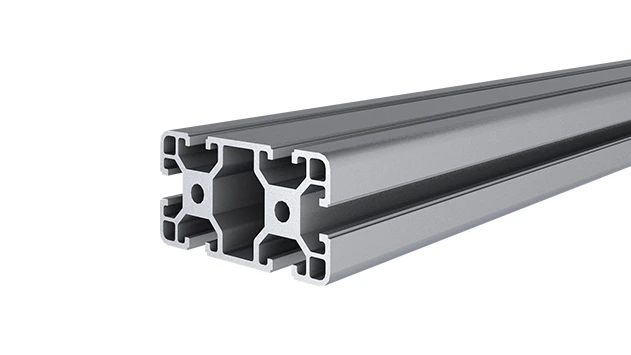
4080B is a 4.00x8.00 CM fractional 40 series square extrusion T-slot profile with two side open T-slots, each side with 4.00cm face, two side with 8.00cm face. The profile has align-a-grooves to assist in aligning connecting profiles.
In the world of industrial design, manufacturing, and even event setup, the materials we choose can make or break efficiency, durability, and adaptability. Whether you're building a permanent production line, a temporary workbench for a workshop, or a modular display for a trade show, the structural backbone needs to check multiple boxes: strength, flexibility, cost-effectiveness, and ease of assembly. That's where the 4080B EU Standard Aluminum Profile comes into play. If you've ever wondered what makes certain structures feel "built to last" while still being easy to reconfigure, chances are you're looking at an aluminum extrusion profile that's been engineered for both versatility and reliability. Let's dive into why this specific profile has become a go-to choice for engineers, designers, and project managers across industries.
First Things First: What Exactly Is a 4080B EU Standard Aluminum Profile?
Before we jump into its benefits, let's clarify what we're talking about. An aluminum extrusion profile is a length of aluminum that's been shaped through a process called extrusion—think of it like squeezing toothpaste through a tube, but with molten aluminum and a precision die. The "4080B" refers to its dimensions: 40 millimeters in width and 80 millimeters in height. The "EU Standard" tag means it adheres to strict European manufacturing norms for quality, tolerances, and safety, ensuring consistency no matter where you source it. And the "B"? That's often a model or series identifier, distinguishing it from other 40x80mm profiles (like the 4080A or 4080C) with slight variations in slot design or wall thickness.
But numbers and letters only tell part of the story. What truly sets this profile apart is its cross-sectional design. Most aluminum profiles, including the 4080B, feature T-slots—longitudinal grooves running along the length of the profile. These slots are like built-in "attachment points" that let you slide in accessories (more on those later) without drilling or welding. Imagine building with a set of giant, industrial-grade Lego blocks: the T-slots are the studs, and the accessories are the connectors. This design is the secret sauce behind its modularity, and it's why the 4080B works equally well for temporary setups that need to be disassembled in days and permanent structures that will stand for years.
Breaking Down the Features: Why 4080B Stands Out Among Aluminum Profiles
Not all aluminum profiles are created equal. The 4080B has a few key features that make it a standout choice for both temporary and permanent use. Let's break them down one by one:
1. Dimensions That Strike the Perfect Balance
At 40x80mm, this profile hits a sweet spot between compactness and load-bearing capacity. It's narrow enough to fit into tight spaces—think between machines on a factory floor or along walls in a small workshop—but tall enough to provide the vertical strength needed for supporting shelves, workbenches, or even lightweight roofing. Compare that to smaller profiles like the 3030B (30x30mm), which might struggle with heavier loads, or larger ones like the 8080 (80x80mm), which can be overkill for projects where space is limited. The 4080B's proportions make it versatile: use it as a vertical support, a horizontal beam, or even a diagonal brace, and it will perform reliably.
2. High-Quality Aluminum Alloy for Strength Without the Weight
Most 4080B profiles are made from 6063-T5 aluminum alloy, a material renowned for its excellent strength-to-weight ratio. For those who aren't material scientists, that means it's strong enough to support heavy equipment (we're talking hundreds of kilograms per linear meter) but light enough that two people can easily carry a 3-meter length without straining. This is a game-changer for both temporary and permanent structures. For temporary setups—like a pop-up workshop or a trade show booth—you don't want to spend hours wrestling with steel beams. For permanent structures, the lighter weight reduces stress on floors and foundations, lowering long-term maintenance costs.
The T5 temper (a heat treatment process) adds to its durability, making it resistant to warping under pressure or temperature changes. Unlike untreated aluminum, which might bend or flex over time, the 4080B holds its shape, ensuring your structure remains stable for years.
3. T-Slot Design: The Key to Modularity
If there's one feature that makes aluminum profiles so popular, it's the T-slot. The 4080B typically has two or three T-slots along its length (depending on the manufacturer), each designed to accept aluminum profile accessories like nuts, bolts, brackets, and even custom components. This means you can attach shelves, panels, lights, or tools anywhere along the profile—no pre-drilled holes required. Need to move a shelf up by 10cm? Just loosen the bolts, slide the bracket, and tighten. Want to add a new crossbeam halfway down? Slot in a connector and secure it with a T-slot nut. This flexibility is why the 4080B is ideal for both temporary structures (which need to be reconfigured quickly) and permanent ones (which might need updates as your needs change).
4. Corrosion Resistance for Longevity
Aluminum naturally forms a thin oxide layer that protects it from rust, but many 4080B profiles take this a step further with anodization—a process that thickens this layer, making the profile even more resistant to corrosion, scratches, and UV damage. This is a huge advantage over materials like steel, which require painting or coating to prevent rust, or wood, which can rot in humid environments. Whether you're using the profile indoors (in a factory with moisture from cleaning) or outdoors (for a temporary event tent), the 4080B will hold up without constant maintenance.

Temporary vs. Permanent Structures: How 4080B Delivers for Both
Now, let's get specific: why is the 4080B equally effective for structures that need to last a day and those that need to last a decade? Let's break it down by use case.
For Temporary Structures: Speed, Portability, and Reusability
Temporary structures—think event stages, pop-up retail displays, or short-term workbenches—have one big requirement: they need to be set up fast, taken down fast, and stored without taking up too much space. The 4080B excels here for three reasons:
- No welding, no drilling: With T-slot accessories, assembly is as simple as sliding brackets into slots and tightening bolts. A basic workbench can be built in under an hour with just a hex key. Compare that to steel, which often requires welding (skilled labor!) or pre-drilled holes (limiting where you can attach parts).
-
As we mentioned earlier, the 4080B's strength-to-weight ratio means you can build a sturdy structure that's still easy to transport. A 3-meter length weighs around 2.5kg, so even a full setup with multiple profiles can be loaded into a van without a forklift. -
When the event or project is over, you can disassemble the profile into individual lengths, stack them flat, and store them until the next use. Unlike materials like plywood or plastic, which can crack or warp after disassembly, aluminum profiles retain their shape, so you can reuse them dozens of times. This not only saves money but also reduces waste—a win for sustainability.
Example: Imagine you're organizing a trade show booth. You need a display that's eye-catching, sturdy enough to hold product samples, and easy to ship. With 4080B profiles, you can build a modular frame, attach graphics to it using T-slot clips, and add shelves for products. After the show, you take it apart, pack the profiles into a compact box, and use the same parts for next year's booth—maybe with a new configuration to keep things fresh.
For Permanent Structures: Durability, Adaptability, and Low Maintenance
Permanent structures—like factory workbenches, production line frames, or warehouse shelving—need to handle daily wear and tear, support heavy loads consistently, and adapt as operations change. Here's how the 4080B delivers:
-
The 4080B's rigid design and high-quality alloy mean it won't sag or flex under constant use. A workbench built with 4080B legs will stay level even after years of tool use, and a material rack will support boxes of parts without bending. -
Factories and workshops rarely stay the same. Maybe you need to add a new shelf to a production line, or reposition a workbench to accommodate a new machine. With T-slots, you don't have to rebuild the entire structure—just add new brackets or extend the profile. This adaptability future-proofs your setup, saving you from costly overhauls. -
As we mentioned, anodized aluminum resists corrosion and scratches, so you won't spend time repainting or replacing rusted parts. Even in high-traffic areas, the profile will keep its structural integrity with minimal care—just an occasional wipe-down to remove dust.
Example: A car manufacturing plant uses 4080B profiles to build its assembly line workstations. These workstations need to support heavy tools, withstand daily cleaning with industrial detergents, and be reconfigured when the production model changes. The 4080B's durability ensures the workstations last for years, while its modularity lets the plant add new components (like tool holders or computer mounts) without rebuilding from scratch.
Real-World Applications: Where 4080B Shines
To really understand the 4080B's versatility, let's look at some common applications across industries. Chances are, you've interacted with a structure built with this profile without even realizing it.
1. Workbenches and Lab Tables
A workbench is the heart of any workshop, lab, or production line, and the 4080B is often the backbone of these workhorses. Its height (80mm) provides stable legs, while its width (40mm) offers enough surface area to attach tabletop materials like plywood, steel, or anti-static panels (critical for electronics labs). T-slots along the edges let you add accessories: tool hooks, monitor arms, or even overhead lights. Best of all, if you need a taller or shorter workbench, you can simply cut the profiles to length—no custom fabrication required.
2. Lean Manufacturing Systems
Lean system principles focus on minimizing waste and maximizing efficiency, and modular structures are a big part of that. The 4080B is perfect for building lean workstations, material flow racks, and kanban systems. For example, a production line might use 4080B profiles to create a gravity-fed parts rack: by angling the profile slightly and adding roller tracks (another T-slot accessory), parts slide down to the operator, reducing the need for manual lifting. When the production line needs to be rebalanced, the rack can be quickly adjusted—no tools beyond a hex key required.
3. Trade Show Displays and Retail Fixtures
Retailers and exhibitors love the 4080B for its ability to create custom displays that are both sturdy and lightweight. A clothing brand might build a modular rack with 4080B profiles, adding shelves, hanging rods, and signage—all attached via T-slots. After the show, the whole thing disassembles into flat-packed profiles that fit into a carrying case. For pop-up shops, this means lower shipping costs and faster setup times compared to wooden or steel fixtures.
4. Warehouse Racking and Material Handling
In warehouses, space is money, and the 4080B helps maximize vertical storage without sacrificing safety. Its load-bearing capacity (often up to 500kg per linear meter, depending on configuration) makes it ideal for mid-weight shelving, while its corrosion resistance ensures it holds up in damp environments (like cold storage facilities). Add caster wheels (another accessory) to a 4080B frame, and you've got a mobile cart for transporting goods around the warehouse—easily reconfigurable if you need to carry larger items later.
The Magic of Accessories: Making 4080B Even More Versatile
A profile is only as good as the accessories that go with it, and the 4080B has a huge ecosystem of aluminum profile accessories designed to extend its functionality. Let's take a look at some of the most useful ones:
- T-slot nuts and bolts: These are the foundation of T-slot assembly. The nut slides into the slot, and the bolt tightens against it, securing accessories without drilling.
- Angle brackets: For connecting profiles at 90° or 45° angles—essential for building frames, shelves, or workbench legs.
- End caps: These snap onto the ends of profiles to cover sharp edges (safer!) and prevent dust from collecting in slots.
- Panel holders: Attach plywood, acrylic, or metal panels to create walls, table tops, or machine guards.
- Roller tracks: As mentioned earlier, these turn profiles into gravity-fed racks for parts or packages.
- Casters: Add wheels to frames for mobile structures like carts or movable workbenches.
The best part? Most accessories are compatible across EU standard profiles, so if you already have 4040A or 3030B profiles, their accessories will work with the 4080B too. This cross-compatibility reduces costs and makes it easy to mix and match profiles for custom setups.
How 4080B Compares to Other Structural Materials
To really appreciate the 4080B, let's compare it to other common structural materials. We'll focus on three competitors: steel, wood, and plastic.
| Material | Strength | Weight | Assembly Time | Maintenance | Cost (Long-Term) |
|---|---|---|---|---|---|
| 4080B Aluminum Profile | High (supports ~500kg/m) | Low (2.5kg/m for 3m length) | Fast (no welding/drilling) | Low (anodized, corrosion-resistant) | Moderate (reusable, low upkeep) |
| Steel (Square Tubing) | Very high (supports ~800kg/m) | High (10kg/m for 3m length) | Slow (requires welding/drilling) | High (needs painting to prevent rust) | High (heavy shipping, maintenance costs) |
| Wood (2x4 Lumber) | Moderate (supports ~200kg/m) | Medium (3.5kg/m for 3m length) | Moderate (requires cutting, screws/nails) | High (prone to rot, warping, pests) | Low upfront, high long-term (needs replacement) |
| Plastic (PVC Extrusions) | Low (supports ~100kg/m) | Low (1.5kg/m for 3m length) | Fast (similar to aluminum, but weaker connections) | Moderate (UV damage, prone to bending) | Low upfront, high replacement cost |
As the table shows, the 4080B hits a sweet spot: it's stronger than plastic and wood, lighter than steel, faster to assemble than both steel and wood, and cheaper to maintain than all three. For most applications, it's the most balanced choice—especially when you factor in reusability and adaptability.
Real-World Success Stories: Companies Using 4080B to Transform Their Operations
Don't just take our word for it—let's look at how real companies are using the 4080B to solve problems.
Case Study 1: Automotive Manufacturing Plant
A major automotive supplier was struggling with a production line that needed constant reconfiguration to accommodate new car models. Their old steel workstations were heavy, hard to move, and required welding to modify. They switched to 4080B profiles for workbenches and material racks. The result? Setup time for new lines dropped by 60%, and reconfigurations that used to take a day now take a morning. Plus, the lighter weight of the aluminum profiles reduced floor stress, eliminating the need for costly foundation repairs.
Case Study 2: Trade Show Exhibitor
A tech company that attends 15+ trade shows per year was tired of high shipping costs and damaged displays. They replaced their wooden booth with a 4080B aluminum frame system. The new setup weighs 70% less, fits into two suitcases instead of a pallet, and can be assembled by two people in under 2 hours (down from 6 hours with the old booth). Over two years, they saved $45,000 in shipping and labor costs—and their booth looks more professional than ever.
Case Study 3: Small Workshop Owner
A independent woodworker needed a workbench that could grow with his business. He started with a basic 4080B frame and plywood top. As he added tools, he used T-slots to attach a tool cabinet, a monitor arm for design software, and even a small dust collection system. When he moved to a larger shop, he disassembled the bench, added longer profiles, and reassembled it in the new space. No new materials needed—just reusing what he already had.
Final Thoughts: Why 4080B Should Be Your First Choice
At the end of the day, the 4080B EU Standard Aluminum Profile isn't just a piece of metal—it's a solution to a common problem: how to build structures that are strong enough to last, flexible enough to change, and smart enough to save time and money. Whether you're building a temporary display or a permanent production line, its combination of strength, modularity, and low maintenance makes it hard to beat.
So, the next time you're planning a project, ask yourself: Do I need something that's easy to assemble? Something that can grow with my needs? Something that won't weigh me down (literally or financially)? If the answer to any of these is yes, the 4080B is worth a closer look. And with a wide range of aluminum profile accessories and cross-compatible EU standard profiles, you'll never run out of ways to make it work for you.
In a world where adaptability is key, the 4080B isn't just a profile—it's a partner in building better, smarter, and more efficient structures. And that's why it's become a staple in workshops, factories, and events around the globe.
In the world of industrial design, manufacturing, and even event setup, the materials we choose can make or break efficiency, durability, and adaptability. Whether you're building a permanent production line, a temporary workbench for a workshop, or a modular display for a trade show, the structural backbone needs to check multiple boxes: strength, flexibility, cost-effectiveness, and ease of assembly. That's where the 4080B EU Standard Aluminum Profile comes into play. If you've ever wondered what makes certain structures feel "built to last" while still being easy to reconfigure, chances are you're looking at an aluminum extrusion profile that's been engineered for both versatility and reliability. Let's dive into why this specific profile has become a go-to choice for engineers, designers, and project managers across industries.
First Things First: What Exactly Is a 4080B EU Standard Aluminum Profile?
Before we jump into its benefits, let's clarify what we're talking about. An aluminum extrusion profile is a length of aluminum that's been shaped through a process called extrusion—think of it like squeezing toothpaste through a tube, but with molten aluminum and a precision die. The "4080B" refers to its dimensions: 40 millimeters in width and 80 millimeters in height. The "EU Standard" tag means it adheres to strict European manufacturing norms for quality, tolerances, and safety, ensuring consistency no matter where you source it. And the "B" is often a model identifier, distinguishing it from other 40x80mm profiles (like the 4080A or 4080C) with slight variations in slot design or wall thickness.
But numbers and letters only tell part of the story. What truly sets this profile apart is its cross-sectional design. Most aluminum profiles, including the 4080B, feature T-slots—longitudinal grooves running along the length of the profile. These slots are like built-in "attachment points" that let you slide in accessories without drilling or welding. Imagine building with a set of giant, industrial-grade Lego blocks: the T-slots are the studs, and the accessories are the connectors. This design is the secret sauce behind its modularity, making it ideal for both temporary setups that need frequent reconfiguration and permanent structures that require long-term reliability.
Breaking Down the Features: Why 4080B Stands Out
Not all aluminum profiles are created equal. The 4080B has key features that make it a standout choice. Let's break them down:
1. Dimensions That Strike the Perfect Balance
At 40x80mm, this profile hits a sweet spot between compactness and load-bearing capacity. It's narrow enough to fit into tight factory spaces or workshop corners but tall enough to support shelves, workbenches, or lightweight roofing. Compare that to smaller profiles like the 3030B (30x30mm), which struggle with heavier loads, or larger ones like the 8080 (80x80mm), which can be overkill for space-limited projects. The 4080B's proportions make it versatile: use it as vertical support, horizontal beam, or diagonal brace, and it performs reliably.
2. High-Quality Aluminum Alloy for Strength Without the Weight
Most 4080B profiles use 6063-T5 aluminum alloy, renowned for its excellent strength-to-weight ratio. This means it supports hundreds of kilograms per linear meter but is light enough for two people to carry a 3-meter length. For temporary setups like pop-up workshops, this eliminates wrestling with heavy steel. For permanent structures, the lighter weight reduces floor stress and long-term maintenance costs. The T5 heat treatment adds durability, resisting warping under pressure or temperature changes—unlike untreated aluminum, which might bend over time.
3. T-Slot Design: The Key to Modularity
The T-slot is aluminum profiles' superpower, and the 4080B typically has two or three slots along its length. These slots accept aluminum profile accessories like nuts, brackets, and custom components—no pre-drilled holes needed. Need to move a shelf up 10cm? Loosen bolts, slide the bracket, retighten. Want to add a crossbeam mid-length? Slot in a connector and secure with a T-slot nut. This flexibility is why the 4080B works for temporary (quick reconfigurations) and permanent (future updates) structures alike.
4. Corrosion Resistance for Longevity
Aluminum naturally resists rust, but many 4080B profiles add anodization—thickening the protective oxide layer for enhanced corrosion, scratch, and UV resistance. This outperforms steel (needs painting) or wood (rots in humidity). Whether indoors (factory moisture) or outdoors (event tents), the 4080B holds up without constant maintenance.
Temporary vs. Permanent Structures: How 4080B Delivers
Why is the 4080B effective for both short-term and long-term use? Let's break it down by use case.
For Temporary Structures: Speed, Portability, Reusability
Temporary structures need fast setup, fast teardown, and compact storage. The 4080B excels here:
- No welding/drilling: T-slot accessories make assembly a hex-key job. A basic workbench takes under an hour—no skilled labor needed.
- Lightweight but strong: Build sturdy structures that transport easily. A 3m length weighs ~2.5kg, so even full setups fit in a van without a forklift.
- Reusable: Disassemble into flat lengths, stack, and store. Unlike plywood or plastic, aluminum retains shape, so reuse it dozens of times—saving money and reducing waste.
Example: A trade show booth built with 4080B profiles assembles in hours, packs into suitcases, and reconfigures yearly for fresh designs—no new materials needed.
For Permanent Structures: Durability, Adaptability, Low Maintenance
Permanent structures need daily wear resistance, consistent load support, and adaptability. The 4080B delivers:
- Long-term stability: Rigid design and alloy mean no sagging. A workbench stays level for years; material racks support heavy boxes without bending.
- Easy upgrades: Factories evolve—add a shelf or reposition a workstation with T-slots, no rebuild needed. This future-proofs setups, avoiding costly overhauls.
- Low maintenance: Anodized aluminum resists corrosion and scratches. Wipe down occasionally—no repainting or rust checks like steel requires.
Example: A car plant uses 4080B for assembly line workstations. They support heavy tools, withstand industrial detergents, and reconfigure when production models change—all without replacing the frame.
Real-World Applications: Where 4080B Shines
Let's explore common uses across industries—you've likely interacted with these without realizing:
1. Workbenches and Lab Tables
A workbench is a workshop's heart, and 4080B is its backbone. Its 80mm height provides stable legs; 40mm width attaches tabletops (plywood, steel, anti-static panels). T-slots add tool hooks, monitor arms, or lights. Cut profiles to length for custom heights—no fabrication required.
2. Lean Manufacturing Systems
Lean system principles thrive on waste reduction, and 4080B builds efficient workstations, flow racks, and kanban systems. For example, angle the profile with roller tracks (accessories) to create gravity-fed parts racks—parts slide to operators, cutting lifting. Rebalance lines quickly with a hex key, no major changes.
3. Trade Show Displays and Retail Fixtures
Retailers love 4080B for lightweight, sturdy displays. A clothing brand builds modular racks with shelves, rods, and signage—all T-slot attached. Post-show, disassemble into flat packs for easy shipping. Pop-up shops cut costs with faster setup and lower transport fees than wooden/steel fixtures.
4. Warehouse Racking and Material Handling
Warehouses maximize vertical space with 4080B. It handles ~500kg/m (config-dependent), ideal for mid-weight shelving. Corrosion resistance suits cold storage or damp areas. Add casters (accessories) for mobile carts—reconfigure easily for larger items later.
Accessories: Expanding 4080B's Capabilities
A profile's versatility depends on accessories, and 4080B has a robust ecosystem. Key ones include:
- T-slot nuts/bolts: Secure accessories without drilling—slide nuts into slots, tighten bolts.
- Angle brackets: Connect profiles at 90°/45° for frames, shelves, or legs.
- End caps: Cover sharp edges, prevent dust in slots—safer and cleaner.
- Panel holders: Attach plywood/acrylic for walls, table tops, or machine guards.
- Roller tracks: Create gravity-fed racks for parts/packages.
- Casters: Add wheels for mobile carts/workbenches.
Most accessories work across EU standard profiles (4040A, 3030B, etc.), reducing costs and enabling mixed-profile setups.
How 4080B Compares to Other Materials
Let's compare 4080B to steel, wood, and plastic—common structural materials:
| Material | Strength (kg/m) | Weight (kg/3m) | Assembly Time | Maintenance | Long-Term Cost |
|---|---|---|---|---|---|
| 4080B Aluminum | Up to 500 | ~2.5 | Fast (hex key only) | Low (wipe clean, no rust) | Moderate (reusable, low upkeep) |
| Steel (Square Tubing) | Up to 800 | ~10 | Slow (welding/drilling) | High (paint/coat to prevent rust) | High (shipping, labor, maintenance) |
| Wood (2x4 Lumber) | Up to 200 | ~3.5 | Moderate (cutting, screws) | High (rot, warping, pests) | Low upfront, high replacement |
| Plastic Extrusions | Up to 100 | ~1.5 | Fast (similar to aluminum) | Moderate (UV damage, bending) | Low upfront, high replacement |
4080B balances strength, weight, and cost—outperforming others for most applications. Steel is stronger but heavier and costlier; wood/plastic are cheaper upfront but weaker and less durable.
Success Stories: Companies Using 4080B
Real-world examples highlight 4080B's impact:
Automotive Plant: Faster Line Reconfigurations
A car supplier replaced steel workstations with 4080B. Setup time for new lines dropped 60%; reconfigurations that took a day now take hours. Lighter profiles reduced floor stress, avoiding $20k in foundation repairs.
Trade Show Exhibitor: $45k in Savings
A tech firm with annual 15+ shows swapped wooden booths for 4080B. Weight dropped 70%, fitting two suitcases vs. a pallet. Assembly time fell from 6 to 2 hours. Over two years, shipping/labor savings hit $45k.
Workshop Owner: Grow Without Rebuilding
A woodworker started with a 4080B bench, adding tool cabinets, monitor arms, and dust collection via T-slots as his business grew. Moving to a larger shop? Disassemble, add longer profiles, reassemble—no new materials.
Final Thoughts: Why 4080B Is Your Best Bet
The 4080B EU Standard Aluminum Profile solves a core problem: building structures that last, adapt, and save resources. Its strength, modularity, and low maintenance make it ideal for temporary and permanent use alike. Whether you're setting up a trade show booth or a factory line, it delivers speed, durability, and flexibility—all while keeping costs in check.
Next project? Ask: Do I need easy assembly? Adaptability? Low upkeep? If yes, 4080B is your answer. With aluminum profile accessories and cross-compatible EU standards, it's a partner in building better, smarter structures—today and tomorrow.