- Company Articles
- Industry articles
- Industry standards
- Why Choose 2020r EU Standard Aluminum Profile for Lean Manufacturing?

Why Choose 2020r EU Standard Aluminum Profile for Lean Manufacturing?
Related Product
2020R EU Standard Aluminum Profile
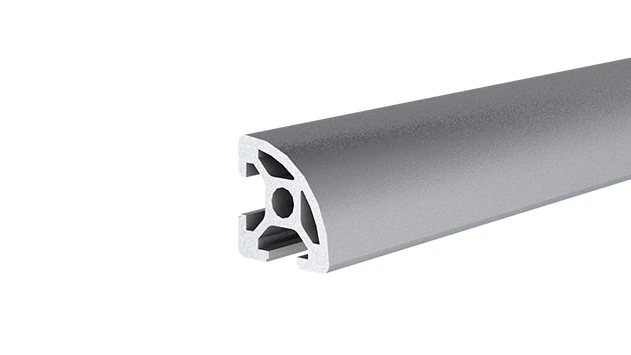
2020R is a 2.00 x 2.00CM fractional 20 series square extrusion T-slot profile with four open T-slots, two side with 2.00cm face, the other side with round face. The profile has align-a-grooves to assist in aligning connecting profiles.
In the fast-paced world of manufacturing, where every second and every cent counts, lean manufacturing has become more than just a buzzword—it's a survival strategy. At its core, lean is about stripping away waste, streamlining processes, and building systems that adapt as quickly as your business needs. But here's the thing: even the best lean strategies can stumble if they're built on rigid, outdated tools. That's where the 2020r EU Standard Aluminum Profile comes in. This unassuming 20mm x 20mm extrusion might just be the unsung hero your lean system has been missing. Let's dive into why this profile is becoming a cornerstone for manufacturers aiming to do more with less, faster, and smarter.
Understanding Lean Manufacturing: The Need for Adaptable Tools
Before we get into the weeds of aluminum profiles, let's ground ourselves in what lean manufacturing really demands. Lean isn't just about cutting costs—it's about creating value. That means eliminating muda (waste) in all its forms: wasted time, wasted materials, wasted effort, and even wasted space. To do that, manufacturers need setups that are flexible enough to pivot with changing production runs, durable enough to withstand daily use, and efficient enough to keep workflows moving without hitches.
Traditional manufacturing setups often fall short here. Heavy steel workbenches that take a team of workers to reposition, fixed shelving that can't expand when inventory grows, or custom-built racks that become obsolete the moment a new product line launches—these are all examples of waste in disguise. They lock teams into rigid processes, slow down innovation, and eat into profits. What lean needs is a building block that's as dynamic as the principles it supports. Enter the 2020r EU Standard Aluminum Profile.
What Is the 2020r EU Standard Aluminum Profile?
Let's start with the basics: the "2020r" in the name. The "2020" refers to its cross-sectional dimensions—20 millimeters by 20 millimeters—making it compact enough for tight spaces but sturdy enough for most light to medium-duty tasks. The "r" typically denotes rounded edges, a small detail that makes a big difference in safety (no sharp corners to snag on gloves or materials) and ergonomics (easier to handle during assembly). As for "EU Standard"? That's your guarantee of quality. EU standards for aluminum profiles ensure consistent dimensions, material composition, and performance—so whether you buy from a supplier in Germany, Poland, or China, you know the parts will fit together perfectly.
At its core, this profile is made from 6063-T5 aluminum alloy, a material prized for its winning combination of strength, lightness, and corrosion resistance. It's created using an extrusion process, where molten aluminum is forced through a die to create the precise T-slot design that makes this profile so versatile. Those T-slots—longitudinal grooves running the length of the profile—are the secret sauce. They allow you to attach aluminum profile accessories like brackets, panels, shelves, and even wheels with nothing more than a bolt and a nut, no welding or drilling required. It's modularity at its finest.

Design Flexibility: The T-Slot Advantage in Lean Systems
If there's one thing lean manufacturing hates, it's "one-and-done" solutions. A setup that works today might be obsolete tomorrow if a new product is introduced or a process is optimized. The 2020r profile's T-slot design turns adaptability from a buzzword into a daily reality. Let's say you build a workbench for assembling small electronics, but next month you need to add a shelf for tools. With traditional wood or steel, you'd be drilling holes or welding brackets—wasting time and potentially ruining the bench if you change your mind later. With 2020r, you simply slide a bracket into the T-slot, tighten a bolt, and the shelf is secure. Need to move the shelf up? Loosen the bolt, reposition, and retighten. It's that easy.
This flexibility extends to entire systems. Imagine a flow rack in a warehouse that's used to feed parts to an assembly line. Today, it might hold boxes of small components, but next quarter, you're switching to larger parts. With 2020r, you can disassemble the rack, add taller uprights (using aluminum profile accessories like corner connectors), and reconfigure the shelves—all in a fraction of the time it would take to build a new steel rack. This isn't just convenient; it's lean. By reusing the same components, you eliminate waste from discarded materials and reduce the need for new purchases. It's a perfect example of kaizen (continuous improvement) in action—your setup evolves as your processes do.
Durability Meets Lightweight: A Lean Dream Team
You might be thinking: "If it's aluminum, is it strong enough?" Let's put those concerns to rest. The 6063-T5 aluminum alloy used in the 2020r profile has a tensile strength of around 180 MPa (megapascals), which translates to a load capacity of roughly 50–100 kilograms per linear meter, depending on how it's supported. That's more than enough for most lean applications: think workbenches holding tools and assemblies, flow racks carrying boxes of parts, or mobile trolleys transporting components across the shop floor.
But what really sets it apart is its weight. At just 0.7–0.9 kilograms per meter (depending on wall thickness), 2020r is significantly lighter than steel (which can weigh 2–3 kg/m for a similar profile). This lightness matters for two big lean reasons: first, it reduces ergonomic waste. Workers can assemble, disassemble, and reposition 2020r structures without heavy lifting equipment, lowering the risk of injury and fatigue. Second, it cuts down on transportation costs—both for shipping the profiles to your facility and for moving finished structures around your shop floor. A workbench built with 2020r might weigh half as much as a steel equivalent, making it easy to roll (with the addition of casters, another aluminum profile accessory) to where it's needed most.
And let's not forget corrosion resistance. Unlike steel, aluminum doesn't rust. That means your 2020r structures will hold up in humid warehouses, cleanrooms, or even outdoor loading areas without needing constant painting or maintenance. Less time spent on upkeep equals more time spent on value-adding tasks—another win for lean.
Cost-Effectiveness: Saving Money Now and Later
Lean manufacturing is often associated with cost-cutting, but smart lean practitioners know it's about investing in tools that save money over time. The 2020r profile is a textbook example of this. Let's break down the costs:
- Assembly Time: Traditional steel setups require welding, drilling, or cutting—skills that demand trained labor and time. With 2020r, assembly is as simple as sliding accessories into T-slots and tightening bolts. A basic workbench that might take 4 hours to weld can be built with 2020r in under an hour, even by someone with minimal training. That's a 75% reduction in labor time.
- Reusability: When your needs change, you don't have to scrap the entire structure. Disassemble the 2020r parts, repurpose them into something new, and save on the cost of buying new materials. A flow rack that once held small parts can become a shelf unit for tools with just a few adjustments.
- Shipping and Handling: Lighter materials mean lower shipping costs. A pallet of 2020r profiles weighs half as much as steel, so you'll pay less to get them from the supplier to your door. And once they're on-site, moving them around the shop floor is easier, reducing the need for forklifts or heavy machinery.
- Maintenance: No rust, no painting, no replacing corroded parts. Aluminum profiles require almost no maintenance beyond occasional tightening of bolts—saving on both time and replacement parts.
Comparing Costs: 2020r vs. Traditional Materials
To put this in perspective, let's compare the 2020r profile to two common alternatives: a larger 3030 EU standard aluminum profile (30mm x 30mm) and traditional steel pipe. The table below breaks down key factors that impact cost and efficiency:
| Factor | 2020r EU Aluminum Profile | 3030 EU Aluminum Profile | Traditional Steel Pipe (20mm) |
|---|---|---|---|
| Material | 6063-T5 Aluminum | 6063-T5 Aluminum | Mild Steel |
| Weight (kg/m) | 0.8 | 1.5 | 2.4 |
| Assembly Time (per meter) | 5–10 minutes | 8–15 minutes | 30–60 minutes (with welding) |
| Load Capacity (kg/m) | 75–100 | 150–200 | 100–150 |
| Corrosion Resistance | High (no rust) | High (no rust) | Low (requires painting) |
| Recyclability | 100% recyclable | 100% recyclable | Recyclable, but energy-intensive |
| Cost (per meter, approx.) | $8–$12 | $15–$20 | $5–$8 (but higher labor/ shipping) |
At first glance, steel might seem cheaper per meter, but when you factor in labor, shipping, and maintenance, 2020r often comes out ahead—especially for lean setups that need to adapt over time. And while the 3030 profile can handle heavier loads, most lean applications (like workbenches or small-part flow racks) don't need that extra capacity. Why pay for strength you don't use?
Aluminum Profile Accessories: The Key to Customization
A profile is only as useful as the accessories that go with it, and 2020r shines here. The EU standard ensures a wide range of aluminum profile accessories are compatible, from simple end caps (to cover sharp edges) to complex hinges and locks. Let's look at a few must-have accessories that turn 2020r into a lean powerhouse:
End Caps and Covers
These small plastic or rubber caps snap onto the ends of the profile, preventing dust, debris, or small parts from getting stuck in the T-slots. They also add a clean, finished look to structures—important for maintaining a professional, organized workspace (another lean principle: visual management).
Corner Brackets and Connectors
Need to join two profiles at a 90-degree angle? A corner bracket slides into the T-slots of both profiles and tightens with a bolt, creating a sturdy joint in seconds. There are even 45-degree brackets for angled structures, like sloped flow racks that use gravity to feed parts to workers.
Casters and Wheels
Add casters (another aluminum profile accessory) to a workbench or trolley, and suddenly you've got a mobile workstation that can follow the flow of production. Lockable casters keep it steady when in use, and swivel wheels make it easy to maneuver in tight spaces—perfect for lean cells where workers need tools and materials within arm's reach.
Panels and Shelves
From plywood to acrylic, panels can be attached to 2020r frames using shelf brackets or panel holders. Need a clean surface for assembling electronics? Add a (ESD) panel to a 2020r workbench to protect sensitive components from static damage. The possibilities are nearly endless.
Real-World Applications: 2020r in Action
Theory is great, but let's look at how 2020r is transforming real lean systems. Take a small electronics manufacturer in Hungary, for example. They used to rely on custom steel workbenches for assembling circuit boards. When a new product line required taller work surfaces, they had to weld extensions onto each bench—a process that took 2 days and left the benches uneven. After switching to 2020r, they built new workbenches with adjustable height (using telescoping aluminum profile accessories) in a single afternoon. Now, if a worker needs a higher surface, they simply loosen a few bolts, adjust, and retighten. No welding, no downtime, no waste.
Another example: a warehouse in Spain that struggled with slow material flow. Their fixed wooden flow racks couldn't keep up with changing order sizes, leading to parts piling up on the floor (a safety hazard and a form of waste). They replaced the wood with 2020r frames and added roller tracks (yes, roller tracks are compatible with 2020r via specialized brackets) to create gravity-fed flow racks. Now, parts glide smoothly to the picking station, and the racks can be reconfigured in minutes if order sizes change. Worker productivity increased by 30%, and floor space was freed up by 15%—all because of a more adaptable setup.
And let's not overlook workbenches. A automotive parts supplier in Germany needed workbenches that could hold tools, bins, and a small assembly jig. With 2020r, they built benches with overhead shelves (for tools), side bins (for parts), and even integrated LED lights (powered via cable management channels in the T-slots). When a new jig was introduced, they simply added a custom bracket to the bench—no need to build a whole new workstation. It's lean customization at its best.
Sustainability: Lean and Green Go Hand in Hand
Modern lean manufacturing isn't just about efficiency—it's about sustainability. Consumers and regulators alike are demanding greener practices, and aluminum profiles deliver here, too. Aluminum is 100% recyclable, and recycling it uses just 5% of the energy required to produce new aluminum. That means when your 2020r structure finally reaches the end of its life (which, with proper care, could be decades), it can be melted down and turned into new profiles with minimal environmental impact.
Compare that to steel, which is also recyclable but requires more energy to process, or wood, which contributes to deforestation. By choosing 2020r, you're not just supporting lean principles—you're reducing your carbon footprint. It's a win-win for your bottom line and the planet.
Why EU Standard Matters: Consistency and Quality
You might be wondering: "Why not just buy a cheaper, non-standard aluminum profile?" Here's the thing: lean manufacturing relies on consistency. If your profiles are slightly off in dimension—even by a millimeter—your accessories might not fit, your structures might wobble, or your flow racks might jam. EU standards eliminate this risk. They specify exact tolerances for width, height, T-slot size, and material strength, so every 2020r profile you buy will work with every accessory, no matter the supplier.
This consistency also makes scaling easier. If you open a new facility in another country, you can order 2020r profiles and accessories locally, confident they'll match the ones you're using at home. No more custom fabrication or re-engineering—just plug-and-play efficiency. For global manufacturers, this is a game-changer.
Conclusion: 2020r—The Lean Manufacturing Building Block
Lean manufacturing is about more than just processes; it's about the tools you use to bring those processes to life. The 2020r EU Standard Aluminum Profile isn't just a piece of metal—it's a catalyst for lean transformation. Its compact size, lightweight design, and modularity make it perfect for eliminating waste, while its durability and cost-effectiveness ensure it delivers value for years to come. Paired with aluminum profile accessories, it becomes a blank canvas for custom workbenches, flow racks, trolleys, and more—all built to adapt as your business does.
So, why choose 2020r for lean manufacturing? Because lean isn't about doing things the way they've always been done. It's about doing things better. And better means flexible, efficient, and sustainable. With 2020r, you're not just building structures—you're building a lean system that can grow, change, and thrive in a world where adaptability is the key to success. It's time to stop working around rigid tools and start building with ones that work for you. The 2020r EU Standard Aluminum Profile is that tool.