- Company Articles
- Industry articles
- Industry standards
- Why Choose 2060 EU Standard Aluminum Profile for Lean Pipe Systems?

Why Choose 2060 EU Standard Aluminum Profile for Lean Pipe Systems?
Related Product
2060 EU Standard Aluminum Profile
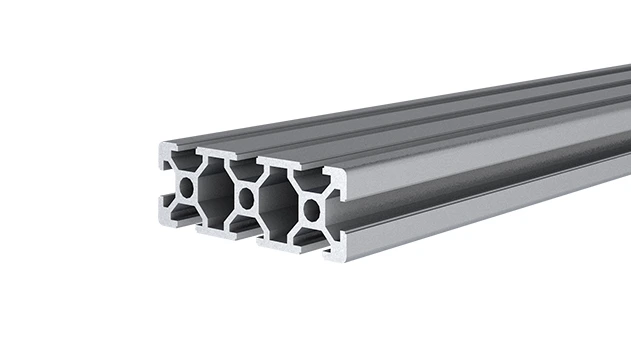
2060 is a 2.00 x 4.00CM fractional 20 series square extrusion T-slot profile with four open T-slots, two side with 2.00cm face, the other side with 6.00cm face. The profile has align-a-grooves to assist in aligning connecting profiles.
The Heart of Lean Manufacturing – Material Handling That Moves with You
Imagine walking into a manufacturing facility where every tool, every part, and every workstation seems to hum with purpose. There's no clutter, no wasted motion, and no time lost searching for materials. This isn't magic – it's lean manufacturing in action. At its core, lean is about stripping away waste, streamlining processes, and creating systems that adapt as your needs change. And if there's one area where this adaptability matters most, it's material handling. The racks, workbenches, conveyors, and trolleys that move parts from Point A to Point B aren't just "furniture" – they're the circulatory system of your operation. Get them right, and everything flows; get them wrong, and inefficiencies creep in like weeds.
For decades, manufacturers relied on rigid, one-size-fits-all solutions: heavy steel racks welded into place, wooden workbenches that warped over time, and conveyors that required a team of engineers to reconfigure. But in a world where product lines shift, order volumes fluctuate, and customer demands evolve overnight, rigidity is the enemy. Enter aluminum profiles – sleek, modular, and surprisingly strong building blocks that are redefining what material handling systems can do. Among these, the 2060 EU Standard Aluminum Profile stands out as a quiet hero, balancing strength, versatility, and cost-effectiveness in a way that makes it perfect for lean pipe systems. Let's dive into why this unassuming piece of extruded aluminum might just be the key to unlocking your operation's full potential.
Understanding Aluminum Profiles: More Than Just Metal – A Building Block for Innovation
Before we zoom in on the 2060 profile, let's take a step back and appreciate what makes aluminum profiles so revolutionary. Unlike traditional materials like steel or wood, aluminum profiles are born from extrusion – a process where heated aluminum is pushed through a die to create consistent, precision-shaped lengths. The result? Profiles with clean, uniform dimensions and, crucially, T-slots – those handy grooves running along their length that let you attach accessories with just a bolt and a nut. No welding, no drilling, no guesswork. It's like building with an advanced set of Legos, but for grown-ups (and with a lot more weight capacity).
What sets EU standard profiles apart is their consistency. When you buy a 2060 EU Standard Aluminum Profile, you know exactly what you're getting: dimensions that match across suppliers, material grades that meet strict quality benchmarks, and finishes that resist corrosion and wear. This standardization isn't just about peace of mind – it's about compatibility. Imagine ordering aluminum profile accessories from one supplier and a profile from another, only to find they don't fit. With EU standards, that's a problem of the past. Every slot, every hole, every connector is designed to work together, so you can mix and match components without hesitation.
Fun fact:
Aluminum extrusion has been around since the 19th century, but it wasn't until the mid-20th century that T-slot profiles emerged, revolutionizing modular construction. Today, they're used everywhere from automotive factories to robotics labs – and yes, even in home DIY projects (though we bet those don't handle the same loads as a factory workbench!).

The 2060 EU Standard Aluminum Profile: What Makes It Stand Out?
Let's get specific: What is the 2060 EU Standard Aluminum Profile, and why should it be on your radar? Start with the basics: its dimensions. As the name suggests, it measures 20mm in width and 60mm in height – a narrow but tall profile that punches above its weight. Most commonly made from 6063-T5 aluminum alloy, it's heat-treated to strike a balance between strength and flexibility, with a smooth, anodized finish that resists scratches and corrosion. But numbers alone don't tell the story. Let's break down what makes 2060 special:
1. The perfect size for medium-duty applications.
At 20x60mm, it's not the smallest profile (that might be the 2020, ideal for lightweight frames) or the largest (like the 4080, built for heavy machinery). Instead, it hits a sweet spot: strong enough to support workbenches, flow racks, and conveyor frames, but lightweight enough to be moved and reconfigured by a single person. Think of it as the "all-rounder" of the aluminum profile world – not too big, not too small, just right for most lean pipe systems.
2. T-slots that maximize versatility.
The 2060 typically features T-slots on three sides: the two 60mm faces and one 20mm face. This means you can attach accessories – brackets, shelves, casters, or roller tracks – from almost any angle. Need to mount a tool holder on the side of a workbench? Slot it in. Want to add a crossbar to a flow rack? Done. This flexibility is a game-changer for lean systems, where adaptability isn't just a nice-to-have – it's a requirement.
3. Strength without the bulk.
Don't let its slim profile fool you: the 2060 can handle serious weight. Depending on the wall thickness (usually 1.5mm to 2mm), a single 1-meter length can support vertical loads of up to 150kg or more. That's enough to hold a fully loaded parts bin on a flow rack or a heavy power tool on a workbench. And because aluminum is lighter than steel, even a fully assembled structure won't require a forklift to move – a huge plus for quick reconfigurations.
Why 2060 EU Standard Aluminum Profile is a Game-Changer for Lean Pipe Systems
Now, let's connect the dots: Why does the 2060 profile make such a difference in lean pipe systems? Lean pipe systems – often called "flexible pipe systems" – are all about building modular structures using pipes and connectors. Traditionally, these used steel pipes with plastic coatings (called "lean pipes" or "kitchen pipes"), but aluminum profiles like the 2060 are quickly replacing them. Here's why:
Flexibility: Build, Break Down, Rebuild – No Welding Required
Lean manufacturing thrives on change. Maybe you need to add a shelf to a workbench to accommodate a new tool. Or reconfigure a flow rack to handle larger parts. Or even disassemble an entire line and rebuild it in a new layout. With traditional steel systems, this would mean cutting, welding, and repainting – a process that takes hours (or days) and risks damaging the structure. With the 2060 profile, it's as simple as loosening a few bolts. Aluminum profile accessories like brackets, corner codes, and T-slot nuts let you attach components in minutes, and because there's no welding, you can take the structure apart just as easily. This isn't just "flexibility" – it's agility. Your material handling system can evolve as fast as your business does.
Lean manufacturing thrives on change. Maybe you need to add a shelf to a workbench to accommodate a new tool. Or reconfigure a flow rack to handle larger parts. Or even disassemble an entire line and rebuild it in a new layout. With traditional steel systems, this would mean cutting, welding, and repainting – a process that takes hours (or days) and risks damaging the structure. With the 2060 profile, it's as simple as loosening a few bolts. Aluminum profile accessories like brackets, corner codes, and T-slot nuts let you attach components in minutes, and because there's no welding, you can take the structure apart just as easily. This isn't just "flexibility" – it's agility. Your material handling system can evolve as fast as your business does.
Durability: Built to Last, Even in Tough Environments
Let's talk about the real world: Manufacturing floors are messy. There's oil, coolant, dust, and the occasional spill. Steel rusts, wood warps, and plastic coatings on lean pipes can chip. Aluminum? It's naturally corrosion-resistant, thanks to a thin oxide layer that forms on its surface. The anodized finish on the 2060 profile only strengthens this barrier, making it ideal for damp or dusty environments. And unlike wood, it won't absorb moisture or harbor bacteria – a must for industries like food processing or pharmaceuticals. Over time, this durability translates to lower maintenance costs: no repainting, no replacing warped boards, no dealing with rusted connectors. Your 2060-based system will look and perform like new for years.
Let's talk about the real world: Manufacturing floors are messy. There's oil, coolant, dust, and the occasional spill. Steel rusts, wood warps, and plastic coatings on lean pipes can chip. Aluminum? It's naturally corrosion-resistant, thanks to a thin oxide layer that forms on its surface. The anodized finish on the 2060 profile only strengthens this barrier, making it ideal for damp or dusty environments. And unlike wood, it won't absorb moisture or harbor bacteria – a must for industries like food processing or pharmaceuticals. Over time, this durability translates to lower maintenance costs: no repainting, no replacing warped boards, no dealing with rusted connectors. Your 2060-based system will look and perform like new for years.
Cost-Effectiveness: Invest Once, Adapt Forever
It's true: Aluminum profiles can cost more upfront than steel pipes or wood. But lean is about the long game – and when you factor in total cost of ownership, 2060 profiles often come out ahead. Consider this: A welded steel rack might cost less to buy, but if you need to reconfigure it in six months, you'll have to cut it up and buy new materials. With 2060, you just reuse the profiles and accessories. Plus, aluminum is 100% recyclable, so if you ever retire a structure, you can sell the scrap for a return on your initial investment. And let's not forget labor costs: assembling a 2060 workbench takes two people an hour, not a team of welders a day. When you add it all up, the 2060 isn't a cost – it's an investment in adaptability.
It's true: Aluminum profiles can cost more upfront than steel pipes or wood. But lean is about the long game – and when you factor in total cost of ownership, 2060 profiles often come out ahead. Consider this: A welded steel rack might cost less to buy, but if you need to reconfigure it in six months, you'll have to cut it up and buy new materials. With 2060, you just reuse the profiles and accessories. Plus, aluminum is 100% recyclable, so if you ever retire a structure, you can sell the scrap for a return on your initial investment. And let's not forget labor costs: assembling a 2060 workbench takes two people an hour, not a team of welders a day. When you add it all up, the 2060 isn't a cost – it's an investment in adaptability.
Ergonomics: Lightweight Design That Protects Your Team
Lean isn't just about efficiency – it's about people. Heavy steel structures force workers to strain when moving materials or adjusting workstations, leading to fatigue and injuries. The 2060 profile, being aluminum, is significantly lighter than steel (about 1/3 the weight for the same strength). This means a fully assembled workbench can be moved by two people instead of four, or a flow rack section can be adjusted in height without a hydraulic lift. When your tools and systems are easier to handle, your team stays healthier, happier, and more productive. It's a small detail, but it adds up to big results.
Lean isn't just about efficiency – it's about people. Heavy steel structures force workers to strain when moving materials or adjusting workstations, leading to fatigue and injuries. The 2060 profile, being aluminum, is significantly lighter than steel (about 1/3 the weight for the same strength). This means a fully assembled workbench can be moved by two people instead of four, or a flow rack section can be adjusted in height without a hydraulic lift. When your tools and systems are easier to handle, your team stays healthier, happier, and more productive. It's a small detail, but it adds up to big results.
A Closer Look: Key Applications in Lean Environments
The 2060 profile isn't just a "good idea" – it's a workhorse in real-world settings. Let's explore how it shines in three critical lean applications: workbenches, flow racks, and turnover trolleys.
Workbenches: Your Team's Home Base, Built for Their Needs
A workbench is where the magic happens – where parts are assembled, inspected, and packaged. It needs to be sturdy, customizable, and comfortable. The 2060 profile excels here. For example, the "Workbench E (Single Deck – Without Caster)" – a common lean configuration – uses 2060 profiles for the frame, with a plywood or aluminum honeycomb top. The T-slots let you add tool hangers, LED task lights, or ESD (electrostatic discharge) mats with ease. Need to lower the height for a shorter worker? Swap out the leg brackets. Add a shelf for bins? Just bolt on a crossbar. Unlike fixed workbenches, a 2060-based one grows with your team's needs.
A workbench is where the magic happens – where parts are assembled, inspected, and packaged. It needs to be sturdy, customizable, and comfortable. The 2060 profile excels here. For example, the "Workbench E (Single Deck – Without Caster)" – a common lean configuration – uses 2060 profiles for the frame, with a plywood or aluminum honeycomb top. The T-slots let you add tool hangers, LED task lights, or ESD (electrostatic discharge) mats with ease. Need to lower the height for a shorter worker? Swap out the leg brackets. Add a shelf for bins? Just bolt on a crossbar. Unlike fixed workbenches, a 2060-based one grows with your team's needs.
Flow Racks: Gravity-Fed Efficiency for Material Handling
Flow racks are the backbone of "first in, first out" (FIFO) inventory systems, using gravity to feed parts to the front as they're used. The 2060 profile is ideal for building these racks, providing a rigid frame to support roller tracks (like the 38 Aluminum Roller Track Yellow or Black ESD). The tall 60mm height ensures the rack stays stable even when fully loaded, while the T-slots make it easy to adjust the angle of the roller tracks for optimal flow. For example, a "Material Rack B (3 Row and 3 Floor)" – a popular design for small parts – uses 2060 uprights and crossbars, with roller tracks mounted via brackets that slide into the T-slots. When you switch to larger parts, just adjust the spacing between tracks – no drilling, no welding, no hassle.
Flow racks are the backbone of "first in, first out" (FIFO) inventory systems, using gravity to feed parts to the front as they're used. The 2060 profile is ideal for building these racks, providing a rigid frame to support roller tracks (like the 38 Aluminum Roller Track Yellow or Black ESD). The tall 60mm height ensures the rack stays stable even when fully loaded, while the T-slots make it easy to adjust the angle of the roller tracks for optimal flow. For example, a "Material Rack B (3 Row and 3 Floor)" – a popular design for small parts – uses 2060 uprights and crossbars, with roller tracks mounted via brackets that slide into the T-slots. When you switch to larger parts, just adjust the spacing between tracks – no drilling, no welding, no hassle.
Turnover Trolleys: Moving Materials Without the Heavy Lifting
Turnover trolleys are the unsung heroes of lean facilities, shuttling parts between workstations, warehouses, and shipping areas. They need to be strong enough to carry heavy loads but light enough to push by hand. The 2060 profile hits this mark perfectly. A typical trolley might use 2060 for the frame, with casters (like the Flat Adjustable Swivel Castor Wheel) mounted to the base. The T-slots let you add shelves, dividers, or even tool holders, turning a basic trolley into a mobile workstation. And because aluminum is lightweight, even a trolley loaded with 200kg of parts can be maneuvered through tight aisles – a lifesaver in busy facilities.
Turnover trolleys are the unsung heroes of lean facilities, shuttling parts between workstations, warehouses, and shipping areas. They need to be strong enough to carry heavy loads but light enough to push by hand. The 2060 profile hits this mark perfectly. A typical trolley might use 2060 for the frame, with casters (like the Flat Adjustable Swivel Castor Wheel) mounted to the base. The T-slots let you add shelves, dividers, or even tool holders, turning a basic trolley into a mobile workstation. And because aluminum is lightweight, even a trolley loaded with 200kg of parts can be maneuvered through tight aisles – a lifesaver in busy facilities.
Comparing 2060 with Other Profiles: Why Size and Standard Matter
To truly appreciate the 2060, it helps to see how it stacks up against other common EU standard profiles. Let's compare it to three popular options: the 2020 (small, lightweight), the 3030 (versatile mid-size), and the 4040 (heavy-duty workhorse).
| Profile Type | Dimensions (WxH) | Typical Load Capacity (Vertical, 1m length) | Best For | Weight (per meter) |
|---|---|---|---|---|
| 2020 EU Standard | 20x20mm | 50-80kg | Lightweight frames, small shelves, machine guards | 0.4-0.6kg |
| 2060 EU Standard | 20x60mm | 120-180kg | Workbenches, flow racks, conveyor frames, trolleys | 1.2-1.5kg |
| 3030 EU Standard | 30x30mm | 100-150kg | Medium-duty racks, assembly jigs, robot bases | 0.8-1.1kg |
| 4040 EU Standard | 40x40mm | 200-300kg | Heavy machinery frames, industrial workbenches, pallet racks | 1.8-2.2kg |
What jumps out? The 2060 offers nearly the same vertical load capacity as the 3030 but in a narrower profile, making it ideal for applications where space is tight (like between workstations). It's also lighter than the 4040, so structures are easier to move, but still strong enough for most medium-duty tasks. In short, it's the profile you reach for when you need "just enough" strength without overcomplicating things – which, in lean manufacturing, is most of the time.
Real-World Impact: Stories of Efficiency
Numbers and specs tell part of the story, but nothing beats real examples. Let's look at two manufacturers who swapped traditional systems for 2060 EU Standard Aluminum Profile – and never looked back.
Case Study 1: A Small Electronics Manufacturer Cuts Setup Time by 70%
A family-owned electronics company in Germany was struggling with a problem common to small manufacturers: their product line changed constantly. One month, they were assembling smart home sensors; the next, medical devices. Each change meant reconfiguring their assembly workbenches, which were made of welded steel. The process took two days, required hiring a local welder, and often left the benches wobbly from patchwork modifications.
They switched to 2060-based workbenches with aluminum profile accessories: adjustable legs, tool rails, and ESD mats. The result? Reconfiguring a workbench now takes two people 30 minutes – not two days. They've cut setup costs by 60% and reduced downtime between product launches. "It's like having a new factory every time we need one," said their production manager.
A family-owned electronics company in Germany was struggling with a problem common to small manufacturers: their product line changed constantly. One month, they were assembling smart home sensors; the next, medical devices. Each change meant reconfiguring their assembly workbenches, which were made of welded steel. The process took two days, required hiring a local welder, and often left the benches wobbly from patchwork modifications.
They switched to 2060-based workbenches with aluminum profile accessories: adjustable legs, tool rails, and ESD mats. The result? Reconfiguring a workbench now takes two people 30 minutes – not two days. They've cut setup costs by 60% and reduced downtime between product launches. "It's like having a new factory every time we need one," said their production manager.
Case Study 2: An Automotive Supplier Eliminates Material Waste with Flow Racks
A tier-1 automotive supplier in Poland was drowning in excess inventory. Their old steel flow racks were fixed in size, so they often overstocked parts to avoid running out between restocks. This led to wasted space and expired components (rubber gaskets, in particular, degraded over time). They replaced the steel racks with 2060-based flow racks, using 38 Aluminum Roller Track Yellow with side guides. The new racks were modular: they could add or remove sections as part volumes changed, and the T-slots let them adjust roller angles to control material flow speed.
Within three months, inventory levels dropped by 40%, and material waste was cut in half. "We used to have racks overflowing with parts we might need," said their logistics coordinator. "Now, everything is just-in-time – and the racks keep up."
A tier-1 automotive supplier in Poland was drowning in excess inventory. Their old steel flow racks were fixed in size, so they often overstocked parts to avoid running out between restocks. This led to wasted space and expired components (rubber gaskets, in particular, degraded over time). They replaced the steel racks with 2060-based flow racks, using 38 Aluminum Roller Track Yellow with side guides. The new racks were modular: they could add or remove sections as part volumes changed, and the T-slots let them adjust roller angles to control material flow speed.
Within three months, inventory levels dropped by 40%, and material waste was cut in half. "We used to have racks overflowing with parts we might need," said their logistics coordinator. "Now, everything is just-in-time – and the racks keep up."
Choosing the Right Partner: Why Your Aluminum Profile Supplier Matters
You've decided the 2060 EU Standard Aluminum Profile is right for your lean pipe system – now what? The next step is finding a reliable aluminum profile supplier. This might seem like a small detail, but it's critical. A good supplier doesn't just sell you profiles – they provide expertise, consistent quality, and access to the full range of aluminum profile accessories you'll need (brackets, connectors, casters, etc.). Here's what to look for:
1. EU Standard Certification:
Not all "aluminum profiles" are created equal. Ensure your supplier's 2060 profiles meet EU standards for dimensions, material grade, and finish. This guarantees compatibility with accessories from other EU-standard suppliers.
2. A Wide Range of Accessories:
A profile is only as useful as the accessories that go with it. Look for suppliers who stock everything from corner codes to roller tracks to casters – ideally, under one roof. This saves time and ensures compatibility.
3. Technical Support:
Even modular systems can have learning curves. A good supplier will help you design your workbench or flow rack, recommend load capacities, and troubleshoot issues. Don't settle for a "ship and forget" vendor.
4. Fast Lead Times:
In lean manufacturing, delays are waste. Choose a supplier with local stock or fast production times to keep your projects on track.
Conclusion: The 2060 EU Standard Aluminum Profile – Your Lean System's Best Friend
Lean manufacturing isn't about perfection – it's about progress. It's about building systems that work
with
your team, not against them, and that evolve as your needs do. The 2060 EU Standard Aluminum Profile embodies this philosophy. It's not the flashiest technology in your factory, but it's one of the most impactful. Its versatility lets you build workbenches that adjust to your workers, flow racks that adapt to your inventory, and trolleys that move with your processes. Its durability ensures it will outlast fads and product lines, and its cost-effectiveness means you're investing in the future, not just the present.
So, why choose the 2060 EU Standard Aluminum Profile for your lean pipe system? Because lean isn't about cutting corners – it's about making smart choices that add up to big results. And when it comes to material handling, there's no smarter choice than a profile that's built to move with you.