- Company Articles
- Industry articles
- Industry standards
- Why Choose 3030r EU Standard Aluminum Profile? Benefits for Lean Manufacturing

Why Choose 3030r EU Standard Aluminum Profile? Benefits for Lean Manufacturing
Related Product
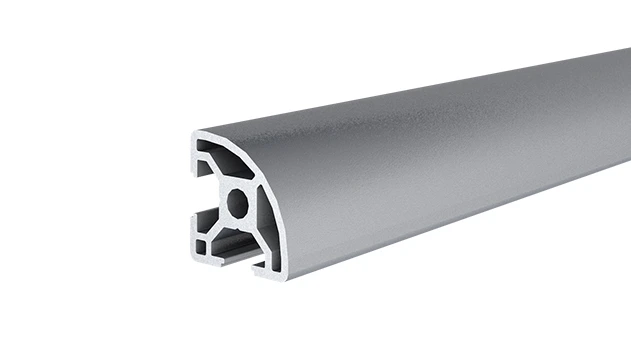
3030R EU Standard Aluminum Profile
3030R is a 3.00 x 3.00CM fractional 30 series square extrusion T-slot profile with four open T-slots, two side with 3.00cm face, the other side with round face. The profile has align-a-grooves to assist in aligning connecting profiles.
In the world of lean manufacturing, every second counts, and every component matters. The goal is simple: eliminate waste, streamline workflows, and keep operations running like a well-oiled machine. But here's the thing—you can't build a lean system on flimsy tools or rigid structures. That's where modular aluminum profiles step in, acting as the backbone of efficient material handling, workstations, and storage solutions. Among the many options available, the 3030r EU Standard Aluminum Profile stands out as a quiet workhorse, designed to align perfectly with lean principles. Let's dive into why this profile has become a go-to choice for manufacturers aiming to boost productivity, cut costs, and stay agile in a fast-paced industry.
Lean Manufacturing: More Than a Buzzword—It's About the Right Tools
Before we jump into the specifics of 3030r, let's ground ourselves in what lean manufacturing really means. At its core, lean is about continuous improvement —identifying and eliminating waste (whether it's time, materials, or effort) while maximizing value for the customer. This philosophy relies heavily on modularity and adaptability . When your production line can quickly reconfigure to meet new demands, when workstations adjust to ergonomic needs, and when material flow is seamless, you're not just working harder—you're working smarter.
Aluminum profiles have long been a staple in lean environments, thanks to their lightweight yet durable nature, and their ability to be assembled into almost any structure imaginable. But not all profiles are created equal. The 3030r EU Standard Aluminum Profile, in particular, has earned a reputation for solving common pain points in lean operations. Let's unpack why.
What Makes 3030r EU Standard Aluminum Profile Unique?
First, let's get technical—briefly. The "3030r" refers to its dimensions: 30mm in width and 30mm in height, with a "r" indicating rounded edges (a design detail that enhances safety and reduces wear on accessories). As an EU standard profile, it adheres to strict quality and precision guidelines, ensuring consistency across batches and compatibility with a wide range of components. But beyond the specs, it's the design intent that sets it apart.
Unlike generic aluminum extrusions, 3030r is engineered with lean manufacturing in mind. Its T-slot design (the grooves running along its length) allows for quick attachment of accessories—think brackets, connectors, panels, or even tool holders—without the need for welding or drilling. This means you can build, modify, or dismantle structures in hours, not days. For a lean team, that's not just convenience; it's a game-changer for responding to shifting production needs.

Core Benefits of 3030r for Lean Operations
Let's break down the advantages that make 3030r a standout choice for lean environments. These aren't just features—they're solutions to real-world challenges manufacturers face daily.
1. Flexibility That Keeps Up with Change
Lean manufacturing thrives on adaptability. One month, you might need a workstation for assembling small electronics; the next, you might need to retool for larger components. With 3030r, reconfiguration is a breeze. Its T-slot system works with a vast array of aluminum profile accessories —from 90° connectors to end caps to adjustable brackets—so you can modify structures without starting from scratch. No welding, no specialized tools, just a hex key and a team that knows how to think on their feet.
Imagine a scenario: Your team needs to add a new shelf to a flow rack to accommodate a larger batch of parts. With 3030r, you can slide in a new bracket, secure it with a bolt, and have the shelf ready in 15 minutes. Compare that to a traditional steel frame, where you'd need to weld a new bracket or drill holes—costing hours of downtime. That's waste eliminated, right there.
2. Durability Without the Bulk
Lean systems can't afford flimsy equipment. A workstation that bends under load or a storage rack that rusts after a year will only create more waste (in repairs, replacements, and downtime). 3030r strikes the perfect balance between strength and weight. Made from high-grade aluminum alloy, it's corrosion-resistant (critical for factory floors where spills or humidity are common) and can support significant loads—up to 150 kg per linear meter in many configurations—without adding unnecessary heft.
This lightweight durability is a boon for mobility, too. Structures built with 3030r (like turnover trolleys or mobile workbenches) are easy to move, reducing the effort needed to transport materials across the shop floor. Less physical strain on workers means fewer injuries and more energy focused on value-adding tasks—another win for lean.
3. Cost-Effectiveness Over the Long Haul
Lean is also about smart spending. While 3030r might have a slightly higher upfront cost than generic profiles, its longevity and reusability make it a cost-saver in the long run. Aluminum doesn't rust, so it lasts for decades. When you no longer need a structure, you can disassemble the 3030r components and repurpose them for a new project. No wasted materials, no need to buy new extrusions for every change. That's a direct reduction in waste—and in your budget.
Plus, the precision of EU standard profiles means fewer errors during assembly. Components fit together seamlessly, reducing the time spent troubleshooting misalignments. For a lean team, time saved is money earned.
4. Safety and Ergonomics Built In
Waste isn't just about materials—it's about human potential, too. A workstation that forces workers into awkward positions or a storage rack with sharp edges can lead to fatigue, errors, or injuries. 3030r's rounded edges (the "r" in its name) reduce the risk of cuts or scrapes, while its modularity lets you design ergonomic workbenches tailored to your team's needs. Need a shelf at waist height? Adjust the brackets. Want to add a footrest? Attach it via the T-slots. When workers are comfortable, they're more productive—and that's lean at its best.
Real-World Applications: 3030r in Action
Theory is great, but let's look at how 3030r transforms day-to-day operations. Here are two common use cases where it shines:
Workbenches: The Heart of the Production Line
A workbench isn't just a table—it's where the magic happens. With 3030r, you can build workstations that adapt to the task at hand. For example, a electronics assembly line might use a 3030r frame with a plywood top, T-slot tool holders for screwdrivers and pliers, and a shelf below for component bins. If the team switches to assembling larger devices, they can add side extensions or adjust the height using adjustable feet—all without replacing the entire bench.
EU standard compliance here is key, too. Workers can trust that the bench is stable and built to safety standards, reducing distractions and boosting confidence in their workspace.
Flow Racks: Streamlining Material Handling
In lean manufacturing, material flow should be smooth and intuitive—parts should arrive at the workstation exactly when needed (a concept called "just-in-time"). Flow racks built with 3030r make this possible. The profile's strength supports roller tracks (another modular component), allowing parts to glide from the back to the front of the rack as they're needed. The 30mm width provides enough stability for multi-tiered racks, while the lightweight design keeps the overall structure easy to position near the production line.
For example, a automotive parts manufacturer might use a 3030r flow rack with three tiers, each holding bins of screws, washers, and gaskets. As workers take parts from the front, gravity feeds more from the back—no more walking to a distant storage area, no more wasted steps. That's lean material handling in action.
3030r vs. Other Profiles: How It Stacks Up
You might be wondering: Why 3030r instead of smaller profiles (like 2020) or larger ones (like 4040)? The answer lies in balance. Let's compare:
| Profile Type | Best For | Load Capacity | Lean Advantage |
|---|---|---|---|
| 2020 EU Standard | Light-duty structures (small shelving, display racks) | Up to 50 kg/m | Ultra-lightweight, ideal for mobile carts |
| 3030r EU Standard | Mid-to-heavy-duty workstations, flow racks, trolleys | Up to 150 kg/m | Balances strength, weight, and flexibility; most versatile for lean |
| 4040 EU Standard | Heavy-duty machinery frames, large storage racks | Up to 300 kg/m | Maximum strength, but bulkier and less agile for frequent reconfigurations |
For most lean operations, where adaptability and mid-range strength are priorities, 3030r hits the sweet spot. It's not too small to handle daily loads, nor too large to be cumbersome when changes are needed.
Why EU Standard Matters
The "EU standard" label isn't just a marketing tag—it's a promise of quality. EU standards for aluminum profiles ensure tight tolerances (meaning parts fit together precisely), consistent material composition (so you know the profile will perform as expected), and compliance with safety regulations. For a lean team, this translates to fewer headaches: no mismatched components, no worrying about structural integrity, and no delays due to subpar materials.
In global supply chains, consistency is critical. Whether you're building a workbench in Berlin or a flow rack in Barcelona, 3030r profiles from different suppliers will work together seamlessly, thanks to EU standardization. That's peace of mind you can't put a price on.
Choosing the Right Accessories for 3030r
A profile is only as good as the accessories that bring it to life. 3030r's T-slot system pairs with a wide range of aluminum profile accessories, each designed to extend its functionality. Here are a few must-haves for lean operations:
- Connectors: 90° brackets, corner codes, and 3-way joints let you build frames of any shape.
- End Caps: Cover exposed T-slots to prevent debris buildup and protect workers from sharp edges.
- Adjustable Feet: Level workbenches or racks on uneven floors, ensuring stability.
- Panel Holders: Attach plywood, acrylic, or metal panels to create shelves, dividers, or machine guards.
The beauty? These accessories are reusable. When you dismantle a structure, you can repurpose the connectors and brackets for the next project—another win for waste reduction.
Final Thoughts: 3030r as a Lean Investment
In lean manufacturing, every decision should align with the goal of creating more value with less waste. The 3030r EU Standard Aluminum Profile does exactly that. Its flexibility reduces downtime during reconfigurations, its durability ensures a long lifespan (minimizing replacement costs), and its compatibility with accessories makes it a modular foundation for endless structures—from workbenches to flow racks to turnover trolleys.
EU standard compliance adds a layer of reliability, ensuring that your investment in 3030r isn't just a purchase, but a step toward building a more efficient, adaptable, and resilient operation. For manufacturers who refuse to settle for rigid, one-size-fits-all solutions, 3030r isn't just a profile—it's a partner in lean success.
So, the next time you're looking to optimize your lean system, ask yourself: Is my current setup keeping up with change? If not, it might be time to consider the quiet workhorse that is 3030r. Your team, your productivity, and your bottom line will thank you.