- Company Articles
- Industry articles
- Industry standards
- Why Comply with 2020 National Standard Profile in Automotive Production Lines?

Why Comply with 2020 National Standard Profile in Automotive Production Lines?
Related Product
2020 National Standard Profile
45° external bending joint, used for 45° external connection of two aluminum pipes.
Walk into any modern automotive factory, and you'll be struck by a symphony of precision: robots welding with millimeter accuracy, workers assembling intricate components, and conveyor belts gliding like clockwork. Behind this harmony lies a silent hero: standards . Standards are the invisible glue that holds manufacturing ecosystems together, ensuring parts fit, processes flow, and safety isn't compromised. Among these, the 2020 National Standard Profile has emerged as a cornerstone for automotive production lines, particularly when paired with aluminum profile systems. But why does compliance with this specific standard matter? Let's dive into the world of manufacturing excellence, where even the smallest profile dimensions can make or break a production line's efficiency, safety, and bottom line.
In an industry where a single delayed shipment or misaligned component can cost millions, automotive manufacturers can't afford to cut corners on standards. The 2020 National Standard Profile isn't just a set of technical specs—it's a promise of reliability. It dictates how materials like aluminum profiles are designed, manufactured, and integrated into critical tools such as workbenches, conveyors, and lean system structures. For factory managers, engineers, and frontline workers alike, compliance isn't optional; it's the foundation of a production line that runs smoothly, adapts to change, and prioritizes people.
What Exactly Is the 2020 National Standard Profile?
Let's start with the basics. The 2020 National Standard Profile is a set of guidelines developed to standardize the dimensions, material properties, and performance criteria of structural components used in industrial settings—with a heavy focus on aluminum profiles. Think of it as a universal language for factory parts: if two components adhere to the 2020 standard, they'll fit together seamlessly, regardless of the manufacturer. This might sound trivial, but in a global supply chain where parts come from multiple suppliers, this consistency is gold.
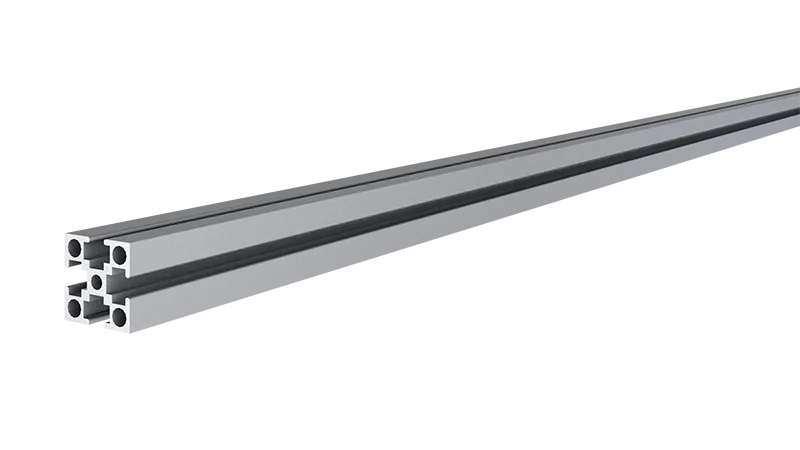
At its core, the standard specifies details like profile cross-sections (e.g., 20x20mm for the 2020 national standard profile ), wall thickness (typically 1.2mm to 2.0mm for aluminum), material composition (often 6063-T5 aluminum alloy for strength and corrosion resistance), and tolerance levels (how much variation from the "ideal" size is acceptable). For automotive production lines, where components like workbenches and conveyors are subjected to constant stress—think heavy tooling, repetitive motion, and daily wear—these specs ensure durability. A 2020-compliant aluminum profile won't warp under heat, bend under load, or degrade from oil and chemical exposure, which are common in automotive environments.
But the 2020 standard isn't just about "toughness." It also prioritizes adaptability. Unlike older standards that locked manufacturers into rigid designs, the 2020 guidelines emphasize modularity. Aluminum profiles built to this standard feature T-slots (a groove running along the length) that allow easy attachment of accessories—think brackets, panels, or sensors—without welding or drilling. This modularity is a game-changer for automotive lines, which often need to reconfigure workflows to produce new car models or adapt to changing demand.
Aluminum Profile: The Material of Choice for 2020 Compliance
Why aluminum? For automotive production lines, the answer is simple: it's the perfect balance of strength, weight, and sustainability. Steel might be stronger, but it's heavy and prone to rust—two liabilities in a fast-paced factory where workers move tools and parts daily, and floors are often damp with coolant. Plastic is lightweight but lacks the rigidity needed for structural components like workbench frames. Aluminum, on the other hand, weighs 1/3 of steel, resists corrosion naturally, and can be recycled repeatedly without losing quality. When paired with the 2020 standard, it becomes a material that checks every box.
Let's break down the benefits for automotive teams:
Lightweight yet strong:
A 2020-compliant aluminum profile can support up to 200kg per linear meter (depending on wall thickness), making it ideal for workbenches holding heavy assembly tools or material racks storing engine parts. Yet, it's light enough that workers can reposition modular components (like a portable workbench) without mechanical help, saving time during line reconfigurations.
Corrosion-resistant:
Automotive factories are messy places—oils, lubricants, and cleaning agents are everywhere. Aluminum's natural oxide layer prevents rust, so profiles stay functional for years, reducing replacement costs. Compare this to steel, which would require regular painting or coating to avoid degradation.
Thermally stable:
Car production involves high-heat processes (e.g., paint curing ovens, welding stations). The 2020 standard specifies aluminum alloys with low thermal expansion, meaning profiles won't warp or shrink when exposed to temperature fluctuations. This stability ensures conveyor tracks stay aligned, and workbench surfaces remain flat—critical for precision tasks like electronics assembly.
For workers on the floor, these benefits translate to less frustration. Imagine trying to assemble a car door on a workbench that wobbles because its frame bent under the tooling weight—that's a recipe for errors and wasted time. With 2020-compliant aluminum profiles, the workbench stays solid, the tools stay in place, and the job gets done right the first time.

Lean System Synergy: How 2020 Standards Fuel Efficiency
The automotive industry lives and breathes lean system principles—eliminating waste, streamlining flow, and continuous improvement. But lean isn't just a philosophy; it relies on tools and infrastructure that support these goals. Here's where the 2020 National Standard Profile shines: it turns lean from a buzzword into a tangible, daily reality.
Let's start with "waste elimination." In manufacturing, waste comes in many forms: excess inventory, downtime, and inefficient movement, to name a few. The 2020 standard attacks all three. For example, standardized aluminum profiles mean factories no longer need to stock custom-made parts for every machine. A single 2020-compliant bracket can fit a workbench, a conveyor guard, or a tool holder, reducing inventory costs and storage space. When a part breaks, maintenance teams can swap in a generic replacement from local suppliers (since the standard is universal), cutting downtime from days to hours.
Then there's "flow"—the smooth movement of parts and workers through the production line. Conveyors are the backbone of flow, and their reliability depends on precision. The 2020 standard sets strict tolerances for conveyor components like roller tracks and aluminum guide rails. For instance, the distance between rollers (pitch) must be consistent within ±0.5mm to prevent parts from jamming or sliding unevenly. When conveyors run smoothly, parts arrive at workstations exactly when needed, eliminating "waiting" waste (a major lean enemy). Workers don't stand idle, and production stays on schedule.
Perhaps the biggest lean win? Modularity. The 2020 standard's focus on T-slot aluminum profiles lets factories design "plug-and-play" systems. Need to add a new workstation for electric vehicle battery assembly? Simply bolt 2020-compliant aluminum tubes and joints to an existing frame, attach a workbench top, and you're ready. No welding, no custom fabrication, no weeks of downtime. This agility is critical in today's automotive market, where brands launch new models (and discontinue old ones) faster than ever. A factory using non-standard profiles might need months to retool; with 2020 compliance, it can pivot in days.
Workbenches and Conveyors: The Frontline of 2020 Compliance
If aluminum profiles are the "bones" of a production line, workbench and conveyor systems are the "muscles"—they do the heavy lifting, literally. And for these tools, 2020 compliance isn't just about performance; it's about worker safety and well-being.
Let's start with workbenches. In automotive assembly, workers spend 8+ hours a day at these stations, assembling everything from dashboards to brake systems. A poorly designed workbench leads to fatigue, errors, and even injuries (e.g., back strain from reaching too far). The 2020 standard addresses this by mandating ergonomic features:
Height adjustability:
Many 2020-compliant workbenches (like the "workbench e" model mentioned in industry catalogs) come with adjustable legs, letting workers set the surface at elbow height—critical for reducing shoulder and neck strain.
Stable surfaces:
The standard requires workbench tops (often made of aluminum honeycomb or composite materials) to have minimal flex. Even under 100kg of tools, the surface shouldn't sag more than 2mm, ensuring precision during tasks like torque wrench use (where a wobbly surface could lead to over-tightened bolts).
Integrated storage:
T-slots in the aluminum frame let workers attach tool holders, bins, or cable management clips, keeping essentials within arm's reach. No more bending to grab a screwdriver from the floor or fumbling with tangled cords—small changes that add up to big reductions in fatigue.
Now, conveyors. These systems move parts between stations—e.g., a door panel from welding to painting, or a battery pack from assembly to testing. A single jam can halt an entire line, costing $10,000+ per minute in lost production. The 2020 standard prevents this by standardizing conveyor components:
Roller alignment:
Rollers must be parallel within ±0.1mm per meter, ensuring parts glide straight. The standard also specifies bearing quality (e.g., precision ball bearings) to reduce friction, so even heavy parts (like engine blocks) move smoothly without sticking.
Load capacity:
Conveyor frames built with 2020 aluminum profiles are tested to support dynamic loads (parts in motion) without flexing. For example, a 40mm-wide roller track must handle 50kg/m without deforming, preventing sag that could trap parts.
Noise reduction:
Ever worked near a conveyor that sounds like a jackhammer? The 2020 standard limits operational noise to 65 decibels (about the volume of a normal conversation) by specifying rubberized roller coatings and tight joint tolerances. Quieter lines mean less worker stress and better communication—critical for teamwork.
| Feature | Non-Compliant Systems | 2020 National Standard Profile Systems |
|---|---|---|
| Workbench Surface Flex (under 100kg load) | 5-8mm (risk of tool slippage) | ≤2mm (stable for precision work) |
| Conveyor Roller Alignment Tolerance | ±1.0mm (frequent jams) | ±0.1mm (smooth part flow) |
| Worker Fatigue (8-hour shift) | High (awkward reach, unstable surfaces) | Low (ergonomic design, stable tools) |
For workers, this translates to tangible improvements. Maria, an assembly line technician at a Midwest auto plant, put it this way: "After we switched to 2020-compliant workbenches, my back pain went away. The surface is steady, the tools are right where I need them, and I don't waste time adjusting things that should just work. It makes the day feel shorter—imagine that!"
Beyond Compliance: The Hidden ROI of 2020 Standards
Skeptics might ask: "Is 2020 compliance worth the upfront cost?" Let's crunch the numbers. While 2020-compliant aluminum profiles and components can cost 10-15% more than non-standard alternatives initially, the long-term savings are staggering.
Reduced downtime:
A single conveyor jam costs an average automotive plant $50,000 per hour (source: Automotive Industry Action Group). With 2020-compliant conveyors, jams drop by 70% (per factory case studies), saving $35,000 per incident. Over a year, that's hundreds of thousands in avoided losses.
Lower maintenance:
Non-standard steel profiles need repainting every 2-3 years ($200-$500 per section). Aluminum profiles? They last 10+ years with zero coating costs. Plus, standardized parts mean maintenance teams need fewer specialized tools—saving on tooling expenses.
Higher productivity:
Ergonomic workbenches and smoother conveyors boost worker output by 12-15% (per OSHA studies on workplace design). For a line producing 100 cars per day, that's 12-15 extra vehicles—adding millions in annual revenue.
There's also the "intangibles" ROI: happier workers. High turnover is a crisis in automotive manufacturing, with annual rates averaging 25%. But factories using 2020-compliant systems report 30% lower turnover—because employees feel valued when their safety and comfort are prioritized. Lower turnover means less time spent training new hires and more consistency in production quality.
Future-Proofing Factories: 2020 Standards and the EV Revolution
The automotive industry is in the middle of a seismic shift: the rise of electric vehicles (EVs). EV production lines differ dramatically from traditional ones—they require more sensitive electronics assembly, heavier battery handling, and modular layouts to accommodate rapidly evolving battery technologies. Here, 2020 compliance isn't just useful; it's essential.
For example, EV battery packs weigh 300-600kg. Conveyors moving these packs need to be ultra-stable, which 2020-compliant aluminum frames provide. The standard's strict load-bearing specs ensure conveyor tracks won't bow under the weight, preventing dangerous spills. Additionally, EV assembly involves delicate electronics (e.g., wiring harnesses), which require anti-static workbenches. 2020 standards mandate conductive aluminum surfaces that dissipate static electricity, protecting sensitive components from damage.
Perhaps most importantly, EV manufacturers need to iterate quickly. A battery design might change 3-4 times in a single year as technology improves. With 2020 modular systems, factories can reconfigure lines to handle new battery sizes or assembly steps in days, not months. This agility is why 90% of new EV plants in Asia and Europe now specify 2020 national standard profiles in their construction plans.
Conclusion: Compliance Isn't Just a Checkbox—It's a Competitive Edge
At the end of the day, complying with the 2020 National Standard Profile isn't about following rules—it's about building better factories. Factories where parts fit, lines flow, workers thrive, and costs stay in check. It's about staying ahead in an industry where innovation waits for no one.
For automotive manufacturers, the choice is clear: embrace 2020 compliance, and you'll get a production line that's efficient, safe, and ready for the future. Resist it, and you'll be stuck with janky conveyors, wobbly workbenches, and a workforce counting the minutes until quitting time. In the race to build the next generation of cars, the factories that win will be the ones built on a foundation of standards—starting with the 2020 National Standard Profile.