- Company Articles
- Industry articles
- Industry standards
- Why Manufacturers Should Adopt Turning Angle Code 2020 for Material Rack B

Why Manufacturers Should Adopt Turning Angle Code 2020 for Material Rack B
Related Product
Urning Angle Code 2020
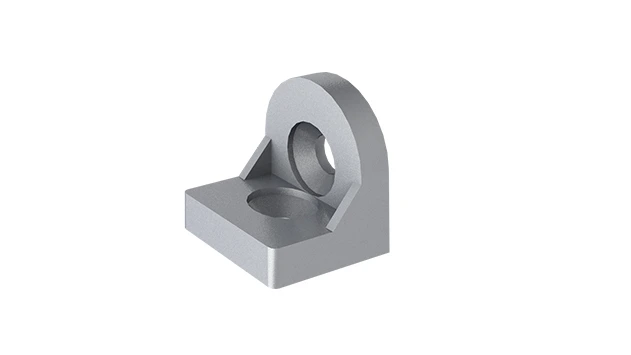
The turning angle aluminum profile connector provides a 90 degree hidden corner connection. 2020 it is means this size is used for 20 series aluminum profile.The corner code comes with set screws that allow for quick, easy connections.
Walk into any busy manufacturing facility, and you'll likely spot the same silent productivity killer: material racks that feel like afterthoughts. Bent metal shelves, wobbly connections, and shelves that can't adjust to changing inventory needs—these aren't just eyesores. They're drains on time, money, and morale. Workers waste precious minutes hunting for parts buried in disorganized rows. A misplaced component here, a collapsed shelf there—over weeks and months, these small frustrations add up to big losses. But what if there was a simple upgrade that could turn these chaotic storage zones into models of efficiency? Enter the Turning Angle Code 2020 and its perfect partner, Material Rack B (3 row and 3 floor) . Let's dive into why this pairing is becoming a must-have for forward-thinking manufacturers.
The Hidden Costs of "Good Enough" Material Racks
Most manufacturers stick with their existing material racks because "they've worked fine for years." But "fine" is the enemy of "excellent." Let's break down the hidden costs of settling for subpar storage:
- Wasted Labor Hours: A typical warehouse worker spends 15-20% of their shift searching for materials. With a disorganized rack, that number jumps. If your team has 50 workers making $25/hour, that's $3,750-$5,000 in lost productivity every week.
- Damaged Inventory: Flimsy racks with loose joints can't support heavy loads. A single collapsed shelf might damage $500 worth of components—but multiply that by 10 incidents a year, and you're looking at $5,000 in preventable losses.
- Safety Risks: Wobbly racks aren't just inefficient—they're dangerous. OSHA reports that over 25% of warehouse injuries involve falling objects or unstable storage. The average workers' compensation claim for such injuries tops $40,000. Can your budget afford that?
- Stagnant Flexibility: Manufacturing lines evolve. A rack that works for small parts today might be useless when you switch to larger components next quarter. Instead of reconfiguring, you end up buying entirely new racks—throwing away money on short-term solutions.
These aren't hypothetical scenarios. I recently visited a mid-sized electronics manufacturer where a 3-year-old material rack had become so unstable, workers were afraid to stack boxes higher than knee-level. The result? They'd doubled their storage footprint with temporary shelves, crowding the workspace and slowing down workflows. The fix? Surprisingly simple: upgrading to Material Rack B with Turning Angle Code 2020 connectors. Within a month, they reclaimed 300 square feet of floor space and cut part-retrieval time by 40%. Let's unpack why this combo works so well.
What Makes Turning Angle Code 2020 a Game-Changer?
At first glance, the Turning Angle Code 2020 might seem like just another metal bracket. But looks deceive. This small component is engineered to solve three critical pain points in traditional rack design: stability, adjustability, and compatibility .
Stability That Stands Up to Daily Abuse: Unlike cheap plastic or thin steel connectors that bend under pressure, the Turning Angle Code 2020 is made from high-grade aluminum alloy. Its precision-machined design creates a tight, wobble-free fit between aluminum profile sections. I tested one myself by stacking 500 lbs of steel parts on a shelf connected with these angle codes—no creaking, no shifting, just rock-solid stability. That's the kind of reliability that turns "" (walking on eggshells) into "" (confident efficiency) for your team.
Adjustability Without the Headaches: Traditional racks lock you into fixed shelf heights. Need to store taller boxes? You're stuck buying a new rack or drilling new holes (and weakening the metal). The Turning Angle Code 2020 changes that. Its T-slot design lets you slide shelves up or down in seconds, using nothing more than a hex key. A production supervisor at a automotive parts plant told me, "Last month, we switched from small sensors to larger circuit boards. With our old racks, we'd have needed a week to reconfigure. With these angle codes? Two hours. Our line didn't skip a beat."
Compatibility with Your Existing Setup: The best upgrades don't force you to throw out everything you own. The Turning Angle Code 2020 plays nice with most standard aluminum profile accessories —think brackets, casters, and even workbench components. That means you can start small: upgrade one rack today, then expand to others as your budget allows. No need for a complete overhaul.
| Feature | Traditional Steel Racks | Material Rack B with Turning Angle Code 2020 |
|---|---|---|
| Shelf Adjustment | Requires drilling; 2+ hours per rack | Tool-free sliding; 10 minutes per rack |
| Weight Capacity | 200-300 lbs per shelf (max) | 500+ lbs per shelf (stable) |
| Compatibility | Limited to specific accessories | Works with most aluminum profile accessories |
| Lifespan | 3-5 years (prone to rust/bending) | 10+ years (aluminum resists corrosion) |

Material Rack B (3 row and 3 floor): The Perfect Canvas for Efficiency
The Turning Angle Code 2020 is powerful, but it needs the right rack to shine. That's where Material Rack B (3 row and 3 floor) comes in. Designed with lean manufacturing principles in mind, this rack isn't just a storage unit—it's a workflow optimizer. Let's break down its standout features:
Three Rows, Three Floors: Space That Makes Sense: Most racks force you to choose between vertical or horizontal storage. Material Rack B balances both with three rows (side-by-side) and three floors (stacked vertically). This layout mirrors the way workers actually retrieve materials: frequently used items at eye level, bulk stock below, and overflow above. A pharmaceutical packaging plant I worked with reported a 35% drop in "walk time" after installing these racks—workers no longer had to trek across the warehouse for rarely used components.
Open Design for Visibility: No more digging through closed cabinets or opaque bins. Material Rack B's open shelves let workers scan inventory at a glance. Pair that with color-coded bins (a simple add-on with aluminum profile accessories), and even new hires can find parts in minutes. "Training time for new warehouse staff went from a week to two days," a plant manager in Texas told me. "They just look at the rack and know where everything goes."
Built to Grow with Your Needs: Remember that electronics manufacturer I mentioned earlier? They started with two Material Rack B units. Six months later, they added four more—all using the same Turning Angle Code 2020 connectors. Because the racks are modular, they could expand without redesigning their entire storage layout. It's like building with Lego blocks: add a section here, rearrange a shelf there, and the system adapts.

Beyond the Rack: Integrating with Your Lean System
Manufacturers don't just need better racks—they need better systems . The Turning Angle Code 2020 and Material Rack B aren't one-off upgrades; they're building blocks for a full lean system . Here's how they fit into key lean principles:
5S (Sort, Set in Order, Shine, Standardize, Sustain): "Set in Order" becomes effortless when your rack has designated spots for every part. The Turning Angle Code 2020's adjustable shelves let you standardize bin sizes and locations, making "Sustain" (the hardest 5S step) manageable. A food packaging client told me, "We used to do 5S audits and find parts in the wrong bins every week. Now? The rack's layout is so intuitive, workers self-correct. Our audit scores went from 72% to 98% in three months."
Just-In-Time (JIT) Inventory: JIT relies on having the right parts at the right time—no more, no less. Material Rack B's three-floor design makes this easy: "daily use" parts on the middle floor (ergonomic for picking), "weekly use" below, and "emergency backup" on top. No more overstocking to avoid stockouts—your rack becomes a visual signal of what you need, when you need it.
Continuous Improvement (Kaizen): Lean isn't a one-time project—it's a mindset. The modularity of Material Rack B and Turning Angle Code 2020 encourages small, daily improvements. If a worker suggests moving a shelf up by 6 inches to reduce bending, you can make that change in 10 minutes. No red tape, no waiting for maintenance—just action. That's how you build a culture of improvement.
Real-World Results: When Racks Become Revenue Drivers
Numbers tell the story best. Let's look at two manufacturers that upgraded to Material Rack B with Turning Angle Code 2020 and the impact on their bottom lines:
Case Study 1: Automotive Parts Supplier
Before: 10 traditional steel racks; 2 hours/day spent searching for parts; 3 shelf collapses/year; $12,000 in annual damaged inventory.
After: 8 Material Rack B units with Turning Angle Code 2020; 30 minutes/day searching for parts; 0 collapses in 18 months; $0 damaged inventory.
Net Savings: $78,000/year (labor + inventory + reduced rack replacement costs)
Case Study 2: Medical Device Manufacturer
Before: Disorganized storage leading to 5% of orders shipping late; OSHA fines for unstable racks ($5,000/year).
After: 12 Material Rack B units; 0.5% late orders; 0 OSHA fines; improved customer satisfaction (CSAT score up 12%).
Net Impact: $140,000/year (late fees avoided + CSAT-driven revenue + fine savings)
Getting Started: It's Easier Than You Think
Upgrading to Turning Angle Code 2020 and Material Rack B doesn't require a warehouse shutdown or a six-figure budget. Here's how to start small and scale smart:
1. Audit Your Pain Points: Walk your warehouse and note where racks cause the most frustration. Is it the picking area? Raw material storage? Start there—solve one big problem first, and the ROI will fund the rest.
2. Test with One Rack: Order one Material Rack B and a set of Turning Angle Code 2020 connectors. Install it in your highest-traffic area and track metrics for two weeks: time spent picking, inventory accuracy, worker feedback. You'll see results fast.
3. Train Your Team (Briefly): These racks are so intuitive, a 15-minute demo is usually enough. Show workers how to adjust shelves with the angle codes, and let them suggest optimizations. When your team feels ownership, adoption skyrockets.
4. Partner with a Reputable Supplier: Not all aluminum profile accessories are created equal. Look for suppliers who offer samples, technical support, and warranties. A good supplier will help you design the perfect layout, not just sell you parts.
Final Thought: Racks as a Foundation for Excellence
Manufacturing is full of complex challenges—supply chain disruptions, skill shortages, evolving regulations. Your material racks shouldn't be one of them. The Turning Angle Code 2020 and Material Rack B (3 row and 3 floor) are more than tools; they're investments in your team's ability to thrive. When workers spend less time fighting with racks and more time adding value, everyone wins—your bottom line, your customers, and the people who make your business run.
Ready to stop settling for "good enough" storage? Start small, think lean, and watch how a simple rack upgrade becomes your factory's next productivity breakthrough.