- Company Articles
- Industry articles
- Industry News
- Why Strengthen Lean Management Now? Trends Shaping Manufacturing in 2025

Why Strengthen Lean Management Now? Trends Shaping Manufacturing in 2025
Related Product
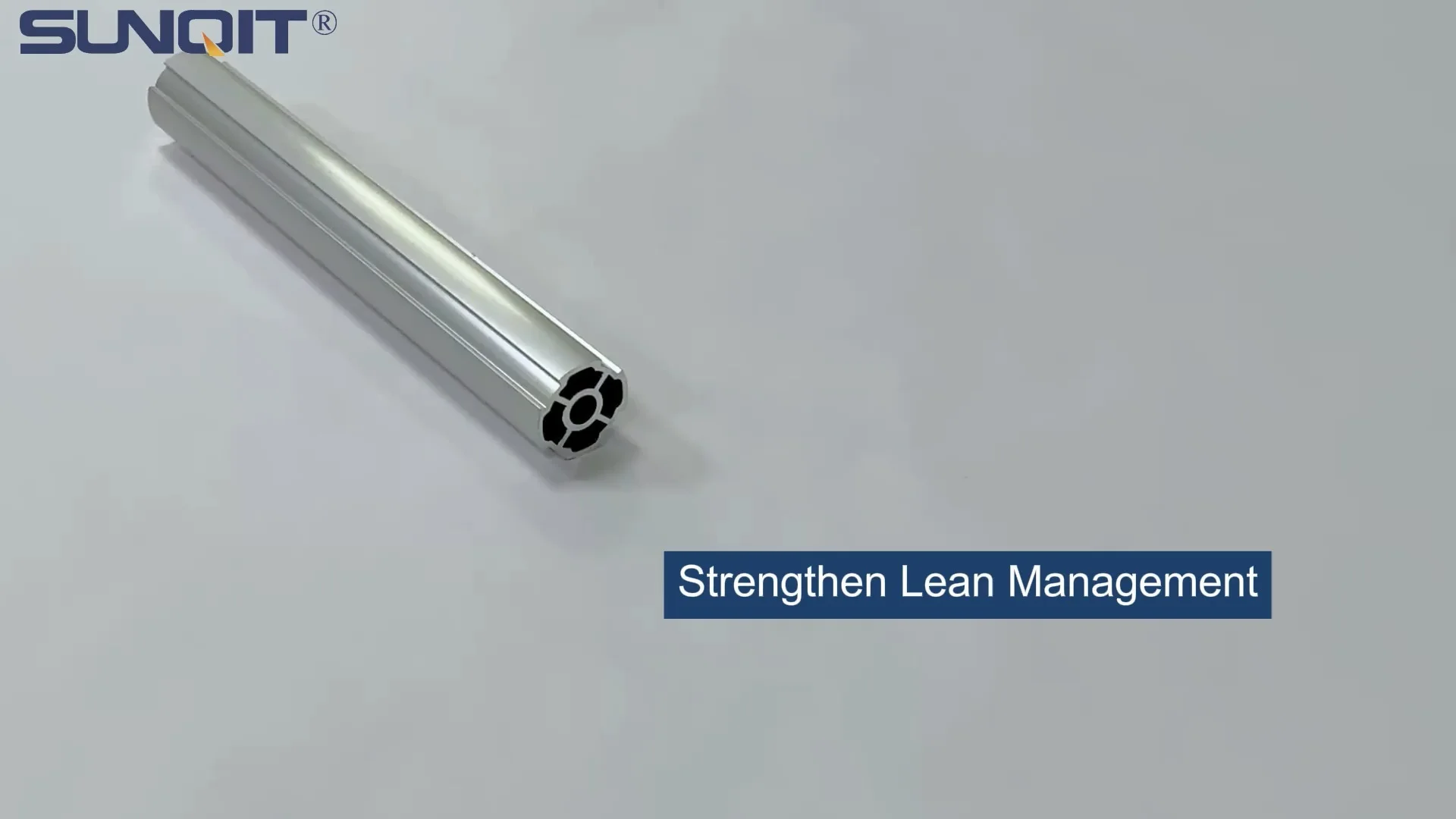
Strengthen Lean Management
This product is called reinforced aluminum tube, and its bending strength is about twice that of the basic aluminum tube. The end face can process m1o threaded holes, install foot cups and other accessories, or convert internal and external screws in
Walk into any manufacturing facility today, and you'll likely sense a quiet urgency in the air. The hum of machinery mixes with the rustle of teams huddling over spreadsheets, debating how to cut costs without sacrificing quality. Supply chains still bear the scars of recent disruptions, customer expectations for faster, more customized products grow by the quarter, and sustainability isn't just a buzzword anymore—it's a regulatory mandate. In 2025, manufacturing isn't just about making things; it's about making things smarter , with fewer resources, less waste, and more resilience. That's where lean management comes in—not as a relic of the past, but as the compass guiding factories toward survival and success. Let's dive into why now, more than ever, strengthening lean management isn't optional. It's essential.
The Perfect Storm: Why 2025 Feels Different
To understand why lean management matters today, let's start with the challenges keeping plant managers up at night. First, cost pressures are relentless. Raw material prices swing wildly, energy costs are unpredictable, and labor—especially skilled labor—is harder to find and retain than ever. A recent survey by the Manufacturing Institute found that 78% of manufacturers struggle with workforce shortages, and turnover in production roles hit a 10-year high in 2024. When every team member counts, wasting their time on inefficient processes isn't just costly—it's unsustainable.
Then there's the demand for agility. Remember when customers were happy with batch-produced goods? Those days are gone. Today, they want products tailored to their needs: a phone case with a custom logo, a medical device calibrated for a specific clinic, a car with a unique trim package. Mass customization requires factories to switch between production runs quickly, without sacrificing speed or quality. Traditional, rigid assembly lines—built for one-size-fits-all production—can't keep up.
And let's not forget sustainability. Governments worldwide are cracking down on carbon footprints, and consumers increasingly choose brands with green credentials. A 2025 report from Nielsen showed that 63% of shoppers are willing to pay more for products made with eco-friendly processes. For manufacturers, this means rethinking everything from energy use to waste reduction. Lean management, with its focus on eliminating waste ( muda in Japanese), aligns perfectly here. After all, waste isn't just about time or materials—it's about unnecessary emissions, excess packaging, and idle resources that harm both the planet and the bottom line.
Lean Management: From Toolkit to Mindset
Lean management has come a long way since its origins in Toyota's post-WWII production system. Back then, it was about cutting waste in assembly lines—think just-in-time inventory and the 5S method (Sort, Set in Order, Shine, Standardize, Sustain). Today, it's evolved into a holistic mindset that spans the entire organization, from the factory floor to the C-suite. It's about creating systems that adapt, learn, and grow with the business.
At its core, modern lean management is about three things: flow , flexibility , and employee empowerment . Flow ensures materials, information, and people move through the production process without bottlenecks. Flexibility lets teams pivot quickly when demand shifts. Empowerment gives frontline workers the tools and authority to spot inefficiencies and fix them—because who knows the process better than the person doing the work?
But here's the catch: Lean management isn't just about principles. It needs the right tools to bring those principles to life. In 2025, that means moving beyond whiteboards and kaizen events (though those still matter) to embrace modular, adaptable equipment that can evolve with your processes. This is where terms like lean system , aluminum profile , and roller track stop being industry jargon and start being game-changers.

Building a Lean Factory: The Tools That Make It Happen
Imagine a factory where reconfiguring an assembly line takes hours, not weeks. Where workstations adjust to fit each operator's height, reducing fatigue and errors. Where materials glide from one station to the next with minimal effort, cutting down on manual lifting and delays. This isn't science fiction—it's the reality for manufacturers using modern lean tools. Let's break down three key players in this transformation:
1. Aluminum Profiles: The Backbone of Flexibility
Traditional production setups rely on fixed steel structures—heavy, hard to modify, and expensive to replace. Enter aluminum profiles: lightweight, durable, and infinitely adaptable. These extruded aluminum beams, with their T-slot design, let you build, break down, and rebuild workstations, racks, and conveyors in days. Need a new workbench for a new product line? Screw aluminum profiles together with a few brackets, add a top, and you're done. Want to adjust the height of a material rack to reduce bending for operators? Loosen a few bolts, reposition, and tighten. No welding, no custom fabrication, no downtime.
Aluminum profiles also shine in sustainability. They're recyclable, and their light weight reduces energy use during transportation and installation. A lean system supplier I spoke with recently mentioned a client—a mid-sized electronics manufacturer—that swapped steel workbenches for aluminum ones and cut their workstation setup time by 70%. "They used to wait 6-8 weeks for custom steel tables," the supplier said. "Now, they can prototype a new line in a weekend. And because aluminum is lighter, operators can rearrange stations themselves, without calling in a maintenance crew."
2. Roller Tracks: Keeping the Flow Alive
Flow is the heartbeat of lean manufacturing. When materials sit idle, or workers spend time moving parts from one station to another, that's waste. Roller tracks solve this by creating gravity-fed or motorized pathways for parts and products. Picture a line of plastic or metal rollers mounted on a frame: a bin of circuit boards glides from the storage area to the assembly station, a finished subcomponent rolls smoothly to quality control, and returns empty bins find their way back to the warehouse—all with minimal human effort.
Modern roller tracks are designed to integrate seamlessly with aluminum profiles, making them easy to customize. Need a curved track to navigate around a corner? No problem. Want to add a brake to slow down fragile parts? Just snap on a friction pad. A automotive parts supplier in Michigan told me they replaced manual cart transport with roller tracks and saw a 35% reduction in material handling time. "Workers used to spend 2 hours a day pushing carts," the plant manager said. "Now, those hours go into assembling parts. Plus, we've cut down on ergonomic injuries from lifting—win-win."
3. ESD Workstations: Precision Meets Protection
In industries like electronics or medical device manufacturing, static electricity isn't just a nuisance—it's a disaster waiting to happen. A single static discharge can fry a microchip, rendering a $500 component useless. That's where ESD workstations (Electrostatic Discharge) come in. These specialized workbenches are grounded to dissipate static, with conductive surfaces and mats that protect sensitive parts. But ESD workstations aren't just about protection—they're about lean efficiency too.
Modern ESD workstations, often built with aluminum profiles, include integrated tool holders, cable management, and adjustable lighting—everything an operator needs within arm's reach. No more searching for a screwdriver or untangling cords. A semiconductor manufacturer in Arizona reported a 40% drop in defects after switching to ESD workstations with built-in tool organizers. "Operators weren't just damaging parts with static—they were wasting time looking for tools," the QA director explained. "The new stations keep everything organized, so they focus on assembling, not hunting."

Real Impact: How One Factory Turned Lean into Profit
Let's put this all together with a real-world example. Take PrecisionTech, a contract manufacturer in Texas that produces custom circuit boards for aerospace and defense clients. In early 2024, they were struggling: high defect rates (12%), long lead times (4 weeks for standard orders), and turnover in assembly roles at 25%. Their CEO, Maria Gonzalez, knew something had to change. "We were stuck in the past," she told me. "Our workbenches were 10 years old, materials sat in piles on the floor, and every time we got a new order, we had to reconfigure the line from scratch."
Maria hired a lean consultant, who recommended three key moves: adopting a lean system built around aluminum profiles, installing roller tracks for material flow, and upgrading to ESD workstations. Here's what happened next:
- Weeks 1-4: The team replaced steel workbenches with aluminum profile ESD workstations. Each station was customized to the operator's height and included tool racks, cable management, and anti-fatigue mats. "Operators were skeptical at first," Maria said. "But within a week, they were asking for adjustments to make the stations even better. One operator suggested adding a shelf for instruction manuals—we did it that day."
- Weeks 5-8: Roller tracks were installed to connect storage, assembly, and testing areas. Bins of components now rolled directly to each workstation, and finished boards moved automatically to inspection. "The biggest change? No more 'material runners,'" Maria noted. "We had three people whose only job was moving parts. Now, they're assembling boards, and we haven't hired replacements—we just made better use of the team we had."
- Months 3-6: Defect rates dropped to 3%, lead times shortened to 2 weeks, and turnover fell to 8%. "Operators felt more valued because we listened to their input," Maria said. "And when you reduce frustration—from hunting tools or moving heavy bins—people stay. Plus, with fewer defects, we're saving $45,000 a month in scrap and rework."
PrecisionTech isn't an anomaly. Across industries, manufacturers that invest in lean tools and principles are seeing similar results: lower costs, happier workers, and more resilient operations. And in 2025, resilience isn't just nice to have—it's what separates the survivors from the shutdowns.

Looking Ahead: Lean Management in the Age of AI and Automation
You might be thinking: With AI and automation taking over manufacturing, do we still need lean management? The answer is a resounding yes—maybe even more so. Automation can perform repetitive tasks faster than humans, but it can't eliminate waste on its own. In fact, automated systems built on inefficient processes just automate the waste. Lean management provides the framework to ensure automation is used wisely .
For example, AI-powered predictive maintenance can tell you when a machine is likely to fail—but lean management ensures you're not over-maintaining equipment (another form of waste). Collaborative robots (cobots) can work alongside humans—but lean principles help design workstations where humans and robots complement each other, rather than getting in each other's way. Aluminum profiles and roller tracks will still be essential here: flexible enough to adapt as AI suggests new workflows, durable enough to support new automation tools.
Sustainability will also deepen its ties with lean. In the next five years, we'll see more factories using lean principles to optimize energy use—like aligning production schedules with renewable energy availability—or redesigning processes to use recycled materials. Aluminum profiles, already recyclable, will become even more eco-friendly, with suppliers offering take-back programs for old components.
Traditional vs. Lean: A Side-by-Side Look
| Aspect | Traditional Manufacturing | Lean Manufacturing (2025) |
|---|---|---|
| Workstations | Fixed steel structures, hard to modify; one-size-fits-all design. | Aluminum profile workbenches; adjustable height, modular components, ESD-safe options. |
| Material Flow | Manual carts or forklifts; frequent delays and idle time. | Roller tracks and conveyors; gravity-fed or motorized, minimal human intervention. |
| Flexibility | Long setup times for new products; rigid assembly lines. | Quick reconfiguration with aluminum profiles and modular tools; mass customization. |
| Waste Reduction | Reactive (fixing waste after it happens); focus on materials only. | Proactive (designing out waste); addresses time, labor, energy, and emissions. |
| Employee Role | Followers of standard procedures; limited input on process design. | Problem-solvers; empowered to adjust workstations and workflows. |
So, What's Next? Strengthening Lean Management in Your Factory
If you're convinced lean management is the way forward (and I hope you are), where do you start? It's not about overhauling your entire factory overnight. Small, intentional steps work best. Here's a roadmap:
- Map Your Current Processes: Walk the floor with your team and identify bottlenecks. Where do materials sit idle? Where do workers spend time on non-value-adding tasks? A simple flowchart can reveal surprising waste.
- Start Small with Quick Wins: replace one outdated workbench with an aluminum profile model. Install a short roller track to connect two stations that always have delays. Measure the impact—time saved, defects reduced—and use that to build momentum.
- Involve Your Team: Lean isn't top-down. Ask operators what frustrates them about their current setup. Chances are, they have great ideas for improvement. When they help design the solution, they'll be more invested in making it work.
- Partner with the Right Suppliers: Look for a lean system supplier that offers not just products, but expertise. A good supplier will help you design custom solutions—whether it's an ESD workstation for sensitive parts or a roller track that fits your unique layout.
Remember, lean management isn't a destination—it's a journey. In 2025, that journey is more critical than ever. The factories that thrive won't just be the ones that make great products; they'll be the ones that make great processes. They'll be flexible enough to adapt, efficient enough to compete, and resilient enough to weather whatever comes next. And at the heart of it all? Lean management—strengthened, modernized, and ready for the future.
So, let's roll up our sleeves. The future of manufacturing isn't something that happens to us. It's something we build—one aluminum profile, one roller track, one empowered team member at a time.