- Company Articles
- Products and Technology
- Product knowledge
- Adhesive vs. Bolt-On Castor Install Base: Which Installation Method is More Secure?

Adhesive vs. Bolt-On Castor Install Base: Which Installation Method is More Secure?
Related Product
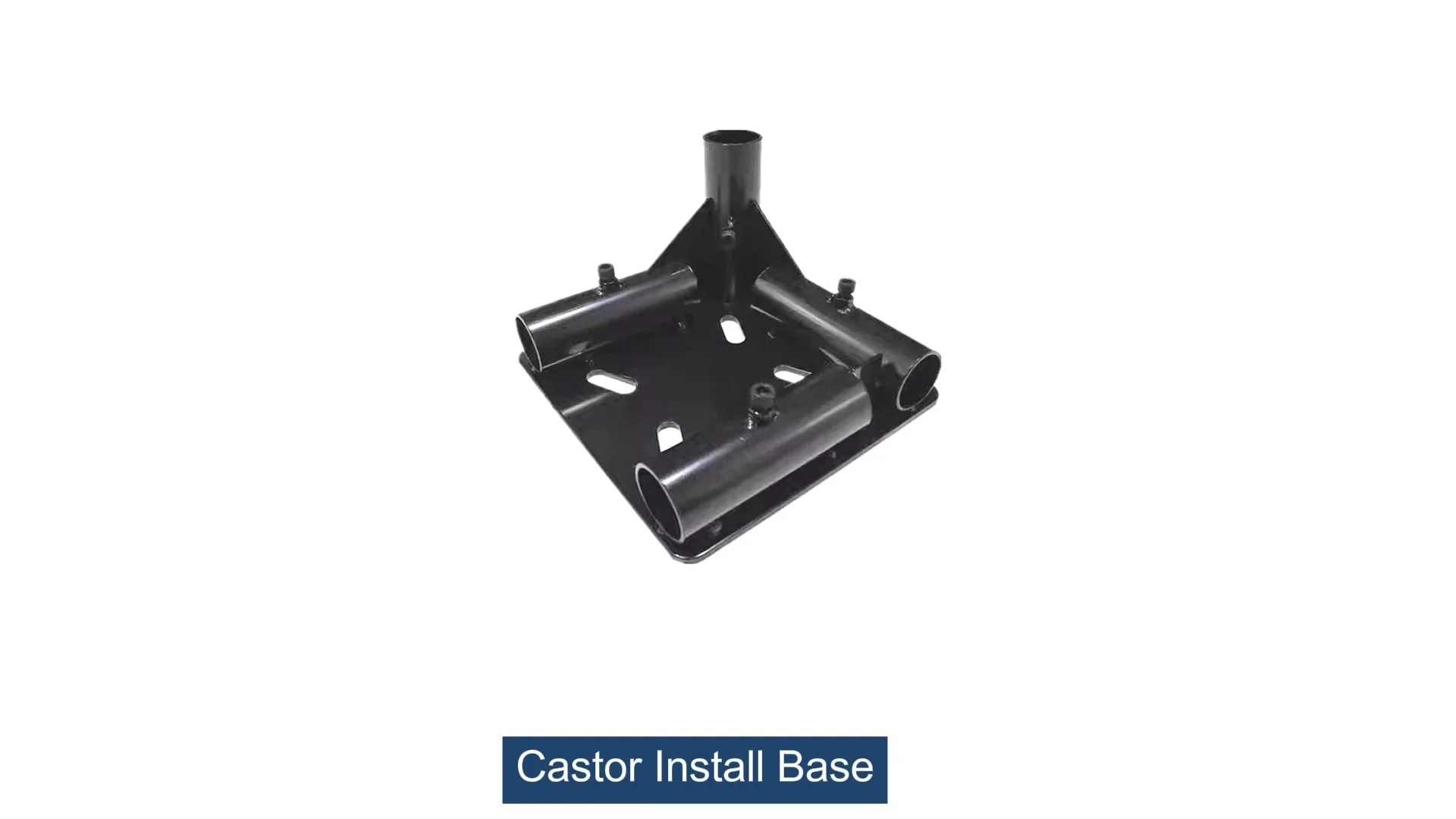
Castor Install Base
Castor install base, used for connection between pipe and castor, it can connect 4 pcs pipe by 1 pcs castor base, to make the structure strong and stable.
In the bustling world of workshops, warehouses, and manufacturing floors, few components work as quietly yet critically as castors. These small, wheeled devices turn static workbenches into mobile stations, heavy material racks into maneuverable units, and rigid assembly lines into flexible workflows. But for all their utility, castors are only as reliable as the connection that holds them to the equipment they serve: the castor install base. It's the unsung link between the caster wheel and the structure above, and choosing the right installation method—adhesive or bolt-on—can mean the difference between seamless operations and costly, even dangerous, failures. In this article, we'll dive into the nitty-gritty of both adhesive and bolt-on castor install bases, weighing their strengths, weaknesses, and real-world performance to help you answer the big question: Which method is truly more secure?
What is a Castor Install Base, Anyway?
Before we compare methods, let's make sure we're on the same page: What exactly is a castor install base? Think of it as the "middleman" between your equipment (say, a workbench or turnover trolley) and the caster wheel itself. It's the component that physically attaches the wheel to the bottom of the structure, distributing weight, absorbing shocks, and ensuring the castor moves in sync with the equipment. Without a solid install base, even the highest-quality caster wheel will wobble, slip, or fail—turning a simple task like moving a loaded trolley into a frustrating, risky chore.
Castor install bases come in various shapes and sizes, from simple plates to more complex designs with added reinforcements. But today, we're focusing on two primary installation methods: adhesive (which uses strong bonding agents) and bolt-on (which uses mechanical fasteners like bolts or screws). Each has its loyal advocates, but which one delivers better security? Let's break them down.
Adhesive Castor Install Bases: The "Stick-and-Go" Approach
Adhesive castor install bases rely on industrial-strength adhesives to bond the base directly to the equipment's surface. Picture a thick, durable tape or a liquid epoxy that, when cured, creates a powerful molecular bond between the base and the material (whether metal, wood, or plastic). This method has grown in popularity for its simplicity—no drilling, no tools, just clean the surface, apply the adhesive, press the base into place, and let it set.
The Pros of Adhesive Bases
- No Damage to Equipment: One of the biggest draws of adhesive bases is that they don't require drilling holes into your workbench, trolley, or rack. For delicate surfaces (like aluminum profile workbenches) or equipment you might want to repurpose later, this is a game-changer—no unsightly holes or weakened structural integrity.
- Quick Installation: In a busy production environment, time is money. Adhesive bases can be installed in minutes: clean the surface with isopropyl alcohol, peel the adhesive backing (if using pre-applied tape), and press firmly. Some adhesives cure in as little as 30 minutes, while others might need 24 hours for full strength—but that's still faster than measuring, drilling, and bolting.
- Uniform Weight Distribution: Unlike bolts, which concentrate stress at specific points, adhesive bonds spread the load evenly across the entire base surface. This can reduce wear and tear on both the base and the equipment over time, especially for lighter loads.
The Cons of Adhesive Bases
- Limited Load Capacity: Adhesive bonds are strong, but they have their limits. Most adhesive bases are rated for light to medium loads—think up to 100-200 pounds per castor. Beyond that, the bond can stretch, weaken, or even fail under constant pressure, especially if the equipment is moved frequently.
- Environmental Sensitivity: Adhesives hate extremes. High temperatures (above 150°F), humidity, or exposure to oils, solvents, or chemicals can break down the bond over time. In a factory with hot machinery or a warehouse with high moisture, adhesive bases might not hold up as well as expected.
- Permanent (or Hard to Reverse): While some adhesives are "removable," most form a permanent bond. If you need to replace the castor or reposition the base, you'll likely have to scrape off the old adhesive (a messy, time-consuming process) and may damage the equipment's surface in the process.
- Surface Prep is Critical: For adhesive to work, the surface must be perfectly clean—no dust, grease, or rust. Even a tiny speck of dirt can create a weak spot, leading to premature failure. In busy workshops where surfaces are rarely spotless, this can be a hidden risk.

Bolt-On Castor Install Bases: The "Drill-and-Secure" Standard
Bolt-on castor install bases are the tried-and-true workhorses of industrial settings. As the name suggests, they use bolts (or screws) to physically fasten the base to the equipment. The base typically has pre-drilled holes, and you drill matching holes into the equipment, then secure with bolts, washers, and nuts. For heavy-duty applications—like turnover trolleys carrying stacks of aluminum extrusion profiles or flow racks loaded with parts—bolt-on is often the default choice.
The Pros of Bolt-On Bases
- Unmatched Load Capacity: When it comes to heavy loads, bolt-on bases reign supreme. A well-bolted base with high-quality steel bolts can handle thousands of pounds—think 500+ pounds per castor. For industrial workbenches, material rack b (3 row and 3 floor) units, or heavy-duty conveyors, this strength is non-negotiable.
- Resistant to Environmental Extremes: Unlike adhesives, bolts don't care about temperature swings, humidity, or chemical exposure. Whether your facility is hot and humid (like a food processing plant) or cold and dry (like a warehouse freezer), bolted connections stay strong. They're also impervious to oils, greases, and cleaning agents common in manufacturing.
- Repairability and Reusability: If a bolt loosens (which can happen with vibration), you can simply retighten it. If the base gets damaged, you can unbolt it, replace it, and reattach a new one—no scraping or surface damage. This makes bolt-on bases ideal for equipment that sees heavy use and may need maintenance over time.
- Secure for Dynamic Movement: Equipment that's moved frequently (like turnover trolleys in a busy assembly line) puts stress on castor bases. Bolted connections are less likely to shift or fail under repeated starts, stops, and turns compared to adhesive, which can weaken with constant vibration.
The Cons of Bolt-On Bases
- Requires Drilling: The biggest downside is the need to drill holes into your equipment. For thick aluminum extrusion profiles or stainless steel racks, this can be time-consuming and requires the right tools (a powerful drill, metal bits). If you drill off-center or too many holes, you risk weakening the structure—especially for thin materials like basic aluminum tube.
- Longer Installation Time: Installing bolt-on bases isn't a one-person, five-minute job. You need to measure and mark hole positions, drill carefully, insert bolts, add washers and nuts, and torque them to the right specification. For a four-castor trolley, this could take an hour or more—time that could be spent on other tasks.
- Potential for Corrosion: If you use regular steel bolts in a humid environment, they can rust over time. While stainless steel bolts solve this problem, they're more expensive. Also, over-tightening bolts can strip threads or crack brittle materials (like plastic or thin aluminum), ruining the connection.

Adhesive vs. Bolt-On: A Side-by-Side Comparison
To help you visualize the differences, let's break down key factors in a comparison table:
| Factor | Adhesive Castor Install Base | Bolt-On Castor Install Base |
|---|---|---|
| Typical Load Capacity | Up to 200 lbs per castor | 500+ lbs per castor |
| Installation Time | Minutes (plus curing time) | 30+ minutes (drilling + bolting) |
| Tools Required | Cleaning cloth, alcohol (for surface prep) | Drill, drill bits, wrench, screwdriver |
| Best For | Light loads, delicate surfaces, temporary setups | Heavy loads, industrial use, frequent movement |
| Environmental Sensitivity | High (temperature, humidity, chemicals) | Low (resistant to most conditions) |
| Reusability | Poor (hard to remove without damage) | Excellent (easily removed and replaced) |
| Cost (Materials) | Moderate (adhesive tape/epoxy) | Higher (bolts, washers, stainless steel options) |

Real-World Scenarios: Which Method Works Best?
The "better" method depends entirely on your specific needs. Let's look at common scenarios to see which shines:
Scenario 1: A Lightweight Office Workbench
Imagine a small workbench e (single deck-without caster) in an office, used for packing small items or as a temporary desk. It rarely moves, holds light loads (under 100 lbs), and has a smooth, painted surface. Here, an adhesive base makes sense: no need to drill into the desk, quick installation, and the load is well within adhesive limits. Plus, if you later want to remove the castors, there's no damage to the desk's finish.
Scenario 2: A Heavy-Duty Warehouse Trolley
Now, consider a turnover trolley loaded with metal parts, weighing 800 lbs total. It's pushed multiple times daily across rough concrete, through doorways, and over small bumps. For this, a bolt-on base with a heavy duty split foot seat is non-negotiable. The split foot seat distributes the load across a larger area, reducing stress on the bolts, while the bolted connection ensures the castors stay put even with constant jostling. Adhesive would likely fail here—either immediately under the weight or over time from vibration.
Scenario 3: An ESD Workstation in Electronics Manufacturing
ESD workstations (used for assembling sensitive electronics) need to be grounded and stable, but they might also need occasional repositioning. They're not extremely heavy (300-400 lbs), but they require reliability to protect delicate components. Here, bolt-on bases are still better: ESD workbenches often have metal frames, so drilling is easy, and the added security of bolts ensures the workstation won't shift during use—critical for precision work.
Scenario 4: A Mobile Retail Display Rack
Retail racks loaded with clothing or small goods are lightweight (under 150 lbs) and moved occasionally (e.g., during store rearrangements). They often have wooden or plastic surfaces that might crack if drilled. Adhesive bases are perfect here: quick to install, no damage to the rack, and sufficient for light, infrequent movement.
Boosting Security: Accessories That Complement Your Installation
Whichever method you choose, there are accessories that can enhance security and performance. Here are a few worth considering:
Heavy Duty Split Foot Seat
For bolt-on bases, a heavy duty split foot seat is a must for heavy loads. This accessory attaches to the bottom of the equipment and provides a larger, reinforced surface for the castor base to bolt into. It spreads the weight over more area, reducing stress on the equipment's frame and preventing bolts from pulling through thin materials.
Suction Cup Anti-Slip Foot Adjuster
Even with a secure base, stationary equipment can slide on smooth floors. A suction cup anti-slip foot adjuster screws into the castor base (or directly into the equipment) and uses a rubber suction cup to grip the floor when the equipment is parked. This is especially useful for adhesive bases, adding an extra layer of stability when the equipment isn't moving.
Caster and Accessories: Locking Casters
Both adhesive and bolt-on bases can benefit from locking caster wheels. When engaged, the lock prevents the wheel from rolling, keeping the equipment stationary. For bolt-on bases, locking casters add security during loading/unloading; for adhesive bases, they reduce stress on the bond by minimizing unintended movement.
The Verdict: Which Method is More Secure?
At the end of the day, "security" depends on your specific use case. For light loads, delicate surfaces, or temporary setups , adhesive castor install bases offer convenience and surface protection with adequate security. But for heavy loads, industrial environments, or frequent movement , bolt-on bases are the clear winner—they're stronger, more durable, and more reliable over time.
When in doubt, ask yourself: What's the maximum weight the equipment will carry? How often will it move? What's the environment like? If you're still unsure, consult a reputable caster supplier—they can help you match the base to your needs, whether you're outfitting a simple workbench or a full lean system.
Remember, the most secure installation method is the one that's right for your application. Adhesive bases have their place, but when security can't be compromised, bolt-on bases are the gold standard. After all, in a factory or warehouse, a failed castor base isn't just an inconvenience—it's a safety risk, a productivity killer, and a potential financial loss. Choose wisely!