- Company Articles
- Products and Technology
- Installation And Maintenance
- Adjustable Height Castor Installation Base: Flexibility for Multi-Height Workbench E

Adjustable Height Castor Installation Base: Flexibility for Multi-Height Workbench E
Related Product
Castor Installation Base
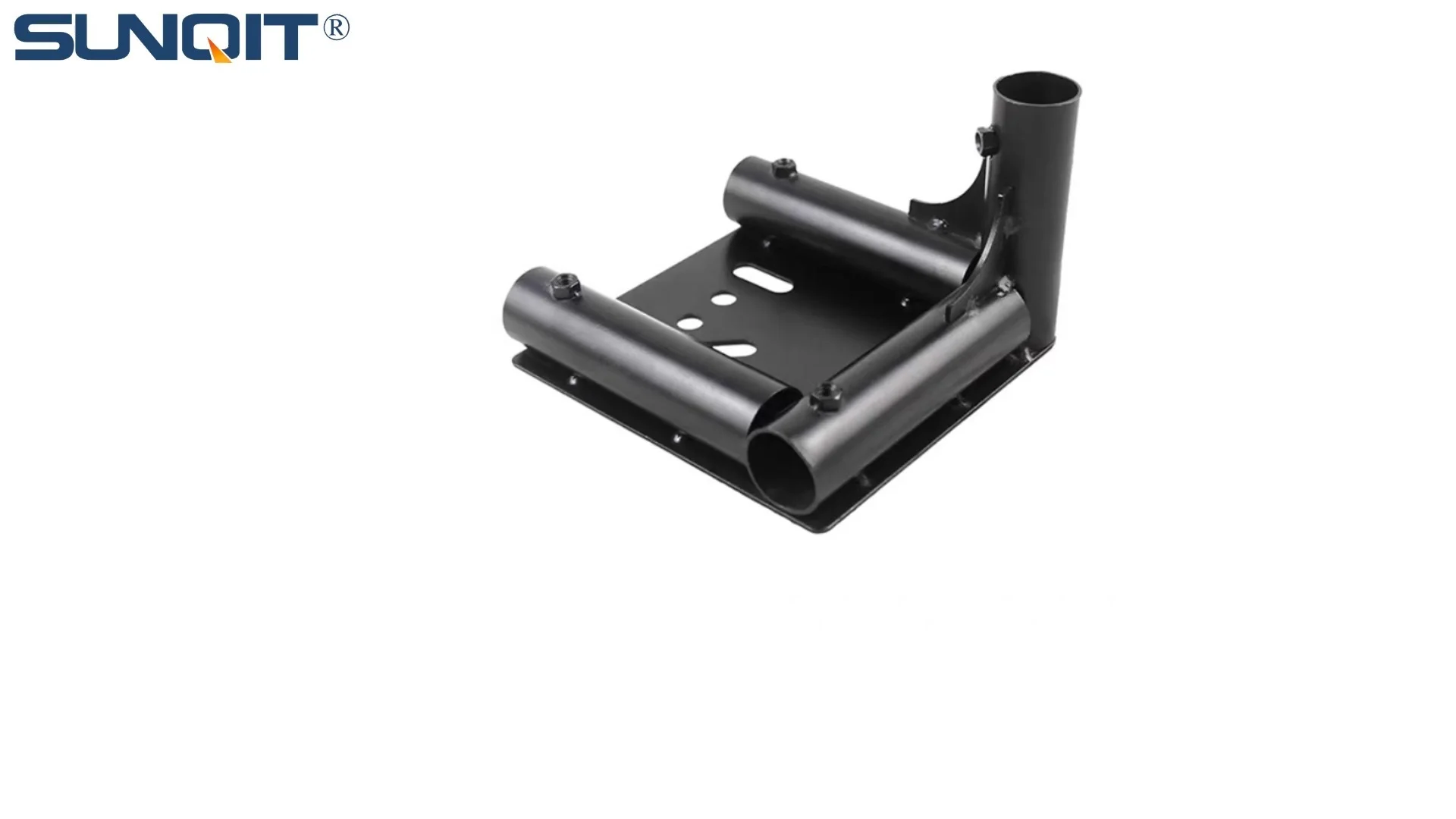
Pipe fitting castor installation base,Well made, precise and strong. Made of high quality of steel,black painting surface treatment for greater resistance to corrosion. It is used for castor or foot lever connection with lean pipe.
Walk into any busy workspace—whether it's a bustling factory assembly line, a precision-focused electronics lab, or a small-scale workshop—and you'll quickly notice a common workhorse: the workbench. These flat, sturdy surfaces are the unsung heroes of productivity, holding tools, materials, and ongoing projects. But for all their reliability, traditional workbenches often come with a hidden limitation: rigidity. Fixed in height and stuck in one spot, they struggle to keep up with the dynamic needs of modern work. Enter Workbench E—a single-deck, caster-free design built for simplicity—and the game-changing solution that transforms it: the Adjustable Height Castor Installation Base. In this article, we'll explore how this unassuming component turns static workspaces into adaptable hubs of efficiency, prioritizing ergonomics, mobility, and versatility for teams of all sizes.
The Hidden Cost of Static Workbenches: Why One Size Doesn't Fit All
Imagine a team of five workers sharing a single workbench. Maria, at 5'2", needs to hunch over to reach the assembly components. Raj, at 6'1", strains his lower back leaning down to fasten small parts. Priya, who alternates between sitting and standing to manage chronic knee pain, can't adjust the surface to suit her needs. Meanwhile, the workbench itself is bolted to the floor, so when the team needs to rearrange the workspace for a new project, they're stuck—wasting hours disassembling and rebuilding instead of focusing on production. This isn't just a hypothetical scenario; it's a daily reality in countless workplaces relying on outdated, one-size-fits-all workbenches.
Workbench E, by design, is a practical, no-frills solution: a single deck without casters, built for stability and basic functionality. It's affordable, durable, and gets the job done for straightforward tasks. But in today's fast-paced environments, "getting the job done" isn't enough. Teams need flexibility. They need workbenches that adapt to people , not the other way around. Static height leads to ergonomic strain, which studies show increases absenteeism and reduces productivity by up to 20% (according to the Occupational Safety and Health Administration). Fixed positioning limits workflow adjustments, making it hard to implement lean manufacturing principles—like optimizing material flow or reconfiguring lines for new products. And without mobility, even simple tasks like cleaning under the workbench or moving it to a different station become time-consuming chores.
For small businesses and large factories alike, these inefficiencies add up. A static Workbench E might seem like a cost-effective choice upfront, but the long-term costs—ergonomic injuries, lost productivity, and limited adaptability—often outweigh the savings. The question then becomes: How can teams retain the reliability of Workbench E while adding the flexibility modern work demands? The answer lies in pairing it with a component designed to bridge this gap: the Adjustable Height Castor Installation Base.
Meet the Adjustable Height Castor Installation Base: Workbench E's Transformative Upgrade
At first glance, the Adjustable Height Castor Installation Base might seem like a simple add-on, but it's far more than that. Think of it as a "conversion kit" for Workbench E—turning a static, fixed-height surface into a dynamic, adaptable workspace tool. Designed to attach seamlessly to the bottom of Workbench E, this base combines two critical features: height adjustability and smooth-rolling casters. Let's break down what makes it so valuable.
First, the height adjustment mechanism. Unlike clunky, tool-dependent systems of the past, this base uses a user-friendly design—often a hand-crank or quick-release lever—that lets anyone adjust the workbench height in seconds, with no special tools required. Most models offer a range of 30-50 cm (about 12-20 inches), covering the sweet spot for both seated and standing work. For Maria, that means raising the bench to a comfortable standing height; for Raj, lowering it to avoid bending; for Priya, switching between positions effortlessly throughout the day. It's not just about comfort—it's about empowering each team member to work in a way that keeps them productive and pain-free.
Then there's the mobility factor. By integrating high-quality casters (with optional locking brakes), the base turns Workbench E from a stationary fixture into a movable workstation. Need to shift it closer to the material storage area? Unlock the casters and roll it into place. Finished for the day? Lock the brakes to keep it steady during cleaning. The casters themselves are designed for durability, with rugged wheels that glide smoothly over concrete, tile, or even slightly uneven floors—no more struggling to drag a heavy bench across the shop.
But what truly sets this base apart is its compatibility with Workbench E's existing design. It's not a replacement for the workbench; it's an enhancement. The base is engineered to bolt directly to the bottom of Workbench E's frame, requiring minimal assembly and no modifications to the original structure. This means businesses don't have to replace their existing Workbench E units—they can upgrade them, saving on costs while adding functionality. It's a small investment that delivers immediate returns in terms of flexibility and ergonomics.

How It Works: The Mechanics Behind the Magic
To truly appreciate the Adjustable Height Castor Installation Base, it helps to understand how it integrates with Workbench E. Let's break down the components and process step by step, so you can visualize how this upgrade transforms a basic workbench into a dynamic tool.
Step 1: The Base Frame – A Foundation for Stability
At the core of the installation base is a sturdy frame, typically constructed from aluminum profile or steel. Aluminum is a popular choice here for good reason: it's lightweight (making the base easier to handle during installation), resistant to rust and corrosion (ideal for industrial environments), and strong enough to support the weight of Workbench E plus its load (often up to 500 kg/1100 lbs). The frame is designed to mirror the footprint of Workbench E, ensuring a snug, secure fit—no wobbling or instability, even when the bench is fully loaded.
Step 2: Height Adjustment Mechanism – Simple, Smooth, and Secure
The height adjustment system is where the base truly shines. Most models use a scissor-lift design, similar to what you'd find in adjustable office chairs but scaled up for industrial use. A hand crank or foot pedal (depending on the model) raises or lowers the platform, which in turn lifts or lowers Workbench E. The mechanism is precision-engineered with locking gears to ensure the height stays fixed once set—no slow sinking or sudden drops, even under heavy loads. For added safety, some models include a secondary locking pin, giving teams peace of mind when working at maximum height.
Step 3: Casters and Caster Accessories – Mobility with Control
Attached to the bottom of the base frame are four heavy-duty casters, each with a swivel head for easy maneuverability. But not all casters are created equal, and the right caster accessories make all the difference. Here's what to look for:
- Brake mechanisms : Each caster should have a reliable brake that locks both the wheel and the swivel head, preventing movement when the workbench is in use. This is critical for safety—imagine trying to assemble delicate electronics on a workbench that rolls mid-task.
- Wheel material : Rubber or polyurethane wheels are best for indoor use, as they absorb shocks, reduce noise, and won't scratch floors. For outdoor or rough surfaces, pneumatic (air-filled) wheels offer better traction.
- Load rating : Each caster should be rated to support at least 1/4 of the total load (Workbench E + materials). Overloading casters leads to premature wear and potential failure.
These accessories aren't just add-ons—they're essential for turning mobility into a safe, functional feature. A base with poor-quality casters or missing brakes is more of a liability than an upgrade.
Step 4: Installation – Tool-Free (or Minimal Tools) for Quick Setup
Installing the base is surprisingly straightforward, even for teams without specialized technical skills. Most manufacturers design the base to bolt directly to the existing mounting points on Workbench E's legs. In some cases, you might need a wrench or screwdriver, but no drilling or welding is required—preserving the integrity of the original workbench. The entire process takes 30-60 minutes per unit, meaning minimal downtime for your team.

Beyond Adjustability: The Ripple Effects of a Flexible Workbench
Upgrading Workbench E with an Adjustable Height Castor Installation Base isn't just about adding a few features—it's about transforming how your team works. The benefits extend far beyond ergonomics and mobility, creating a ripple effect that boosts productivity, morale, and even bottom-line results. Let's explore these advantages in detail.
1. Ergonomics First: Happier, Healthier Teams
We've touched on ergonomics already, but it's worth emphasizing: when workers can adjust their workbench to their ideal height, the impact is profound. The average person spends 6-8 hours a day at their workstation; small discomforts add up to chronic pain over time. By allowing Maria to raise the bench to elbow height when standing and Raj to lower it when seated, you're not just preventing injuries—you're showing your team that their well-being matters. This leads to higher job satisfaction, lower turnover, and fewer sick days. In fact, a study by the Society for Human Resource Management found that companies with ergonomic workspaces report 15% higher employee engagement than those without.
2. Mobility = Agility: Adapting to Change in Minutes
In lean manufacturing, agility is key. When a new order comes in, or a process needs optimization, every minute counts. With a mobile Workbench E, your team can rearrange the workspace on the fly. Need to move the bench closer to the conveyor belt to reduce material handling? Unlock the casters and roll it into place. Hosting a training session and need extra floor space? Temporarily relocate the workbench to the corner. Even simple tasks, like cleaning under the bench or accessing tools stored nearby, become faster and easier. This agility reduces downtime and helps your team respond quickly to changing demands—whether it's a rush order or a sudden shift in project priorities.
3. Versatility: One Workbench, Multiple Roles
A static workbench is limited to one function. An adjustable, mobile Workbench E can wear many hats. In the morning, it might serve as an assembly station for small parts (lowered to seated height). In the afternoon, it could be raised to standing height for packaging or quality control checks. In the evening, it might be wheeled to the testing area to hold equipment for overnight diagnostics. This versatility eliminates the need to invest in multiple specialized workbenches, saving space and money. For small businesses or startups with limited square footage, this is a game-changer—maximizing the utility of every piece of equipment.
4. Compatibility with Lean Pipe Workbench Systems
For teams already using lean pipe workbench systems—modular workstations built with lean principles in mind—the Adjustable Height Castor Installation Base is a natural fit. Lean pipe systems prioritize flexibility, using lightweight pipes and joints to create customizable workspaces. Adding an adjustable, mobile base to Workbench E aligns perfectly with this philosophy, allowing the bench to integrate seamlessly into lean workflows. For example, you could connect the mobile Workbench E to a flow rack using lean pipe connectors, creating a continuous material flow line that adapts to height and position as needed. It's lean manufacturing at its best: eliminating waste (in this case, wasted space and rigidity) while maximizing value.

Static vs. Upgraded: A Side-by-Side Comparison
| Feature | Workbench E (Original: Static, No Casters) | Workbench E + Adjustable Height Castor Installation Base |
|---|---|---|
| Height Adjustment | Fixed (set at time of manufacture) | Adjustable (typically 70-110 cm/28-43 inches) |
| Mobility | None (stationary, bolted or weighted down) | Full mobility (360° swivel casters with brakes) |
| Ergonomic Support | Limited (one height fits few workers) | High (adapts to individual height/preferences) |
| Workflow Adaptability | Low (hard to reposition for new tasks) | High (easily rearranged for lean processes) |
| Cost Over Time | Higher (ergonomic injuries, lost productivity) | Lower (reduced injuries, higher efficiency) |
| Compatibility with Lean Systems | Limited (static positioning resists flow optimization) | High (integrates with lean pipe workbenches, flow racks) |
*Table comparing key features of the original Workbench E and the upgraded version with an Adjustable Height Castor Installation Base.
Real-World Impact: Stories from the Shop Floor
Numbers and features tell part of the story, but real-world examples bring it to life. Let's look at how two different teams—one a small electronics repair shop, the other a mid-sized automotive parts manufacturer—transformed their workflows with the Adjustable Height Castor Installation Base.
Case Study 1: QuickFix Repairs – A Small Shop's Big Leap
QuickFix Repairs is a family-owned electronics repair shop with 8 employees, specializing in smartphones and laptops. Their workspace was tight—just 500 sq ft—with four static Workbench E units lining the walls. "We had workers of all heights, and the benches were set for the tallest guy," says owner Mike Chen. "Our techs were complaining about neck and back pain, and we were losing 2-3 hours a week to rearranging tools and moving devices between benches."
After researching options, Mike upgraded two of their Workbench E units with Adjustable Height Castor Installation Bases. The results were immediate: "Lila, who's 5'1", can now raise her bench to standing height, and she says her shoulder pain is gone. Raj, our tallest tech, lowers his to seated height and no longer hunchs. And since the benches roll, we can push them aside when we need to host a training session or deep-clean the floor. We've already seen a 15% increase in repairs per day, and the team morale? Through the roof."
Case Study 2: AutoParts Inc. – Lean Manufacturing in Action
AutoParts Inc. manufactures precision components for electric vehicles, with a 50-person assembly line. They'd recently adopted lean manufacturing principles but struggled with their static workbenches. "We were trying to implement a U-shaped assembly line to reduce material travel time, but our Workbench E units were bolted down," explains plant manager Sarah Lopez. "Rearranging took days, and we couldn't adjust heights for different stations—some required standing, others sitting."
Sarah's team upgraded 10 Workbench E units with adjustable bases, pairing them with lean pipe workbench accessories like overhead tool racks and side shelves. "Overnight, we could reconfigure the line in hours instead of days. The adjustable heights let us assign workers to stations based on skill, not height. And the mobility meant we could align the workbenches with our flow racks, cutting material handling time by 30%. It was the missing piece in our lean puzzle."
Choosing the Right Base: What to Look for in a Quality Upgrade
Not all Adjustable Height Castor Installation Bases are created equal. To ensure you're getting a product that delivers on its promises—durability, safety, and performance—here are key factors to consider when making a purchase:
1. Load Capacity: Don't Cut Corners on Strength
Start with the basics: what's the maximum load the base can support? This includes the weight of Workbench E itself plus the materials, tools, and equipment you'll place on it. A good rule of thumb is to choose a base rated for 1.5 times your typical load—this accounts for unexpected heavy items and ensures longevity. For example, if Workbench E and its daily load weigh 300 kg, opt for a base rated for 450 kg or more.
2. Height Range: Flexibility for All Team Members
Check the adjustable height range to ensure it accommodates your tallest and shortest team members. The sweet spot for most workbenches is 70-110 cm (28-43 inches), which covers seated to standing positions for adults of average height. If you have team members outside this range, look for bases with extended ranges (e.g., 60-120 cm/24-47 inches).
3. Caster Quality and Caster Accessories
As we discussed earlier, casters and their accessories are critical. Look for casters with swivel locks (to prevent unwanted movement) and total-lock brakes (which lock both the wheel and swivel head). Wheel material should match your floor type: rubber or polyurethane for smooth concrete/tile, pneumatic for rough or uneven surfaces. Also, check if replacement parts (like wheels or brakes) are readily available—you don't want to replace the entire base if a single caster fails.
4. Material and Build Quality
Aluminum profile bases are lightweight and corrosion-resistant, making them ideal for indoor use or environments with moderate moisture. Steel bases are heavier but offer superior strength for extremely heavy loads or outdoor use. Look for powder-coated finishes to resist scratches and rust, and welded (not bolted) frame joints for added durability.
5. Warranty and Support
A reputable manufacturer will stand behind their product with a solid warranty—typically 1-3 years for parts and labor. They should also offer clear installation instructions, customer support, and access to replacement parts. Avoid no-name brands with vague warranties; the savings aren't worth the risk of downtime if the base fails.
The Future of Workbenches: Adaptability as Standard
In a world where workspaces are evolving faster than ever—remote teams, agile manufacturing, and ergonomic awareness are no longer trends but expectations—static workbenches are becoming obsolete. Workbench E, with its reliability and simplicity, remains a valuable tool, but its true potential is unlocked when paired with solutions like the Adjustable Height Castor Installation Base. This upgrade isn't just about adding features; it's about reimagining what a workbench can be: a flexible, people-centric hub that adapts to your team's needs, not the other way around.
Whether you're a small repair shop looking to boost morale and productivity or a large manufacturer striving for lean efficiency, the message is clear: adaptability matters. The Adjustable Height Castor Installation Base offers a cost-effective way to transform your existing Workbench E units into dynamic, ergonomic, mobile workstations—without the expense of replacing them outright. It's an investment in your team, your processes, and your bottom line.
So, what are you waiting for? Take a look at your current workbenches. Are they holding your team back, or empowering them to do their best work? With the right upgrade, you can turn rigidity into flexibility, discomfort into ergonomics, and static spaces into hubs of innovation. The future of work is adaptable—and it starts with the tools your team uses every day.