- Company Articles
- Products and Technology
- Product knowledge
- Adjustable Lean Pipe Clamps: Benefits for Flexible Workstations

Adjustable Lean Pipe Clamps: Benefits for Flexible Workstations
Related Product
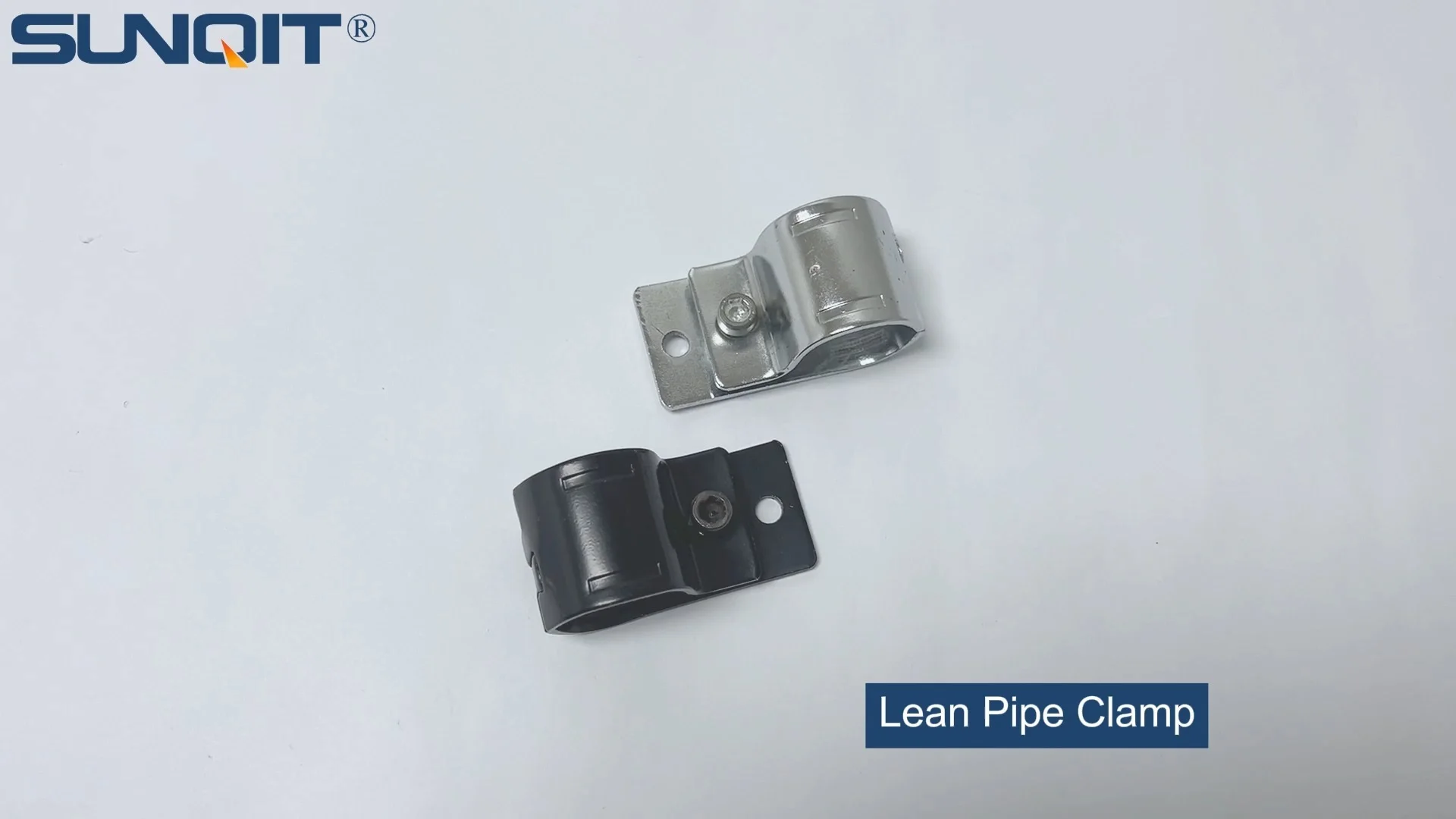
Lean Pipe Clamp
Lean pipe clamp is used for rack system hang monitor or other panel for workbenck, flowrack in production daily use.
The Shift Toward Flexible Manufacturing
Walk into any modern factory or workshop today, and you'll notice a quiet revolution happening on the shop floor. Gone are the days of rigid, one-size-fits-all workstations bolted to the ground, designed to produce a single product for years on end. Today's manufacturing landscape moves faster. Consumer demands shift overnight, product lifecycles shrink, and small-batch production is no longer a niche—it's the norm. In this environment, flexibility isn't just a nice-to-have; it's the difference between thriving and falling behind.
Consider a mid-sized electronics manufacturer I visited last year. Their assembly line once churned out the same smartphone model for six months straight. Now, they switch between three different device types weekly—each with unique components, tool requirements, and workflow needs. Traditional metal workbenches, with fixed shelves and immovable tool racks, left them scrambling. Workers wasted hours rearranging equipment, and downtime between product runs ate into profits. Sound familiar? This is the reality for countless teams across automotive, aerospace, medical device, and consumer goods industries.
The solution? Modular workstations built on lean principles—systems that adapt as quickly as your production needs do. And at the heart of these systems lies an unsung hero: the adjustable lean pipe clamp. These unassuming components might not grab headlines, but they're the reason today's factories can reconfigure a workstation in an hour instead of a week. Let's dive into what makes adjustable lean pipe clamps so transformative, and how they're reshaping the way we build and use workstations.
What Are Adjustable Lean Pipe Clamps?
First, let's clarify: lean pipe systems (often called "flexible pipe systems") are modular setups made from lightweight, durable pipes and connectors, designed to create everything from workbenches and flow racks to material trolleys and assembly lines. They're the backbone of lean manufacturing, emphasizing efficiency, waste reduction, and adaptability. And adjustable lean pipe clamps? They're the connectors that hold this backbone together—with a twist.
Unlike fixed clamps, which lock pipes into a permanent position (think: a welded joint or a one-time-use plastic connector), adjustable clamps are designed to be loosened, repositioned, and retightened repeatedly. Picture a simple yet clever mechanism: a clamp that wraps around two lean pipes (or a pipe and an aluminum profile), secured by a bolt or lever. Twist the bolt, and the clamp releases, letting you slide, rotate, or reangle the pipes. Tighten it back down, and it holds firm—strong enough to support tools, materials, or even heavy components.
Most adjustable clamps are made from robust materials like galvanized steel, stainless steel, or even aluminum for lighter applications. They come in various sizes to fit standard lean pipe diameters (typically 28mm or 30mm) and are compatible with common lean pipe joints, which add stability at corners or intersections. The magic isn't just in their design, though—it's in how they empower teams to take control of their workspace. No more waiting for maintenance to weld a new shelf; no more buying entirely new workstations when product specs change. With a few turns of a wrench, your team can reimagine their setup.

The Core Benefits of Adjustable Lean Pipe Clamps for Workstations
So, why should you care about these clamps? Let's break down their impact—from day-to-day operations to long-term business resilience.
1. Unmatched Flexibility in Design
The biggest draw of adjustable lean pipe clamps is, without question, flexibility. Let's say you run a small assembly line building custom industrial tools. One week, you're assembling compact drills that need low, ergonomic workbenches with tool hooks at waist height. The next week, you switch to larger saws, requiring taller work surfaces and overhead storage racks for bulky components. With fixed clamps, you'd need two separate workstations—or spend days disassembling and rebuilding. With adjustable clamps? Your team can loosen the joints, raise the workbench height by 12 inches, reposition the overhead rack, and tighten everything back down in under an hour.
This flexibility extends to micro-adjustments, too. Maybe a worker prefers their parts bin tilted at a 15-degree angle to reduce bending, while their neighbor needs it flat for better visibility. Adjustable clamps let you tweak individual components without disrupting the entire workstation. It's customization at the speed of your team's needs.
2. Cost-Effective Scalability
Manufacturing budgets are tight, and every dollar spent on equipment needs to justify its value. Adjustable lean pipe clamps excel here by turning one workstation into many. Instead of buying a new flow rack when you add a product line, you can reconfigure your existing one using the same pipes, clamps, and aluminum profiles. Over time, this reusability slashes capital expenses. A 2023 study by the Lean Manufacturing Institute found that companies using modular lean systems with adjustable components reduced workstation-related costs by 35% compared to those using fixed metal setups.
There's also the cost of downtime to consider. Traditional reconfigurations might take a full shift—halting production and delaying orders. With adjustable clamps, rework happens during breaks or between shifts, minimizing lost time. For a factory running two shifts daily, that's potentially 16 hours of saved production time per reconfiguration.
3. Enhanced Ergonomics and Worker Productivity
Happy, healthy workers are productive workers—and adjustable clamps play a quiet role in boosting both. Ergonomics isn't a one-size-fits-all science. A workstation that's comfortable for a 6-foot-tall worker might cause strain for someone shorter. Adjustable clamps let teams tailor their setups to individual needs: raising or lowering workbenches, angling conveyor tracks to reduce reaching, or positioning tool holders at shoulder height instead of waist height.
Take an automotive parts supplier I worked with last year. They switched to adjustable clamp-based workstations and saw a 22% drop in reported back pain and a 15% increase in hourly output. Workers weren't just more comfortable—they felt empowered to shape their environment, which boosted morale. When your team can adjust their space to fit their body, they focus less on discomfort and more on getting the job done right.
4. Durability That Stands the Test of Time
You might be thinking: "If they're adjustable, do they hold up over time?" The answer is a resounding yes—when you choose quality clamps. High-grade adjustable clamps (like those made from stainless steel or heavy-duty aluminum) are built to withstand the wear and tear of daily use. They resist corrosion in humid or dusty environments, and their locking mechanisms (often featuring nylon or rubber gaskets) maintain grip even after dozens of adjustments. I've visited factories where adjustable clamps have been in use for 5+ years, still functioning like new.
Compare that to cheap, fixed plastic connectors, which crack under stress, or welded joints, which weaken if you try to modify them. Adjustable clamps are an investment, but one that pays off in longevity. They grow with your business, adapting to new challenges instead of becoming obsolete.
5. Seamless Integration with Lean Systems
Adjustable clamps don't work in isolation—they're part of a larger lean ecosystem. Pair them with lean pipes, aluminum profiles, flow racks, and roller tracks, and you've got a system that supports core lean principles like "just-in-time" production and continuous improvement (kaizen). For example, a flow rack used to move components along an assembly line can have its angle adjusted with clamps to speed up or slow down material flow, reducing bottlenecks. A workbench can be reconfigured to include a built-in conveyor for waste removal, cutting down on trips to the trash bin.
This integration is key for teams serious about lean manufacturing. It turns static workstations into dynamic tools that evolve with your processes. When you can tweak a setup in response to a kaizen suggestion (e.g., "Let's move the parts bin closer to the assembly point"), you're not just improving efficiency—you're fostering a culture of innovation.

Real-World Applications: From Workbenches to Flow Racks
Let's ground this in real examples. Adjustable lean pipe clamps shine in scenarios where adaptability is critical. Here are three common use cases where they make a tangible difference:
Case 1: Electronics Manufacturing Workbenches
Electronics assembly is a fast-paced world, with products ranging from tiny circuit boards to larger devices like tablets. A workbench that assembles smartwatch components one week might need to handle laptop motherboards the next—each requiring different tool layouts, static protection (ESD workstations), and part storage. Adjustable clamps let teams swap out ESD-safe shelves, reposition anti-static mats, or add/remove tool hooks as needed. One electronics plant in Taiwan I toured uses adjustable clamps to reconfigure 12 workstations daily, switching between three product lines without missing a beat.
Case 2: Automotive Parts Flow Racks
Flow racks are the backbone of many automotive assembly lines, feeding parts (like screws, gaskets, or small components) to workers in sequence. But when a new car model launches, part sizes or quantities often change. A flow rack designed for 10mm bolts might need to hold 12mm bolts, requiring wider dividers. With adjustable clamps, workers can loosen the dividers, slide them apart, and retighten—no new rack needed. A major auto supplier in Michigan reported saving $40,000 in flow rack costs last year by reusing existing setups with adjustable clamps.
Case 3: Turnover Trolleys for Material Handling
Turnover trolleys (used to move materials between stations) often need to carry varying loads: empty bins one trip, full parts bins the next. Adjustable clamps let teams add or remove shelves, adjust handle heights for different operators, or even modify the trolley's width to fit through narrower aisles. A food packaging facility in Canada uses adjustable clamp-based trolleys to switch between transporting glass jars (needing dividers) and plastic bottles (needing flat shelves)—all with the same base trolley.

Adjustable vs. Fixed Clamps: A Side-by-Side Comparison
| Feature | Adjustable Lean Pipe Clamps | Fixed Clamps/Joints |
|---|---|---|
| Flexibility | High: Can be repositioned, rotated, or adjusted repeatedly. | Low: Permanent position once installed; cannot be modified. |
| Assembly Time | Medium: Initial setup takes 10–15 minutes; reconfigurations take 5–10 minutes. | Low: Quick to install (5–10 minutes) but cannot be reused. |
| Long-Term Cost | Lower: Reusable across multiple setups; reduces need for new equipment. | Higher: Requires replacement when needs change; adds up over time. |
| Ergonomic Potential | High: Supports individual adjustments for worker comfort. | Low: Static setup; may not fit all workers. |
| Best For | Dynamic environments with frequent product/process changes; lean manufacturing teams. | Static production lines with stable, long-term product runs. |
Choosing the Right Adjustable Clamps: Key Considerations
Not all adjustable clamps are created equal. To get the most value, keep these factors in mind when selecting clamps for your workstations:
- Load Capacity: Check the clamp's weight rating. A clamp for holding small tools won't work for a shelf supporting 50kg of materials. Look for clamps rated for at least 1.5x your expected load to be safe.
- Material Compatibility: Ensure the clamp fits your lean pipe diameter and works with your existing aluminum profiles or stainless steel pipes. Most manufacturers list compatible pipe sizes (e.g., "fits 28mm lean pipe" or "compatible with 40x40 aluminum profiles").
- Environmental Needs: For humid, corrosive, or cleanroom environments, opt for stainless steel clamps. For lighter, cost-sensitive setups, aluminum or galvanized steel may suffice.
- Ease of Adjustment: Lever-operated clamps are faster to adjust than bolted ones, which require a wrench. Choose based on how often you'll reconfigure—frequent changes call for quicker adjustment mechanisms.
- Supplier Reliability: Go with reputable lean pipe suppliers who stand behind their products. Cheap, off-brand clamps may fail under stress, risking worker safety or costly downtime.
Conclusion: Building the Workstations of Tomorrow
In a world where change is the only constant, adjustable lean pipe clamps aren't just tools—they're enablers. They turn static workspaces into dynamic, adaptable ecosystems that grow with your business, empower your team, and reduce waste. Whether you're running a small workshop or a large manufacturing plant, the benefits are clear: flexibility that cuts costs, ergonomics that boost productivity, and durability that stands the test of time.
The next time you look at your factory floor, think about the possibilities. What if your workstations could evolve as quickly as your ideas? What if your team could tweak, adjust, and reimagine their setup without waiting for permission or new equipment? With adjustable lean pipe clamps, that future is already here. It's not just about building better workstations—it's about building a more resilient, innovative, and human-centered way of manufacturing.
So, grab a clamp, gather your team, and start reimagining. Your workspace—and your bottom line—will thank you.