- Company Articles
- Products and Technology
- Product knowledge
- Adjustable Leveling Feet Explained: How They Work in Flexible Production Equipment

Adjustable Leveling Feet Explained: How They Work in Flexible Production Equipment
Related Product
Adjustable Leveling Feet
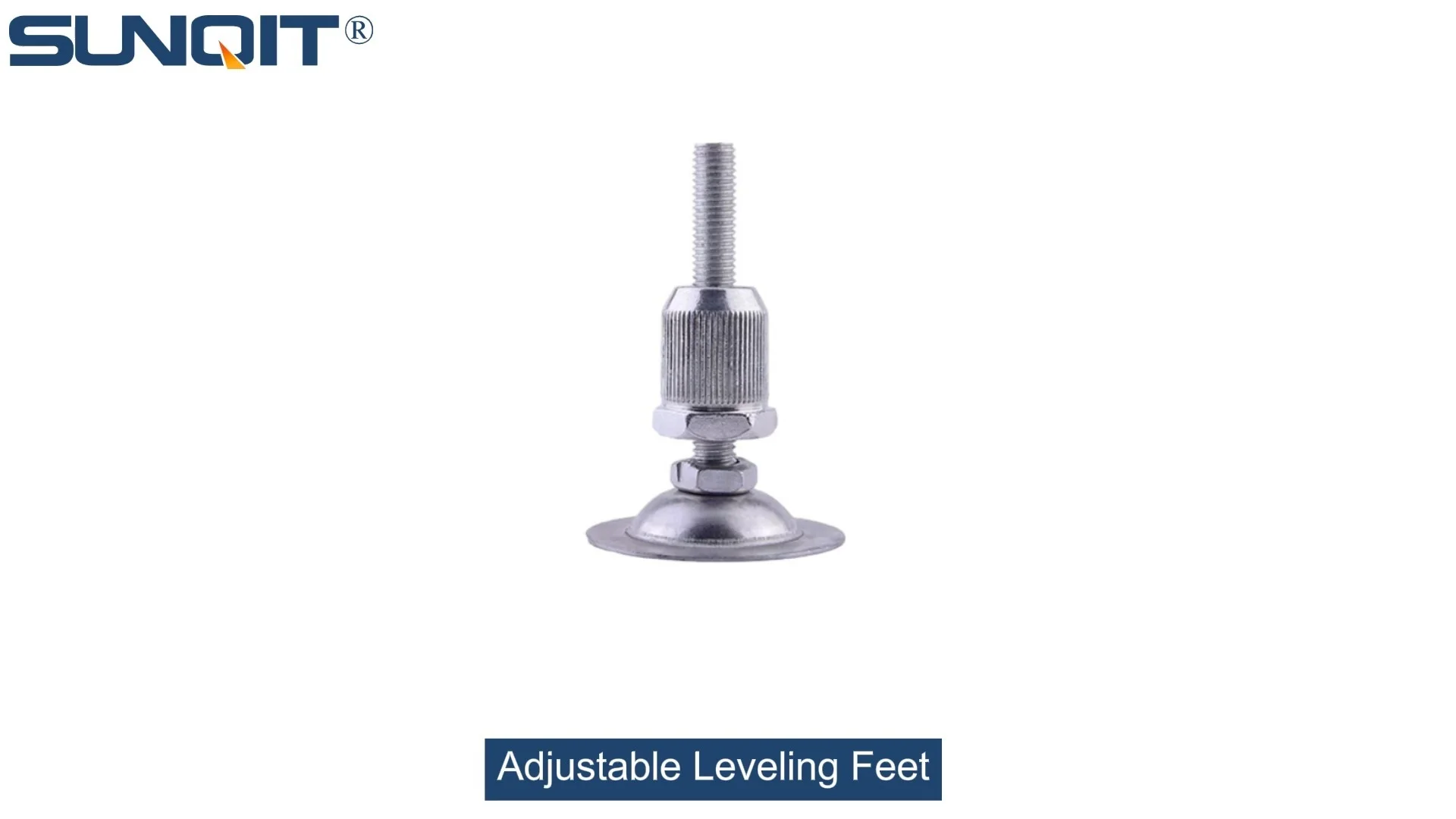
Adjustable leveling feet are designed to keep machines level when placed on uneven or sloped ground. Otherwise known as adjustable equipment feet, they are available to order in a wide variety of size and load capacity combinations.
Walk into any manufacturing facility, warehouse, or assembly line, and you'll likely notice rows of workbenches, conveyor systems, and machinery humming with activity. Amidst the buzz of productivity, there's a quiet hero keeping everything stable, precise, and safe: the adjustable leveling foot. These unassuming components might not grab headlines, but they play a critical role in ensuring that flexible production equipment—from lean pipe workbenches to aluminum profile assembly stations—performs at its best. In this article, we'll dive deep into what adjustable leveling feet are, how they work, and why they're indispensable in modern manufacturing.
What Are Adjustable Leveling Feet, Anyway?
At their core, adjustable leveling feet are mechanical components designed to support and stabilize equipment while allowing height adjustments to compensate for uneven surfaces. Think of them as the "feet" of your production equipment—except they're not just for standing; they're for optimizing how equipment stands. Whether it's a wobbly workbench on a cracked concrete floor or a conveyor system that needs precise alignment with an assembly line, these small but mighty tools step in to bridge the gap (literally).
Most adjustable leveling feet share a few basic parts: a threaded stem (the "leg"), a base (the "foot" that touches the floor), and an adjustment mechanism (usually a nut or handle that lets you raise or lower the stem). Some models also include locking features to keep the foot from shifting once set, or anti-slip bases to prevent sliding. Materials vary, too—you'll find them in steel, aluminum, or even reinforced plastic, depending on the load capacity and environment (e.g., corrosive vs. dry conditions).
How Do Adjustable Leveling Feet Actually Work?
The magic of adjustable leveling feet lies in their simplicity. Let's break down the process step by step:
1. The Threaded Stem: The "Height Controller"
The stem is typically a metal rod with threads (like a bolt) that screws into a mounting point on the equipment—say, the bottom of a lean pipe workbench or an aluminum profile frame. When you twist the stem (or the nut around it), it moves up or down relative to the equipment. Twist clockwise, and the stem extends, raising the equipment; twist counterclockwise, and it retracts, lowering the equipment. It's similar to turning a screw to adjust a table leg, but engineered for industrial durability.
2. The Base: Spreading the Weight
Attached to the bottom of the stem is the base, which distributes the equipment's weight across the floor. A larger base means more stability, as it reduces pressure on the floor (important for preventing cracks or indentations) and minimizes the chance of tipping. Bases might be flat, rounded, or even equipped with rubber pads for extra grip—especially useful in environments where floors are oily or smooth.
3. Locking Mechanisms: Keeping It Steady
Once you've adjusted the height to perfection, a locking nut (often called a "jam nut") is tightened against the equipment's mounting point to hold the stem in place. Without this, vibrations from machinery or accidental bumps could cause the stem to unscrew, undoing your careful adjustments. Some advanced models even have self-locking threads or spring-loaded bases that automatically compensate for minor shifts—handy for high-vibration areas like stamping plants.

Why They Matter: The Impact on Flexible Production
Flexible production equipment—think lean pipe workbenches, aluminum profile assembly stations, and mobile workstations—relies on adaptability. These setups are designed to be reconfigured quickly for changing production needs, but that flexibility means they're often moved, adjusted, or repurposed. Without adjustable leveling feet, this adaptability would come with a cost: instability, inaccuracy, and even safety risks.
Stability = Productivity (and Safety)
Imagine assembling delicate electronics on a workbench that wobbles with every movement. A slight shake could misalign a circuit board, leading to faulty products or rework. Or picture a conveyor system that's tilted because the floor dips—packages might slide off, jamming the line and halting production. Adjustable leveling feet eliminate these issues by ensuring equipment sits flat and steady, even on uneven floors. This stability isn't just about productivity; it's about safety, too. A wobbly machine is more likely to tip, putting workers at risk of injury or damage to expensive tools.
Precision in Every Adjustment
In industries like automotive or aerospace, where measurements are precise down to the millimeter, even a tiny tilt in a workbench can throw off an entire assembly. Adjustable leveling feet let operators fine-tune height to within fractions of an inch, ensuring that parts align perfectly with jigs, fixtures, or conveyor tracks. For example, a lean pipe workbench used for quality inspection needs to be level with the incoming conveyor to smoothly pass products—adjustable feet make that alignment possible, even if the floor slopes slightly from one end of the line to the other.
Protecting Equipment (and Floors)
Uneven weight distribution can strain equipment over time. A workbench with one short leg might bend its frame, warping the surface or damaging internal components. Adjustable leveling feet distribute weight evenly, extending the lifespan of expensive tools. They also protect floors: by spreading weight and preventing wobbling, they reduce wear and tear on concrete, epoxy, or tile—saving facilities money on repairs.

Common Types of Adjustable Leveling Feet (and When to Use Them)
Not all adjustable leveling feet are created equal. Different production environments and equipment require different designs. Here's a breakdown of the most common types, along with their best uses:
| Type | Key Features | Load Capacity | Best For |
|---|---|---|---|
| Standard Threaded Feet | Basic design with a threaded stem and flat base; simple to adjust with a wrench. | Up to 2,000 lbs per foot | Light to medium-duty equipment like small workbenches or shelving units. |
| Heavy-Duty Leveling Feet | Thicker stems (often steel) and large, reinforced bases; built for high weight. | 2,000–10,000+ lbs per foot | Industrial machinery, large conveyor systems, or heavy aluminum profile workstations. |
| Swivel Base Feet | Bases that rotate to adapt to uneven floors; ideal for sloped or curved surfaces. | Up to 5,000 lbs per foot | Outdoor equipment, loading docks, or facilities with uneven concrete. |
| ESD-Compliant Feet | Conductive materials (e.g., carbon-filled rubber) to dissipate static electricity. | Up to 3,000 lbs per foot | Electronics manufacturing, where static can damage sensitive components (paired with ESD workbenches). |
| Retractable Feet (with Casters) | Feet that retract to let caster wheels take over, allowing easy movement. | Up to 4,000 lbs per foot | Mobile workstations or lean pipe trolleys that need to be both movable and stationary. |
For example, a lean pipe workbench used in a warehouse might use standard threaded feet for basic stability, while a heavy aluminum profile assembly line in an automotive plant would rely on heavy-duty leveling feet to support the weight of car parts. And in a lab where static control is critical, ESD-compliant feet ensure that sensitive equipment isn't damaged by electrostatic discharge.

Installation and Maintenance: Keeping Feet in Top Shape
Adjustable leveling feet are low-maintenance, but a little care goes a long way in ensuring they perform reliably. Here's how to install and maintain them:
Installation Tips
1. Check the mounting points: Ensure the equipment has threaded holes or plates that match the stem's diameter and thread type (e.g., M10, 1/2"-13). Mismatched threads can strip the mounting point, making adjustments impossible.
2. Level in stages: Start by loosely attaching all feet, then adjust each one incrementally until the equipment is stable. Tighten the locking nuts once level—over-tightening can warp the equipment's frame.
3. Test for stability: After installation, push gently on different corners of the equipment to check for wobbling. If it moves, readjust the feet until it's solid.
Maintenance Musts
1. Clean threads regularly: Dust, grease, or debris can clog threads, making adjustments difficult. Wipe stems with a cloth and apply a light machine oil (avoid WD-40, which can attract dirt) to keep them turning smoothly.
2. Inspect bases for wear: Rubber pads or grip surfaces can degrade over time, reducing traction. replace worn bases to prevent slipping.
3. Tighten locking nuts: Vibrations can loosen jam nuts, so check them monthly and retighten as needed. A quick twist with a wrench can save you from a wobbly workbench later.
The Future of Adjustable Leveling Feet: Smart and Sustainable
As manufacturing evolves, so do the tools that support it. Adjustable leveling feet are no exception. Today's innovations are focused on two key areas: smart technology and sustainability.
Some manufacturers are experimenting with "smart" leveling feet equipped with sensors that monitor height, load, and vibration. These sensors send data to a central system, alerting operators if adjustments are needed—before instability becomes a problem. Imagine a lean pipe workbench that automatically notifies maintenance when a foot starts to loosen, preventing downtime.
Sustainability is another trend. With a push toward eco-friendly manufacturing, companies are using recycled steel or aluminum for stems and bases, and biodegradable rubber for grip pads. Lightweight aluminum profiles paired with aluminum leveling feet also reduce energy use during transportation and installation—small changes that add up to big environmental benefits.
Final Thoughts: The Unsung Heroes of the Production Floor
Adjustable leveling feet may not be the most glamorous part of a production line, but they're essential. They turn wobbly workbenches into stable workstations, uneven floors into level surfaces, and flexible setups into reliable, productive systems. Whether you're assembling electronics on an ESD workbench, moving materials with a turnover trolley, or building a custom aluminum profile workstation, these small components ensure that every part of your operation runs smoothly.
So the next time you walk through a manufacturing facility, take a moment to notice the feet under the equipment. Chances are, they're hard at work—quietly, steadily, and (indispensable) to keeping the world of production moving forward.