- Company Articles
- Products and Technology
- Product knowledge
- Adjustable Leveling Feet for 3C Product Testing Workstations – Vibration Control

Adjustable Leveling Feet for 3C Product Testing Workstations – Vibration Control
Related Product
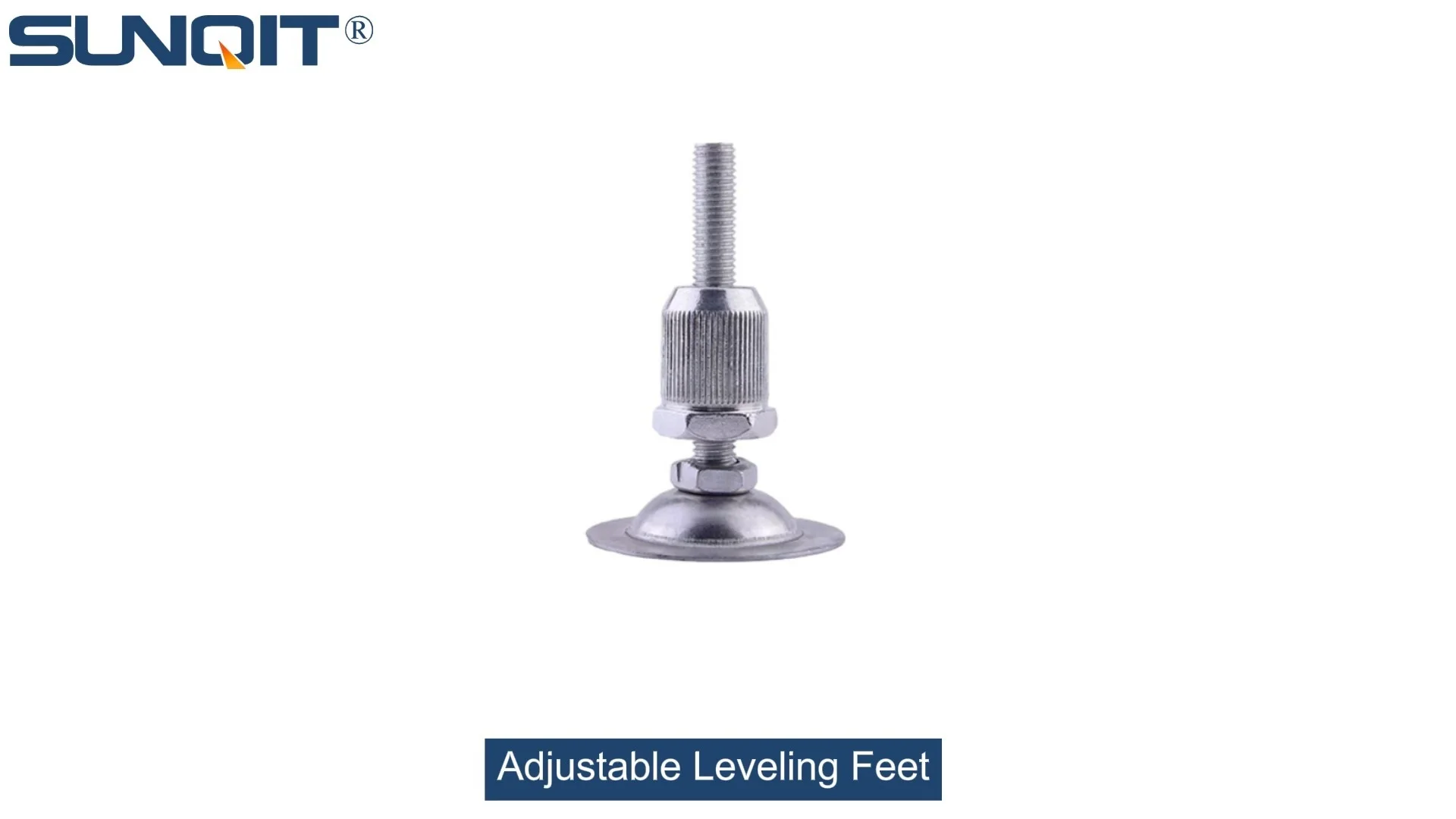
Adjustable Leveling Feet
Adjustable leveling feet are designed to keep machines level when placed on uneven or sloped ground. Otherwise known as adjustable equipment feet, they are available to order in a wide variety of size and load capacity combinations.
Introduction: The Hidden Challenge in 3C Product Testing
Walk into any 3C (Consumer Electronics, Communications, and Computer) manufacturing facility, and you'll likely be struck by the precision that defines every step of the process. From the sleek smartphones gliding down assembly lines to the intricate circuit boards being inspected under microscopes, these products demand accuracy at a microscopic level. What many people don't see, however, is the silent battle happening beneath the surface—one that could make or break the quality of the final product: the fight against vibration. In this high-stakes environment, the workbench isn't just a piece of furniture; it's the foundation upon which reliability is built. And at the heart of that foundation? Adjustable leveling feet. These unassuming components might not grab headlines, but they play a critical role in ensuring that testing equipment stays stable, measurements remain accurate, and products meet the rigorous standards consumers expect.
Consider this: a single misalignment of 0.1mm during a camera module test can result in blurry photos on a flagship phone. A tiny vibration during a circuit continuity check might cause a false reading, leading to a defective component slipping through quality control. For 3C manufacturers, where margins are tight and competition is fierce, such errors aren't just costly—they erode trust. That's why forward-thinking facilities are investing in more than just top-of-the-line testing tools; they're rethinking the very workstations those tools sit on. And when it comes to workstation stability, adjustable leveling feet are no longer an afterthought—they're a necessity.
The Critical Role of Stability in 3C Testing Workstations
To understand why adjustable leveling feet matter, let's first unpack what makes 3C testing so uniquely demanding. Unlike, say, assembling furniture, where slight wobbles might be annoying but harmless, 3C testing involves interactions with components that are often smaller than a grain of rice. Take semiconductor chips, for example: modern chips can have billions of transistors packed into a space the size of a fingernail. Testing these requires equipment that can position probes with nanometer precision. Even the tiniest vibration—from a nearby forklift, a technician's footsteps, or an uneven floor—can throw off these delicate operations.
This is where the workbench itself becomes a critical variable. A stable workstation isn't just about keeping tools from sliding around; it's about creating a controlled environment where external disturbances are minimized. For ESD-sensitive components (a common concern in 3C manufacturing), an esd workbench is already standard to prevent electrostatic discharge. But even the best esd workbench can fail if it's not properly leveled. An uneven surface causes stress on the workstation frame, leading to micro-movements over time. These movements might be imperceptible to the human eye, but to a laser interferometer or a scanning electron microscope, they're catastrophic.
Stability also impacts operator comfort and efficiency. A wobbly workbench forces technicians to compensate, leading to fatigue and increased risk of human error. Over time, this can slow down testing processes and contribute to higher turnover rates. In short, workstation stability is a chain that links directly to product quality, operational efficiency, and bottom-line results. And adjustable leveling feet are the link that keeps that chain from breaking.

Understanding Vibration in Testing Environments: Sources and Solutions
Vibration in manufacturing environments comes from a variety of sources, some obvious and others surprisingly subtle. Let's start with the most common culprit: uneven flooring. Many factories are housed in older buildings where floors have settled over time, creating slight slopes or bumps. Even new facilities can have minor inconsistencies in concrete pouring, leading to uneven surfaces. When a workbench is placed on such a floor, it rocks back and forth, transmitting those movements to the equipment above. Then there's the issue of nearby machinery—compressors, conveyor belts, and even HVAC systems generate constant vibrations that travel through the floor and into workstations. Foot traffic is another factor; every time someone walks past a testing area, the ground vibrates slightly, and that energy can ripple through a poorly stabilized workbench.
The effects of these vibrations are far-reaching. In optical testing, for instance, vibrations cause lenses to shift, blurring images and making it impossible to verify the alignment of camera sensors. In electrical testing, they can cause probes to lose contact with circuit boards, leading to intermittent readings. For mechanical stress tests, vibrations can add unintended forces to components, skewing results and leading to incorrect durability assessments. The problem is compounded by the fact that 3C products are getting smaller and more complex. A decade ago, a 1mm vibration might have been negligible for a laptop's hard drive; today, it could disrupt the performance of a foldable phone's flexible display panel.
So, how do adjustable leveling feet address this? At their core, these devices are designed to compensate for uneven surfaces by allowing precise height adjustment of each workstation leg. By turning a threaded stem, operators can raise or lower individual feet, ensuring that the workbench sits perfectly level, even on the most irregular floors. But their role goes beyond leveling. High-quality adjustable feet also feature materials that absorb vibrations, acting as a buffer between the floor and the workstation. Rubber or polyurethane pads, for example, dampen the energy from external sources, preventing it from reaching sensitive equipment. Some advanced models even include locking mechanisms to maintain the adjusted height over time, ensuring that stability doesn't degrade as the workstation is used.

Adjustable Leveling Feet: Beyond the Basics
Not all adjustable leveling feet are created equal. To truly meet the demands of 3C testing, these components need to be more than just "height adjusters"—they need to be engineered for precision, durability, and compatibility with the unique needs of the industry. Let's break down the key features that set high-performance leveling feet apart.
Material Matters: Aluminum Profile and Beyond
The material of the leveling foot directly impacts its performance. For heavy-duty workstations—those supporting large testing equipment like X-ray machines or thermal chambers—steel bases with zinc plating are common, offering excellent load capacity and corrosion resistance. But for most 3C testing workstations, which are often built using aluminum profile for its lightweight strength and modularity, aluminum-based leveling feet are a natural fit. Aluminum profile workstations are popular because they're easy to customize, resistant to rust, and compatible with a wide range of accessories. When paired with aluminum leveling feet, the entire system becomes more cohesive, with consistent materials reducing the risk of galvanic corrosion and ensuring a clean, professional look.
The base of the leveling foot is another critical consideration. Rubber or polyurethane pads are standard for their vibration-dampening properties, but the hardness of the material matters. Softer rubbers absorb more vibration but may wear down faster under heavy loads, while harder rubbers offer better durability but less dampening. Some manufacturers offer interchangeable pads, allowing facilities to swap materials based on the specific testing environment. For ESD-sensitive areas, conductive rubber pads are available, ensuring that static charges are safely grounded—an essential feature when paired with an esd workbench.
Adjustment Mechanisms: Precision at Your Fingertips
The way a leveling foot adjusts can make a big difference in usability. Traditional models use a hex nut or a knurled knob that requires a wrench or manual turning. While simple, these can be time-consuming to adjust, especially when fine-tuning is needed. More advanced designs feature a "quick-adjust" mechanism, where a lever or a dial allows for tool-free height changes, speeding up setup and recalibration. For workstations that need to be leveled frequently—such as those moved between testing areas—this can save significant time over the long run.
Another innovation is the inclusion of a visual indicator, like a bubble level built into the foot itself. This allows operators to see at a glance whether the workstation is level, eliminating the need for a separate level tool. Some high-end models even connect to digital sensors, sending real-time level data to a central monitoring system. This is particularly useful in smart factories, where predictive maintenance is a priority—if a foot starts to loosen or wear, the system can alert technicians before stability is compromised.

Comparing Adjustable Leveling Feet: Which Type is Right for Your Workstation?
With so many options on the market, choosing the right adjustable leveling feet can feel overwhelming. To simplify the process, let's compare four common types, evaluating their strengths, weaknesses, and ideal use cases in 3C testing environments.
| Type of Leveling Foot | Key Materials | Load Capacity (per foot) | Adjustment Range | Vibration Dampening | Best For |
|---|---|---|---|---|---|
| Standard Rubber-Based | Steel stem, rubber pad | Up to 500 kg | 10-30 mm | Moderate | General testing workstations with light-to-medium equipment |
| Heavy-Duty Anti-Slip | Stainless steel stem, polyurethane pad | Up to 1500 kg | 15-40 mm | High | Workstations with large equipment (e.g., thermal cyclers, X-ray machines) |
| ESD-Compliant | Aluminum stem, conductive rubber pad | Up to750 kg | 12-35 mm | Moderate-High | ESD workbenches and areas with sensitive electronic components |
| Aluminum Profile-Mounted | Aluminum stem and base, rubber pad | Up to 600 kg | 8-25 mm | Moderate | Aluminum profile workstations requiring modular integration |
As the table shows, the ESD-compliant model stands out for environments where static control is critical—making it a top choice for esd workbench setups. Its conductive rubber pad ensures that any static charge generated on the workstation is safely dissipated to the ground, protecting components like microchips and sensors. The heavy-duty anti-slip model, on the other hand, is ideal for workstations supporting large testing equipment, thanks to its high load capacity and superior vibration dampening. For facilities using aluminum profile workstations, the aluminum profile-mounted feet offer seamless integration, as they're designed to attach directly to the profile's T-slots, eliminating the need for additional brackets.
When selecting a leveling foot, it's also important to consider the environment in which it will be used. For cleanrooms, where dust and contamination are concerns, feet with smooth surfaces and minimal crevices are better, as they're easier to clean. In humid or corrosive environments, stainless steel stems are a must to prevent rust. And for mobile workstations—those mounted on casters—self-locking leveling feet are available, which can be lowered to stabilize the workstation when in use and raised to allow movement.
Installation and Maintenance: Ensuring Long-Term Stability
Even the best adjustable leveling feet won't perform well if they're installed incorrectly. Proper installation is key to maximizing stability and extending the life of both the feet and the workstation. Let's walk through the steps to ensure a solid setup.
Installation Best Practices
First, start with a clean workspace. Remove any debris from the floor where the workstation will be placed, as small particles can interfere with the leveling process. Next, inspect the workstation legs to ensure they're free of damage—bends or cracks in the legs can prevent the feet from seating properly. If the workstation is new, assemble it according to the manufacturer's instructions, leaving the leveling feet loose until the final step.
Once the workstation is assembled, place it in its intended location and use a spirit level to check for unevenness. Start by adjusting the feet one by one, focusing on the leg that's highest off the ground first. Turn the adjustment stem clockwise to lower the foot or counterclockwise to raise it, checking the level after each adjustment. For larger workstations, it's helpful to have a second person hold the level while you adjust the feet. Once the workbench is level, tighten any locking nuts or mechanisms to prevent the feet from shifting over time. Finally, test the stability by gently pushing on different corners of the workstation—there should be no rocking or movement.
For aluminum profile workstations, installation is slightly different. These often use T-slot nuts that slide into the profile's grooves, allowing the leveling feet to be positioned anywhere along the leg. This flexibility is one of the advantages of aluminum profile, as it lets operators adjust the foot placement to accommodate uneven floors or heavy equipment loads. When attaching feet to aluminum profiles, make sure the T-slot nuts are fully seated and tightened to prevent them from slipping.
Maintenance Tips for Longevity
Adjustable leveling feet are low-maintenance components, but a little care can go a long way in ensuring they perform reliably. Regular inspections are key—check the feet monthly for signs of wear, such as cracks in the rubber pads or corrosion on the stems. If the pads are worn, replace them immediately; worn pads reduce stability and vibration dampening. For threaded stems, apply a small amount of anti-seize lubricant every six months to prevent rust and ensure smooth adjustment. Avoid using harsh chemicals when cleaning the feet, as these can degrade rubber pads and damage metal surfaces—mild soap and water are usually sufficient.
It's also important to recalibrate the leveling feet periodically. Over time, factors like temperature changes, heavy loads, and floor settling can cause the workstation to become uneven again. A good rule of thumb is to check the level every three months, or whenever the workstation is moved. For high-precision testing areas, consider implementing a more frequent schedule—monthly checks might be necessary to maintain optimal stability.
Case Study: How Adjustable Leveling Feet Transformed a 3C Testing Facility
To put these concepts into context, let's look at a real-world example of how adjustable leveling feet improved operations at a mid-sized 3C manufacturer. This facility specialized in testing camera modules for smartphones, a process that requires extreme precision—even a 0.01mm misalignment can result in blurry images or autofocus issues. Despite using high-end testing equipment and esd workbenches, the facility was struggling with a 5% failure rate during final inspections, leading to costly rework and delayed shipments.
An investigation revealed that the issue was vibration-related. The testing area was located near a conveyor belt, and even though the workstations were placed on rubber mats, the constant movement of the conveyor was causing micro-vibrations in the workbenches. The existing leveling feet were basic plastic models with minimal adjustability, and the rubber mats were not effectively dampening the vibrations. The facility's engineering team decided to upgrade to heavy-duty anti-slip adjustable leveling feet with polyurethane pads, specifically designed for vibration absorption.
The results were striking. Within the first month, the failure rate dropped to 1.2%, a reduction of over 75%. Technicians reported that the testing equipment was far more stable, with fewer interruptions due to misaligned probes. The facility also noticed a secondary benefit: the new feet were easier to adjust, cutting setup time for new workstations by 30%. Over the course of a year, the savings from reduced rework and increased efficiency more than paid for the cost of the leveling feet upgrade.
This case study highlights a key point: adjustable leveling feet aren't just a "nice-to-have" accessory—they're an investment in quality. For 3C manufacturers, where even small improvements in accuracy can lead to significant cost savings, upgrading to high-performance leveling feet is a decision that pays dividends.
Choosing the Right Supplier: Quality and Support Matter
With so many options available, selecting the right supplier for adjustable leveling feet is just as important as choosing the right product. A reliable supplier can provide not only high-quality components but also valuable expertise to help you select the best feet for your specific needs.
Start by looking for suppliers with experience in the 3C industry. These suppliers understand the unique challenges of testing environments and can recommend products tailored to your applications. Ask about their quality control processes—do they test each batch of leveling feet for load capacity and durability? Do they offer material certifications, such as RoHS compliance for electronics manufacturing? A reputable supplier will be transparent about their testing procedures and happy to provide documentation.
Customization options are another factor to consider. Every workstation is different, and off-the-shelf feet may not always be the best fit. Suppliers that offer custom lengths, materials, or pad options can help you create a solution that meets your exact requirements. For example, if you need leveling feet that attach to a specific type of aluminum profile, a supplier with in-house engineering capabilities can design a custom mounting bracket.
Finally, don't overlook customer support. A good supplier should offer technical assistance during installation and troubleshooting help if issues arise. Look for suppliers with responsive customer service teams and a track record of standing behind their products with warranties. Remember, the cheapest option isn't always the best—investing in a quality product from a reliable supplier will save you time and money in the long run.
Conclusion: Elevating Quality Through Stability
In the fast-paced world of 3C manufacturing, where innovation is constant and consumer expectations are higher than ever, the smallest details can make the biggest difference. Adjustable leveling feet may not be the most glamorous components in a testing facility, but they play a vital role in ensuring that products meet the precision and reliability standards that define the industry. By compensating for uneven floors, absorbing vibrations, and providing a stable platform for testing equipment, these unassuming devices help manufacturers reduce errors, improve efficiency, and build trust with customers.
Whether you're setting up a new testing lab or upgrading existing workstations, investing in high-quality adjustable leveling feet is a decision that delivers tangible returns. From ESD-compliant models for sensitive electronics to heavy-duty feet for large equipment, there's a solution to fit every need. And when paired with a well-designed workbench—whether it's an aluminum profile workstation or an esd workbench—adjustable leveling feet create a foundation for success that can withstand the demands of modern 3C manufacturing.
So, the next time you walk into a testing facility, take a moment to look down. Those small, unassuming feet beneath the workbench might just be the reason the products rolling off the line are as reliable as they are. In the world of 3C testing, stability isn't just a goal—it's the starting point. And adjustable leveling feet are how we get there.