- Company Articles
- Products and Technology
- Product knowledge
- Adjustable Leveling Feet for Automotive Assembly Lines – Withstanding Heavy Tool Loads

Adjustable Leveling Feet for Automotive Assembly Lines – Withstanding Heavy Tool Loads
Related Product
Adjustable Leveling Feet
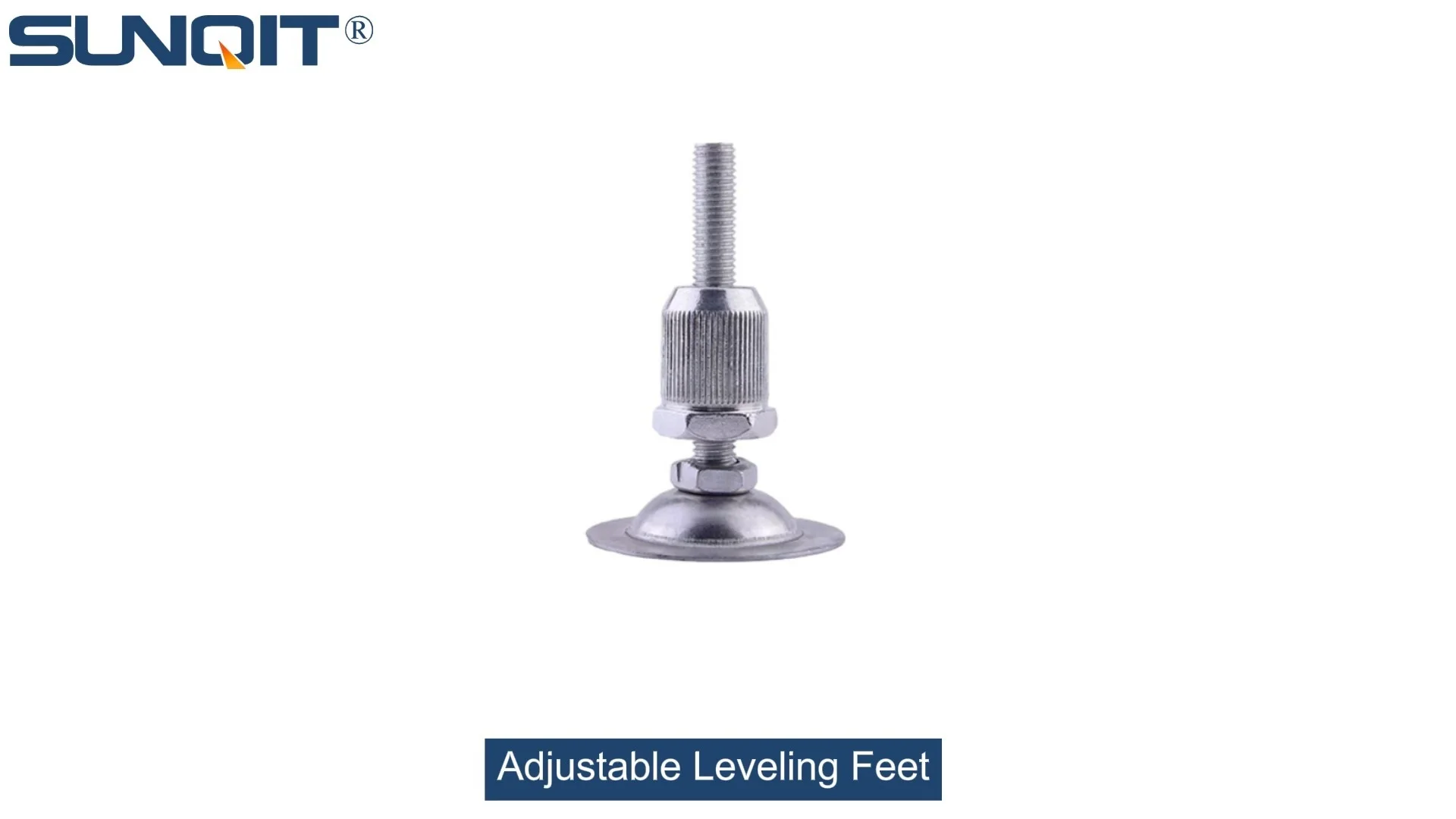
Adjustable leveling feet are designed to keep machines level when placed on uneven or sloped ground. Otherwise known as adjustable equipment feet, they are available to order in a wide variety of size and load capacity combinations.
In the fast-paced world of automotive manufacturing, every detail matters. From the precision of a single bolt to the stability of the workbench where technicians spend hours assembling critical components, the smallest inefficiencies or instabilities can ripple into costly delays, quality issues, or even safety risks. Among the unsung heroes of this high-stakes environment are adjustable leveling feet – unassuming components that play a pivotal role in keeping assembly lines running smoothly, even when supporting the heaviest tools and equipment. Let's dive into why these small but mighty parts are indispensable, how they integrate with lean systems, and what makes them a cornerstone of modern automotive assembly.
The Critical Role of Stability in Automotive Assembly
Automotive assembly lines are marvels of precision and efficiency. Each station along the line is a hub of activity: technicians wielding torque wrenches, pneumatic tools, and specialized equipment to fit everything from engine blocks to dashboard wiring. These tools aren't just heavy – many weigh 20 pounds or more, and when used repeatedly throughout a shift, their cumulative impact on work surfaces is significant. Add to that the need for pinpoint accuracy: a misaligned bracket here or a wobbly workbench there could result in parts that don't fit, leading to rework, wasted materials, or even vehicles that fail safety inspections.
Factory floors, despite best efforts, are rarely perfectly level. Years of heavy machinery movement, shifts in concrete, or uneven wear can create subtle (and not-so-subtle) dips and slopes. Without a way to compensate for these imperfections, workbenches, material racks, and tool stands can wobble, vibrate, or even shift during use. For example, imagine a technician using a 50-pound impact wrench to tighten bolts on a transmission housing. If the workbench beneath them rocks slightly with each pull of the trigger, the torque applied might vary, leading to under-tightened bolts that could loosen over time. Or consider a conveyor system that feeds parts to the line: if its base isn't level, parts might jam, slowing down the entire production flow.
Stability isn't just about precision – it's also about safety. A wobbly workbench increases the risk of tools slipping, parts falling, or technicians losing balance. In an industry where workers are surrounded by heavy machinery and sharp components, even a minor accident can have serious consequences. Adjustable leveling feet address these challenges head-on, providing a simple yet effective way to stabilize equipment, regardless of the floor's condition.
What Are Adjustable Leveling Feet, Exactly?
At their core, adjustable leveling feet are mechanical components designed to support and level equipment by compensating for uneven surfaces. They typically consist of three main parts: a base plate that sits on the floor, a threaded stem that connects the base to the equipment, and an adjustment nut that allows the height to be fine-tuned. Some models also include a rubber or plastic pad on the base to prevent slipping, while others feature locking mechanisms to keep the height setting secure once adjusted.
Materials matter here. In automotive plants, where exposure to oils, coolants, and cleaning agents is common, durability and corrosion resistance are key. Many adjustable leveling feet are made from steel with zinc plating or stainless steel for added protection against rust. For lighter-duty applications or where weight is a concern (such as mobile workbenches), aluminum is a popular choice – its lightweight nature pairs well with aluminum profiles, which are increasingly used in modular assembly setups for their flexibility and strength.
The adjustability range varies, but most feet can extend or retract between 10mm and 50mm, allowing them to compensate for small to moderate floor irregularities. This might not sound like much, but in a precision environment, even 2mm of wobble can make a difference. For heavier loads – think workbenches supporting 1,000+ pounds of tools and parts – heavy-duty models with reinforced stems and larger base plates are available, designed to distribute weight evenly and prevent sinking into soft or damaged floors.

Why Heavy Tool Loads Demand Specialized Leveling Solutions
Automotive technicians rely on a wide array of heavy tools: impact wrenches, hydraulic presses, torque multipliers, and diagnostic equipment, to name a few. When these tools are mounted on workbenches or tool carts, the combined weight can push the limits of standard support systems. A typical workbench in an engine assembly station, for example, might hold a 30-pound torque wrench, a 40-pound parts organizer, a 60-pound diagnostic laptop cart, and several smaller tools – adding up to 200+ pounds before even accounting for the weight of the workbench itself.
The problem isn't just static weight; it's dynamic force. Every time a technician uses an impact wrench, the tool delivers sudden, high-torque bursts that send vibrations through the workbench. Over time, these vibrations can loosen standard feet, causing the bench to shift or wobble. Adjustable leveling feet with locking nuts solve this by securing the height setting once adjusted, preventing "creep" even under repeated vibration. Similarly, feet with large, non-slip base pads (often made of rubber or polyurethane) grip the floor to resist movement, ensuring the workbench stays put during use.
Another challenge is uneven load distribution. A workbench might have most of its weight concentrated on one side – say, where a heavy tool is permanently mounted. Without proper leveling, this can cause the bench to tilt, putting strain on the frame and increasing the risk of tools sliding off. Adjustable feet allow technicians to tweak individual legs to balance the load, ensuring the work surface remains perfectly horizontal. This not only protects the equipment but also reduces fatigue for workers, who don't have to compensate for a tilted surface while performing tasks like wiring or component alignment.

Integrating Adjustable Leveling Feet into Lean Systems
Modern automotive manufacturing thrives on lean principles – the philosophy of minimizing waste, maximizing efficiency, and continuously improving processes. Lean systems prioritize flexibility, allowing assembly lines to adapt quickly to changes in production (e.g., switching between car models or scaling up for higher demand). Adjustable leveling feet align seamlessly with this ethos, offering the adaptability needed to keep lines agile and responsive.
Consider modular workbenches, a staple of lean manufacturing. These workbenches are designed to be reconfigured quickly – adding shelves, swapping out tool holders, or even moving the entire unit to a new location. When a workbench is moved, the floor beneath it might be slightly different: a crack here, a raised seam there. Adjustable leveling feet make it easy to level the bench in its new spot in minutes, without the need for shims, wedges, or other temporary fixes that create waste. This reduces setup time, a key lean metric, and ensures the bench is operational immediately, keeping production on track.
Waste reduction also comes into play with durability. High-quality adjustable leveling feet have long lifespans, meaning they don't need to be replaced frequently – reducing the waste of materials and the labor required for maintenance. Additionally, their ability to prevent equipment damage (by stabilizing workbenches and tools) cuts down on costly repairs or replacements of expensive tools and work surfaces. In a lean system, every dollar saved on waste is a dollar invested back into efficiency.
Employee engagement, another pillar of lean, is indirectly boosted by stable work environments. When technicians don't have to fight with wobbly workbenches or worry about tools sliding around, they can focus on their tasks with greater confidence and less frustration. This leads to higher job satisfaction, lower turnover, and better quality work – all of which contribute to a stronger, more efficient operation.

Key Features to Look for in Quality Adjustable Leveling Feet
Not all adjustable leveling feet are created equal. When selecting feet for automotive assembly lines, there are several critical features to prioritize to ensure they can handle heavy loads, resist wear, and integrate with existing systems like workbenches and aluminum profiles. Here's a breakdown of what matters most:
| Feature | Why It Matters | Example Spec for Automotive Use |
|---|---|---|
| Load Capacity | Must support the total weight of the equipment, tools, and parts without bending or failing. | Minimum 500kg per foot (for heavy workbenches or tool stands). |
| Adjustment Range | Needs to compensate for typical floor irregularities in factory settings. | 15mm to 40mm adjustment (covers most minor dips and slopes). |
| Material Durability | Resists corrosion from oils, coolants, and cleaning agents; withstands heavy use. | Zinc-plated steel or stainless steel stem; rubber or polyurethane base pad. |
| Locking Mechanism | Prevents height settings from loosening due to vibration or tool use. | Dual-lock nut design or integrated friction lock. |
| Non-Slip Base | Prevents equipment from sliding during use, even on smooth concrete floors. | 30mm diameter rubber pad with textured surface. |
| Compatibility with Workbenches/Profiles | Easy to install on standard workbench frames or aluminum profiles. | Threaded stem fits M12 or M16 mounting holes (common in industrial workbenches). |
It's also worth considering the ease of adjustment. In a busy assembly line, technicians don't have time to fiddle with complicated tools to level a workbench. Look for feet with large, easy-to-turn adjustment nuts or even tool-free designs (e.g., knurled nuts that can be adjusted by hand). This ensures that leveling can be done quickly, even during a shift change or when reconfiguring a station.
Real-World Applications: Workbenches and Beyond
Adjustable leveling feet aren't limited to workbenches – though that's where they're most visibly used. In automotive plants, they're found in a variety of critical locations, each serving a unique purpose:
Assembly Workbenches: As discussed, these are the backbone of many assembly stations. A typical workbench might have four to six adjustable feet, one at each corner and additional ones along longer sides for extra support. For example, a 10-foot-long bench used for assembling car doors might have six feet to distribute the weight of tools, door panels, and hardware evenly. Technicians can adjust each foot individually to ensure the bench is level, even if the floor dips in the middle.
Material Racks and Shelving: Racks holding heavy parts like engine blocks or transmission assemblies need to stay stable to prevent tipping. Adjustable feet allow these racks to be leveled, even when loaded unevenly (e.g., one shelf fully stocked, another half-empty). This is especially important in lean systems, where material flow is optimized, and racks are often moved to bring parts closer to the line.
Conveyor Systems: While conveyors are typically mounted on fixed frames, adjustable feet are used at connection points or in modular conveyor sections. They ensure that conveyor belts remain aligned, preventing jams caused by uneven tracking. In automated lines, where parts move at high speeds, even a slight misalignment can lead to parts falling off the belt, disrupting production.
Inspection Stations: Quality control is non-negotiable in automotive manufacturing. Inspection tables, where parts are checked for defects under lights or with measurement tools, must be perfectly level to ensure accurate readings. A tilted table could make a part appear warped when it's actually straight, leading to unnecessary rejects. Adjustable feet here provide the precision needed to maintain consistency in inspections.
Maintenance and Longevity: Keeping Leveling Feet in Top Shape
Like any component, adjustable leveling feet require regular maintenance to perform their best. Fortunately, their upkeep is simple and can be integrated into routine plant maintenance schedules:
Regular Inspections: Technicians or maintenance staff should check leveling feet monthly for signs of wear, such as cracks in the base pad, stripped threads on the stem, or loose locking nuts. Catching these issues early prevents sudden failures that could disrupt production.
Cleaning: Factory floors can accumulate dirt, oil, and debris, which can get trapped in the threads of the leveling feet, making adjustment difficult. A quick wipe with a rag or brush to remove buildup ensures the feet can still be adjusted smoothly when needed.
Lubrication: Threaded stems should be lightly lubricated (with a dry lubricant like graphite or a silicone spray) to prevent rust and keep adjustment easy. Avoid heavy oils, which can attract dirt.
Replacement of Wear Parts: Base pads, in particular, can wear down over time, losing their non-slip properties. Many manufacturers sell replacement pads, making it easy to swap them out without replacing the entire foot. This extends the life of the feet and keeps costs low.
Choosing the Right Supplier: A Partnership for Success
In automotive manufacturing, reliability is everything – and that extends to the suppliers of even the smallest components. When selecting a supplier for adjustable leveling feet, look for partners with a track record in industrial applications, particularly automotive. They should understand the unique challenges of the industry, from load requirements to corrosion resistance, and offer products tested to meet or exceed industry standards (e.g., ISO certifications for quality).
Flexibility is another key factor. A good supplier should offer a range of sizes, materials, and configurations to meet different needs – from lightweight aluminum feet for mobile workbenches to heavy-duty stainless steel feet for fixed tool stands. They should also be able to provide technical support, helping you select the right feet for your specific application and answering questions about installation or maintenance.
Finally, consider lead times and inventory. Automotive plants can't afford delays waiting for replacement parts. Suppliers with local warehouses or large inventories can ensure quick delivery, minimizing downtime if a foot needs to be replaced unexpectedly.
The Future of Adjustable Leveling Feet: Innovation in Stability
As automotive manufacturing evolves – with trends like electrification, automation, and modular production – adjustable leveling feet are evolving too. One emerging trend is the integration of smart technology: feet with built-in sensors that detect vibration, movement, or changes in height, sending alerts to maintenance teams before a problem arises. For example, a sensor might detect that a foot has started to loosen, triggering a notification to tighten it before the workbench becomes unstable.
Lightweight materials are also gaining traction. Carbon fiber composites, though currently expensive, offer the strength of steel with significantly less weight – ideal for mobile equipment where every pound counts. Meanwhile, advances in rubber and polyurethane formulations are leading to base pads with even better grip and durability, able to withstand harsh chemicals and extreme temperatures (important as plants adopt new cleaning protocols or expand into regions with extreme climates).
Modularity is another focus. Some manufacturers are designing feet that can be easily swapped between different equipment types – a workbench today, a material rack tomorrow – reducing the need for multiple part numbers and simplifying inventory management. This aligns with the lean principle of minimizing waste, as plants can standardize on a few versatile feet rather than stocking dozens of specialized ones.
Conclusion: Small Parts, Big Impact
Adjustable leveling feet may not grab headlines, but their role in automotive assembly lines is irreplaceable. By providing stability, adaptability, and durability, they ensure that workbenches, tool stands, and material racks can withstand the heavy loads and constant use of modern manufacturing. They integrate seamlessly with lean systems, reducing waste and boosting efficiency, and they contribute to a safer, more productive workplace for technicians.
As automotive plants continue to push for higher precision, faster production, and greater flexibility, the demand for high-quality adjustable leveling feet will only grow. These small but critical components are a reminder that in manufacturing, success often lies in the details – and that even the most unassuming parts can be the difference between a good assembly line and a great one.
So, the next time you walk through an automotive plant, take a moment to look down at the base of a workbench or material rack. Chances are, you'll see adjustable leveling feet quietly doing their job – keeping the line stable, the tools secure, and the wheels of production turning smoothly. In a world where every second and every cent counts, that's a contribution worth celebrating.