- Company Articles
- Products and Technology
- Product knowledge
- Adjustable Leveling Feet for Communication Equipment Workbenches – Precision Alignment

Adjustable Leveling Feet for Communication Equipment Workbenches – Precision Alignment
Related Product
Adjustable Leveling Feet
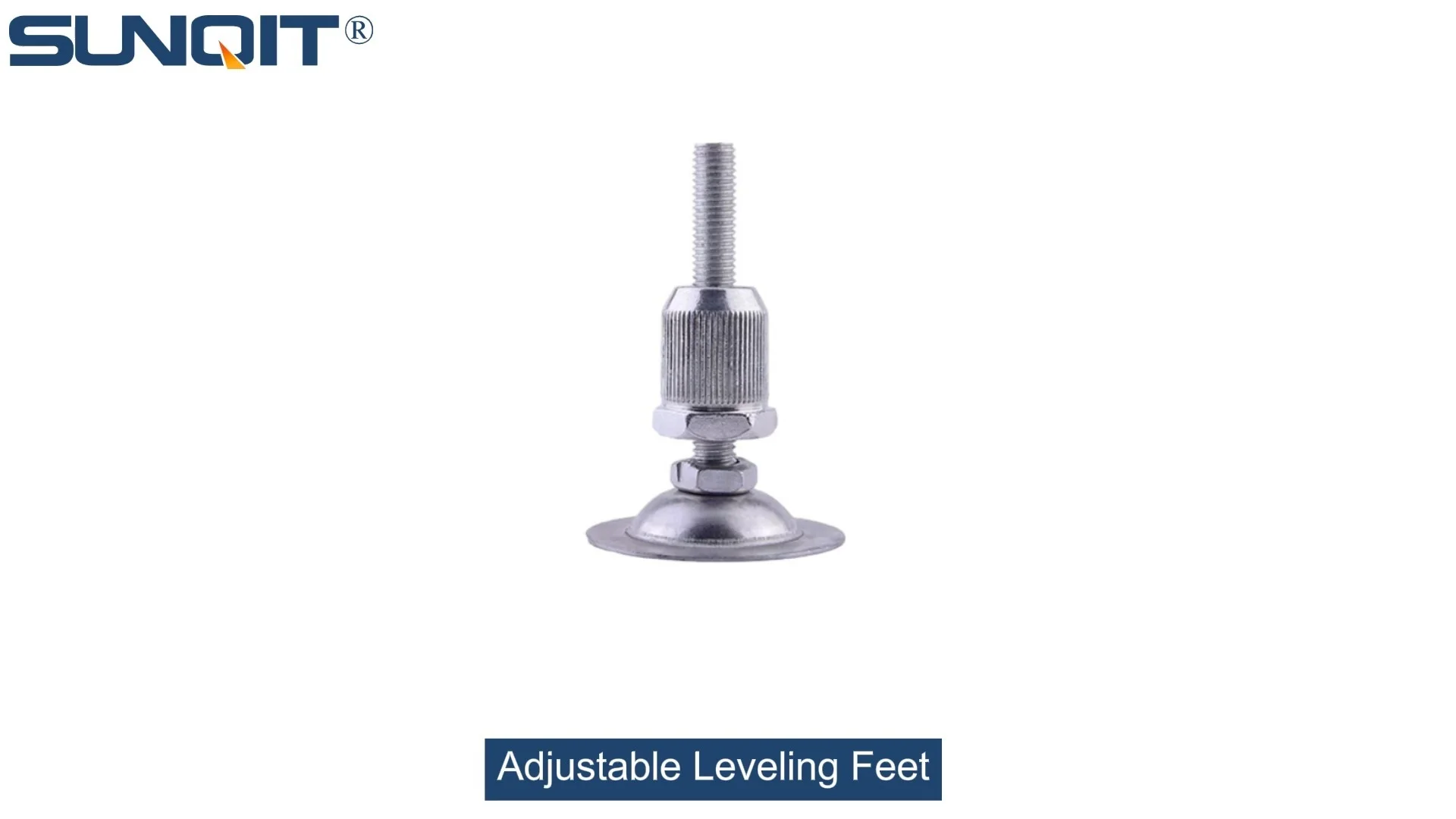
Adjustable leveling feet are designed to keep machines level when placed on uneven or sloped ground. Otherwise known as adjustable equipment feet, they are available to order in a wide variety of size and load capacity combinations.
Walk into any communication equipment workshop, and you'll notice a silent hero holding everything together: the workbench. It's where technicians assemble delicate routers, test high-frequency transceivers, and troubleshoot fiber optic modules—tasks that demand millimeter-level precision. But here's the thing: even the sturdiest workbench is only as reliable as the surface it stands on. Uneven floors, warped concrete, or minor shifts in the workshop's foundation can throw off alignment, leading to wobbly setups, misaligned components, and even costly errors. That's where adjustable leveling feet step in. These unassuming components aren't just "feet"—they're the unsung guardians of precision, ensuring that every measurement, every connection, and every test on your communication workbench is accurate. Let's dive into why they matter, how they work, and how to choose the right ones for your setup.
Why Stability Matters More Than You Think in Communication Workbenches
Communication equipment—think servers, switches, 5G transceivers, or satellite modems—is built to handle data at lightning speeds, but it's surprisingly fragile when it comes to physical stability. A misalignment of just 1mm can throw off fiber optic cable connections, causing signal loss. A wobbly workbench might lead to uneven torque when tightening RF connectors, resulting in poor conductivity. Even something as simple as a slight tilt can make it harder to read calibration tools, leading to faulty measurements. In an industry where downtime costs run into thousands of dollars per minute, these small inconsistencies add up fast.
Traditional workbenches often rely on fixed legs or basic pads, which work fine on perfectly level floors. But how many workshops have perfectly level floors? Over time, concrete settles. Heavy equipment is moved, leaving indentations. Renovations or even temperature changes can cause floors to shift. Suddenly, that "stable" workbench is rocking, and your team is wasting time readjusting tools or, worse, reworking damaged components. Adjustable leveling feet solve this by putting control back in your hands—literally. They let you tweak each leg's height independently, compensating for uneven surfaces and locking in stability.
What Are Adjustable Leveling Feet, Anyway? Breaking Down the Basics
At first glance, adjustable leveling feet might look like simple threaded bolts with a base, but there's more engineering here than meets the eye. Let's break down their key components: a stem (usually threaded), a base plate (the part that touches the floor), and an adjustment mechanism (often a hex nut or a rotating base). The stem screws into the workbench leg or frame, and by twisting it, you raise or lower the height. The base plate distributes the workbench's weight evenly, preventing it from sinking into soft floors or scratching hard ones. Some models add extra features: anti-slip rubber pads to grip the floor, corrosion-resistant coatings for humid environments, or swivel bases that adapt to uneven surfaces better than fixed plates.
Materials matter too. For communication workbenches, which often live in controlled but busy environments, durability and compatibility are key. Aluminum alloy is a popular choice—lightweight, resistant to rust, and easy to machine. It pairs well with modern workbench frames made from aluminum profiles, a material known for its strength-to-weight ratio and modularity. Steel is another option, favored for heavy-duty setups where the workbench holds hundreds of pounds of equipment. Stainless steel, on the other hand, shines in environments with high moisture or chemical exposure, though it's heavier and pricier. Plastic bases are common for lighter workbenches, offering cost savings and noise reduction, but they're less suited for heavy loads.

From Lean Pipe to ESD: How Adjustable Leveling Feet Integrate with Modern Workbenches
Today's communication workshops don't just use one type of workbench—they're modular, adaptable, and often tailored to specific tasks. Let's look at two common setups and how adjustable leveling feet fit in: lean pipe workbenches and ESD workbenches.
Lean pipe workbenches, built from lightweight metal pipes and joints, are beloved for their flexibility. They're easy to reconfigure as projects change, making them ideal for R&D labs or small-batch production. But their modularity can also be a weakness: if the base isn't stable, the entire structure can wobble. Adjustable leveling feet designed for lean pipe systems often come with universal brackets that attach to the pipe frames, no drilling required. This means you can upgrade an existing lean pipe workbench without overhauling it—just swap out the fixed feet for adjustable ones and instantly boost stability.
ESD workbenches are non-negotiable in communication equipment assembly, where static electricity can fry sensitive microchips. These workbenches are grounded to dissipate static, and every component—including the feet—needs to align with that system. Adjustable leveling feet for ESD setups are made from conductive materials (like brass or ESD-safe rubber) that maintain the bench's grounding path. Some even have built-in grounding studs, ensuring that the feet themselves don't become a static "gap" between the bench and the floor. For technicians assembling 5G transceivers or fiber optic modules, this isn't just a nice-to-have—it's a safety requirement.
Then there are aluminum profile workbenches, constructed from extruded aluminum beams with T-slots for easy accessory mounting. These are popular in high-precision environments because aluminum profiles are rigid, lightweight, and resistant to warping. Adjustable leveling feet for aluminum profiles often feature T-slot compatible brackets, letting you slide them into place and secure them with bolts—no custom drilling needed. This integration ensures that the feet don't compromise the profile's structural integrity, keeping the workbench flat and stable even under heavy loads.

Comparing Adjustable Leveling Feet: Which Type Fits Your Workbench?
Not all adjustable leveling feet are created equal. The right choice depends on your workbench's material, the equipment it holds, and your workshop's environment. Let's break down the most common types, their strengths, and when to use them:
| Type | Material | Max Load Capacity (lbs) | Best For | Key Advantage | Compatibility |
|---|---|---|---|---|---|
| Aluminum Alloy | Aluminum with rubber base | 500–1,500 | Aluminum profile workbenches, lean pipe setups | Lightweight, corrosion-resistant, easy to machine | T-slots, lean pipe joints, ESD systems |
| Stainless Steel | 304/316 stainless steel | 1,500–3,000 | Heavy-duty communication racks, outdoor workshops | High durability, rust-proof, ideal for wet environments | Steel frames, cast iron workbenches |
| Cast Iron | Malleable cast iron with steel stem | 3,000–5,000+ | Industrial-grade assembly lines, server testing stations | Ultra-high load capacity, minimal flexing under weight | Reinforced steel workbenches, concrete floors |
| ESD-Safe Composite | Conductive plastic/rubber with metal stem | 500–1,200 | ESD workbenches, microchip assembly | Dissipates static, non-marring base | Grounding systems, aluminum/lean pipe workbenches |
For most communication equipment workshops, aluminum alloy or ESD-safe composite feet strike the best balance between weight, durability, and precision. If you're working with heavy server racks or outdoor setups (like mobile communication towers), stainless steel is worth the investment. Cast iron, while strong, is often overkill unless you're dealing with industrial-scale loads.

Installing Adjustable Leveling Feet: A Step-by-Step Guide
Installing adjustable leveling feet isn't rocket science, but getting it right the first time saves you from rework later. Here's a simple, technician-friendly guide to ensure your workbench stays stable:
1. Assess Your Workbench and Floor
Start by checking your workbench's current setup. Are the existing feet fixed or adjustable? If they're fixed, measure their diameter and mounting hole positions—this will help you choose compatible replacement feet. Next, inspect the floor: use a spirit level to find high and low spots. Mark these areas with tape so you know which legs might need extra adjustment later.
2. Choose the Right Feet for Your Workbench Type
For aluminum profile workbenches, pick feet with T-slot brackets—these slide into the profile's slots and secure with bolts. For lean pipe workbenches, look for clamp-on brackets that wrap around the pipes. ESD workbenches need conductive feet with grounding compatibility. If you're unsure, check the workbench manufacturer's specs—they often recommend specific foot types.
3. Prep the Workbench
Clear the workbench of equipment and tools to avoid damage. If possible, tilt the bench onto its side (get help—aluminum profiles are lighter than steel, but still heavy!) to access the legs. Clean the mounting area with a cloth to remove dust or grease—this ensures the feet attach securely.
4. Mount the Feet
For bolt-on feet: Align the foot's mounting holes with the workbench's pre-drilled holes. insert bolts and tighten with a wrench—don't over-tighten, as this can strip threads or warp the bench frame. For clamp-on feet (common on lean pipe benches): Position the clamp around the pipe, then tighten the screw until it's snug but not crushing the pipe. For T-slot feet (aluminum profiles): Slide the bracket into the T-slot, align it with your marks, and secure with a T-slot bolt and nut.
5. Level the Workbench
Stand the workbench upright and place a spirit level on the surface. Start with the lowest leg (the one over the floor's low spot) and twist its leveling foot clockwise to raise it until the bubble centers. Move to the opposite leg and adjust until the bench is level side-to-side. Then check front-to-back and tweak as needed. For extra precision, use a laser level—this is especially helpful for long workbenches where a spirit level might miss subtle tilts.
6. Test for Stability
Once level, give the workbench a gentle shake. It should feel solid, with no wobbling. Place a heavy object (like a toolbox or a test server) on different corners to simulate real-world loads—this ensures the feet don't compress or slip under weight. If you notice movement, recheck the leveling and tighten any loose brackets.
Maintaining Adjustable Leveling Feet: Keep Them Working Like New
Adjustable leveling feet are built to last, but they need a little care to keep performing. Here's how to maintain them and extend their lifespan:
Regular Cleaning
Dust, oil, and workshop debris can build up in the threads of the leveling stem, making adjustment harder over time. Every month, wipe the stems with a dry cloth to remove dust. For oil or grease, use a mild degreaser (avoid harsh chemicals on ESD-safe feet, as they can damage conductivity). A soft-bristle brush works well for cleaning out stubborn debris from the threads.
Lubricate Threads
Once a quarter, apply a small amount of anti-seize lubricant to the threads (graphite-based lubricants are best for ESD systems, as they don't interfere with conductivity). This prevents rust and makes adjustments smoother. Avoid over-lubricating—excess grease attracts dust.
Check for Wear
Inspect the base plates for cracks or flattened rubber (on rubber-based feet). If the rubber is worn, the foot might slip on smooth floors—replace it. Check the stems for bent threads; if they're damaged, the foot won't adjust evenly. Tighten any loose mounting bolts—vibration from equipment can loosen them over time.
Re-Level After Moving Equipment
If you move heavy equipment (like a test server or calibration tool) to a new spot on the workbench, the weight distribution can shift, causing the bench to tilt. Re-check the level with a spirit level and adjust the feet as needed. This is especially important after assembling large communication units—their weight can compress the feet slightly.
Real-World Impact: How Adjustable Leveling Feet Solved These Workshops' Problems
Still not convinced adjustable leveling feet are worth the investment? Let's look at how they've transformed real communication equipment workshops:
Case Study 1: Telecom Equipment Manufacturer Cuts Rework by 40%
A mid-sized manufacturer of 5G base station components was struggling with misaligned circuit board assemblies. Their lean pipe workbenches wobbled on the shop's uneven concrete floor, leading to soldering errors and rework rates of 25%. After upgrading to aluminum alloy adjustable leveling feet with anti-slip bases, they re-leveled the workbenches. Within a month, rework dropped to 10%, and technicians reported faster assembly times—no more pausing to steady the bench mid-solder.
Case Study 2: Data Center Workshop Improves Calibration Accuracy
A data center's in-house repair workshop was using fixed-leg ESD workbenches to calibrate fiber optic transceivers. Their calibration tools (which require a perfectly flat surface) kept returning inconsistent results. After switching to ESD-safe adjustable leveling feet with conductive rubber bases, they leveled the benches to within 0.1mm/m. Calibration accuracy improved by 95%, and the workshop passed its annual ISO audit with zero findings related to workbench stability.
Case Study 3: R&D Lab Reduces Equipment Damage During Prototyping
A university's communication R&D lab was prototyping small-cell antennas on an aluminum profile workbench. The bench sat on a slightly sloped floor, causing prototypes to slide during testing. By installing T-slot adjustable feet, they leveled the bench and added locking nuts to keep the feet from shifting. Now, prototypes stay in place during vibration tests, and the lab has reduced equipment damage by 60%.
The Future of Adjustable Leveling Feet: Smart, Sustainable, and More Precise
As communication equipment gets smaller, faster, and more complex, the demand for precision in workbenches will only grow. Here's what we can expect from the next generation of adjustable leveling feet:
Smart Leveling with IoT Integration
Imagine leveling feet with built-in tilt sensors that send real-time data to your workshop management system. If a workbench starts to wobble (due to foot wear or floor shifts), you get an alert before it affects production. Some manufacturers are already testing prototypes with Bluetooth-enabled sensors—no more manual level checks.
Sustainable Materials
With workshops prioritizing eco-friendly practices, we'll see more feet made from recycled aluminum profiles and biodegradable lubricants. Aluminum is already highly recyclable, and new manufacturing techniques are reducing waste in foot production. Some companies are even offering take-back programs for old feet, melting them down to make new ones.
Micro-Adjustment Features
For ultra-precision tasks (like assembling quantum communication modules), feet with micro-adjustment dials (measuring in 0.01mm increments) are on the horizon. These would let technicians fine-tune height with pinpoint accuracy, ensuring the workbench surface is flat to within microns.
Final Thoughts: Your Workbench Deserves Stable Feet
At the end of the day, adjustable leveling feet are more than just hardware—they're an investment in precision, productivity, and equipment safety. Whether you're assembling 5G transceivers on a lean pipe workbench, testing fiber optics on an ESD setup, or prototyping antennas on an aluminum profile bench, the right feet ensure your workbench works with you, not against you. They turn uneven floors into non-issues, reduce rework, and let your team focus on what they do best: building the communication tools that keep the world connected.
So, next time you're in the workshop, take a second look at your workbench's feet. Are they keeping up with your precision needs? If not, it might be time to upgrade. Your technicians (and your bottom line) will thank you.