- Company Articles
- Products and Technology
- Product knowledge
- Adjustable Leveling Feet for Consumer Electronics Assembly – Precision and Stability

Adjustable Leveling Feet for Consumer Electronics Assembly – Precision and Stability
Related Product
Adjustable Leveling Feet
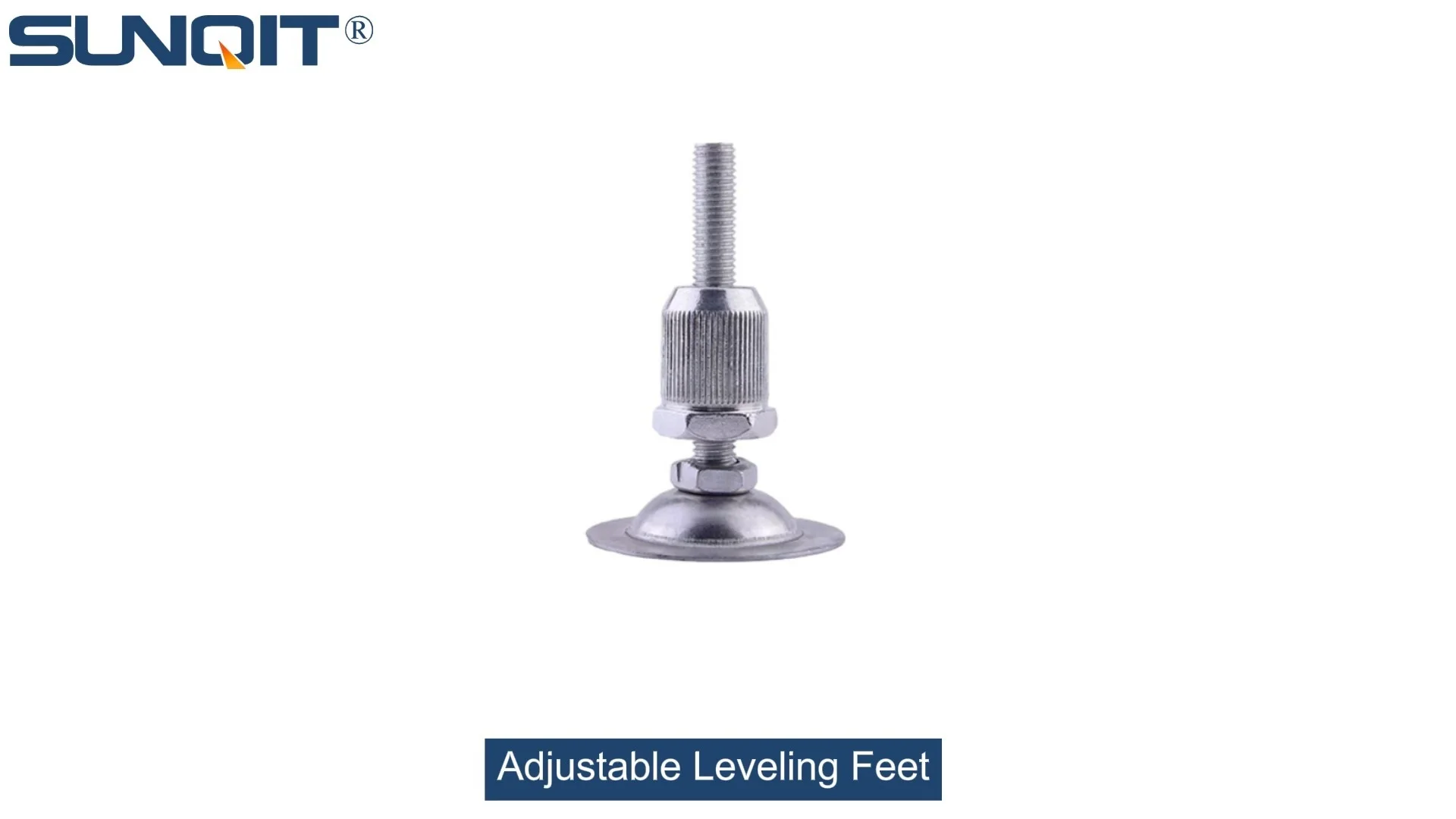
Adjustable leveling feet are designed to keep machines level when placed on uneven or sloped ground. Otherwise known as adjustable equipment feet, they are available to order in a wide variety of size and load capacity combinations.
In the fast-paced world of consumer electronics assembly, where a single misaligned component can turn a high-tech gadget into a defective product, precision isn't just a goal—it's a necessity. Technicians solder microchips smaller than a fingernail, align circuit boards with submillimeter accuracy, and test delicate sensors that react to the slightest movement. Yet, behind all this intricate work lies a foundation that's often overlooked: the stability of the workbench itself. Enter adjustable leveling feet—small, unassuming components that play a colossal role in keeping assembly lines running smoothly, products defect-free, and technicians confident in every task they perform.
Why Stability Matters in Electronics Assembly
Consumer electronics—smartphones, laptops, wearables, and IoT devices—are marvels of miniaturization. A modern smartphone, for example, packs over 100,000 components into a space smaller than a deck of cards. Assembling these components requires workbenches that stay perfectly still, even when operators lean on them, tools are set down, or nearby machinery vibrates. A wobbling workbench isn't just an annoyance; it's a threat to quality.
Consider soldering a 0.5mm surface-mount resistor onto a PCB. The tip of the soldering iron must hover precisely over the pad, with no unintended movement. If the workbench tilts even 1 degree, the iron could slip, creating a cold solder joint or damaging adjacent components. Similarly, during quality inspection, a slightly tilted workbench might cause a technician to misread measurements from a microscope, leading to false passes or rejects. Over time, these small errors add up—costing manufacturers time, money, and reputational damage.
Enter the esd workbench , a staple in electronics assembly lines. Designed to prevent electrostatic discharge (ESD) from frying sensitive components like microprocessors, ESD workbenches are already engineered with protective features. But even the best ESD protection is rendered useless if the workbench itself isn't stable. A rocking surface disrupts grounding connections, weakens ESD shielding, and introduces variables that no amount of anti-static matting can fix. That's where adjustable leveling feet step in: they turn an unstable workbench into a rock-solid foundation, ensuring ESD protection works as intended and precision tasks stay on target.
What Are Adjustable Leveling Feet, Anyway?
At their core, adjustable leveling feet are simple devices: a threaded stem topped with a base (often rubber or metal) and a nut to lock the position. They attach to the bottom of workbenches, racks, or machinery, allowing operators to raise or lower individual feet to compensate for uneven floors. Think of them as the "levelers" on a pool table—small adjustments that make a world of difference in stability.
But don't let their simplicity fool you. Modern adjustable leveling feet are engineered with features tailored to industrial environments. Many have anti-slip rubber bases to grip concrete floors, corrosion-resistant coatings for longevity, and high-load capacities to support heavy workbenches loaded with tools, fixtures, and materials. Some even include suction-cup designs for extra stability on smooth surfaces, or swivel bases that adapt to slightly uneven floors without losing contact.
For electronics assembly, where workbenches are often custom-built or reconfigured (thanks to flexible manufacturing principles), adjustability is key. A lean pipe workbench , for example—built with modular lean pipes and joints—might be modified to add a new shelf, reposition a tool rail, or accommodate a larger PCB. Each modification can shift the workbench's weight distribution, requiring the feet to be readjusted. Without adjustable leveling feet, reconfiguring a lean pipe workbench would mean hunting for shims or wedges to prop up uneven corners—a messy, temporary fix that never quite works as well as a purpose-built leveling solution.

Key Features to Look for in Quality Leveling Feet
Not all adjustable leveling feet are created equal. For consumer electronics assembly, where precision and durability are non-negotiable, here are the features that matter most:
| Feature | Why It Matters | Example Use Case |
|---|---|---|
| Threaded Adjustment Range | Determines how much height can be added/removed to level the workbench. Longer threads = better for uneven floors. | A factory with a 5mm slope across the assembly line needs feet with at least 10mm of adjustment range. |
| Load Capacity | Must support the total weight of the workbench, tools, and materials without bending or breaking. | A lean pipe workbench with a 200kg load (tools + PCB batches) needs feet rated for 50kg+ each (4 feet total). |
| Anti-Slip Base | Prevents the workbench from sliding during use, even when operators push or pull on it. | Rubber bases grip concrete floors better than metal, reducing movement during repetitive tasks like component insertion. |
| Locking Nut | Keeps the foot from rotating loose after adjustment, maintaining stability over time. | Without a locking nut, vibration from nearby conveyor belts could cause the foot to unscrew slightly, leading to wobbling. |
| Corrosion Resistance | Protects against moisture, chemicals, or cleaning agents common in factory environments. | Stainless steel or zinc-plated feet won't rust in humid assembly areas or when exposed to disinfectant sprays. |
Another critical consideration is compatibility with the workbench itself. Many modern assembly workbenches—including ESD workbenches and lean pipe workbenches—are built using aluminum profile frames. These lightweight, durable profiles (think of T-slotted extrusion rails) are popular for their modularity: they can be cut to length, connected with joints, and customized with accessories like shelves or tool hooks. Adjustable leveling feet designed for aluminum profiles often feature brackets that slide into the T-slots, making installation a breeze. This compatibility ensures a secure fit that won't loosen, even with frequent adjustments.

Integrating Leveling Feet with ESD and Lean Pipe Workbenches
Let's dive deeper into how adjustable leveling feet work with two common assembly line staples: ESD workbenches and lean pipe workbenches. Both rely on stability to function, but their unique designs require slightly different approaches to leveling.
ESD Workbenches: Stability + Static Protection
ESD workbenches are more than just tables—they're part of a protective ecosystem. Their surfaces are made of conductive materials, and they're grounded to a common point, ensuring any static charge on the operator or tools is safely dissipated. But grounding only works if the workbench is in constant contact with the floor. A wobbly foot could lift the workbench slightly, breaking the ground connection and leaving components vulnerable to ESD damage.
Adjustable leveling feet for ESD workbenches often include conductive rubber bases or metal grounding plates. These materials maintain electrical continuity between the workbench and the floor, even when the foot is adjusted. Some models also have built-in grounding studs, allowing them to connect directly to the facility's ESD grounding system. For example, a technician assembling iPhones on an ESD workbench can adjust the feet to level the surface, confident that the grounding path remains intact—no more worrying about a loose foot causing a $500 chip to short-circuit.
Lean Pipe Workbenches: Flexibility + Stability
Lean pipe workbenches are the chameleons of assembly lines. Built with lightweight steel or aluminum lean pipes and modular joints, they can be reconfigured in hours to adapt to new products or processes. One week, a lean pipe workbench might hold a PCB testing station; the next, it's converted into a packaging station for smartwatches. This flexibility is a cornerstone of lean manufacturing, but it comes with a catch: each reconfiguration can throw off the workbench's balance.
Adjustable leveling feet are essential here. When a lean pipe workbench is disassembled and rebuilt, the legs might be cut to different lengths, or the weight distribution could shift (e.g., adding a heavier tool shelf on one side). Leveling feet allow operators to fine-tune each corner, ensuring the workbench stays stable regardless of its configuration. For example, a manufacturer switching from assembling wireless earbuds to tablets might add a second shelf to their lean pipe workbench. The added weight on one side could cause the bench to tilt, but a quick adjustment of the leveling feet brings it back to level—no need for new legs or shims.
Aluminum profile lean pipe workbenches offer even more advantages. The T-slots in the aluminum extrusion allow leveling feet to be positioned anywhere along the frame, not just at the corners. This is useful for longer workbenches, where adding a middle foot can prevent sagging in the center. Imagine a 3-meter-long lean pipe workbench used for assembling laptop screens—without a center leveling foot, the middle might dip under the weight of tools and materials, causing screens to tilt during alignment. Adding a foot in the middle, secured via the aluminum profile's T-slot, keeps the entire surface flat and stable.

Installation Best Practices: Getting It Right the First Time
Even the best adjustable leveling feet won't work if they're installed incorrectly. Here's a step-by-step guide to ensuring your workbench stays level, stable, and ready for precision tasks:
- Start with a Clean Slate: Before installing the feet, clean the bottom of the workbench legs or aluminum profile frame. Dust, grease, or debris can prevent the feet from seating properly, leading to slippage later.
- Mark the Position: For lean pipe or aluminum profile workbenches, use a pencil to mark where the feet will go. Most manufacturers recommend placing feet near the corners, but add center feet for longer benches (over 2 meters) to prevent sagging.
- Attach the Feet Loosely: Screw the feet into the pre-drilled holes or T-slot brackets, but don't tighten them all the way. This allows for easy adjustment later.
- Position the Workbench: Move the workbench to its final location. Avoid dragging it, as this can scratch the floor or shift the feet.
- Check for Level: Place a spirit level on the workbench surface—both side-to-side and front-to-back. Note which corners are higher or lower.
- Adjust Incrementally: Turn the leveling feet clockwise to lower them, counterclockwise to raise them. Start with the lowest corner, adjusting it until the bubble in the spirit level is centered. Repeat for the remaining corners, rechecking the level after each adjustment.
- Lock the Nuts: Once level, tighten the locking nuts on each foot to prevent them from rotating. Use a wrench for a secure fit—over-tightening can strip the threads, so stop when the nut is snug.
- Test Stability: Lean on the workbench gently from all sides. It should feel solid, with no rocking. If it moves, recheck the level and adjust as needed.
- Recheck Periodically: Floors settle, feet wear down, and workbenches get reconfigured. Schedule monthly checks to ensure the workbench stays level—especially after heavy use or nearby construction.
Pro tip: For ESD workbenches, use a multimeter to test the grounding continuity after installation. Place one probe on the workbench surface and the other on the leveling foot's grounding stud. The resistance should be less than 1 ohm—if not, the foot might be loose, or the grounding connection is faulty.
Common Challenges and How to Solve Them
Even with careful installation, adjustable leveling feet can run into issues. Here are the most common problems and how to fix them:
Problem: Feet Keep Loosening
Cause: Vibration from nearby machinery or frequent operator movement can cause the locking nuts to back off. Solution: Use thread-locking adhesive (like Loctite) on the threads before tightening the nuts. For metal-to-metal connections, a medium-strength adhesive works best—strong enough to prevent loosening, but removable for future adjustments.
Problem: Floor Is Too Uneven
Cause: Older factories often have floors with slopes or dips greater than 10mm. Solution: Upgrade to leveling feet with extended adjustment ranges (15mm or more). For extreme cases, use shims under the feet (but pair them with anti-slip pads to prevent sliding).
Problem: Feet Sink Into Soft Floors
Cause: Vinyl or epoxy floors might compress under heavy workbenches, causing feet to sink over time. Solution: Add larger base plates to the feet (e.g., 100mm diameter instead of 50mm). The increased surface area distributes weight, reducing floor compression.
Problem: ESD Grounding Fails After Adjustment
Cause: Adjusting the foot might break the conductive path between the workbench and the floor. Solution: Use feet with spring-loaded grounding pins or conductive foam bases. These maintain contact even when the foot is raised or lowered.
Case Study: How Leveling Feet Cut Defects by 30% at a Smartphone Factory
To see adjustable leveling feet in action, let's look at a real-world example. A mid-sized electronics manufacturer in Vietnam produces budget smartphones for Southeast Asian markets. Their assembly line had been struggling with a 12% defect rate in the PCB soldering stage—far above the industry average of 5%.
After investigating, engineers discovered the root cause: the lean pipe workbenches used for soldering were wobbling. The factory floor, made of old concrete, had a 8mm slope across the line, and the workbenches' fixed-height feet couldn't compensate. Operators reported "fighting the bench" to keep their soldering irons steady, leading to misaligned joints and cold solder connections.
The solution? The manufacturer replaced the fixed feet with adjustable leveling feet designed for aluminum profiles (their lean pipe workbenches used 4040 aluminum extrusion). Each foot had a 15mm adjustment range, anti-slip rubber base, and conductive grounding stud (to work with their ESD setup). Technicians leveled each bench using spirit levels, then locked the feet in place.
Within two weeks, the defect rate dropped to 8%. After a month of fine-tuning, it stabilized at 4%—a 30% improvement. Operators reported less fatigue, and the QA team noted fewer reworks. The factory saved an estimated $120,000 annually in reduced scrap and rework costs—all from a $50 upgrade per workbench.
Future Trends: The Next Generation of Leveling Feet
As consumer electronics assembly becomes more automated and precise, adjustable leveling feet are evolving too. Here's what to watch for:
- Smart Leveling Feet: Embedded sensors will detect when a workbench starts to wobble, sending alerts to supervisors via IoT platforms. Some models might even include motorized adjustment, leveling themselves automatically.
- Eco-Friendly Materials: Manufacturers are moving away from plastic bases, instead using recycled rubber or biodegradable composites. Aluminum profile compatibility will also grow, as aluminum is 100% recyclable.
- Ultra-Low Profile Designs: For compact assembly cells (e.g., for smartwatch production), feet will get shorter but retain high load capacities, fitting into tighter spaces without sacrificing stability.
- Integrated Vibration Dampening: Built-in springs or gel pads will absorb vibrations from nearby robots or machinery, keeping workbenches even steadier for micro-assembly tasks.
Conclusion: The Unsung Heroes of Precision
Adjustable leveling feet might not make headlines, but they're the backbone of quality in consumer electronics assembly. From keeping ESD workbenches grounded to stabilizing reconfigurable lean pipe workbenches, these small devices ensure that every solder joint, every component alignment, and every inspection is done with the precision the industry demands.
As electronics get smaller and assembly lines more flexible, the role of adjustable leveling feet will only grow. They're a reminder that in manufacturing, sometimes the most critical innovations are the ones you don't see—quietly working behind the scenes to turn chaos into order, and defects into perfect products.
So the next time you pick up your smartphone, take a moment to appreciate the unsung hero under the assembly line workbench. Without adjustable leveling feet, that phone in your hand might not work at all.