- Company Articles
- Products and Technology
- Product knowledge
- Adjustable Leveling Feet for Heavy-Duty Conveyors – Handling High-Volume Material Flow

Adjustable Leveling Feet for Heavy-Duty Conveyors – Handling High-Volume Material Flow
Related Product
Adjustable Leveling Feet
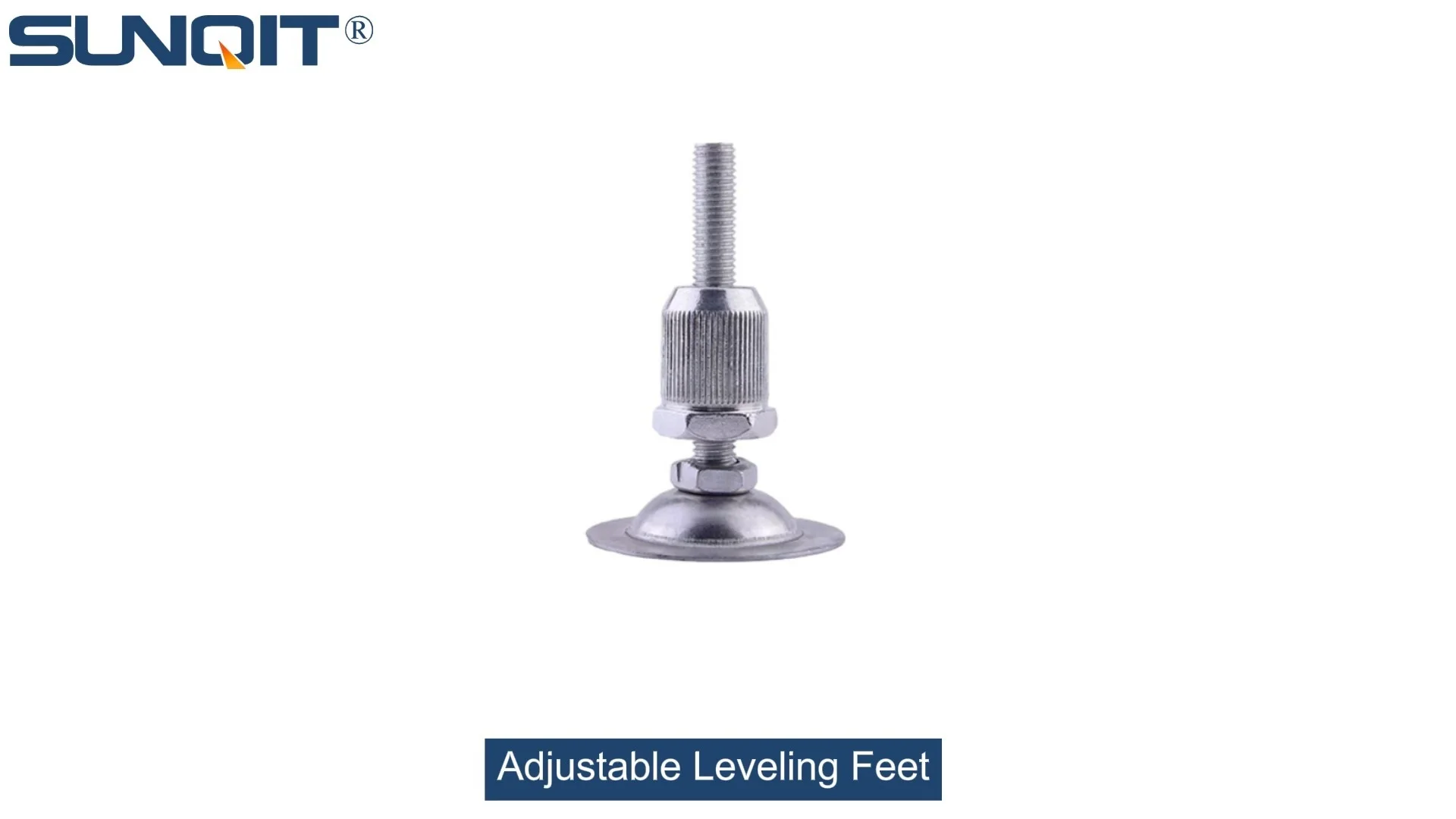
Adjustable leveling feet are designed to keep machines level when placed on uneven or sloped ground. Otherwise known as adjustable equipment feet, they are available to order in a wide variety of size and load capacity combinations.
Walk into any busy manufacturing plant or distribution center, and you'll hear it before you see it: the steady hum of conveyors moving products, parts, and materials from one station to the next. These metal arteries keep operations alive, especially in high-volume environments where pausing for even a minute can cost thousands of dollars. But here's the thing no one talks about enough: the unsung heroes keeping those conveyors running smoothly aren't the motors or the belts—it's often something much smaller, much quieter, and far more critical: adjustable leveling feet .
Imagine a conveyor belt in a automotive factory, tasked with moving 500-pound engine blocks every hour. If that conveyor isn't perfectly level, even by a fraction of an inch, chaos follows. Parts slide off, belts wear unevenly, motors strain, and workers scramble to fix jams. Over time, those small tilts turn into big problems: increased downtime, higher maintenance costs, and even safety risks. That's where adjustable leveling feet step in. They're not just "feet"—they're the foundation of reliability in high-stakes material flow.
Why High-Volume Material Flow Demands Precision (and Level Feet)
High-volume material flow isn't just about moving a lot of stuff quickly. It's about moving it consistently . When you're processing thousands of units daily—whether it's packages in a warehouse, circuit boards in an electronics plant, or food products in a distribution center—every step depends on predictability. A conveyor that dips or rises unexpectedly is like a pothole on a highway: it disrupts the flow, damages cargo, and forces the entire system to slow down.
This is where lean system principles collide with real-world mechanics. Lean manufacturing thrives on eliminating waste, and there's no bigger waste than downtime caused by preventable issues. Adjustable leveling feet might seem trivial, but they're a cornerstone of lean efficiency. By keeping conveyors stable, they ensure materials glide smoothly, workers stay focused, and bottlenecks stay at bay. It's the kind of small investment that pays off in big ways—fewer delays, less wear and tear, and a production line that feels like a well-oiled machine (because it is).
What Are Adjustable Leveling Feet, Anyway? Let's Break It Down
At first glance, adjustable leveling feet look simple: a metal stem, a base, and a way to twist or turn to raise or lower the conveyor. But don't let their simplicity fool you. These small components are engineered to handle massive loads, resist corrosion, and stay put even in the dustiest, busiest environments.
Most adjustable leveling feet share a few key parts: a threaded stem (usually steel or stainless steel) that screws into the conveyor frame, a base (often rubber, plastic, or metal) that sits on the floor, and a locking mechanism to keep the foot from loosening over time. The magic is in the adjustability: by rotating the stem, you can raise or lower individual corners of the conveyor, compensating for uneven floors, warped frames, or shifting ground. It's like giving your conveyor a set of "height-adjustable shoes" to dance over the imperfections of the real world.
Take anti-slip adjustable leveling feet , for example. These are game-changers in environments where floors get wet or oily—think food processing plants or automotive workshops. The rubber or textured base grips the floor, preventing the conveyor from shifting even under heavy loads. Then there are heavy-duty models, like the heavy duty split foot seat , designed for extreme weights (we're talking tons). These feet distribute pressure evenly, protecting both the conveyor and the floor beneath it.

The Cost of Cutting Corners: What Happens When Leveling Feet Fail
Let's get real: not all leveling feet are created equal. Cheap, flimsy feet might save a few dollars upfront, but they'll cost you tenfold in the long run. I once visited a warehouse that skimped on leveling feet for their roller track conveyors. Within six months, the uneven pressure warped the roller tracks, causing packages to jam several times a day. The maintenance team was replacing rollers weekly, and workers were so frustrated they started calling the line "the bottleneck express." By the time they upgraded to heavy-duty adjustable feet, they'd already lost over $50,000 in downtime and repairs.
The consequences aren't just financial. Unstable conveyors are a safety hazard. A tilted conveyor can cause heavy items to tip, risking injury to workers nearby. Loose leveling feet can also create tripping hazards if they protrude or break off. In regulated industries like pharmaceuticals or aerospace, even minor instability can lead to compliance issues—no one wants to explain to an inspector why their product handling equipment doesn't meet safety standards.

Choosing the Right Adjustable Leveling Feet: A Buyer's Guide
So, how do you pick the right leveling feet for your heavy-duty conveyor? It starts with asking the right questions: What's the maximum load the conveyor will carry? What's the condition of the floor (smooth? cracked? oily?)? Will the environment be wet, dusty, or corrosive? Answering these will narrow down your options. To make it easier, let's compare some common types:
| Type of Leveling Foot | Key Features | Load Capacity | Best For | Pro Tip |
|---|---|---|---|---|
| Standard Adjustable Leveling Feet | Threaded steel stem, metal base, basic lock nut | Up to 2,000 lbs per foot | Dry, indoor environments with smooth floors (e.g., electronics assembly lines) | Opt for zinc-plated stems to resist rust in humid areas. |
| Anti-Slip Adjustable Leveling Feet | Rubber or polyurethane base, serrated bottom for grip | Up to 3,500 lbs per foot | Wet or oily floors (e.g., automotive plants, food processing) | Check the durometer rating of the rubber—higher ratings (80-90 Shore A) last longer under heavy loads. |
| Heavy Duty Split Foot Seat | Wide, split metal base for even weight distribution | Up to 10,000 lbs per foot | Extreme loads (e.g., moving machinery parts, large pallets) | Pair with a floor plate if the ground is uneven to prevent sinking. |
| M10*56 Rubber Leveling Feet | Precision-threaded M10 stem, compact design | Up to 1,500 lbs per foot | Smaller conveyors or tight spaces (e.g., lab equipment, workbenches) | Ideal for workbench integration—keep assembly stations level alongside conveyors. |
Another factor to consider is adjustability range. Most feet offer 1-3 inches of height adjustment, but if your floor is severely uneven, you might need extended stems. Also, look for feet with locking nuts or jam nuts—these prevent the stem from unscrewing due to vibration, a common issue in high-speed conveyors.

Installation: Getting It Right the First Time
Even the best leveling feet won't work if they're installed poorly. I've seen teams rush through installation, only to realize later they forgot to check the floor for cracks or debris. Here's a step-by-step guide to doing it right:
1. Prep the Floor: Clean the area where the conveyor will sit. Sweep away dirt, remove loose tiles, and fill small cracks with epoxy. An uneven floor can't be fixed by leveling feet alone—you need a solid base to start with.
2. Position the Feet: Attach the leveling feet to the conveyor frame using the manufacturer's recommended hardware. Make sure they're spaced evenly to distribute weight—too few feet, and the frame will bow; too many, and you'll waste money.
3. Level It Out: Use a spirit level (digital levels work best for precision) to check the conveyor from front to back and side to side. Adjust each foot by turning the stem until the bubble is centered. For long conveyors, check in multiple spots—floors can slope subtly over distance.
4. Lock It Down: Once level, tighten the locking nut against the frame to prevent the stem from turning. For extra security, apply thread locker (like Loctite) to the threads—just don't overdo it, or you'll struggle to adjust them later.
5. Test It: Run the conveyor with a test load (simulate your heaviest product) and watch for movement. If the conveyor shifts or the feet sink into the floor, you may need larger bases or floor plates.
Maintenance: Keeping Your Feet (and Conveyors) Happy
Adjustable leveling feet aren't "set it and forget it" parts. Like any component, they need regular check-ups to keep performing. Here's a quick maintenance routine to follow:
Weekly Inspections: Walk the conveyor and visually check each foot. Look for cracks in the base, rust on the stem, or loose locking nuts. Tighten any nuts that have come loose—vibration from the conveyor can slowly unscrew them.
Monthly Cleaning: Wipe down the feet with a damp cloth to remove dust and debris. For rubber bases, use a mild detergent to clean off oil or grease—grime can reduce grip over time.
Quarterly Recalibration: Floors can shift with temperature changes or heavy traffic. Use your spirit level to recheck the conveyor's levelness every 3 months. A quick adjustment now can prevent big problems later.
replace When Worn: Rubber bases wear out, metal stems bend, and threads strip. If a foot no longer adjusts smoothly or the base is cracked, replace it immediately. Waiting until it fails is a recipe for downtime.
Beyond Conveyors: Where Else Do Leveling Feet Shine?
Adjustable leveling feet aren't just for conveyors. They're everywhere in lean manufacturing environments. Take workbench setups: assembly stations need to be level to ensure precise work, whether you're building circuit boards or packaging medical devices. Pairing level workbenches with level conveyors creates a seamless flow—parts move smoothly from the line to the bench and back, with no awkward lifting or shifting.
They're also critical for roller track systems, which rely on gravity to move materials. A tilted roller track can send boxes sliding too fast (risking damage) or too slow (causing backups). Leveling feet let you fine-tune the angle, ensuring materials glide at the perfect speed.
The Bottom Line: Invest in the Foundation
In the world of high-volume material flow, success is in the details. Adjustable leveling feet might not make headlines, but they're the quiet force that keeps your conveyors running, your workers safe, and your bottom line healthy. They're a small investment that delivers big returns—fewer headaches, less downtime, and a production line that feels like it's working with you, not against you.
So, the next time you're planning a conveyor upgrade or troubleshooting a finicky line, don't overlook the feet. Ask your conveyor supplier about their leveling foot options, or reach out to a specialist who can help you pick the perfect fit. Your future self (and your maintenance team) will thank you.
After all, in a world where every second counts, why let a little tilt stand in your way?