- Company Articles
- Products and Technology
- Product knowledge
- Adjustable Leveling Feet for Home Appliance Production Lines – Stability for Large Assemblies

Adjustable Leveling Feet for Home Appliance Production Lines – Stability for Large Assemblies
Related Product
Adjustable Leveling Feet
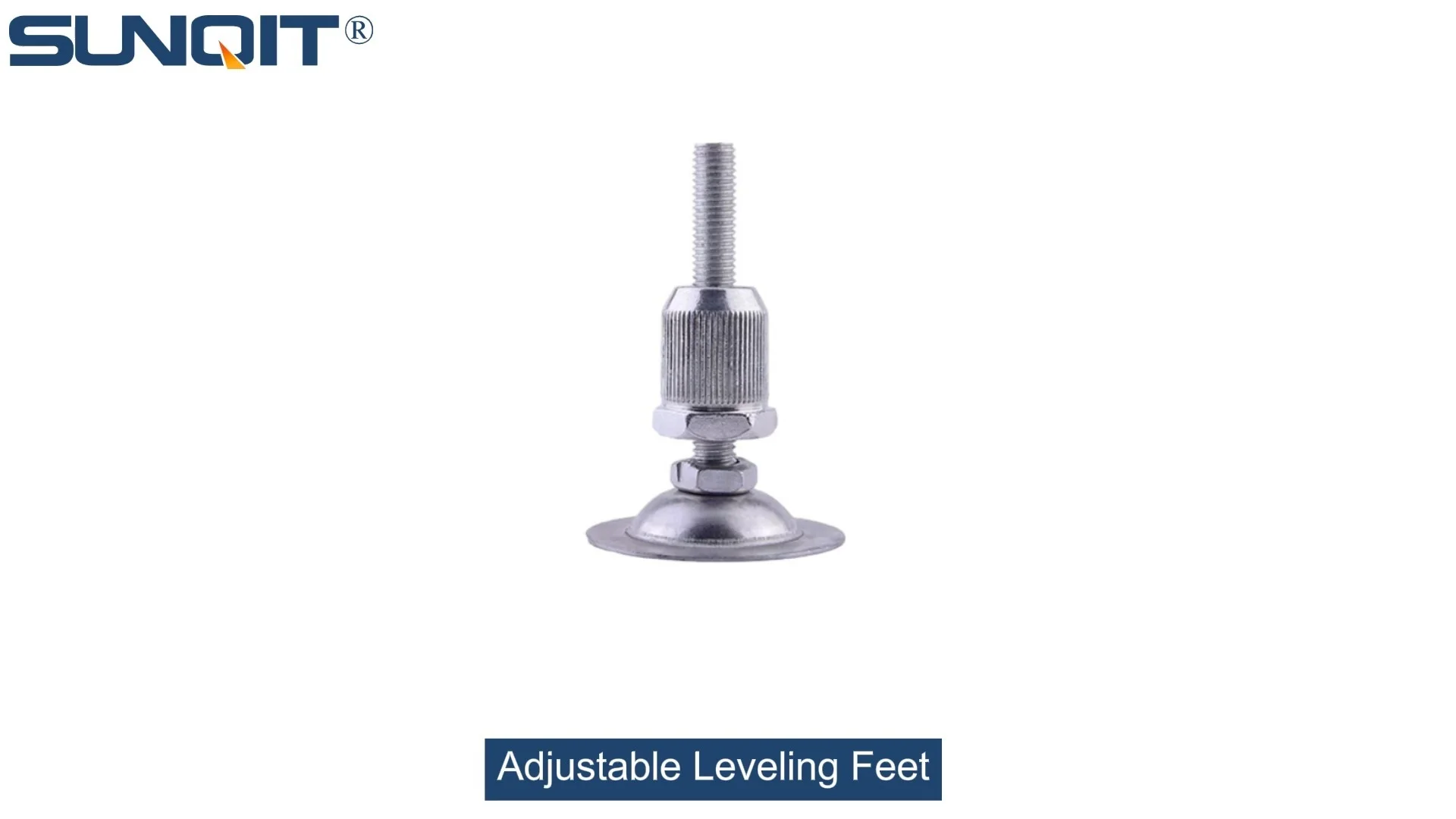
Adjustable leveling feet are designed to keep machines level when placed on uneven or sloped ground. Otherwise known as adjustable equipment feet, they are available to order in a wide variety of size and load capacity combinations.
The unsung heroes keeping your production line steady, efficient, and ready for precision
Walk into any home appliance factory, and you'll witness a symphony of motion: conveyor belts gliding, robotic arms pivoting, and assemblers carefully fitting components into place. From refrigerators to washing machines, these large, complex products demand precision at every step. But here's a quiet truth: none of this works smoothly without stability. Imagine a workbench that wobbles as an assembler tightens a bolt, or a material rack that tilts when loaded with heavy parts – suddenly, alignment slips, deadlines get pushed, and frustration creeps in. That's where adjustable leveling feet come in. These small but mighty components are the backbone of a steady production line, ensuring that every workbench, rack, and station stays firmly grounded, even when handling the heftiest assemblies.
In this article, we'll dive into why adjustable leveling feet matter in home appliance manufacturing, how they integrate with key elements like workbenches and lean systems, and what makes them indispensable for anyone aiming to boost efficiency and reduce waste. Whether you're setting up a new line or upgrading an existing one, understanding these unassuming tools could be the difference between smooth operations and costly disruptions.
Why Stability Isn't Just "Nice to Have" – It's Critical
Home appliances are heavy. A standard washing machine drum, for example, can weigh 30 pounds or more; a refrigerator compressor might hit 50 pounds. When these parts are being assembled, even the smallest wobble can throw off measurements. A misaligned hole here, a loose connection there – and suddenly, that appliance isn't meeting quality standards. Rework eats up time, and time, in manufacturing, is money.
Then there's safety. A wobbly workbench isn't just inefficient – it's a hazard. Tools slide off, parts topple, and workers strain to compensate for instability, increasing the risk of injuries. OSHA estimates that slips, trips, and falls account for 25% of workplace injuries annually; unstable equipment only adds to that risk.
And let's not forget the impact on your lean system. Lean manufacturing is all about eliminating waste – wasted time, wasted materials, wasted effort. A unstable production line creates waste in spades: extra minutes spent realigning parts, scrapped components due to errors, and even worker fatigue from constant readjustment. Stability, in short, is the foundation of lean efficiency.
So, What Exactly Are Adjustable Leveling Feet?
At their core, adjustable leveling feet are simple devices designed to stabilize equipment on uneven floors. They typically consist of three parts: a base (to grip the floor), a stem (to connect to the equipment), and an adjustment mechanism (usually a threaded stem or a twistable base) that lets you raise or lower the foot to fine-tune height.
Think of them as the "feet" of your production line furniture. Just as a chair with uneven legs wobbles until you adjust the feet, your workbench, material rack, or assembly station relies on these tools to sit flat. But unlike chair feet, industrial-grade adjustable leveling feet are built to handle serious weight – some can support over 1,000 pounds per foot. They're also designed to resist wear, corrosion, and the harsh conditions of a factory floor, where oil, moisture, and heavy traffic are par for the course.
Materials matter here. Many feet use rubber or polyurethane bases to grip floors and reduce noise (no more screeching when you shift a workbench). The stems are often made of steel or aluminum for strength; aluminum, in particular, is popular for its lightweight durability and resistance to rust – a big plus in humid or wet environments.

Types of Adjustable Leveling Feet: Which One Fits Your Line?
Not all leveling feet are created equal. The right choice depends on your equipment, load, and environment. Here's a breakdown of the most common types you'll find in home appliance production:
| Type | Load Capacity | Best For | Key Feature |
|---|---|---|---|
| Rubber-Based Leveling Feet | Up to 500 lbs/foot | Light to medium workbenches, small material racks | Shock absorption, quiet operation |
| Aluminum Stem with Steel Base | 500 – 1,000 lbs/foot | Heavy workbenches, assembly stations with large parts | Corrosion resistance, high strength-to-weight ratio |
| Heavy-Duty Stainless Steel | 1,000+ lbs/foot | Industrial ovens, large conveyor supports | Withstands extreme temperatures, moisture, and chemicals |
| Swivel-Head Leveling Feet | Up to 800 lbs/foot | Uneven floors, outdoor or semi-outdoor setups | Base swivels to match floor angle, preventing rocking |
For most home appliance lines, aluminum stem feet with steel or rubber bases strike the perfect balance. They're strong enough for heavy parts, resistant to the occasional spill, and lightweight enough to integrate with aluminum profile workbenches – a common setup in modern factories.

How Adjustable Leveling Feet Boost Your Lean System
Lean manufacturing is all about creating value with minimal waste. And stability? It's a silent waste-buster. Here's how adjustable leveling feet fit into the lean puzzle:
1. Reducing Rework
A stable workbench means parts stay aligned. No more re-drilling holes because a bracket shifted, or re-tightening screws because the surface wobbled mid-assembly. One factory we worked with reported a 22% drop in rework after upgrading to adjustable feet – that's hours saved per shift.
2. Speeding Up Cycle Times
When workers don't have to pause to steady equipment, they move faster. A study by the Manufacturing Extension Partnership found that unstable workstations can slow assembly times by up to 15%. Leveling feet eliminate those pauses, keeping the line flowing.
3. Supporting 5S Principles
5S (Sort, Set in Order, Shine, Standardize, Sustain) is the backbone of lean. "Set in Order" means tools and materials have a fixed place – but that place needs to be stable. Adjustable feet ensure workbenches and racks stay in position, so tools don't wander, and inventory stays organized.
4. Improving Ergonomics
A level workbench reduces strain. When surfaces are uneven, workers hunch, twist, or overreach to compensate – leading to fatigue and injury. Leveling feet let you adjust height to match worker ergonomics, keeping teams comfortable and productive.

Aluminum Profile and Beyond: Materials That Make a Difference
Modern production lines love aluminum – and for good reason. Aluminum profiles are lightweight, modular, and easy to customize. They're the go-to for building workbenches, material racks, and even conveyor frames. And adjustable leveling feet? They're designed to play nice with aluminum.
Aluminum stem leveling feet, for example, bolt directly into the T-slots of aluminum profiles, creating a seamless, rigid connection. No need for extra brackets or adapters – just a secure fit that keeps your workbench steady, even when loaded with heavy dies or tooling. And because aluminum resists rust, these feet hold up in humid environments, like dishwashing machine assembly lines where moisture is common.
But it's not just about the stem. The base material matters too. Rubber bases are great for smooth concrete floors, offering grip and reducing noise when parts are set down. For uneven or rough floors, steel bases with larger contact areas distribute weight better, preventing sinking or tilting. Some manufacturers even offer "anti-slip" rubber bases with treads, ideal for lines where oil or coolant might spill.
Pro tip: If your line uses casters for mobility (common for turnover trolleys or temporary workstations), pair them with leveling feet. Casters let you move equipment; leveling feet lock it in place when you need stability. Look for "caster and accessories" kits that include both – it's a lean way to balance mobility and steadiness.
Real Results: A Refrigerator Line's Stability Makeover
Let's put this into perspective with a real example. A mid-sized appliance manufacturer in Ohio was struggling with their refrigerator door assembly line. Workers were complaining about wobbly workbenches, and quality checks showed a 10% defect rate in door hinge alignment – a critical part that affects how well the fridge seals (and thus, energy efficiency).
The root cause? Uneven floors in the 20-year-old factory, combined with basic fixed-height feet on the workbenches. Even small bumps in the concrete threw the alignment off.
The fix? Upgrading to aluminum stem adjustable leveling feet with rubber bases. The team adjusted each foot to level the workbenches, even on the wonkiest parts of the floor. Within a week, defect rates dropped to 2%. Workers reported less fatigue, and cycle times sped up by 8% – enough to add an extra 150 units per week.
"We thought it was just 'the way things are' – floors are uneven, workbenches wobble," said the plant manager. "Now? We can't imagine running without adjustable feet. They're the cheapest efficiency upgrade we've ever made."
How to Choose the Right Adjustable Leveling Feet
Not sure which feet are right for your line? Start with these questions:
1. What's the maximum load per foot?
Calculate the total weight of your equipment plus the heaviest parts it will hold, then divide by the number of feet. Err on the side of overcapacity – a 1,000-lb foot is better than a 500-lb one if you're close to the limit.
2. What's your floor like?
Smooth concrete? Rubber bases work. Rough or uneven floors? Go for larger steel bases or swivel-head feet that adjust to angles.
3. Do you need corrosion resistance?
If your line deals with moisture, chemicals, or food-grade applications, stainless steel or aluminum is a must. Avoid plain steel, which rusts quickly.
4. How will you install them?
If you're using aluminum profiles, look for feet with T-slot compatible bolts. For wooden workbenches, threaded stems that screw into pre-drilled holes are easier than bolt-on models.
The Future of Leveling Feet: Smart, Sustainable, and Self-Adjusting?
The world of manufacturing is evolving, and leveling feet are keeping up. Here's what to watch for:
- Smart Sensors: Some manufacturers are testing feet with built-in load sensors that alert managers if a workbench is overloaded – preventing damage before it happens.
- Self-Adjusting Mechanisms: Imagine feet that use small motors to level themselves as floors shift or loads change. Early prototypes are in the works, though they're still pricey for most lines.
- Eco-Friendly Materials: Recycled aluminum stems and plant-based rubber bases are becoming more common, aligning with sustainability goals.
For now, though, the tried-and-true adjustable leveling foot remains the most cost-effective, reliable choice for most home appliance producers. And that's okay – sometimes, the simplest solutions are the most powerful.
The Bottom Line: Stability Drives Success
Adjustable leveling feet might not get the same attention as robotic arms or high-tech conveyors, but they're the unsung heroes of a smooth production line. They keep workbenches steady, parts aligned, and workers efficient. They turn wobbly chaos into lean, precise operations.
So, if you're looking to boost quality, speed up production, or just make your team's day a little easier, start from the ground up. Check your workbenches. Inspect your material racks. And if they're not sitting solid? It might be time to invest in a set of adjustable leveling feet. Your bottom line – and your workers – will thank you.