- Company Articles
- Products and Technology
- Solution
- Adjustable Leveling Feet for Lean Pipe Turnkey Solutions – Custom Designs for Unique Needs

Adjustable Leveling Feet for Lean Pipe Turnkey Solutions – Custom Designs for Unique Needs
Related Product
Adjustable Leveling Feet
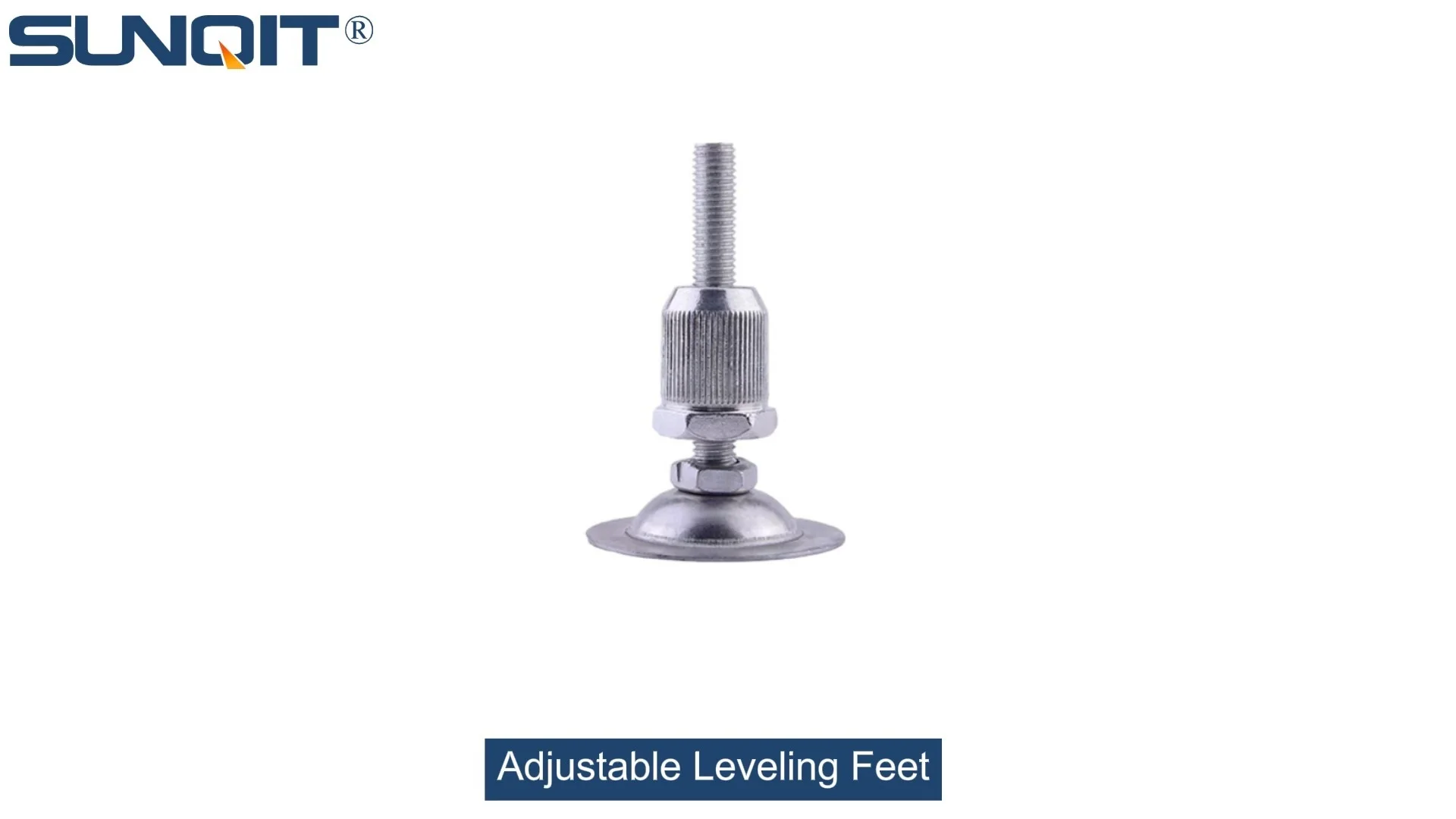
Adjustable leveling feet are designed to keep machines level when placed on uneven or sloped ground. Otherwise known as adjustable equipment feet, they are available to order in a wide variety of size and load capacity combinations.
In the fast-paced world of manufacturing, where every second counts and precision is non-negotiable, the smallest components often play the biggest roles. Think about it: a conveyor belt that jams, a workbench that wobbles, or a material rack that leans—these might seem like minor hiccups, but they can grind production to a halt, compromise product quality, and even put workers at risk. Today, we're shining a light on one such unsung hero: adjustable leveling feet . These unassuming components are the backbone of stability in lean pipe turnkey solutions, ensuring that everything from workbenches to material racks stays grounded, secure, and efficient—no matter what the factory floor throws at them.
What Are Adjustable Leveling Feet, and Why Do They Matter?
At their core, adjustable leveling feet are exactly what they sound like: devices attached to the bottom of equipment—think lean pipe workbenches , conveyor stands, or turnover trolleys—to compensate for uneven floors. They typically consist of a threaded stem, a base (often with a rubber or plastic pad to prevent slipping), and a nut to lock the height in place. Twist the stem, and the foot extends or retracts, letting you fine-tune the height of each corner of a piece of equipment until it's perfectly level.
But why does this matter so much in lean manufacturing? Lean systems thrive on efficiency—eliminating waste, streamlining workflows, and reducing errors. A wobbly workbench might not seem like a big deal, but in reality, it can lead to:
- Product defects: Components sliding off the bench, misalignments during assembly, or tools rolling into hard-to-reach corners.
- Worker fatigue: Constantly readjusting posture to compensate for uneven surfaces can lead to strain and reduced productivity.
- Equipment damage: Vibration from unstable setups can wear down motors, loosen joints, or even cause conveyor belts to derail.
- Safety hazards: Unstable racks or trolleys are at risk of tipping, especially when loaded with heavy materials.
Let's paint a picture. Maria, a production manager at a small electronics manufacturer, was struggling with a 15% defect rate on their PCB assembly line. After weeks of investigation, she noticed that the lean pipe workbench at the soldering station was slightly tilted—just enough that tiny resistors and capacitors would slide off the mat (ESD workstation) when operators reached for tools. The team had tried shimming the legs with cardboard, but the shims would shift, and the problem returned. Then, they swapped out the fixed plastic feet for adjustable leveling feet. Within a week, defects dropped by 12%, and operators reported less eye strain from having to chase rolling components. "It was like night and day," Maria recalls. "We'd been overlooking this tiny component, but it turned out to be the missing piece in our efficiency puzzle."
The Role of Adjustable Leveling Feet in Lean Pipe Turnkey Solutions
Lean pipe turnkey solutions are all about customization. Every factory, every production line, has unique needs—whether it's a compact workbench for electronics assembly or a heavy-duty material rack for automotive parts. These solutions are built using modular components like aluminum profiles , lean pipes, and connectors, which can be configured and reconfigured on the fly. But without stable foundations, even the most thoughtfully designed setup will underperform.
Adjustable leveling feet act as the bridge between these modular systems and the often imperfect factory floor. Here's how they integrate seamlessly into key components of lean solutions:
1. Lean Pipe Workbenches: Precision Starts with Stability
Workbenches are the heart of any assembly line. Whether operators are assembling smartphones, testing circuit boards, or packaging finished goods, they need a flat, steady surface. Lean pipe workbenches —built with lightweight yet durable aluminum or steel pipes—are popular for their flexibility, but their modular design means they're only as stable as their feet. Adjustable leveling feet ensure that even if the floor dips near a drainage grate or rises slightly under a support beam, the workbench remains level. This is especially critical for ESD workstations, where sensitive electronic components can be damaged by static discharge; a level surface prevents uneven grounding and ensures consistent ESD protection.
2. Material Racks and Flow Racks: Secure Storage, Even on Uneven Floors
Material racks, whether they're 3-row, 3-floor storage units or gravity-fed flow racks, hold hundreds of pounds of inventory. A rack that's off-kilter is a disaster waiting to happen—boxes can tip, labels can peel, and retrieving items becomes a time-consuming chore. Adjustable leveling feet let warehouse managers fine-tune each rack's position, ensuring that shelves stay parallel and loads distribute evenly. For flow racks, which rely on gravity to move materials along roller tracks, a level setup is even more critical: a slight tilt can cause items to move too fast (risking damage) or too slow (creating bottlenecks).
3. Turnover Trolleys and Mobile Workstations: Stability on the Go
Many lean setups use mobile equipment—trolleys to transport materials between stations, or workbenches on caster wheels that can be repositioned for different tasks. But when these mobile units are stationary, they need to stay put. That's where leveling feet with "lockable" features come in: some models have a foot that can be lowered to lift the caster off the ground, securing the trolley in place. This dual functionality—mobility when needed, stability when stationary—makes them indispensable for flexible manufacturing environments.

Custom Designs for Unique Needs: One Size Doesn't Fit All
Factory floors are as unique as the products they produce. Some have smooth concrete, others have rough asphalt or even grated metal surfaces. Loads vary too—from lightweight circuit boards to heavy automotive parts weighing hundreds of pounds. That's why adjustable leveling feet can't be a one-size-fits-all solution. The best lean pipe suppliers offer custom designs tailored to specific environments, with options like:
| Feature | Custom Options | Best For |
|---|---|---|
| Material | Aluminum (lightweight, corrosion-resistant), stainless steel (heavy-duty, chemical-resistant), or plastic (non-conductive, low-cost). | Aluminum for cleanrooms or food processing; stainless steel for factories with harsh chemicals; plastic for ESD-sensitive areas. |
| Load Capacity | From 50kg per foot (small workbenches) to 500kg+ (heavy machinery bases). | High-capacity feet for material racks or assembly lines with heavy tools. |
| Base Design | Rubber pads (anti-slip, vibration-dampening), metal plates (for rough surfaces), or suction cups (for smooth floors like tile). | Rubber pads for concrete; suction cups for labs or cleanrooms with polished floors. |
| Thread Size & Length | M8, M10, M12 threads (common for aluminum profile systems) with adjustable lengths from 20mm to 100mm+. | Longer threads for floors with significant unevenness (e.g., old factories with cracked concrete). |
| Locking Mechanisms | Hex nuts, wing nuts, or integrated locks to prevent accidental adjustment. | Wing nuts for quick adjustments; integrated locks for high-vibration environments (e.g., near heavy machinery). |
Take, for example, a pharmaceutical manufacturer that needed leveling feet for their cleanroom workbenches. The environment required non-corrosive materials (to avoid contamination), non-slip bases (to prevent the benches from shifting during sterile operations), and ESD-safe components (to protect sensitive medications). A standard steel foot wouldn't work here—instead, the supplier provided aluminum feet with rubber ESD-compliant pads and stainless steel threads, ensuring they met both the facility's hygiene and safety standards.
Another example: a automotive plant with grated metal floors. Standard rubber pads would sink into the grates, making leveling impossible. The solution? Leveling feet with large, flat metal bases that spanned the gaps, distributing the load evenly across the grate. It's these small, tailored adjustments that turn a generic component into a game-changer for specific industries.

Materials Matter: Choosing the Right Leveling Foot for Your Environment
The material of your adjustable leveling feet isn't just about durability—it's about compatibility with your workspace. Let's break down the most common options and when to use them:
Aluminum: Lightweight and Corrosion-Resistant
Aluminum leveling feet are a popular choice for lean pipe systems, especially those built with aluminum profiles . They're lightweight, making them easy to install and adjust, and naturally resistant to rust and corrosion—ideal for humid environments like food processing plants or coastal factories. Aluminum is also non-magnetic, which is a plus for electronics manufacturing where magnetic interference could damage components. The downside? They're not as strong as steel, so they're best for medium loads (up to 200kg per foot).
Stainless Steel: Heavy-Duty and Hygienic
Stainless steel leveling feet are the workhorses of heavy industry. They can handle loads up to 500kg per foot, making them perfect for material racks, heavy machinery bases, or foundries where heat and debris are common. Stainless steel is also easy to clean and sanitize, which is why it's a staple in pharmaceutical or medical device manufacturing. The tradeoff? They're heavier and more expensive than aluminum, so they're overkill for lightweight setups like small workbenches.
Plastic: Affordable and Non-Conductive
Plastic leveling feet are budget-friendly and great for light loads—think small trolleys, tool cabinets, or workbenches in dry, clean environments. They're non-conductive, which is useful for ESD workstations, and they won't scratch delicate floors like hardwood or tile. However, they're not as durable as metal options; they can crack under heavy loads or degrade in extreme temperatures, so they're best for low-stress applications.

Integration with Lean Pipe Systems: Seamless Compatibility
Adjustable leveling feet don't work in isolation—they're part of a larger ecosystem of lean pipe components, from aluminum profiles to connectors, casters, and roller tracks. The best suppliers design their feet to integrate seamlessly with these systems, ensuring a hassle-free setup. For example:
- Thread compatibility: Feet with M10 threads are designed to fit standard aluminum profile T-slots, so you don't need adapters or custom drilling.
- Mounting brackets: Some feet come with brackets that attach directly to lean pipe joints, making installation a breeze—no welding or specialized tools required.
- Dual-function designs: As mentioned earlier, feet that work with caster wheels —lower the foot to lift the caster, lock in place, and you've got a stable workstation. Raise the foot, and the caster takes over for mobility.
This integration is key to lean turnkey solutions, where every component should work together to minimize waste. A leveling foot that requires custom modifications or doesn't fit your existing aluminum profiles is just another form of waste—time wasted on installation, money wasted on adapters, and frustration for your team.
The Future of Adjustable Leveling Feet: Smarter, More Adaptive Solutions
As manufacturing evolves—with the rise of Industry 4.0, smart factories, and automation—adjustable leveling feet are evolving too. Today's innovations include:
- Self-leveling feet: Equipped with sensors and small motors, these feet automatically adjust to uneven floors, ideal for remote or hard-to-reach equipment like ceiling-mounted conveyors.
- IoT connectivity: Feet with built-in load sensors can send data to a central dashboard, alerting managers if a workbench or rack is overloaded or becoming unstable—a proactive way to prevent accidents.
- Recycled materials: Eco-friendly options made from recycled aluminum or plastic, aligning with sustainability goals in modern manufacturing.
These advancements might seem futuristic, but they're already being tested in cutting-edge facilities. For example, a major automotive manufacturer in Germany is using self-leveling feet on their robotic assembly lines, where even a 1mm tilt can throw off precision welding. The sensors in the feet communicate with the robots, ensuring the work surface stays level in real time—reducing errors and downtime.
Conclusion: The Unsung Hero of Lean Stability
Adjustable leveling feet might not get the same attention as high-tech robots or automated conveyor systems, but they're the quiet foundation on which efficient, safe, and productive lean manufacturing systems are built. From lean pipe workbenches to heavy material racks, they ensure that every component stays stable, every workflow stays smooth, and every product meets the highest quality standards.
When choosing leveling feet for your lean pipe turnkey solution, remember: it's not just about picking a foot—it's about understanding your environment, your loads, and your unique challenges. Work with a supplier who offers custom designs, understands the nuances of aluminum profiles and caster wheel integration, and can help you find the perfect fit for your factory floor. After all, in lean manufacturing, the smallest details often make the biggest difference.
So the next time you walk through a factory and see a perfectly level workbench, a steady conveyor belt, or a rack that stands firm even with a full load, take a moment to appreciate the adjustable leveling feet holding it all together. They may be out of sight, but they're never out of mind—at least, not for the lean manufacturing experts who know that stability is the first step toward excellence.