- Company Articles
- Products and Technology
- Product knowledge
- Adjustable Leveling Feet for Machinery Manufacturing: Handling Heavy Loads Safely

Adjustable Leveling Feet for Machinery Manufacturing: Handling Heavy Loads Safely
Related Product
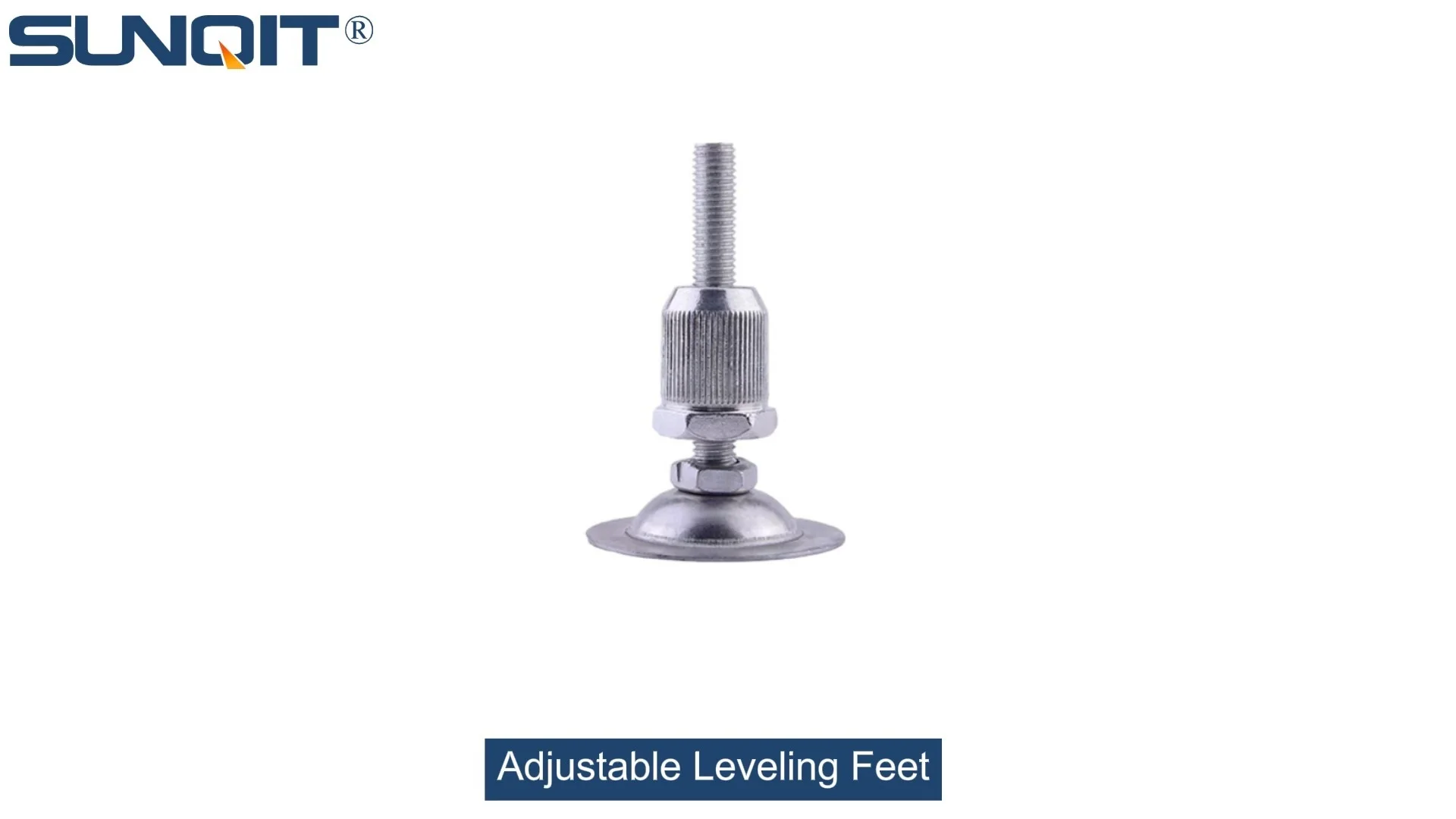
Adjustable Leveling Feet
Adjustable leveling feet are designed to keep machines level when placed on uneven or sloped ground. Otherwise known as adjustable equipment feet, they are available to order in a wide variety of size and load capacity combinations.
On a bustling factory floor, where the hum of machinery blends with the rhythm of production lines, stability isn't just a convenience—it's a lifeline. Imagine a precision assembly station where a workbench wobbles slightly, or a conveyor belt that sits unevenly, causing parts to shift mid-transit. These might seem like minor nuisances, but in reality, they're ticking time bombs: risking product defects, slowing down workflows, and even endangering the workers who rely on these tools daily. This is where adjustable leveling feet step in—quiet heroes that transform instability into reliability, and chaos into control. In machinery manufacturing, where heavy loads and precise alignment are non-negotiable, choosing the right leveling feet isn't just about equipment maintenance; it's about protecting your team, your products, and your bottom line.
What Are Adjustable Leveling Feet, and Why Do They Matter?
At their core, adjustable leveling feet are deceptively simple devices: they're the "feet" attached to the base of machinery, workbenches, conveyors, and racks, designed to compensate for uneven floors, absorb vibrations, and distribute weight evenly. But don't let their simplicity fool you—their impact is anything but small. Think of them as the foundation of your manufacturing setup. A house built on a shaky foundation will crack; a production line built on unstable machinery will falter. Adjustable leveling feet ensure that every piece of equipment, from a lightweight workbench to a heavy-duty conveyor, stands firm, regardless of the floor's imperfections.
In machinery manufacturing, where tolerances are measured in millimeters and loads can reach thousands of kilograms, even the tiniest misalignment can snowball into major issues. A misaligned conveyor might cause parts to jam, leading to costly downtime. An unlevel workbench could throw off precision measurements, resulting in defective products that eat into profits. Worse, an unstable machine is a safety hazard: a sudden shift could cause tools to slip, parts to fall, or workers to lose balance. Adjustable leveling feet aren't just about "leveling"—they're about creating a stable, predictable environment where your team can work confidently, and your machinery can perform at its best.
Exploring the Types: Which Adjustable Leveling Feet Are Right for Your Needs?
Not all adjustable leveling feet are created equal. Just as every machine has unique requirements—weight, environment, and function—so too do the feet that support them. Let's dive into three critical types that are indispensable in machinery manufacturing, each designed to tackle specific challenges:
1. Anti-slip Adjustable Leveling Feet: Grip That Won't Let Go
When you're dealing with heavy machinery or workbenches that see constant movement—think of a workbench where operators are loading and unloading parts all day—slip resistance isn't optional. Anti-slip adjustable leveling feet are engineered with specialized base materials (often rubber or high-friction polymers) that dig into the floor, creating a secure bond that resists sliding, even under dynamic loads. This is especially crucial in environments where floors might be oily, dusty, or prone to moisture—common scenarios in manufacturing plants.
What sets these feet apart is their dual functionality: they level the equipment and anchor it in place. The adjustable thread allows you to tweak the height to compensate for uneven floors, while the anti-slip base ensures that once set, the machine stays put. For example, a material rack loaded with heavy components needs to stay stationary, even when workers are pulling parts from it. Anti-slip leveling feet prevent the rack from shifting, reducing the risk of tipping or collapse. They're also a favorite for mobile workbenches or trolleys that need to stay stable when in use but can be moved when needed—no more chasing a runaway cart across the factory floor.
2. M10*56 Rubber Leveling Feet: Precision Meets Durability
For applications where precision and vibration dampening are key, M10*56 rubber leveling feet are a go-to choice. The "M10*56" refers to the thread size (M10) and length (56mm), making them compatible with a wide range of machinery bases—from compact workbenches to larger conveyor frames. The rubber component is the star here: rubber naturally absorbs shocks and vibrations, which is critical for protecting sensitive equipment or delicate parts. Imagine a quality control station where microscopes or measurement tools are mounted on a workbench; vibrations from nearby machinery could throw off readings, leading to incorrect assessments. M10*56 rubber leveling feet act as a buffer, isolating the workbench from these disturbances and ensuring measurements stay accurate.
Rubber also offers chemical resistance, making these feet ideal for environments where oils, coolants, or cleaning agents are present. Unlike metal feet, which might corrode or degrade over time when exposed to these substances, rubber holds up, extending the lifespan of both the feet and the machinery they support. And because they're adjustable, you can fine-tune the height with ease—perfect for when you need to align multiple pieces of equipment in a straight line, like a series of workbenches along an assembly line. Whether you're setting up a new production cell or retrofitting old machinery, M10*56 rubber leveling feet strike the perfect balance between precision, durability, and versatility.
3. Heavy Duty Split Foot Seat: For the Toughest Loads
When the going gets heavy, the heavy duty split foot seat steps up. Designed to handle extreme loads—think machinery that weighs tons, or material racks stacked with steel components—these leveling feet are built like tanks. The "split foot" design distributes weight across a larger surface area, reducing the pressure on the floor and preventing indentations or damage, even on concrete. This is a game-changer in facilities where floor integrity is as important as equipment stability; a single heavy machine without proper weight distribution could crack the floor over time, leading to expensive repairs.
Constructed from high-strength materials like cast iron or reinforced steel, heavy duty split foot seats are built to last. They often feature a large, flat base (the "split" refers to a design that allows for easy adjustment even under load) and a coarse thread for quick height adjustments—no need for fancy tools, just a wrench to turn the nut. These feet are common in industries like automotive manufacturing, where stamping presses or welding robots exert immense downward force, or in warehouses with pallet racks that hold thousands of pounds of inventory. If your operation involves heavy machinery that rarely moves but needs to stay rock-solid for years, the heavy duty split foot seat is the unsung hero you can rely on.

A Side-by-Side Comparison: Choosing the Right Foot for the Job
With so many options, how do you decide which adjustable leveling foot fits your needs? Let's break down the key features of the three types we've covered, so you can match them to your machinery's requirements:
| Type | Material | Typical Load Capacity | Key Features | Best For |
|---|---|---|---|---|
| Anti-slip Adjustable Leveling Feet | Metal stem + rubber/non-slip base | Up to 1,500 kg per foot | High-friction base, shock absorption, corrosion-resistant stem | Workbenches, mobile trolleys, material racks in slippery environments |
| M10*56 Rubber Leveling Feet | Metal stem (steel) + rubber base | Up to 800 kg per foot | Precision height adjustment (M10 thread), vibration dampening, chemical resistance | Precision workstations, conveyor systems, sensitive measuring equipment |
| Heavy Duty Split Foot Seat | Cast iron or reinforced steel | 5,000+ kg per foot | Large split base for weight distribution, coarse thread for quick adjustment | Heavy machinery (stamping presses, welding robots), industrial material racks |

The Hidden Benefits: Beyond Stability
Adjustable leveling feet do more than just keep machinery steady—they unlock a host of secondary benefits that ripple through your entire operation. Let's explore how these small components deliver big results:
Safety First: Protecting Your Most Valuable Asset—Your Team
Nothing matters more than the safety of your workers. An unstable machine isn't just a productivity killer; it's a hazard. A workbench that shifts while someone is using a power tool could lead to cuts or bruises. A conveyor that tilts might spill heavy parts, risking crushed toes or worse. Adjustable leveling feet eliminate these risks by ensuring every piece of equipment stays grounded. The anti-slip variants add an extra layer of protection, preventing accidental movement even during high-activity periods. When your team knows their tools and workstations are secure, they can focus on their tasks without distraction—boosting confidence and reducing the likelihood of accidents.
Precision That Saves Time and Money
In manufacturing, precision equals profit. A misaligned assembly line might produce parts that don't fit, requiring rework or scrapping—both costly and time-consuming. Adjustable leveling feet ensure that machinery is aligned to exact specifications, from the height of a workbench to the angle of a conveyor. For example, a workbench used for electronics assembly needs to be level to prevent small components from rolling off, while a flow rack with multiple shelves must align perfectly with a conveyor to ensure smooth part transfer. With adjustable feet, you can dial in that precision quickly, reducing setup time and minimizing errors. Over time, these small adjustments add up to significant savings in labor and materials.
Durability: Extending Equipment Lifespan
Machinery isn't cheap, and replacing it is a major expense. Vibrations, uneven weight distribution, and constant stress from instability can wear down components prematurely—bearings fail, frames bend, and motors burn out faster. Adjustable leveling feet absorb vibrations, distribute weight evenly, and reduce stress on machinery parts, effectively extending their lifespan. For example, a conveyor with M10*56 rubber leveling feet will experience less wear on its motor and belt, because the feet dampen the shaking that would otherwise rattle the system apart. Investing in quality leveling feet today means spending less on repairs and replacements tomorrow.

Real-World Applications: Where Adjustable Leveling Feet Shine
To truly understand the value of adjustable leveling feet, let's look at how they perform in three common machinery manufacturing scenarios:
1. The Precision Workbench: A Stable Canvas for Craftsmanship
A workbench is the heart of any assembly or repair station. Whether it's used for assembling circuit boards, inspecting parts, or packing products, it needs to be stable, level, and vibration-free. Enter anti-slip adjustable leveling feet: they grip the floor to prevent sliding when workers lean on the bench or move heavy tools, while their adjustable height ensures the surface is even, even if the factory floor dips or rises. Pair them with a workbench made from sturdy materials like aluminum profiles, and you've got a setup that can handle daily use without wobbling. For electronics manufacturers, where static control is critical, some anti-slip feet even come with ESD (electrostatic discharge) properties, protecting sensitive components from damage.
2. Conveyor Systems: Keeping the Flow Smooth
Conveyors are the arteries of a production line, moving parts from one station to the next. If a conveyor is unlevel, parts can get stuck, slow down, or even fall off—disrupting the entire workflow. M10*56 rubber leveling feet are ideal here: their rubber bases absorb the vibrations from the conveyor motor, preventing them from spreading to the floor and disturbing nearby equipment. They also allow for precise alignment between conveyor sections, ensuring parts transition smoothly from one belt to the next. In food processing or pharmaceutical manufacturing, where cleanliness is paramount, rubber feet are easy to wipe down and resistant to sanitizing chemicals, making them a hygienic choice.
3. Heavy-Duty Material Racks: Supporting the Weight of Production
Material racks in warehouses or manufacturing facilities often hold thousands of pounds of raw materials, finished goods, or tools. A rack that leans to one side is a disaster waiting to happen—especially if it collapses under the load. Heavy duty split foot seats distribute the rack's weight across a larger area, preventing the floor from cracking and keeping the rack upright. Their robust construction stands up to the constant loading and unloading of heavy items, and their coarse threads make it easy to adjust the height if the rack needs to be repositioned or if the floor settles over time. In automotive plants, where racks store heavy engine parts or body panels, these feet are non-negotiable for maintaining a safe, efficient storage system.
How to Choose the Right Adjustable Leveling Feet for Your Machinery
Selecting the perfect adjustable leveling feet isn't a one-size-fits-all process. It requires a bit of homework to ensure they match your machinery's needs and your facility's conditions. Here's a step-by-step guide to help you make the right choice:
Step 1: Calculate the Load Per Foot
Start by determining how much weight each foot will bear. Divide the total weight of the machinery (including any maximum load it will carry) by the number of feet it has. For example, a workbench that weighs 500 kg and has four feet will put 125 kg per foot. Always add a safety margin—aim for feet with a load capacity 20-30% higher than your calculated per-foot weight to account for unexpected stress or dynamic loads (like parts being dropped on the machinery).
Step 2: Assess the Environment
Consider the conditions where the machinery will operate: Is the floor smooth or uneven? Are there oils, chemicals, or moisture present? Will the area be cleaned regularly with harsh detergents? For slippery floors, prioritize anti-slip feet. For chemical exposure, rubber or stainless steel feet are better than standard steel. For outdoor or humid environments, look for corrosion-resistant materials like galvanized steel or aluminum.
Step 3: Check the Machinery's Base Design
Look at the mounting points on your machinery. What thread size do they require? (This is where specs like M10*56 come into play.) Is there enough clearance for the foot's base? Some heavy-duty feet have larger bases that might not fit if the machinery is close to the floor. Measure the available space and compare it to the foot's dimensions to avoid installation headaches.
Step 4: Prioritize Key Features
What matters most to your operation? If precision alignment is critical, go for feet with fine-thread adjustments. If vibration is an issue, rubber or anti-vibration pads are a must. For heavy loads, steel or cast iron bases are better than plastic. Make a list of your top priorities—safety, durability, precision, or cost—and rank them to narrow down your options.
Maintenance Tips: Keeping Your Leveling Feet in Top Shape
Even the best adjustable leveling feet need a little care to perform their best over time. Here are some simple maintenance tips to extend their lifespan and ensure they keep your machinery stable:
- Regular Inspections: Check feet monthly for signs of wear, like cracks in rubber bases, rust on metal stems, or loose threads. Tighten any loose nuts or bolts to prevent wobbling.
- Cleanliness: Wipe down feet with a damp cloth to remove dirt, oil, or debris that could reduce grip (especially important for anti-slip models). For rubber feet, avoid harsh solvents that might degrade the material.
- Lubrication: Apply a small amount of machine oil to the threads twice a year to keep adjustments smooth. This prevents threads from seizing up, making it easier to re-level machinery if needed.
- replace When Worn: If a foot's base is cracked, the thread is stripped, or the anti-slip surface is worn smooth, replace it immediately. A single faulty foot can compromise the stability of the entire machine.
Conclusion: Stability as a Foundation for Success
In the fast-paced world of machinery manufacturing, it's easy to overlook the small components that keep everything running smoothly. But adjustable leveling feet are far from "small"—they're the foundation upon which safe, efficient, and precise production relies. Whether you're outfitting a new workbench with anti-slip feet, aligning a conveyor with M10*56 rubber feet, or supporting a heavy material rack with split foot seats, these devices ensure that your machinery stands firm, your workers stay safe, and your products meet the highest standards.
At the end of the day, investing in quality adjustable leveling feet isn't just about buying a part—it's about investing in peace of mind. It's knowing that when your team walks onto the factory floor, they're stepping into an environment where stability is never in question. It's trusting that your machinery will perform consistently, day in and day out, without unexpected disruptions. And it's recognizing that sometimes, the most important innovations are the ones that keep everything—quite literally—on solid ground.
So, the next time you're setting up a new production line, upgrading old equipment, or simply looking to improve safety in your facility, don't forget the unsung heroes underfoot. Adjustable leveling feet might not grab headlines, but they'll quietly work behind the scenes to keep your operation running stronger, safer, and more efficiently than ever before.