- Company Articles
- Products and Technology
- Product knowledge
- Adjustable Leveling Feet for Mobile Workstations: Ensuring Stability on the Go

Adjustable Leveling Feet for Mobile Workstations: Ensuring Stability on the Go
Related Product
Adjustable Leveling Feet
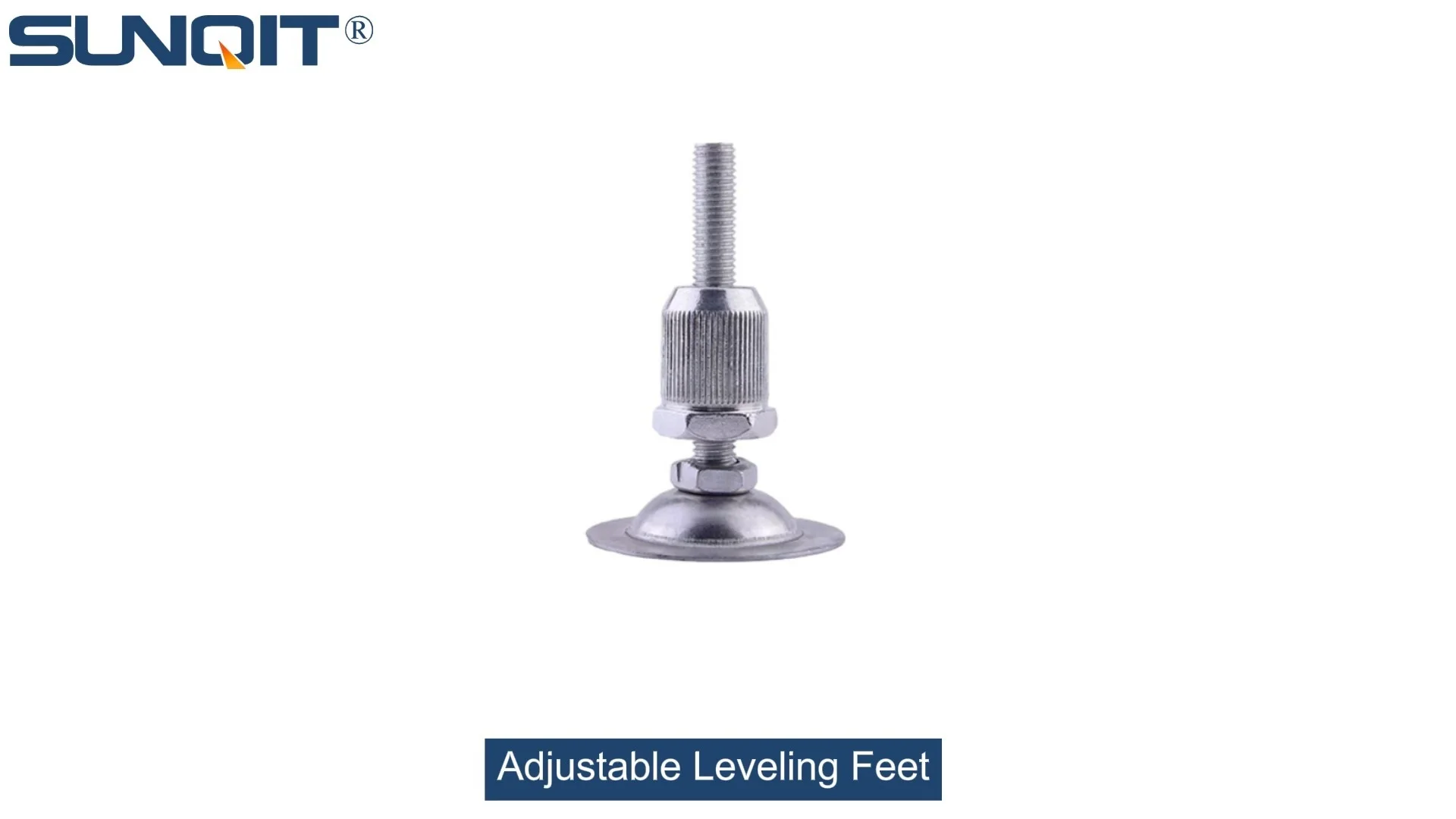
Adjustable leveling feet are designed to keep machines level when placed on uneven or sloped ground. Otherwise known as adjustable equipment feet, they are available to order in a wide variety of size and load capacity combinations.
Picture this: It's a busy Tuesday morning on the factory floor. Maria, a line assembler at a electronics manufacturing plant, wheels her mobile workstation—a sleek lean pipe workbench mounted on caster wheels—over to her station. She's got a batch of circuit boards to test, and every second counts. But as she locks the caster wheels in place and leans in to start work, she notices something off. The workbench wobbles. Just a little at first, but enough that her tools slide slightly when she reaches for them. Annoyed, she tries to prop a piece of cardboard under one leg, but it slips out. By the time she's adjusted it "good enough," she's already five minutes behind. Sound familiar? If you've ever worked with mobile workstations, you know the struggle: they're supposed to make your life easier by moving where you need them, but uneven floors, worn casters, or heavy loads can turn them into a frustrating, unstable mess. That's where adjustable leveling feet come in—and trust me, they're more than just a "nice-to-have" add-on. They're the unsung heroes that turn a wobbly workstation into a rock-solid tool for productivity.
Why Mobile Workstations Need Both Mobility and Stability
First, let's talk about why mobile workstations are so popular in the first place. In today's fast-paced work environments—whether it's a manufacturing plant, a research lab, a warehouse, or even a busy kitchen—flexibility is key. A workstation that can roll from one corner of the floor to another means workers don't have to waste time walking back and forth to retrieve tools or materials. It means teams can reconfigure their workspace in minutes to adapt to a new project. And in industries like electronics assembly, where precision is everything, a mobile workstation can bring the tools directly to the product, not the other way around. But here's the catch: mobility often comes at the cost of stability. Most mobile workstations rely on caster wheels to move, and while casters are great for rolling, they're not designed to keep a heavy load steady on an uneven surface. A minor dip in the concrete, a worn spot in the floor tiles, or even a single pebble can throw the entire workstation off-kilter. And when that happens, the consequences go beyond frustration. A wobbly workstation can lead to:
- Wasted time: As Maria experienced, stopping to adjust a unstable workstation eats into productivity. Over a day, that adds up to hours of lost work.
- Errors and defects: In precision tasks—like assembling small parts or conducting lab tests—a shaky surface can lead to mistakes, which cost money to fix and damage quality control.
- Safety risks: A workstation that rocks back and forth increases the chance of tools, materials, or even the workstation itself tipping over. That's a hazard for both workers and equipment.
- Physical strain: Constantly leaning or overcompensating to steady a workstation can lead to muscle fatigue or repetitive strain injuries over time.
So, what's the solution? We can't just ditch the casters—mobility is too important. And we can't expect every floor to be perfectly level (let's be real, even new buildings settle over time). The answer lies in finding a balance: a workstation that glides smoothly on casters when you need to move it, but locks into place with unshakable stability when you're ready to work. That's where adjustable leveling feet shine. They're the bridge between mobility and stability, giving you the best of both worlds.
What Are Adjustable Leveling Feet, Anyway?
If you're not familiar with adjustable leveling feet, let's break them down. At their core, they're simple devices: a threaded rod attached to a base (usually made of rubber, metal, or plastic) that screws into the bottom of a workstation leg. By twisting the rod, you can extend or retract the base, effectively raising or lowering that corner of the workstation. Think of them like the "leveling legs" on a washing machine or a refrigerator—same idea, but built to handle the rigors of industrial use. But don't let their simplicity fool you. Modern adjustable leveling feet are engineered with specific features to tackle the unique challenges of mobile workstations. For example, many come with anti-slip bases to grip the floor and prevent sliding, even on smooth surfaces like tile or polished concrete. Others have heavy-duty split foot seats, which distribute the workstation's weight over a larger area, reducing pressure on the floor and improving stability. Some even use suction cup technology to create a vacuum seal with the floor, making them ideal for environments where vibration is a concern, like labs with sensitive equipment.
One of the most common types you'll see is the M10*56 rubber leveling foot—a standard size in many industries. The "M10" refers to the thread size (10mm), and "56" is the length of the threaded rod (56mm). The rubber base provides excellent grip, and the threaded design makes adjustment easy—no tools required, just a quick twist by hand. But there are also specialized options, like the suction cup anti-slip foot adjuster, which uses a rubber cup that compresses when you lower it, creating suction to hold the workstation in place. These are especially popular in cleanrooms or food processing facilities, where hygiene and precision are top priorities.

How Adjustable Leveling Feet Work With Caster Wheels
Now, you might be wondering: "If my workstation already has caster wheels, why add leveling feet?" The answer is simple: they work together. Casters handle the "mobile" part, and leveling feet handle the "stable" part. Here's how it typically works: When you need to move the workstation, you retract the leveling feet so that only the caster wheels are touching the floor. This lets you roll it smoothly, even over minor obstacles. Once you've positioned it where you need it, you extend the leveling feet until they make contact with the floor and lift the casters slightly off the ground (or at least take most of the weight). Now, the workstation is supported by the leveling feet, not the casters, which means it's no longer rolling or wobbling. It's a seamless transition—move, lock, work, unlock, move again. And because the leveling feet are adjustable, you can fine-tune each one individually to compensate for uneven floors. If the left front corner is lower than the right back, just twist that leveling foot a little more until the workstation feels steady.
I recently visited a automotive parts manufacturer that had just upgraded their lean pipe workbenches with adjustable leveling feet, and the difference was night and day. Their old setup used fixed-height legs with casters, and workers would often prop wood blocks under the legs to stabilize them. "Half the time, the blocks would slide, and we'd have to start over," one supervisor told me. "Now, with the leveling feet, the guys just twist them until the bench stops moving. It takes 10 seconds, and they're ready to go. We've already seen a 15% increase in production speed on those lines because they're not wasting time adjusting blocks anymore." That's the power of combining mobility (casters) with stability (leveling feet)—it turns a workaround into a system.

The Benefits of Adjustable Leveling Feet: More Than Just "Stability"
Stability is the main goal, but adjustable leveling feet offer a lot more than that. Let's dive into the key benefits that make them a must-have for any mobile workstation:
1. Adaptability to Any Floor Surface
No two floors are the same. A factory might have cracked concrete with expansion joints, a lab could have vinyl tiles that have lifted at the edges, and a warehouse might have a mix of concrete and carpet (yes, really). Adjustable leveling feet don't care about any of that. Their threaded design lets you extend or retract them by fractions of an inch, so you can compensate for even the most uneven surfaces. I once worked with a jewelry maker who had a mobile workstation in her garage studio. The floor sloped slightly toward the door, which meant her workstation would slowly roll forward if she didn't wedge a doorstop under it. After installing leveling feet, she simply extended the front feet a little more than the back, and problem solved—no more rolling, no more doorstops. "It sounds small, but being able to trust that my workstation won't move while I'm soldering delicate pieces has made me so much more confident," she said. "I don't have to worry about ruining a piece because the bench shifted mid-stroke."
2. Protection for Floors and Equipment
When a workstation is wobbling, the casters or legs can scrape against the floor, causing scratches or damage over time. Adjustable leveling feet distribute the workstation's weight evenly, reducing pressure on any single point. This not only protects the floor but also extends the life of the workstation itself. Heavy loads can warp or bend fixed legs over time, but leveling feet take the stress off the frame by providing stable, even support. Plus, many leveling feet come with soft, non-marking bases (like rubber or plastic), which are gentler on sensitive floors like hardwood or tile. In a museum exhibit hall I consulted for, they used mobile display workstations with aluminum profile frames and adjustable leveling feet with rubber bases. The curator told me, "We can't have scratches on the historic wood floors, so the non-marking feet were a must. And since the exhibits change every few months, being able to adjust the feet to keep the displays level on the uneven floor has saved us from embarrassing tilted signs or wobbly cases."
3. Safety First: Reducing the Risk of Accidents
A wobbly workstation is an accident waiting to happen. Tools can fall off, materials can spill, and in extreme cases, the entire workstation could tip over. Adjustable leveling feet eliminate that risk by keeping the workstation firmly planted. This is especially critical in environments where workers are handling heavy objects, sharp tools, or hazardous materials (like chemicals or hot liquids). In a commercial kitchen I worked with, the chefs used mobile prep stations with caster wheels to move ingredients around. But when chopping vegetables or using a knife, a unstable station was a major hazard. After adding adjustable leveling feet, the head chef noted, "We haven't had a single knife slip or bowl spill since we installed them. The guys feel safer, and that makes them more focused on their work—not worrying about the station moving."
4. Precision for Sensitive Tasks
In fields like electronics assembly, medical device manufacturing, or scientific research, even the smallest vibration can ruin a project. Adjustable leveling feet not only stabilize the workstation but also help dampen vibrations, thanks to their sturdy bases and often rubber or foam padding. For example, a lab technician measuring samples with a sensitive scale needs the workstation to be completely still—even a tiny wobble can throw off the readings. Leveling feet ensure that the scale stays steady, so the results are accurate. One lab manager I spoke to put it this way: "Before leveling feet, we'd have to redo measurements because the scale kept fluctuating. Now, we get consistent readings the first time, which cuts down on wasted materials and speeds up our research."

Types of Adjustable Leveling Feet: Which One Is Right for You?
Not all adjustable leveling feet are created equal. Just like workstations come in different shapes, sizes, and uses, leveling feet are designed to meet specific needs. Let's take a look at the most common types and when to use them:
| Type of Leveling Foot | Design Features | Best For | Material Highlights | Key Benefit |
|---|---|---|---|---|
| M10*56 Rubber Leveling Feet | Threaded steel rod (M10 x 56mm), non-slip rubber base, hand-adjustable (no tools needed). | General-purpose workstations, lean pipe workbenches, light to medium loads (up to 200kg per foot). | Zinc-plated steel rod (rust-resistant), rubber base (grip on concrete, tile, or wood). | Affordable, easy to install, and versatile for most everyday use cases. |
| Suction Cup Anti-Slip Foot Adjuster | Flexible rubber suction cup base, threaded rod, creates vacuum seal when pressed down. | Smooth floors (tile, polished concrete, glass), cleanrooms, labs, or environments where vibration is a concern. | Food-grade rubber (some models), stainless steel rod (for corrosion resistance). | Extra grip and vibration dampening—ideal for precision tasks or environments where hygiene matters. |
| Heavy Duty Split Foot Seat | Wide, split metal base (spreads weight), thick steel rod, often requires a wrench for adjustment (higher load capacity). | Heavy workstations (machinery, tool chests, industrial lean pipe workbenches), loads over 500kg per foot. | High-carbon steel (for strength), powder-coated finish (rust-resistant). | Maximum stability for heavy loads—prevents sinking into soft floors (like asphalt or carpet). |
| Aluminum Pipe Adjustable Leveling Feet | Lightweight aluminum rod and base, compatible with aluminum profile workstations, corrosion-resistant. | Aluminum profile workstations, cleanrooms, marine environments (saltwater exposure), or where weight is a concern. | Anodized aluminum (prevents corrosion), plastic or rubber base options. | Lightweight yet strong, perfect for aluminum frame systems where matching materials matter. |
Choosing the right type depends on three main factors: the weight of your workstation, the type of floor surface, and the environment you're working in. For example, if you're using a lightweight lean pipe workbench in a factory with concrete floors, M10*56 rubber leveling feet will probably do the job. But if you're rolling a heavy machinery cart over asphalt, a heavy-duty split foot seat would be better. And if you're in a lab with polished tile floors, suction cup feet will give you the grip and precision you need.
Integrating Adjustable Leveling Feet with Your Workstation: A Quick Guide
So, you've decided to add adjustable leveling feet to your mobile workstation—great choice! Now, how do you actually install them? Don't worry, it's easier than you might think, even if you're not a "DIY expert." Here's a step-by-step guide to get you started:
Step 1: Check Your Workstation's Legs
Most modern workstations (like lean pipe workbenches or aluminum profile workstations) come with pre-drilled holes or threaded inserts in the legs, specifically designed to attach leveling feet or casters. If yours doesn't, you may need to drill a hole and add a threaded insert (you can buy these at any hardware store). Just make sure the hole size matches the thread size of your leveling feet (e.g., M10 for M10*56 feet).
Step 2: Choose the Right Position
Leveling feet should be installed on the bottom of each leg, as close to the corners as possible. This ensures even weight distribution. If your workstation has four legs, you'll need four leveling feet. For larger workstations with six or eight legs, install one per leg—more support means more stability.
Step 3: Screw Them In (By Hand or With Tools)
Most leveling feet can be screwed in by hand, thanks to their large, easy-to-grip bases. For tighter spaces or heavier feet (like the heavy-duty split foot seat), you may need a wrench or pliers. Just be careful not to over-tighten—you don't want to strip the threads.
Step 4: Test and Adjust
Once installed, roll the workstation to its usual spot and lock the casters. Then, start adjusting the leveling feet. Begin with one foot, twisting it clockwise to extend it (lower it) or counterclockwise to retract it (raise it). Press down on the workstation to check for wobble, and adjust each foot until the workstation feels steady. A good trick: place a bubble level on the workstation surface to ensure it's perfectly horizontal. This is especially helpful for precision tasks like lab work or electronics assembly.
Pro tip: If you're installing leveling feet on a workstation that's already in use, empty it first. Adjusting the feet with a heavy load on top can make it harder to get the right level, and you risk straining yourself.
Real-World Results: How Adjustable Leveling Feet Transformed These Workspaces
Still not convinced that adjustable leveling feet are worth the investment? Let's look at a few real-world examples of how they've made a difference for businesses and workers.
Case Study 1: Electronics Assembly Plant
A mid-sized electronics manufacturer was struggling with high defect rates on their assembly line. After investigating, they found that the issue was their mobile lean pipe workbenches, which wobbled on the factory's uneven concrete floor. Workers were having trouble soldering small components because the bench moved slightly with every movement. The plant manager decided to install M10*56 rubber leveling feet on all 20 workstations. Within a month, defect rates dropped by 22%, and production speed increased by 15%. "The workers no longer have to brace themselves while soldering," the manager reported. "They can focus on the task, and the quality shows."
Case Study 2: Research Lab
A university research lab was conducting sensitive experiments that required precise measurements. Their mobile aluminum profile workstations kept shifting on the lab's vinyl floor, leading to inconsistent results. The lab technician installed suction cup anti-slip leveling feet, and the difference was immediate. "Our data is now consistent across trials, which has cut our research time in half," the technician said. "We used to have to repeat experiments because the numbers didn't match, but now we trust the readings the first time."
Case Study 3: Warehouse Fulfillment Center
A large warehouse was using mobile workstations to pick and pack orders. The concrete floor had several cracks and dips, making the workstations unstable. Workers were dropping items, and morale was low. The warehouse manager installed heavy-duty split foot seat leveling feet on the workstations. "The first day after installation, we had zero dropped items," the manager noted. "The team noticed right away—they came up to me and said, 'What did you do to the benches? They don't move anymore!' It's made the job less frustrating, and that's boosted productivity."
Maintaining Your Adjustable Leveling Feet: Keep Them Working Like New
Adjustable leveling feet are tough, but they're not indestructible. With regular use, dirt, debris, or rust can build up, making them harder to adjust. Here's how to keep them in top shape:
- Clean the threads regularly: Dirt or dust can get stuck in the threads, making adjustment difficult. Wipe them down with a dry cloth, and if they're really dirty, use a small brush (like a toothbrush) to scrub out the gunk. For metal threads, a little WD-40 or lubricating oil can help keep them moving smoothly.
- Check the base for wear: The rubber or plastic base on the leveling foot can wear down over time, reducing grip. If you notice cracks, tears, or smooth spots (where the tread has worn off), replace the foot. It's a small cost compared to the risk of a unstable workstation.
- Tighten loose feet: Over time, the leveling feet can loosen from the workstation legs. Give them a quick twist every few weeks to make sure they're secure.
- Protect against corrosion: If you're using leveling feet in a damp environment (like a kitchen or marine facility), opt for stainless steel or zinc-plated models. Wipe them down after exposure to water to prevent rust.
By spending five minutes a month on maintenance, you can extend the life of your leveling feet and ensure they keep your workstation stable for years to come.
Choosing the Right Adjustable Leveling Feet: What to Look For
Ready to buy adjustable leveling feet for your workstation? Here are the key factors to consider to make sure you get the right ones:
1. Load Capacity
First, calculate the total weight of your workstation, including tools, materials, and any equipment that will be on it. Then, divide that by the number of leveling feet (usually 4-6) to get the weight per foot. Make sure the leveling feet you choose can handle that weight. For example, if your workstation weighs 800kg and has 4 feet, each foot needs a load capacity of at least 200kg. It's always better to overestimate—going with a higher capacity than you need ensures durability.
2. Floor Type
Rubber bases are great for concrete, tile, or wood floors—they provide grip and won't scratch. Suction cup bases work best on smooth, non-porous surfaces like polished concrete or glass. For rough floors (like asphalt or gravel), a metal base (like the heavy-duty split foot seat) is better, as it won't tear easily.
3. Environment
Consider where the workstation will be used. In wet or humid environments (kitchens, labs), choose stainless steel or aluminum feet to prevent rust. In cleanrooms or food processing facilities, look for food-grade rubber bases that are easy to sanitize. For outdoor use, opt for UV-resistant materials to prevent cracking from sunlight.
4. Adjustment Range
How much "play" do you need? If your floor is very uneven, you'll want leveling feet with a longer adjustment range (more thread length). Most standard feet adjust between 10-50mm, but heavy-duty models can go up to 100mm or more.
5. Compatibility with Your Workstation
Make sure the leveling feet fit your workstation's legs. Check the thread size (M10, M12, etc.) and the mounting style (threaded insert, bolt-on, etc.). If you're using a lean pipe workbench or aluminum profile workstation, look for feet specifically designed to work with those systems—they'll be easier to install and more secure.
Final Thoughts: Stability Isn't a Luxury—It's a Necessity
At the end of the day, adjustable leveling feet are more than just a (pèijiàn)—a "fitting" or "accessory." They're a critical component that transforms a mobile workstation from a frustrating liability into a powerful tool for productivity. Whether you're assembling electronics on a lean pipe workbench, conducting experiments in a lab, or picking orders in a warehouse, stability matters. It saves time, reduces errors, improves safety, and makes the job easier. So, if you're still putting up with a wobbly workstation, do yourself (and your team) a favor: invest in adjustable leveling feet. They're affordable, easy to install, and the benefits—from smoother workflows to happier workers—are impossible to ignore. As Maria (remember her from the beginning?) would tell you: "I wish we'd installed these years ago. No more cardboard, no more wasted time—just a bench that stays where I put it. It's the little things that make the biggest difference."
So, what are you waiting for? Your workstation (and your sanity) will thank you.