- Company Articles
- Products and Technology
- Product knowledge
- Adjustable Leveling Feet for Small Batch Production – Flexibility Meets Stability

Adjustable Leveling Feet for Small Batch Production – Flexibility Meets Stability
Related Product
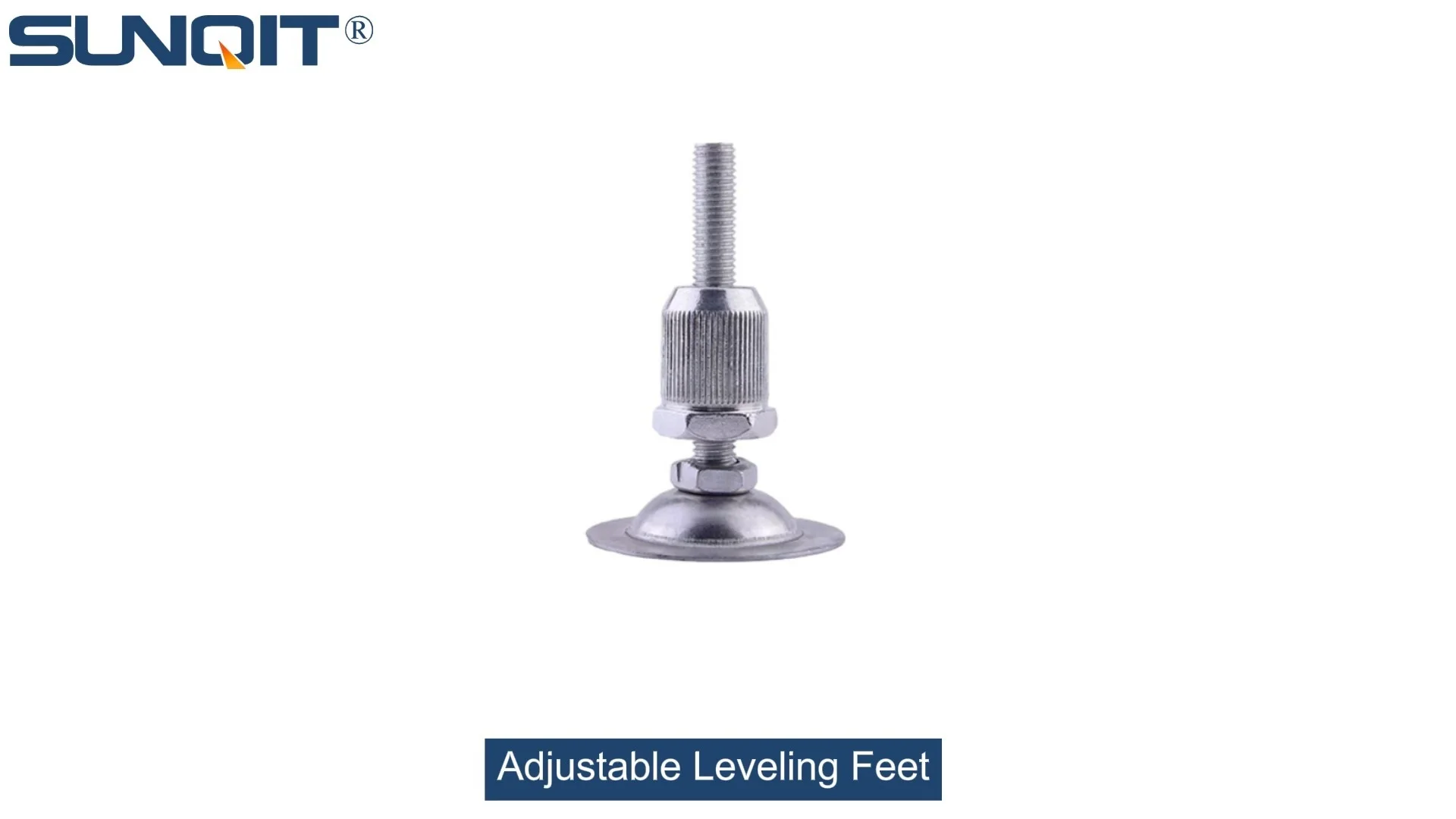
Adjustable Leveling Feet
Adjustable leveling feet are designed to keep machines level when placed on uneven or sloped ground. Otherwise known as adjustable equipment feet, they are available to order in a wide variety of size and load capacity combinations.
Small batch production is the heartbeat of innovation. Whether you're crafting custom electronics, prototyping medical devices, or assembling artisanal components, the ability to pivot quickly, adapt to changing specs, and maintain precision is non-negotiable. But in the chaos of (frequent line changes), limited floor space, and the pressure to deliver consistent quality, one often-overlooked component can make or break your operation: the stability of your workbenches. Enter adjustable leveling feet – the unsung heroes that bridge the gap between flexibility and stability, ensuring your lean system runs smoothly even when the floor beneath you isn't perfect.
The Hidden Cost of "Good Enough" Workbenches
Walk into any small production facility, and you'll likely find workbenches that have seen better days. Maybe they're propped up with scraps of wood to "level" them, or their fixed feet are scuffed from being dragged across uneven concrete. It's easy to dismiss these as minor inconveniences – after all, the team is used to it, right? But those wobbly surfaces are quietly eating into your bottom line.
Consider this: A 0.5-degree tilt on a workbench might not sound like much, but when you're assembling a circuit board with 0.1mm precision, that tilt can throw off measurements, leading to rework. Over time, those seconds spent readjusting components add up to hours of wasted labor. Worse, unstable workbenches increase the risk of tools or parts sliding off, causing scrap, delays, or even injuries. And let's not forget the mental toll – working on an unsteady surface is distracting, making it harder for your team to stay focused on the task at hand.
In small batch production, where every job is unique, your workbenches need to be as adaptable as your workflow. Fixed-height feet lock you into a one-size-fits-all setup, forcing you to either compromise on ergonomics (straining workers who need a higher or lower surface) or waste time swapping out workbenches entirely. That's where adjustable leveling feet step in – turning rigid obstacles into flexible solutions.
What Are Adjustable Leveling Feet, Anyway?
At their core, adjustable leveling feet are simple devices: a threaded stem attached to a base (often rubber or metal) that screws into a workbench leg, allowing you to raise or lower individual feet to compensate for uneven floors. But don't let their simplicity fool you – modern designs are engineered to handle heavy loads, resist corrosion, and provide precise adjustments down to fractions of an inch.
Most adjustable feet consist of three parts: the stem (which screws into the workbench leg), the adjustment nut (to lock the height in place once set), and the base (which contacts the floor). The base is critical – rubber bases grip better on smooth floors and reduce noise, while metal bases are better for rough surfaces or heavy loads. Some models even include anti-slip features or swivel bases to accommodate floors with subtle slopes.
The magic is in the threading. A finer thread (more threads per inch) allows for smaller, more precise adjustments – essential for tasks like quality inspection or micro-assembly. Coarser threads, on the other hand, let you make quick height changes when reconfiguring workbenches for a new job. It's this versatility that makes adjustable leveling feet a must-have for environments where no two days are the same.

Why Small Batch Production Can't Afford to Ignore Them
Small batch production thrives on change. One week, you're assembling 50 units of a new sensor; the next, you're switching to a prototype enclosure for a client. Each job might require different tools, materials, or even team configurations. Your workbenches need to keep up – and adjustable leveling feet make that possible.
Take ergonomics, for example. A workbench that's perfect for a 5'4" operator might be too low for a 6'2" teammate. With adjustable feet, you can tweak the height in minutes, reducing strain and keeping everyone comfortable. Or consider space constraints: In a small facility, you might need to move a workbench to a new corner to make room for a temporary assembly line. Chances are, that new corner has a slightly different floor height than the old spot. Instead of hunting for shims, you simply twist the feet until the bench is steady – no tools, no hassle.
But the biggest advantage? Consistency. In small batches, every unit matters. You can't afford to have the first 10 units assembled on a level bench and the next 10 on a tilted one – that's a recipe for quality control headaches. Adjustable leveling feet ensure that, no matter where the workbench is, it's always stable, so your team can focus on building great products, not fighting the workspace.

Materials Matter: Why Aluminum Profile and Adjustable Feet Are a Match Made in Lean Heaven
Not all adjustable leveling feet are created equal – and the material they're made from plays a huge role in their performance, especially when paired with modern workbench materials like aluminum profile. Aluminum profile workbenches have become a staple in lean manufacturing for good reason: they're lightweight, durable, and infinitely customizable. But to get the most out of that aluminum frame, you need feet that can keep up.
Aluminum adjustable feet are a natural fit here. They're corrosion-resistant, so they hold up in environments with moisture or chemicals (think electronics assembly where cleaning agents are common). They're also lightweight, which makes moving workbenches easier – a big plus when you're rearranging the line for a new batch. And because aluminum profiles are often used for modular workbenches, aluminum feet integrate seamlessly with the frame, maintaining that clean, professional look that's part of a well-organized lean system.
But it's not just about aesthetics. Aluminum's strength-to-weight ratio means these feet can handle heavy loads without adding unnecessary bulk. A typical aluminum adjustable foot can support 500-1000 lbs – more than enough for most small batch applications, from PCB assembly to tool storage. And because aluminum is a sustainable material (highly recyclable), it aligns with the waste-reduction goals of lean manufacturing, making it a choice you can feel good about.

Lean Systems and the Role of Adjustable Stability
Lean manufacturing is all about eliminating waste – whether that's wasted time, materials, or movement. Adjustable leveling feet might not seem like a "lean tool" at first glance, but they're quietly supporting your lean efforts in ways you might not realize.
Let's start with muda (waste) reduction. How many times have you seen a worker spend 10 minutes searching for a shim to level a bench? That's wasted time – time that could be spent adding value to the product. With adjustable feet, that 10 minutes becomes 30 seconds of twisting a nut. Multiply that by 10 workbenches and 50 workweeks a year, and you're looking at hundreds of hours saved – hours that can be reinvested in training, process improvement, or growing your business.
Then there's flexibility , a cornerstone of lean in small batch production. Lean systems thrive on adaptability – the ability to switch from producing Part A to Part B with minimal downtime. Adjustable feet make that switch faster by ensuring your workbenches can go anywhere in the facility and still perform. No more limiting workbench placement to "the only level spot in the shop" – now, every spot is a level spot, giving you the freedom to optimize workflow without constraints.
And let's not forget continuous improvement . A key part of lean is regularly evaluating and refining processes. With adjustable feet, you can experiment with workbench heights, angles, or locations to find what works best for your team. Maybe raising a bench by 2 inches reduces shoulder strain, or moving it 3 feet to the left cuts down on walking time between stations. These small tweaks add up to big gains in efficiency – and they're all possible because your workbenches aren't stuck in one place.
Leveling Feet vs. Caster Wheels: When to Choose Which
At this point, you might be thinking, "Why not just use caster wheels? They make moving workbenches easy, and some have locks to keep them steady." It's a fair question – caster wheels are great for mobility, but they're not always the best choice for stability. Let's break down when to use each:
| Scenario | Adjustable Leveling Feet | Caster Wheels |
|---|---|---|
| Precision assembly (e.g., electronics, medical devices) | Best choice – eliminates movement during delicate tasks | Risky – even locked casters can shift slightly under vibration |
| Frequent repositioning (e.g., daily line changes) | Good if moved rarely; requires lifting to adjust | Better – quick to roll and lock in place |
| Uneven floors or heavy loads | Ideal – can compensate for slopes up to 5 degrees | Challenging – locked casters may not fully stabilize on rough surfaces |
| Ergonomic height adjustments | Excellent – fine-tune height for each operator | Limited – height is fixed unless using expensive adjustable casters |
The sweet spot? Many lean facilities use a hybrid approach: workbenches with both casters and adjustable leveling feet. The casters make moving easy, and once in place, the leveling feet are lowered to lift the casters off the ground, ensuring stability. It's the best of both worlds – mobility when you need it, stability when you don't.
Choosing the Right Adjustable Leveling Feet: It's Not One-Size-Fits-All
So, you're sold on adjustable leveling feet – now what? With so many options on the market, how do you pick the right ones for your small batch operation? Here are the key factors to consider:
Load Capacity: Start with the basics – how much weight will the workbench hold? A bench for light assembly might only need feet rated for 200 lbs, while one holding heavy tools could require 1000+ lbs. Always err on the side of higher capacity than you think you need – better safe than sorry.
Adjustment Range: Measure the worst-case unevenness in your facility. If the floor varies by 2 inches between spots, you'll need feet that can adjust at least that much. Look for feet with a (thread range) of 1-3 inches for most small batch needs.
Floor Type: Rubber-based feet are best for concrete or tile floors – they grip well and won't scratch. For sensitive floors (like polished concrete in a client-facing demo area), consider felt or plastic bases. If you work in a wet environment, opt for non-slip rubber to prevent accidents.
Corrosion Resistance: If your facility uses chemicals, moisture, or is in a humid climate, go for stainless steel or aluminum feet. They'll last longer and maintain their adjustability over time.
Ease of Adjustment: Look for feet with large, easy-to-grip adjustment nuts – you don't want your team struggling with tiny knobs when they're in a hurry to set up for a new batch. Some models even come with a hex socket for quick adjustments with a wrench, which is handy for very tight tolerances.
From Wobbly to World-Class: A Small Batch Success Story
Let's put this all into perspective with a real example. A mid-sized electronics manufacturer specializing in custom sensors was struggling with high rework rates – nearly 15% of their small-batch orders required adjustments due to alignment issues. The team blamed the components, the tools, even the operators – until a lean consultant visited and pointed out their workbenches.
The workbenches were old, with fixed steel feet, and the facility's concrete floor had settled over the years, creating a 0.7-degree slope in the main assembly area. The consultant recommended swapping out the fixed feet for aluminum adjustable leveling feet and upgrading to aluminum profile workbenches for added flexibility. Skeptical at first, the manufacturer agreed to a trial on one line.
Within a month, rework rates on that line dropped to 3%. The team reported less eye strain from squinting at misaligned parts, and tool (tool slips) decreased by 80%. Encouraged, they rolled out the change to all workbenches – and within six months, overall rework was down to 5%, saving them over $40,000 in labor and scrap costs. Best of all, the adjustable feet made it easier to reconfigure lines for new sensor models, cutting changeover time from 2 hours to 45 minutes. As the production manager put it: "We never thought something as simple as leveling feet could make such a difference. It's like we've been driving with a flat tire for years, and now we finally put air in it."
The Future of Small Batch Production: Flexibility as a Competitive Edge
Small batch production isn't going anywhere – if anything, it's growing. Consumers want personalized products, and businesses need to innovate faster than ever. In this landscape, flexibility isn't a nice-to-have; it's a competitive advantage. And that flexibility starts with the basics: the workbenches, the tools, and yes, the feet that keep them stable.
Adjustable leveling feet might not be the most glamorous part of your production line, but they're a quiet reminder that lean manufacturing is about the details. It's about eliminating waste in all forms – including the waste of time, energy, and resources caused by unstable workbenches. By investing in these small, adaptable components, you're not just fixing a wobbly bench – you're building a more resilient, efficient, and human-centered workspace where your team can thrive.
Final Thoughts: Stability Isn't Static
In small batch production, the only constant is change. New orders, new designs, new team members – your workspace needs to adapt. Adjustable leveling feet are more than just a fix for uneven floors; they're a tool for empowerment. They give your team the freedom to create a workspace that works for them, not against them. And in the end, that's what lean manufacturing is all about: respecting the people who do the work, and giving them the tools to do it better.
So, the next time you walk through your facility, take a closer look at those workbenches. Are they helping your team shine, or holding them back? If it's the latter, maybe it's time to level up – with adjustable feet that turn "good enough" into "great."