- Company Articles
- Products and Technology
- Product knowledge
- Adjustable Leveling Feet Height Adjustment Range: Matching Your Workbench E Requirements

Adjustable Leveling Feet Height Adjustment Range: Matching Your Workbench E Requirements
Related Product
Adjustable Leveling Feet
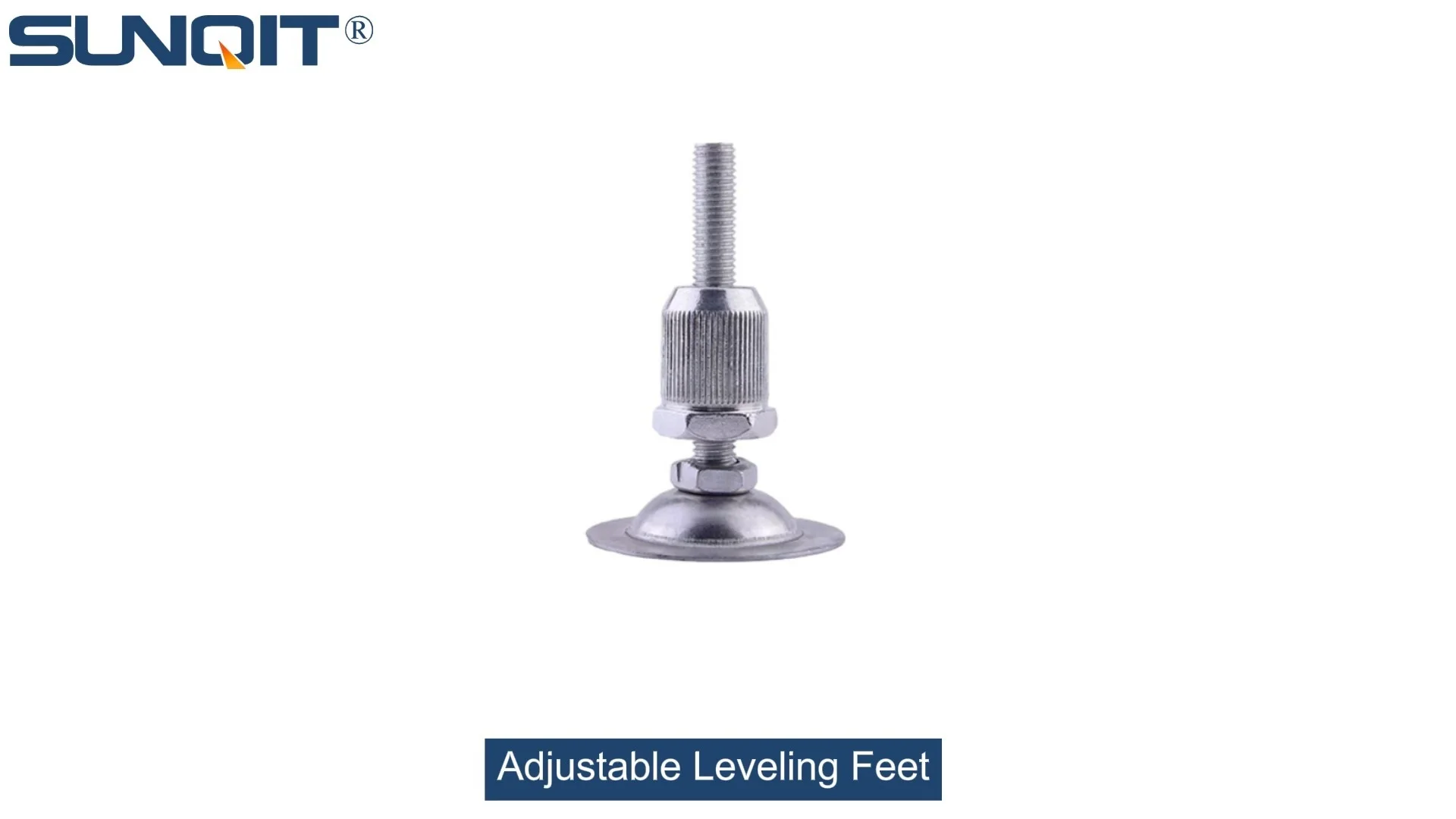
Adjustable leveling feet are designed to keep machines level when placed on uneven or sloped ground. Otherwise known as adjustable equipment feet, they are available to order in a wide variety of size and load capacity combinations.
Walk into any busy production facility, and you'll notice the unsung heroes keeping everything running smoothly: workbenches. These sturdy surfaces are where the magic of production assemble happens—whether it's assembling intricate electronics, packaging finished goods, or prepping components for the next stage. Among the many workbench models out there, one stands out for its simplicity and reliability: Workbench E (single deck-without caster) . But even the best workbench is only as good as its foundation. That's where adjustable leveling feet come in, and their height adjustment range? It's the secret sauce that turns a basic table into a precision tool for your lean system .
Why Stability Isn't Just a "Nice-to-Have" on the Shop Floor
Let's start with the obvious: when you're assembling parts that need to line up perfectly—think tiny screws, delicate circuit boards, or precision-machined components—you can't afford a wobbly workbench. A slight shake here, a small tilt there, and suddenly that part you spent 10 minutes aligning is off-kilter. Worse, an unstable workbench isn't just a productivity killer; it's a safety risk. Tools slide, materials topple, and over time, repeated vibrations can even damage sensitive equipment.
But here's the thing: most factory floors aren't perfectly flat. Years of heavy machinery, temperature changes, and general wear leave small dips, bumps, and uneven spots. Even brand-new facilities can have subtle inconsistencies. So, a workbench that sits "flat" in the corner might rock when moved to the production line. That's where adjustable leveling feet step up. They're like the workbench's built-in problem solvers, adapting to the floor so the surface stays steady—no matter what the ground throws at it.
Adjustable Leveling Feet: More Than Just "Feet"
At first glance, adjustable leveling feet might seem simple: a metal or plastic base, a threaded rod, and a nut to lock it in place. But their real power lies in that threaded rod—and the height adjustment range it offers. That range determines how much you can raise or lower each foot to compensate for uneven floors. Too small a range, and you might not fix that annoying wobble. Too large, and you risk making the workbench unstable by extending the feet too far.
Take the M10*56 rubber leveling feet , for example. The "M10" refers to the thread size (10mm diameter), and "56" is the length of the threaded rod (56mm). That 56mm isn't just a random number—it's the maximum distance you can adjust the foot up or down. So, if one corner of your Workbench E is sitting 15mm lower than the others, you twist the foot, extend the rod by 15mm, and suddenly the surface is level. It's like having a tiny mechanic for each leg, tweaking things until everything's just right.

Decoding the Height Adjustment Range: What You Need to Know
Height adjustment ranges for leveling feet typically fall between 10mm and 100mm, but most workbenches (including Workbench E) use feet with ranges between 15mm and 60mm. Why this sweet spot? Because factory floors rarely have discrepancies larger than 50mm, and going beyond that can make the workbench feel "tippy." Let's break down why the range matters, especially for a single-deck, caster-free workbench like Workbench E:
- Precision for Production Assemble: When you're assembling parts that need to fit together with zero tolerance, even a 2mm tilt can throw off measurements. A 30-50mm adjustment range lets you dial in the perfect level, ensuring tools like rulers, jigs, and assembly guides sit flat.
- Adaptability Across Floors: Maybe your Workbench E starts on the main production line, then moves to a secondary area with a slightly uneven concrete slab. With a decent adjustment range, you don't need a new workbench—just a quick twist of the feet.
- Longevity for Your Lean System: In a lean system, waste reduction is key. A workbench that can adapt to changing floor conditions lasts longer, reducing the need to replace it. Adjustable feet extend the life of Workbench E by preventing unnecessary wear and tear from uneven stress.

Workbench E and Its Perfect Leveling Match
Workbench E is designed for simplicity: a single, solid deck, no casters (so it stays put once positioned), and a lightweight but durable frame—often built with aluminum or steel. Since it doesn't have wheels, its stability 100% depends on its feet. That's why choosing the right adjustable leveling feet—with the right height range—is critical.
Most manufacturers recommend pairing Workbench E with leveling feet that have a 20-50mm adjustment range. This gives you enough flexibility to handle common floor issues without overcomplicating things. For example, the M10*56 rubber leveling feet we mentioned earlier? Their 56mm threaded rod translates to roughly 45mm of usable adjustment (you need to leave some thread in the leg for stability), which fits perfectly within that 20-50mm sweet spot. The rubber base also adds grip, preventing the workbench from sliding during heavy use—another win for production assemble accuracy.
But what if your floor has a bigger dip? Say, 60mm? Then you might opt for heavy-duty anti-slip adjustable leveling feet with a longer thread. These often have ranges up to 80mm, but they're bulkier, so you'll want to make sure they don't interfere with the workbench's overall footprint. Workbench E's simple design makes it easy to swap feet, though—no need for special tools, just a wrench to loosen the locking nut, swap the foot, and you're good to go.

Comparing Common Leveling Feet for Workbench E
Not all leveling feet are created equal. To help you pick the right one for your Workbench E, here's a quick breakdown of popular options, including their height adjustment ranges and best uses:
| Leveling Foot Type | Height Adjustment Range (mm) | Thread Size | Base Material | Best For |
|---|---|---|---|---|
| M10*56 Rubber Leveling Feet | 15-45mm | M10 | Rubber | Standard factory floors, light-to-medium loads |
| Anti-Slip Adjustable Leveling Feet | 20-60mm | M12 | Rubber with anti-slip | Uneven floors, heavy loads (e.g., tool storage) |
| Heavy Duty Split Foot Seat | 30-80mm | M16 | Steel with rubber pad | Extreme unevenness, industrial-grade use |
As you can see, the M10*56 rubber leveling feet are the sweet spot for most Workbench E users. They're affordable, easy to install, and cover the typical floor issues in a lean system. If you're dealing with heavier tools or bumpier floors, the anti-slip version adds extra security. And for those rare cases where the floor is really out of whack, the heavy-duty split foot seat has your back.
Installing and Maintaining Your Leveling Feet
Installing adjustable leveling feet on Workbench E is a breeze—even if you're not a DIY pro. Most models come pre-drilled with holes for the feet, so you just screw them in by hand until they're snug, then use a wrench to lock the nut once you've adjusted the height. Pro tip: When setting up, place a level on the workbench deck and tweak each foot until the bubble is centered. It takes 5 minutes, and you'll thank yourself later when your assembly work is spot-on.
Maintenance is just as simple. Every few months, check the feet for loose nuts (vibrations can wiggle them over time) and wipe off any dirt or debris from the threads. If the rubber base starts to wear down (look for cracks or smooth spots), replace it—rubber feet are cheap, and a worn base can lose its grip. For steel-threaded feet, a quick wipe with a dry cloth prevents rust, keeping the adjustment smooth.
Wrapping Up: Leveling Feet as the Backbone of Your Lean System
At the end of the day, adjustable leveling feet might not be the flashiest part of your production line, but they're essential. For Workbench E—a workhorse in so many lean systems—their height adjustment range ensures it stays stable, precise, and ready for whatever production assemble task comes next. Whether you're using M10*56 rubber feet for everyday use or stepping up to anti-slip models for trickier floors, the right range means your workbench works with you, not against you.
So, the next time you're setting up a new workbench or troubleshooting a wobbly surface, remember: it's not just about the feet—it's about how far they can go. Because in a lean system, every detail counts. And when your workbench is level, everything else falls into place.