- Company Articles
- Products and Technology
- Product knowledge
- Adjustable Leveling Feet Height: Finding the Right Fit for Ergonomic Workstations

Adjustable Leveling Feet Height: Finding the Right Fit for Ergonomic Workstations
Related Product
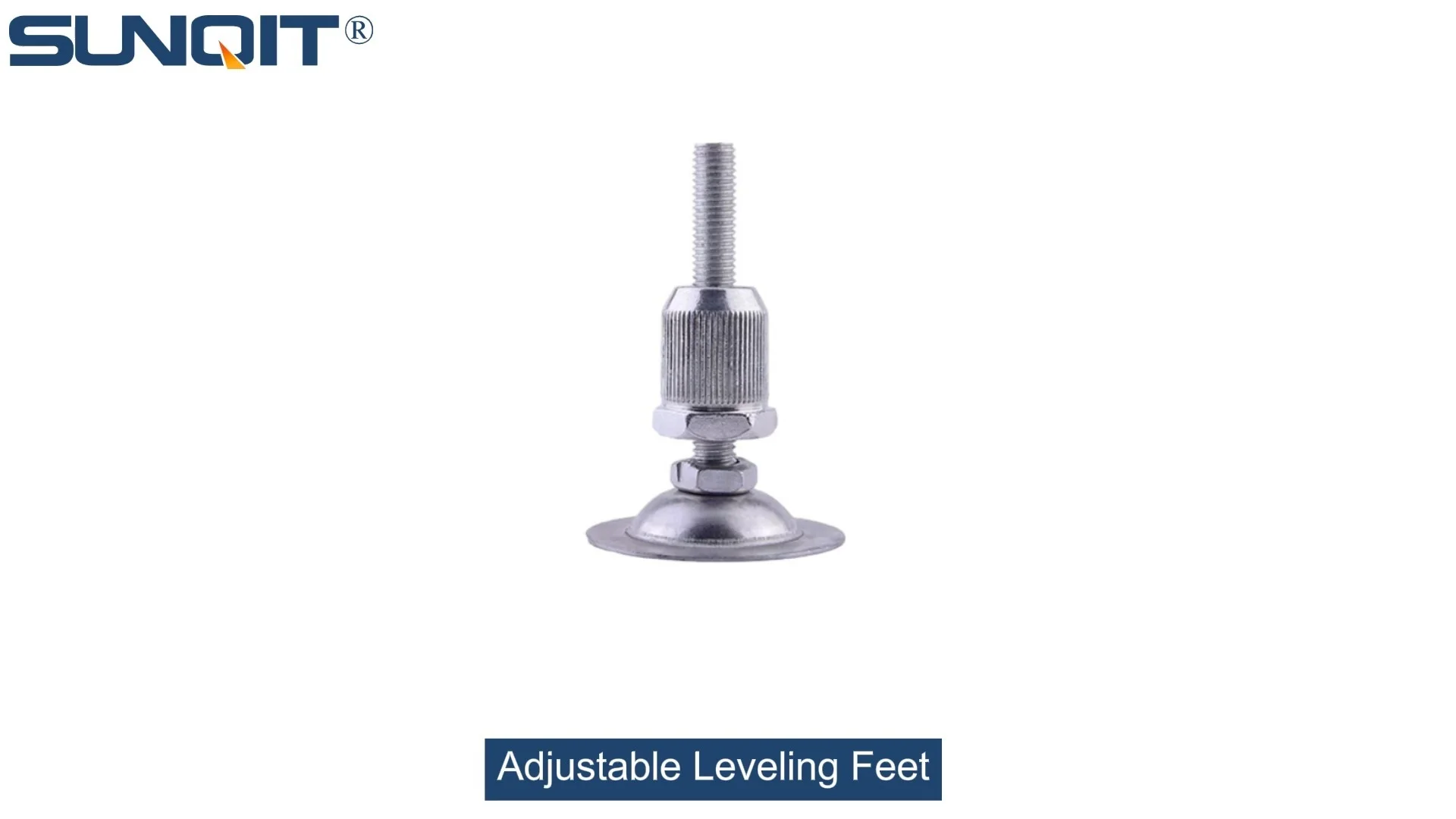
Adjustable Leveling Feet
Adjustable leveling feet are designed to keep machines level when placed on uneven or sloped ground. Otherwise known as adjustable equipment feet, they are available to order in a wide variety of size and load capacity combinations.
Small adjustments, big impact on comfort, productivity, and workplace well-being
Walk into any busy workshop, manufacturing plant, or even a home garage, and you'll likely spot a workbench—sturdy, reliable, and the unsung hero of daily tasks. But here's a question: When was the last time you stopped to think about what's holding that workbench up? Chances are, it's a set of adjustable leveling feet—those small, unassuming components that do more than just keep the surface steady. They're the quiet architects of ergonomic comfort, the problem-solvers for wobbly floors, and the key to turning a basic workbench into a productivity powerhouse.
In a world where we talk a lot about ergonomic chairs, standing desks, and anti-fatigue mats, adjustable leveling feet often fly under the radar. But ask anyone who's spent hours hunched over a tilted workbench or struggling to keep tools from sliding off an uneven surface—they'll tell you: these little feet make all the difference. Whether you're assembling electronics on a lean pipe workbench, packaging products in a warehouse, or conducting precision tests in a lab, the height and stability of your workstation directly impact how you feel at the end of the day, how efficiently you work, and even how many mistakes you make.
This article is all about shining a light on these unsung heroes. We'll break down what adjustable leveling feet are, why their height matters for ergonomics, how to choose the right ones for your needs, and even dive into the materials that make them tick—like the durable, lightweight aluminum profile that's revolutionizing workstation design. By the end, you'll see why adjustable leveling feet aren't just "parts"—they're the foundation of a workspace that works with you, not against you.
In a world where we talk a lot about ergonomic chairs, standing desks, and anti-fatigue mats, adjustable leveling feet often fly under the radar. But ask anyone who's spent hours hunched over a tilted workbench or struggling to keep tools from sliding off an uneven surface—they'll tell you: these little feet make all the difference. Whether you're assembling electronics on a lean pipe workbench, packaging products in a warehouse, or conducting precision tests in a lab, the height and stability of your workstation directly impact how you feel at the end of the day, how efficiently you work, and even how many mistakes you make.
This article is all about shining a light on these unsung heroes. We'll break down what adjustable leveling feet are, why their height matters for ergonomics, how to choose the right ones for your needs, and even dive into the materials that make them tick—like the durable, lightweight aluminum profile that's revolutionizing workstation design. By the end, you'll see why adjustable leveling feet aren't just "parts"—they're the foundation of a workspace that works with you, not against you.
What Are Adjustable Leveling Feet, Anyway?
Let's start with the basics. Adjustable leveling feet are mechanical components designed to support and stabilize equipment—like workbenches, cabinets, or machinery—while allowing you to tweak their height to compensate for uneven floors or align surfaces to ergonomic standards. Think of them as the "feet" of your workstation, but with a superpower: they can grow or shrink on command.
At their core, most adjustable leveling feet share a few key parts: a stem (the part that screws into the equipment), an adjustment nut (the mechanism that raises or lowers the foot), and a base (the part that touches the floor). Twist the nut, and the stem extends or retracts, changing the height. Simple, right? But don't let their simplicity fool you. These little devices are engineered to handle heavy loads—some can support hundreds, even thousands, of pounds—while staying stable and easy to adjust.
You'll find them in almost every industry. In manufacturing, they're under lean pipe workbenches where assembly line workers spend hours piecing together products. In labs, they stabilize sensitive equipment that can't tolerate even the tiniest wobble. In retail, they keep checkout counters level so cashiers aren't straining to reach registers. Even in your home, they might be under your washing machine, keeping it from dancing across the floor during the spin cycle.
The magic of adjustable leveling feet lies in their versatility. Need to raise a workbench by 1 inch to match the height of a conveyor belt? Done. Have a floor that slopes slightly in one corner? Twist a few feet to level it out. Want to protect a hardwood floor from scratches? Choose a foot with a rubber base. They're not just about fixing problems—they're about creating solutions that make workspaces more efficient, safer, and more comfortable.
At their core, most adjustable leveling feet share a few key parts: a stem (the part that screws into the equipment), an adjustment nut (the mechanism that raises or lowers the foot), and a base (the part that touches the floor). Twist the nut, and the stem extends or retracts, changing the height. Simple, right? But don't let their simplicity fool you. These little devices are engineered to handle heavy loads—some can support hundreds, even thousands, of pounds—while staying stable and easy to adjust.
You'll find them in almost every industry. In manufacturing, they're under lean pipe workbenches where assembly line workers spend hours piecing together products. In labs, they stabilize sensitive equipment that can't tolerate even the tiniest wobble. In retail, they keep checkout counters level so cashiers aren't straining to reach registers. Even in your home, they might be under your washing machine, keeping it from dancing across the floor during the spin cycle.
The magic of adjustable leveling feet lies in their versatility. Need to raise a workbench by 1 inch to match the height of a conveyor belt? Done. Have a floor that slopes slightly in one corner? Twist a few feet to level it out. Want to protect a hardwood floor from scratches? Choose a foot with a rubber base. They're not just about fixing problems—they're about creating solutions that make workspaces more efficient, safer, and more comfortable.
Why Height Matters: Ergonomics Isn't Just About "Comfort"
So, why does the height of these feet matter so much for ergonomics? Let's start with a scenario we've all experienced: standing at a workbench that's just a little too low. After an hour, your back starts to ache from hunching. Your shoulders tense up, and your wrists feel strained from bending them to reach tools. By lunch, you're exhausted—not because you're working hard, but because your body is fighting against the workstation.
Ergonomics is about designing workspaces that fit the people using them, and the height of your work surface is one of the most critical factors. The ideal height for a standing workbench, for example, is roughly elbow height when your arms are relaxed at your sides. If it's too low, you hunch; too high, and you strain your shoulders. Adjustable leveling feet let you dial in that perfect height, no matter who's using the workstation or what task they're doing.
But it's not just about individual comfort. Misaligned work surfaces can throw off entire workflows. Imagine a lean pipe workbench in a factory where parts slide down a conveyor onto the bench. If the bench is even half an inch lower than the conveyor, parts might get stuck at the edge, causing delays. If it's higher, workers have to lift parts up, wasting energy and increasing the risk of injury. Adjustable feet fix that alignment in minutes, keeping the flow smooth and efficient.
Then there's the issue of uneven floors. Few spaces have perfectly level ground—especially older factories or warehouses with concrete floors that have settled over time. A workstation without adjustable feet might rock back and forth, making precision tasks impossible. A surgeon wouldn't operate on a wobbly table, and a mechanic shouldn't assemble delicate parts on one either. Adjustable leveling feet stabilize the surface, turning a shaky workbench into a solid foundation for accuracy.
Over time, the impact adds up. Studies show that ergonomic workstations reduce musculoskeletal disorders (like carpal tunnel or lower back pain) by up to 60%, and boost productivity by as much as 15%. And adjustable leveling feet? They're a big part of that equation. They're not just adjusting height—they're adjusting how people feel, how efficiently they work, and how often they stay healthy and on the job.
Ergonomics is about designing workspaces that fit the people using them, and the height of your work surface is one of the most critical factors. The ideal height for a standing workbench, for example, is roughly elbow height when your arms are relaxed at your sides. If it's too low, you hunch; too high, and you strain your shoulders. Adjustable leveling feet let you dial in that perfect height, no matter who's using the workstation or what task they're doing.
But it's not just about individual comfort. Misaligned work surfaces can throw off entire workflows. Imagine a lean pipe workbench in a factory where parts slide down a conveyor onto the bench. If the bench is even half an inch lower than the conveyor, parts might get stuck at the edge, causing delays. If it's higher, workers have to lift parts up, wasting energy and increasing the risk of injury. Adjustable feet fix that alignment in minutes, keeping the flow smooth and efficient.
Then there's the issue of uneven floors. Few spaces have perfectly level ground—especially older factories or warehouses with concrete floors that have settled over time. A workstation without adjustable feet might rock back and forth, making precision tasks impossible. A surgeon wouldn't operate on a wobbly table, and a mechanic shouldn't assemble delicate parts on one either. Adjustable leveling feet stabilize the surface, turning a shaky workbench into a solid foundation for accuracy.
Over time, the impact adds up. Studies show that ergonomic workstations reduce musculoskeletal disorders (like carpal tunnel or lower back pain) by up to 60%, and boost productivity by as much as 15%. And adjustable leveling feet? They're a big part of that equation. They're not just adjusting height—they're adjusting how people feel, how efficiently they work, and how often they stay healthy and on the job.

Types of Adjustable Leveling Feet: Which One Is Right for You?
Not all adjustable leveling feet are created equal. Just like shoes, different types are designed for different "jobs." Some prioritize heavy-duty strength, others focus on floor protection, and some are built for quick adjustments. Let's break down the most common types, so you can find the perfect "fit" for your workstation.
| Type of Leveling Foot | How It Works | Best For | Weight Capacity (Typical) | Adjustment Range |
|---|---|---|---|---|
| Screw-In (Standard) | Stem screws directly into the equipment; adjustment nut twists to raise/lower. | General workbenches, cabinets, light machinery. | 200–500 lbs per foot. | 0.5–2 inches. |
| Bolt-On (Heavy-Duty) | Base plate bolts to the floor for maximum stability; height adjusted via stem. | Industrial machinery, large lean pipe workbenches, high-vibration environments. | 1,000+ lbs per foot. | 1–4 inches. |
| Swivel Base | Base swivels to adapt to uneven floors; maintains contact even on slopes. | Outdoor workstations, uneven concrete floors, mobile carts. | 300–800 lbs per foot. | 0.75–3 inches. |
| Anti-Slip (Soft Base) | Rubber or plastic base prevents sliding; ideal for smooth floors. | Labs, retail counters, hardwood/tile floors. | 200–600 lbs per foot. | 0.5–2.5 inches. |
Each type has its place. For a small home workbench, a standard screw-in foot might be all you need. But for a heavy-duty lean pipe workbench in a factory, you'd want bolt-on or swivel base feet to handle the weight and uneven floors. And if you're working on a tile floor, anti-slip feet will keep your workstation from sliding around—no more chasing tools that roll off the edge.

Materials Matter: From Steel to Aluminum Profile
Now that we know what adjustable leveling feet are and why they matter, let's talk about what they're made of. The materials used in leveling feet affect everything from durability to weight to corrosion resistance—and one material that's gaining popularity in modern workstations is aluminum profile.
Steel is the old reliable. It's strong, affordable, and can handle heavy loads, which is why you'll see it in industrial settings where workbenches are supporting tons of equipment. But steel has a downside: it's heavy. If you need to move your workstation (say, rearranging a lean pipe workbench setup), steel feet add extra weight. It's also prone to rust if not coated, which can be a problem in damp environments like food processing plants or outdoor workshops.
Plastic is lightweight and corrosion-resistant, making it great for light-duty applications or environments where chemicals might eat away at metal. You'll find plastic feet under things like office furniture or small home appliances. But plastic isn't as strong as metal—it can crack under heavy loads, so it's not ideal for industrial workbenches.
Then there's aluminum profile . Aluminum has long been valued for its strength-to-weight ratio—it's lightweight but surprisingly tough. When shaped into profiles (extruded aluminum bars with specific cross-sections), it becomes even more versatile. Aluminum profile leveling feet are lighter than steel, making them easier to install and move, and they're naturally resistant to corrosion, so they hold up in humid or wet environments. Plus, aluminum is easy to machine, so manufacturers can create custom shapes and sizes to fit unique workstation designs—like the sleek, modular lean pipe workbenches that are becoming standard in modern factories.
But aluminum profile isn't just about the feet themselves. Many modern workstations, including lean pipe workbenches, are built using aluminum profile frames. This means the entire structure—from the legs to the feet—is lightweight, durable, and easy to assemble. When you pair aluminum profile frames with aluminum leveling feet, you get a workstation that's both strong and flexible, able to adapt to changing needs without sacrificing stability.
So, which material should you choose? It depends on your environment. For heavy loads and dry conditions, steel might be the way to go. For light loads or corrosion concerns, plastic works. But if you want the best of both worlds—strength, light weight, and corrosion resistance—aluminum profile is hard to beat. It's no wonder more and more manufacturers are making the switch.
Steel is the old reliable. It's strong, affordable, and can handle heavy loads, which is why you'll see it in industrial settings where workbenches are supporting tons of equipment. But steel has a downside: it's heavy. If you need to move your workstation (say, rearranging a lean pipe workbench setup), steel feet add extra weight. It's also prone to rust if not coated, which can be a problem in damp environments like food processing plants or outdoor workshops.
Plastic is lightweight and corrosion-resistant, making it great for light-duty applications or environments where chemicals might eat away at metal. You'll find plastic feet under things like office furniture or small home appliances. But plastic isn't as strong as metal—it can crack under heavy loads, so it's not ideal for industrial workbenches.
Then there's aluminum profile . Aluminum has long been valued for its strength-to-weight ratio—it's lightweight but surprisingly tough. When shaped into profiles (extruded aluminum bars with specific cross-sections), it becomes even more versatile. Aluminum profile leveling feet are lighter than steel, making them easier to install and move, and they're naturally resistant to corrosion, so they hold up in humid or wet environments. Plus, aluminum is easy to machine, so manufacturers can create custom shapes and sizes to fit unique workstation designs—like the sleek, modular lean pipe workbenches that are becoming standard in modern factories.
But aluminum profile isn't just about the feet themselves. Many modern workstations, including lean pipe workbenches, are built using aluminum profile frames. This means the entire structure—from the legs to the feet—is lightweight, durable, and easy to assemble. When you pair aluminum profile frames with aluminum leveling feet, you get a workstation that's both strong and flexible, able to adapt to changing needs without sacrificing stability.
So, which material should you choose? It depends on your environment. For heavy loads and dry conditions, steel might be the way to go. For light loads or corrosion concerns, plastic works. But if you want the best of both worlds—strength, light weight, and corrosion resistance—aluminum profile is hard to beat. It's no wonder more and more manufacturers are making the switch.

Choosing the Right Height: It's Personal (and Practical)
So, you've decided to invest in adjustable leveling feet—great! Now, how do you choose the right height range? It's not a one-size-fits-all answer. The perfect height depends on who's using the workstation, what they're doing, and even the layout of your space. Let's break down the key factors.
User Height : This is the most obvious one. A workstation that's perfect for someone who's 5'4" will be a disaster for someone who's 6'2". As a general rule, standing workbenches should be set so that when the user stands with arms relaxed, their elbows are at a 90-degree angle to the work surface. For sitting workbenches, the surface should be slightly below elbow height to allow for comfortable typing or writing. Adjustable leveling feet let you fine-tune this—no more "one height fits all" workbenches that leave half your team straining.
Task Type : What are people doing at the workstation? If it's assembly work that requires fine motor skills (like soldering tiny electronics on a lean pipe workbench), the surface might need to be a bit higher to reduce eye strain—you don't want workers hunched over, squinting. If it's heavy lifting (loading parts onto a conveyor), a lower surface might be better to reduce the distance parts need to be lifted. Adjustable feet let you adapt the height to the task, not the other way around.
Floor Condition : Even the most ergonomic height won't matter if the workstation is wobbling. If your floor has dips or slopes, you'll need feet with a wider adjustment range to compensate. Swivel base feet are especially helpful here—their bases can tilt to match the floor's angle, ensuring the workstation stays level even on uneven ground.
Equipment Compatibility : If your workstation is part of a larger system—like a lean pipe workbench connected to a conveyor or material rack—you'll need to align the heights of all components. A difference of even a quarter-inch can disrupt workflow, so look for feet with precise adjustment (some let you adjust in 1/16-inch increments) to get everything perfectly aligned.
To find the right height range for your feet, start by measuring the lowest and highest possible heights you might need. For example, if your tallest worker is 6'5" and your shortest is 5'2", calculate the ideal work surface height for both, then add a few extra inches to account for uneven floors. That gives you the minimum adjustment range your feet should have. When in doubt, go for a slightly wider range—it's better to have extra adjustability than not enough.
User Height : This is the most obvious one. A workstation that's perfect for someone who's 5'4" will be a disaster for someone who's 6'2". As a general rule, standing workbenches should be set so that when the user stands with arms relaxed, their elbows are at a 90-degree angle to the work surface. For sitting workbenches, the surface should be slightly below elbow height to allow for comfortable typing or writing. Adjustable leveling feet let you fine-tune this—no more "one height fits all" workbenches that leave half your team straining.
Task Type : What are people doing at the workstation? If it's assembly work that requires fine motor skills (like soldering tiny electronics on a lean pipe workbench), the surface might need to be a bit higher to reduce eye strain—you don't want workers hunched over, squinting. If it's heavy lifting (loading parts onto a conveyor), a lower surface might be better to reduce the distance parts need to be lifted. Adjustable feet let you adapt the height to the task, not the other way around.
Floor Condition : Even the most ergonomic height won't matter if the workstation is wobbling. If your floor has dips or slopes, you'll need feet with a wider adjustment range to compensate. Swivel base feet are especially helpful here—their bases can tilt to match the floor's angle, ensuring the workstation stays level even on uneven ground.
Equipment Compatibility : If your workstation is part of a larger system—like a lean pipe workbench connected to a conveyor or material rack—you'll need to align the heights of all components. A difference of even a quarter-inch can disrupt workflow, so look for feet with precise adjustment (some let you adjust in 1/16-inch increments) to get everything perfectly aligned.
To find the right height range for your feet, start by measuring the lowest and highest possible heights you might need. For example, if your tallest worker is 6'5" and your shortest is 5'2", calculate the ideal work surface height for both, then add a few extra inches to account for uneven floors. That gives you the minimum adjustment range your feet should have. When in doubt, go for a slightly wider range—it's better to have extra adjustability than not enough.
Where Adjustable Leveling Feet Shine: Real-World Applications
Adjustable leveling feet might seem like small components, but their impact is huge across industries. Let's take a look at some real-world scenarios where they make a difference—starting with the workbench, the heart of many workspaces.
Manufacturing: Lean Pipe Workbenches In manufacturing plants, lean pipe workbenches are everywhere. These modular workstations are designed for efficiency, with tools and materials within arm's reach. But efficiency goes out the window if the bench is wobbly or at the wrong height. Adjustable leveling feet ensure each workbench is level, even on factory floors that have seen decades of heavy machinery. They also let managers quickly reconfigure workbenches when production needs change—lowering a bench for a new task, raising it to align with a new conveyor, or adjusting for a taller worker. With aluminum profile frames and feet, these workbenches are lightweight enough to move but stable enough to handle the demands of assembly line work.
Laboratories: Precision Equipment Labs rely on sensitive instruments—microscopes, spectrometers, centrifuges—that can't tolerate vibration or misalignment. A tiny wobble can throw off a measurement, ruining hours of work. Adjustable leveling feet with fine-tuning capabilities ensure these instruments stay perfectly stable, even on floors that aren't perfectly level. Anti-slip bases prevent sliding, and corrosion-resistant materials (like aluminum or stainless steel) stand up to the harsh chemicals often used in labs.
Healthcare: Patient Care Stations In hospitals and clinics, workstations need to be both stable and adaptable. Nurses' stations, medication carts, and treatment tables all use adjustable leveling feet to ensure they're at the right height for caregivers of different sizes and patients with varying needs. For example, a treatment table might be raised for a standing doctor or lowered for a seated nurse, all with a quick twist of the adjustment nut. Stability is critical here too—no one wants a medication cart rolling away while preparing doses.
Retail: Checkout Counters and Displays Retail spaces are all about customer experience, and that includes the checkout process. Cashiers stand for hours, so their counters need to be at a height that reduces strain. Adjustable leveling feet let store managers set counters to the perfect height for their team, and they keep displays level so products don't roll off shelves. In busy stores, where floors might be scuffed or uneven from foot traffic, leveling feet ensure everything looks neat and professional.
Food Service: Prep Tables and Kitchen Equipment Kitchens are tough environments—wet, greasy, and full of heavy equipment. Stainless steel adjustable leveling feet are a must here; they resist corrosion from water and food spills, and they're easy to clean (no crevices for bacteria to hide). Prep tables, mixers, and ovens all rely on these feet to stay level, preventing spills and ensuring equipment operates safely. Imagine a commercial mixer wobbling during use—it could send batter flying or even tip over. Leveling feet keep that from happening.
Manufacturing: Lean Pipe Workbenches In manufacturing plants, lean pipe workbenches are everywhere. These modular workstations are designed for efficiency, with tools and materials within arm's reach. But efficiency goes out the window if the bench is wobbly or at the wrong height. Adjustable leveling feet ensure each workbench is level, even on factory floors that have seen decades of heavy machinery. They also let managers quickly reconfigure workbenches when production needs change—lowering a bench for a new task, raising it to align with a new conveyor, or adjusting for a taller worker. With aluminum profile frames and feet, these workbenches are lightweight enough to move but stable enough to handle the demands of assembly line work.
Laboratories: Precision Equipment Labs rely on sensitive instruments—microscopes, spectrometers, centrifuges—that can't tolerate vibration or misalignment. A tiny wobble can throw off a measurement, ruining hours of work. Adjustable leveling feet with fine-tuning capabilities ensure these instruments stay perfectly stable, even on floors that aren't perfectly level. Anti-slip bases prevent sliding, and corrosion-resistant materials (like aluminum or stainless steel) stand up to the harsh chemicals often used in labs.
Healthcare: Patient Care Stations In hospitals and clinics, workstations need to be both stable and adaptable. Nurses' stations, medication carts, and treatment tables all use adjustable leveling feet to ensure they're at the right height for caregivers of different sizes and patients with varying needs. For example, a treatment table might be raised for a standing doctor or lowered for a seated nurse, all with a quick twist of the adjustment nut. Stability is critical here too—no one wants a medication cart rolling away while preparing doses.
Retail: Checkout Counters and Displays Retail spaces are all about customer experience, and that includes the checkout process. Cashiers stand for hours, so their counters need to be at a height that reduces strain. Adjustable leveling feet let store managers set counters to the perfect height for their team, and they keep displays level so products don't roll off shelves. In busy stores, where floors might be scuffed or uneven from foot traffic, leveling feet ensure everything looks neat and professional.
Food Service: Prep Tables and Kitchen Equipment Kitchens are tough environments—wet, greasy, and full of heavy equipment. Stainless steel adjustable leveling feet are a must here; they resist corrosion from water and food spills, and they're easy to clean (no crevices for bacteria to hide). Prep tables, mixers, and ovens all rely on these feet to stay level, preventing spills and ensuring equipment operates safely. Imagine a commercial mixer wobbling during use—it could send batter flying or even tip over. Leveling feet keep that from happening.
Installing Adjustable Leveling Feet: A Step-by-Step Guide
Installing adjustable leveling feet isn't rocket science, but doing it right ensures your workstation stays stable and ergonomic. Here's a simple guide to get you started:
1. Gather Your Tools : You'll need a wrench (to tighten the feet), a level (to check for evenness), and possibly a drill (if your workstation doesn't have pre-drilled holes for the feet). For heavy workbenches, you might also want a helper to lift the workstation while you install the feet.
2. Prep the Workstation : If your workstation is already assembled, empty it of tools and materials to make it lighter. If it's new (like a lean pipe workbench), assemble the frame first, leaving the feet off until last.
3. Install the Feet : Screw the feet into the pre-drilled holes on the bottom of the workstation legs. For bolt-on feet, align the base plate with the holes and secure with bolts. Hand-tighten first to make sure the threads catch properly, then use a wrench to snug them up—don't over-tighten, as this can strip the threads.
4. Level the Workstation : Place the level on the work surface, both side-to-side and front-to-back. If it's uneven, twist the adjustment nut on the low side to raise that foot until the bubble is centered. Repeat until the workstation is level in all directions. For uneven floors, you might need to adjust multiple feet—start with the lowest corner and work your way around.
5. Test Stability : Once level, give the workstation a gentle shake to check for wobbles. If it moves, double-check the level and adjust as needed. For heavy workbenches, you can also place a weight on the surface (like a toolbox) to simulate daily use and ensure the feet hold firm.
6. Lock the Feet (If Needed) : Some feet come with lock nuts—small nuts that tighten against the workstation leg to prevent the foot from unscrewing over time. If your feet have them, tighten the lock nut against the leg after adjusting the height.
Pro tip: If you're installing feet on a lean pipe workbench with an aluminum profile frame, check the manufacturer's instructions for torque specifications. Aluminum threads are softer than steel, so over-tightening can damage them. A little care during installation goes a long way in keeping your workstation stable for years.
1. Gather Your Tools : You'll need a wrench (to tighten the feet), a level (to check for evenness), and possibly a drill (if your workstation doesn't have pre-drilled holes for the feet). For heavy workbenches, you might also want a helper to lift the workstation while you install the feet.
2. Prep the Workstation : If your workstation is already assembled, empty it of tools and materials to make it lighter. If it's new (like a lean pipe workbench), assemble the frame first, leaving the feet off until last.
3. Install the Feet : Screw the feet into the pre-drilled holes on the bottom of the workstation legs. For bolt-on feet, align the base plate with the holes and secure with bolts. Hand-tighten first to make sure the threads catch properly, then use a wrench to snug them up—don't over-tighten, as this can strip the threads.
4. Level the Workstation : Place the level on the work surface, both side-to-side and front-to-back. If it's uneven, twist the adjustment nut on the low side to raise that foot until the bubble is centered. Repeat until the workstation is level in all directions. For uneven floors, you might need to adjust multiple feet—start with the lowest corner and work your way around.
5. Test Stability : Once level, give the workstation a gentle shake to check for wobbles. If it moves, double-check the level and adjust as needed. For heavy workbenches, you can also place a weight on the surface (like a toolbox) to simulate daily use and ensure the feet hold firm.
6. Lock the Feet (If Needed) : Some feet come with lock nuts—small nuts that tighten against the workstation leg to prevent the foot from unscrewing over time. If your feet have them, tighten the lock nut against the leg after adjusting the height.
Pro tip: If you're installing feet on a lean pipe workbench with an aluminum profile frame, check the manufacturer's instructions for torque specifications. Aluminum threads are softer than steel, so over-tightening can damage them. A little care during installation goes a long way in keeping your workstation stable for years.
Common Mistakes to Avoid (And How to Fix Them)
Even with the best intentions, it's easy to make mistakes when installing or using adjustable leveling feet. Here are some of the most common ones—and how to avoid them:
Mistake #1: Overlooking Weight Capacity It's tempting to buy the cheapest feet available, but if they can't support your workstation's weight, they'll bend or break, leading to wobbles or even collapse. Always check the weight capacity of the feet (usually listed per foot) and make sure to distribute the load evenly. For example, a 2000-lb workbench with four feet needs feet rated for at least 500 lbs each (and it's smart to go higher for safety).
Mistake #2: Ignoring Floor Protection Metal feet can scratch hardwood, tile, or polished concrete floors. Over time, this can lead to costly repairs. Fix: Choose feet with rubber or plastic bases, or add floor protectors under metal feet. Anti-slip bases also help here—they prevent the workstation from sliding, which reduces floor scuffs.
Mistake #3: Setting the Height Once and Forgetting It Workstations aren't static. If you rearrange your space, get new equipment, or have new workers with different heights, you'll need to readjust the feet. Make it a habit to check the level and height every few months, especially after moving the workstation.
Mistake #4: Using the Wrong Type for the Environment Putting steel feet in a damp garage? They'll rust. Using plastic feet under a heavy industrial workbench? They'll crack. Take the time to match the material to the environment—aluminum profile feet for humid areas, steel for heavy loads, plastic for light-duty, dry spaces.
Mistake #5: Skipping the Lock Nut Vibration from machinery or daily use can cause adjustable feet to unscrew over time, slowly lowering the workstation. If your feet have lock nuts, use them! They're a small step that prevents big headaches later.
Mistake #1: Overlooking Weight Capacity It's tempting to buy the cheapest feet available, but if they can't support your workstation's weight, they'll bend or break, leading to wobbles or even collapse. Always check the weight capacity of the feet (usually listed per foot) and make sure to distribute the load evenly. For example, a 2000-lb workbench with four feet needs feet rated for at least 500 lbs each (and it's smart to go higher for safety).
Mistake #2: Ignoring Floor Protection Metal feet can scratch hardwood, tile, or polished concrete floors. Over time, this can lead to costly repairs. Fix: Choose feet with rubber or plastic bases, or add floor protectors under metal feet. Anti-slip bases also help here—they prevent the workstation from sliding, which reduces floor scuffs.
Mistake #3: Setting the Height Once and Forgetting It Workstations aren't static. If you rearrange your space, get new equipment, or have new workers with different heights, you'll need to readjust the feet. Make it a habit to check the level and height every few months, especially after moving the workstation.
Mistake #4: Using the Wrong Type for the Environment Putting steel feet in a damp garage? They'll rust. Using plastic feet under a heavy industrial workbench? They'll crack. Take the time to match the material to the environment—aluminum profile feet for humid areas, steel for heavy loads, plastic for light-duty, dry spaces.
Mistake #5: Skipping the Lock Nut Vibration from machinery or daily use can cause adjustable feet to unscrew over time, slowly lowering the workstation. If your feet have lock nuts, use them! They're a small step that prevents big headaches later.
Elevating Workstations, One Foot at a Time
Adjustable leveling feet might not be the most glamorous part of a workstation, but they're undoubtedly one of the most important. They turn wobbly workbenches into stable platforms, align surfaces to ergonomic perfection, and adapt to the unique needs of workers and environments. Whether you're setting up a lean pipe workbench in a factory, a lab bench in a research facility, or a checkout counter in a store, the right adjustable feet can transform a basic workspace into one that's efficient, comfortable, and built to last.
As workplaces evolve—embracing modular designs, flexible workflows, and a greater focus on employee well-being—materials like aluminum profile are making workstations lighter, stronger, and more adaptable. And at the heart of these modern workstations? Adjustable leveling feet, quietly doing their job to keep everything level, stable, and aligned.
So, the next time you're setting up a workstation, don't overlook the feet. Take the time to choose the right type, material, and height range. Your back (and your productivity) will thank you. After all, a workspace that's built on a solid foundation—literally—can lift up everyone who uses it.
As workplaces evolve—embracing modular designs, flexible workflows, and a greater focus on employee well-being—materials like aluminum profile are making workstations lighter, stronger, and more adaptable. And at the heart of these modern workstations? Adjustable leveling feet, quietly doing their job to keep everything level, stable, and aligned.
So, the next time you're setting up a workstation, don't overlook the feet. Take the time to choose the right type, material, and height range. Your back (and your productivity) will thank you. After all, a workspace that's built on a solid foundation—literally—can lift up everyone who uses it.