- Company Articles
- Products and Technology
- Product knowledge
- Adjustable Leveling Feet in Computer Peripheral Production – Minimizing Assembly Errors

Adjustable Leveling Feet in Computer Peripheral Production – Minimizing Assembly Errors
Related Product
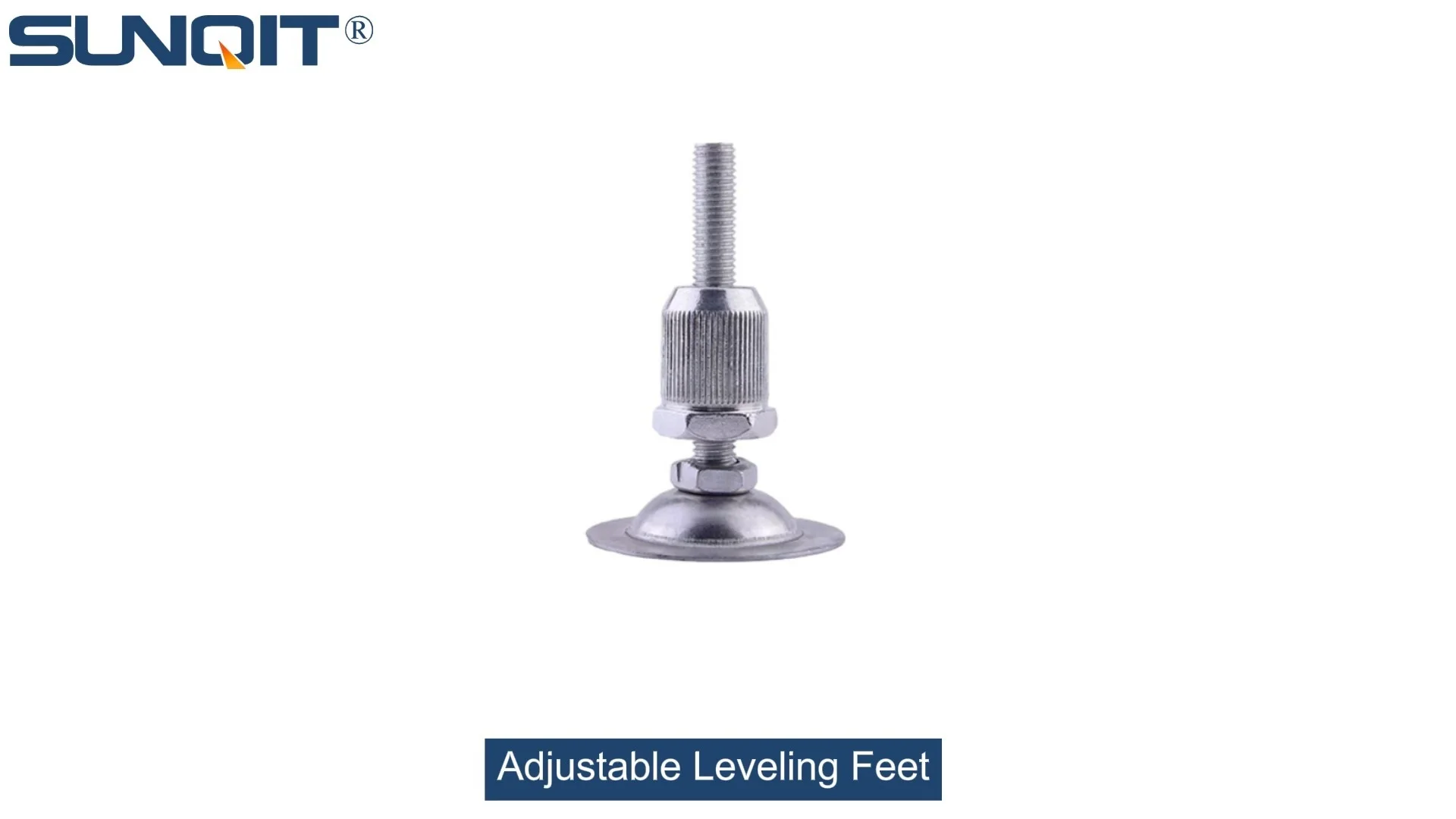
Adjustable Leveling Feet
Adjustable leveling feet are designed to keep machines level when placed on uneven or sloped ground. Otherwise known as adjustable equipment feet, they are available to order in a wide variety of size and load capacity combinations.
The unsung heroes that keep precision in motion, one stable workbench at a time
The Morning Shift That Changed Everything: A Story from the Assembly Line
Maria had been working the morning shift at TechFlow Peripherals for three years. Her station assembled wireless keyboards—tiny, intricate devices where a misaligned keycap or a loose circuit board could turn a functional product into scrap. But one Tuesday, something felt off. The workbench, usually steady as a rock, wobbled slightly every time she reached for a component. At first, she brushed it off, adjusting her posture to compensate. But by mid-morning, the errors started piling up: a keycap that wouldn't snap into place, a ribbon cable that kinked because the alignment jig sat crooked. By lunch, her reject bin was half-full, and frustration gnawed at her.
"It's the floor," her coworker Raj said, nodding at the uneven concrete beneath their stations. "After the rain last night, the slab shifted a little. My bench is doing the same thing." That afternoon, the maintenance team arrived with toolboxes and a set of unassuming metal components: adjustable leveling feet. They screwed them into the base of each workbench, twisted the knobs until the surfaces sat perfectly flat, and within an hour, Maria's station was steady again. The rest of the day? Not a single error. "I didn't realize how much energy I was wasting just trying to keep things straight," she later told her supervisor. "Now, I can focus on the parts, not the bench."
Maria's story isn't unique. In the world of computer peripheral production—where components are measured in millimeters and tolerances are tighter than a watch spring—stability isn't a luxury. It's the foundation of quality. And at the heart of that stability? Adjustable leveling feet. These small, often overlooked devices are the silent guardians of precision, turning wobbly workbenches into pillars of reliability and slashing assembly errors before they ever happen.
Why Even a Millimeter Matters: The High Stakes of Imprecision
Computer peripherals—keyboards, mice, webcams, monitors—are deceptively complex. A standard wireless keyboard, for example, contains over 50 individual parts: keycaps, switches, PCBs, batteries, and a plastic housing, all of which must align with microscopic precision. If the workbench holding these components tilts by just 1mm, the alignment jig shifts, the PCB sits at an angle, and suddenly, a switch doesn't solder correctly. That keyboard might still "work," but the key could stick, the battery might drain faster, or the wireless signal could weaken. For consumers, it's a frustrating, "cheap" product. For manufacturers, it's a return, a bad review, and a hit to the bottom line.
The cost of these errors adds up fast. Rework alone—disassembling faulty units, replacing parts, and re-testing—eats into labor hours. Then there's scrap: components that can't be salvaged, ending up in landfills. And let's not forget the ripple effect on production schedules. A single misaligned workbench can slow an entire line, delaying shipments and straining relationships with retailers. In 2023, a leading peripheral manufacturer reported that 12% of their production costs stemmed from "preventable alignment errors," with unstable workbenches cited as the top culprit. For a company producing 500,000 keyboards monthly, that's 60,000 units at risk—all because of a few wobbly feet.
But here's the thing: these errors are avoidable. Adjustable leveling feet aren't just "parts for benches"—they're precision tools that bridge the gap between imperfect floors and perfect products. By letting workers fine-tune their work surfaces to absolute flatness, they eliminate the root cause of many alignment issues. And in an industry where "good enough" isn't enough, that's a game-changer.

Adjustable Leveling Feet 101: More Than Just "Feet"
At first glance, adjustable leveling feet might look like simple bolts with rubber bottoms. But beneath that unassuming exterior lies a design engineered for one critical job: stability. Most models consist of three parts: a threaded stem that screws into the workbench leg, a rotating base (often with a rubber or plastic pad to grip the floor), and a locking nut to secure the height once adjusted. Twist the base, and the stem extends or retracts, raising or lowering that corner of the workbench until it's level. It's elegant in its simplicity—and profoundly effective.
But not all leveling feet are created equal. In computer peripheral production, where workbenches often support heavy equipment—like automated screwdrivers, laser alignment tools, or conveyor systems—strength matters. Heavy-duty models, made from carbon steel or stainless steel, can support loads of up to 1,500 kg per foot, ensuring even the sturdiest workstations stay put. For lighter setups, like manual assembly stations, aluminum or zinc-alloy feet offer a balance of strength and weight, making adjustments easier for workers.
Then there's the base material. Rubber pads are standard for gripping smooth floors, but in factories with oily or wet surfaces (common in machining areas), non-slip materials like polyurethane or even metal with serrated edges prevent slipping. Some feet even come with swivel bases, allowing them to adapt to uneven floors by tilting slightly—ideal for old factories with cracked or warped concrete. "We switched to swivel-base feet last year," says Tom, a production engineer at PrecisionTech Peripherals. "Our facility is in a 50-year-old building, so the floors are… characterful. Now, instead of shimming benches with cardboard (yes, we did that), we just twist the feet and go. It's saved us hours of setup time."

Workbenches Reimagined: How Leveling Feet Elevate the Assembly Experience
A workbench isn't just a table—it's a worker's partner. For eight hours a day, it's where they focus, create, and problem-solve. But a wobbly workbench is a terrible partner. It's the coworker who never stays still, the distraction that pulls focus from the task at hand. Adjustable leveling feet transform that dynamic, turning workbenches into reliable allies.
Consider the ergonomics. When a workbench is level, workers don't have to hunch, stretch, or twist to compensate for uneven surfaces. Their posture improves, fatigue decreases, and focus sharpens. A 2022 study by the Manufacturing Ergonomics Institute found that workers at stations with properly leveled workbenches reported 30% less neck and shoulder strain—and a 15% increase in productivity. "I used to go home with a headache every day," says Lisa, who assembles gaming mice at SwiftGrip Technologies. "Now, with the bench level, I don't even think about it. I just… work."
Then there's the equipment. Many modern assembly stations use aluminum profile frames—lightweight, modular structures that can be customized with shelves, tool holders, and conveyor rails. Aluminum profiles are popular because they're strong, easy to modify, and compatible with a wide range of accessories. But their modularity means they're only as stable as their base. That's where adjustable leveling feet shine. Designed to fit standard aluminum profile legs, they lock the entire structure into place, ensuring that even as workers add or remove components (like a new shelf for tools or a roller track for parts), the bench remains steady. "We use 4040 aluminum profiles for all our workstations," explains Raj, the production manager at TechFlow. "Pairing them with leveling feet means we can reconfigure a station in an hour—no need to call maintenance to realign everything. The feet do the heavy lifting."
Did You Know? The average assembly worker spends 7% of their shift adjusting to unstable work surfaces—from repositioning parts to correcting misalignments. With adjustable leveling feet, that time drops to less than 1%, freeing up over 2.5 hours per week for actual production.

Roller Tracks, Conveyors, and the Lean System: Leveling Feet as the Glue of Efficiency
In lean manufacturing—the philosophy of minimizing waste and maximizing value—every component has a purpose. Roller tracks, for example, are the arteries of the assembly line, carrying parts from station to station with minimal effort. But a roller track that slopes even slightly can slow part flow, cause jams, or send components sliding off the edge. Enter adjustable leveling feet: not just for workbenches, but for the roller track supports themselves.
"We run a lean system here," says Mike, a lean coordinator at GlobalPeriph Inc. "Our goal is to eliminate 'muda'—waste. And nothing wastes time like a roller track that doesn't roll. Last year, we installed leveling feet on all our track supports. Now, when we set up a new line, we level the tracks in 10 minutes instead of an hour. Parts glide smoothly, jams are down 80%, and our lead times have shrunk by two days. All from a $15 part."
It's a classic example of how lean systems thrive on small, precise improvements. A level roller track means parts arrive at each station exactly when needed, reducing wait times. It means fewer damaged components (no more parts crashing into stops because the track tilted downward). And it means workers spend less time unjamming tracks and more time adding value. For a lean system to work, every link in the chain must be strong—and adjustable leveling feet are the link that keeps the chain from sagging.
Choosing the Right Feet: A Buyer's Guide (With Real-World Data)
Not all adjustable leveling feet are suited for computer peripheral production. To help manufacturers make the best choice, we've compiled a comparison of the most common types, based on feedback from production managers and engineers in the field.
| Type of Leveling Foot | Material | Max Load Capacity (per foot) | Adjustment Range | Best For | User Feedback |
|---|---|---|---|---|---|
| Standard Carbon Steel | Carbon steel stem, rubber base | 800 kg | 10-50 mm | Manual assembly workbenches, light conveyor supports | "Reliable and affordable. We use these on 80% of our stations." – Maria, TechFlow |
| Heavy-Duty Stainless Steel | Stainless steel stem and base, polyurethane pad | 1,500 kg | 15-75 mm | Automated assembly lines, roller track systems, aluminum profile workstations | "Worth the extra cost for our robot stations. They never rust, even in humid conditions." – Tom, PrecisionTech |
| Swivel-Base Aluminum | Aluminum stem, swivel plastic base | 300 kg | 8-40 mm | Mobile workbenches, temporary stations, uneven floors | "Perfect for our reconfigurable lines. The swivel base adapts to our old factory floors." – Lisa, SwiftGrip |
| Anti-Vibration Rubber | Zinc-alloy stem, anti-vibration rubber base | 500 kg | 12-60 mm | Precision testing stations, PCB assembly (reduces shake during soldering) | "Cut our soldering errors by 40%. The rubber dampens vibrations from nearby machines." – Raj, TechFlow |
The Ripple Effect: How Leveling Feet Strengthen the Entire Production Ecosystem
Adjustable leveling feet don't just reduce errors on individual workbenches—they create a ripple effect that touches every corner of the production process. When stations are stable, rework decreases, freeing up workers to focus on value-added tasks. When roller tracks are level, parts flow faster, reducing bottlenecks and shortening lead times. When quality improves, customer returns drop, boosting brand reputation and repeat business.
Consider the numbers. After installing adjustable leveling feet across all workstations, TechFlow Peripherals saw a 22% reduction in keyboard assembly errors within three months. That translated to 11,000 fewer defective units monthly, saving the company $45,000 in rework and scrap costs. "We reinvested that money in training and better tools," says Raj. "Now, our workers are happier, our products are better, and our customers notice."
But the impact goes beyond dollars and cents. For workers like Maria, the difference is personal. "I used to dread coming to work on days when the bench was off," she says. "Now, I walk in, check the level (it's always perfect), and get to work. It sounds small, but it makes me feel like the company cares about my success. And when you feel that way, you care more about the products you build."
Conclusion: The Smallest Parts, the Biggest Impact
In the grand scheme of computer peripheral production—with its robots, lasers, and high-tech materials—adjustable leveling feet might seem. But as Maria, Raj, and thousands of other workers know, it's the small things that often make the biggest difference. A steady workbench. A level roller track. A day without errors.
These unassuming devices are more than just "feet." They're a commitment to precision, a nod to the workers who build the products we rely on, and a testament to the power of solving problems at their roots. In an industry where innovation is king, sometimes the most revolutionary tool is the one that keeps everything else standing still—perfectly, steadily, and without fail.
So the next time you type on a keyboard or click a mouse, take a moment to appreciate the hidden heroes beneath the assembly line. Adjustable leveling feet: because in the world of precision, even the smallest step forward starts with a firm foundation.