- Company Articles
- Products and Technology
- Product knowledge
- Adjustable Leveling Feet in Medical Labs: Sterility and Stability Combined

Adjustable Leveling Feet in Medical Labs: Sterility and Stability Combined
Related Product
Adjustable Leveling Feet
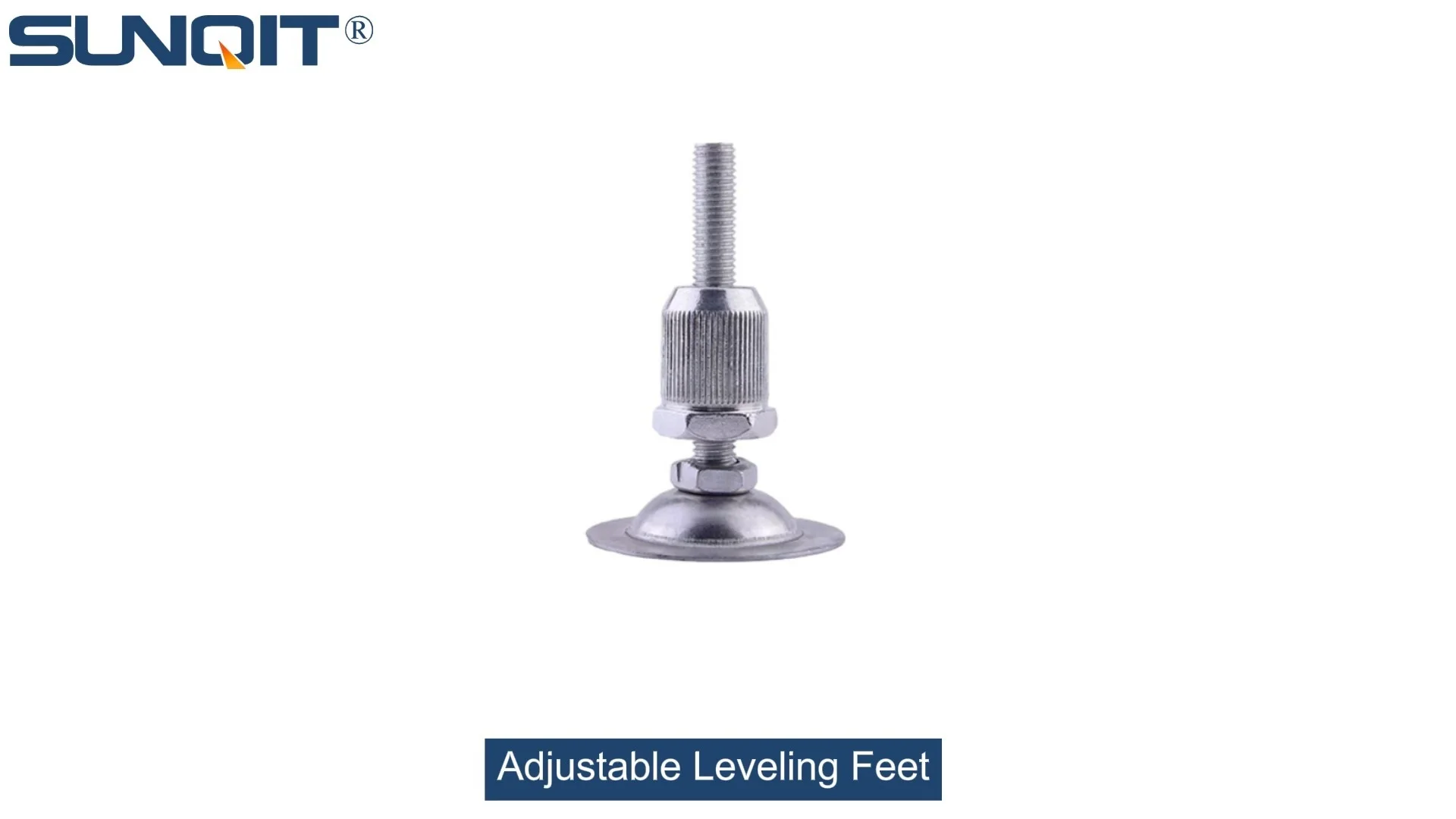
Adjustable leveling feet are designed to keep machines level when placed on uneven or sloped ground. Otherwise known as adjustable equipment feet, they are available to order in a wide variety of size and load capacity combinations.
Walk into any medical laboratory, and you'll likely notice the precision: gleaming instruments, carefully labeled samples, and technicians moving with deliberate focus. What you might not see, though, is one of the unsung heroes keeping this precision intact: adjustable leveling feet. These small but critical components play a quiet yet vital role in ensuring that lab workbenches, equipment stations, and material racks remain stable, level, and sterile—three non-negotiable requirements in an environment where even the smallest error can compromise patient results or research outcomes. Let's dive into how adjustable leveling feet, often paired with materials like aluminum profile and integrated into workbench designs, become the backbone of safety and accuracy in medical labs.
Why Stability Isn't Just "Nice to Have" in Medical Labs
Imagine a centrifuge spinning at 15,000 RPM, separating blood components for a cancer diagnosis. Or a microscope analyzing a tissue sample, where a 0.1mm shift could mean missing a critical anomaly. In these scenarios, stability isn't a luxury—it's a lifeline. Medical labs house equipment that's sensitive to even the tiniest vibrations or tilts. An unlevel workbench might cause a pipette to slip, spilling a precious sample. A wobbly analyzer could produce skewed readings, leading to misdiagnoses. And in the worst cases, instability can damage expensive machinery, costing labs thousands in repairs and delaying vital tests.
But stability challenges in labs are common. Floors, even in newly built facilities, rarely sit perfectly flat. Years of foot traffic, equipment movement, or subtle structural shifts can create uneven surfaces. That's where adjustable leveling feet step in. Unlike fixed feet, these components let technicians tweak height with precision, compensating for dips or slopes in the floor. Think of them as tiny, customizable "levelers" that transform an uneven space into a rock-solid foundation for critical work.
Sterility: The Non-Negotiable Standard
In medical labs, sterility is more than a buzzword—it's a legal and ethical obligation. Labs must adhere to strict guidelines (like ISO 15189 for medical laboratories) to prevent contamination, which can render samples useless or, worse, spread pathogens. Every surface, from workbenches to equipment bases, must be easy to clean, resistant to harsh disinfectants, and non-porous to avoid harboring bacteria or mold.
This is where material choice becomes critical. Porous materials like wood or uncoated steel are out of the question—they trap dirt, absorb spills, and corrode when exposed to bleach or alcohol-based cleaners. Instead, labs turn to materials like stainless steel, aluminum, and high-grade plastics. And when it comes to adjustable leveling feet, these materials aren't just preferences—they're requirements. A leveling foot made of cheap plastic might crack under heavy equipment, while a rust-prone metal could flake, introducing contaminants into the environment.

Adjustable Leveling Feet: The Perfect Marriage of Stability and Sterility
At first glance, adjustable leveling feet might seem simple: a threaded rod, a base, and a nut to lock the height in place. But in medical labs, simplicity is part of their strength. Let's break down why they're so effective:
1. Precision Adjustment for Uneven Floors
Most adjustable leveling feet feature a threaded stem that screws into a base, allowing technicians to raise or lower the foot by twisting it. Some models even include a hex head or wrench flat for tool-assisted adjustments, ensuring fine-tuning down to fractions of a millimeter. This is game-changing in labs with uneven floors. For example, a workbench spanning 6 feet might sit 0.5 inches lower on one end—hardly noticeable to the eye, but enough to throw off a balance scale or cause a reagent bottle to roll. With adjustable feet, a quick twist can level the entire surface, turning a potential hazard into a stable workspace.
2. Sterile-Friendly Materials
The best adjustable leveling feet for medical labs are made from materials like anodized aluminum or stainless steel. Aluminum, in particular, is a standout choice. It's lightweight (so it doesn't add unnecessary bulk to equipment), corrosion-resistant (even when doused with disinfectants), and non-porous (no hidden crevices for bacteria). Many feet also feature a rubber or plastic anti-slip base—like the anti-slip adjustable leveling feet often specified in lab designs—to prevent sliding while adding a barrier between metal and the floor (which helps with noise reduction too).
3. Easy to Clean, Easy to Maintain
Lab technicians don't have time to scrub hard-to-reach corners. Adjustable leveling feet are designed with simplicity in mind: smooth surfaces, minimal crevices, and no decorative grooves that trap dirt. A quick wipe with a disinfectant cloth is usually all it takes to keep them sterile. Even the threaded stem, which might seem like a potential dirt trap, is often covered with a protective cap or designed with a fine thread pitch that's easy to brush clean.

Integration with Lab Workbenches: A Match Made in Efficiency
Workbenches are the heart of any medical lab. They're where samples are prepared, tests are run, and equipment is stationed. And in modern labs, these workbenches are rarely generic tables—they're custom-built systems, often using aluminum profile frames. Aluminum profile (think of it as modular, T-slot aluminum extrusions) is popular because it's strong, lightweight, and infinitely customizable. Technicians can add shelves, hooks, or even built-in sinks by sliding accessories into the T-slots. And adjustable leveling feet? They're often integrated directly into the aluminum profile legs, creating a seamless, stable, and sterile workstation.
Take, for example, a pathology lab workbench used for tissue processing. It needs to support a microtome (a precision cutting tool), staining racks, and reagent bottles—all while staying level to prevent tissue samples from shifting during slicing. An aluminum profile frame with integrated adjustable leveling feet checks all the boxes: the aluminum resists corrosion from formalin and staining chemicals, the T-slots allow for tool holders and shelves, and the feet ensure the entire bench stays perfectly level, even if the floor dips near a floor drain.

Casters vs. Leveling Feet: When Mobility Isn't Worth the Trade-Off
You might wonder: Why not use casters (wheels) instead? Casters allow equipment to be moved easily, which sounds convenient for cleaning or reconfiguring the lab. But in medical labs, mobility often comes at the cost of stability and sterility. Casters can lock, but even locked, they have more play than fixed feet—enough to cause vibrations during centrifugation or microscropy. They also have more crevices: wheel bearings, axle nuts, and caster mounts are magnets for dust and spills, making thorough cleaning nearly impossible. In contrast, adjustable leveling feet are fixed, non-negotiable in their stability, and far easier to sanitize.
That said, some labs use a hybrid approach: equipment with both casters and leveling feet (often retractable casters that lift when the feet are lowered). This works for mobile carts used to transport samples between stations, but for stationary workbenches or heavy equipment like HPLC machines, adjustable leveling feet remain the gold standard.
A Closer Look: Comparing Adjustable Leveling Feet for Labs
Not all adjustable leveling feet are created equal. Labs must choose based on load capacity, material, and sterility features. Here's a comparison of common types used in medical settings:
| Type of Adjustable Leveling Foot | Material | Max Load Capacity (kg per foot) | Sterility Features | Anti-Slip Properties |
|---|---|---|---|---|
| Aluminum Anti-Slip (Standard) | Anodized aluminum stem, rubber base | 200–300 | Smooth anodized surface, no crevices, compatible with all lab disinfectants | High (rubber base grips floors, reduces sliding) |
| Stainless Steel Heavy-Duty | 304 stainless steel stem and base | 500–800 | Corrosion-resistant, autoclavable (some models), seamless design | Medium (metal base; may require rubber pad for extra grip) |
| Nylon-Coated Aluminum | Aluminum stem with nylon coating, nylon base | 150–250 | Nylon resists chemicals, no metal exposure, easy to wipe clean | Very High (nylon base has textured surface for maximum grip) |
| Rubber-Base Stainless Steel | Stainless steel stem, solid rubber base | 300–400 | Stainless steel resists rust, rubber base is non-porous | High (rubber base dampens vibrations, prevents slipping) |
Case Study: How One Lab Transformed Accuracy with Anti-Slip Adjustable Leveling Feet
: A mid-sized diagnostic lab in the Midwest was struggling with inconsistent results from their blood chemistry analyzer. Technicians noticed that samples tested on the left side of the analyzer often showed slight variations compared to the right side. After ruling out instrument calibration and reagent issues, they suspected the problem might be environmental.
Problem Identification: A level check revealed the analyzer's benchtop was 0.3 inches lower on the left side. The bench, a older model with fixed wooden feet, couldn't be adjusted. This slight tilt was causing reagents to flow unevenly through the analyzer's internal channels, leading to inconsistent readings.
Solution: The lab replaced the benchtop with a new aluminum profile workbench equipped with anti-slip adjustable leveling feet. The feet allowed technicians to precisely level the surface, ensuring the analyzer sat perfectly flat. The aluminum frame was also easier to clean, reducing the risk of cross-contamination between samples.
Outcome: Within a week, result variability dropped by 92%. The lab's quality control scores improved, and technicians reported less eye strain from leaning to read unevenly placed samples. "It's amazing how something so small made such a big difference," said the lab manager. "We should have upgraded years ago."
Maintenance: Keeping Leveling Feet in Top Shape
Like any lab equipment, adjustable leveling feet need regular care to perform their best. Here's a quick maintenance checklist:
- Weekly Cleaning: Wipe feet with a disinfectant wipe or cloth dampened with 70% isopropyl alcohol. Pay extra attention to the base and the area where the stem meets the equipment (dirt can accumulate here).
- Monthly Inspection: Check for loose nuts or stems. If a foot wobbles, tighten the locking nut. If the threads feel stiff, apply a small amount of food-grade silicone lubricant (avoid oil-based lubricants, which can attract dust).
- Quarterly Level Check: Use a spirit level to ensure workbenches and equipment remain level. Floors can shift over time, so even properly adjusted feet may need a tweak.
- replace When Worn: If the anti-slip base cracks or the threads become stripped, replace the foot immediately. Most quality feet last 5–10 years with proper care, but it's better to replace a $20 foot than risk a $50,000 instrument.
Future Trends: Smart Leveling Feet and Beyond
As labs embrace automation and IoT (Internet of Things), even humble leveling feet are getting an upgrade. Some manufacturers are experimenting with "smart" feet equipped with sensors that detect unevenness and send alerts to lab management systems. Imagine a centrifuge that automatically pauses if its feet detect excessive vibration, or a workbench that logs leveling adjustments for compliance audits. While these are still in early stages, they highlight the growing recognition of how foundational stability is to lab operations.
Another trend is the use of antimicrobial coatings. Companies are developing aluminum and stainless steel feet treated with silver ions or other antimicrobial agents that inhibit bacterial growth—adding an extra layer of protection in high-risk labs, like those handling infectious diseases.
Conclusion: The Quiet Guardians of Lab Precision
Adjustable leveling feet may not grab headlines, but in medical labs, they're indispensable. They turn uneven floors into stable workspaces, keep equipment sterile, and ensure that the precision instruments we rely on for diagnoses and research can do their jobs flawlessly. When paired with materials like aluminum profile and designed with sterility in mind, they become more than just components—they're partners in upholding the highest standards of lab safety and accuracy.
So the next time you walk into a medical lab, take a moment to look down. Underneath those gleaming workbenches and analyzers, you'll find the unsung heroes: adjustable leveling feet, quietly ensuring that every test, every sample, and every result is built on a foundation of stability and sterility.