- Company Articles
- Products and Technology
- Installation And Maintenance
- Adjustable Leveling Feet Maintenance: Tips to Extend Lifespan in Flexible Production Lines

Adjustable Leveling Feet Maintenance: Tips to Extend Lifespan in Flexible Production Lines
Related Product
Adjustable Leveling Feet
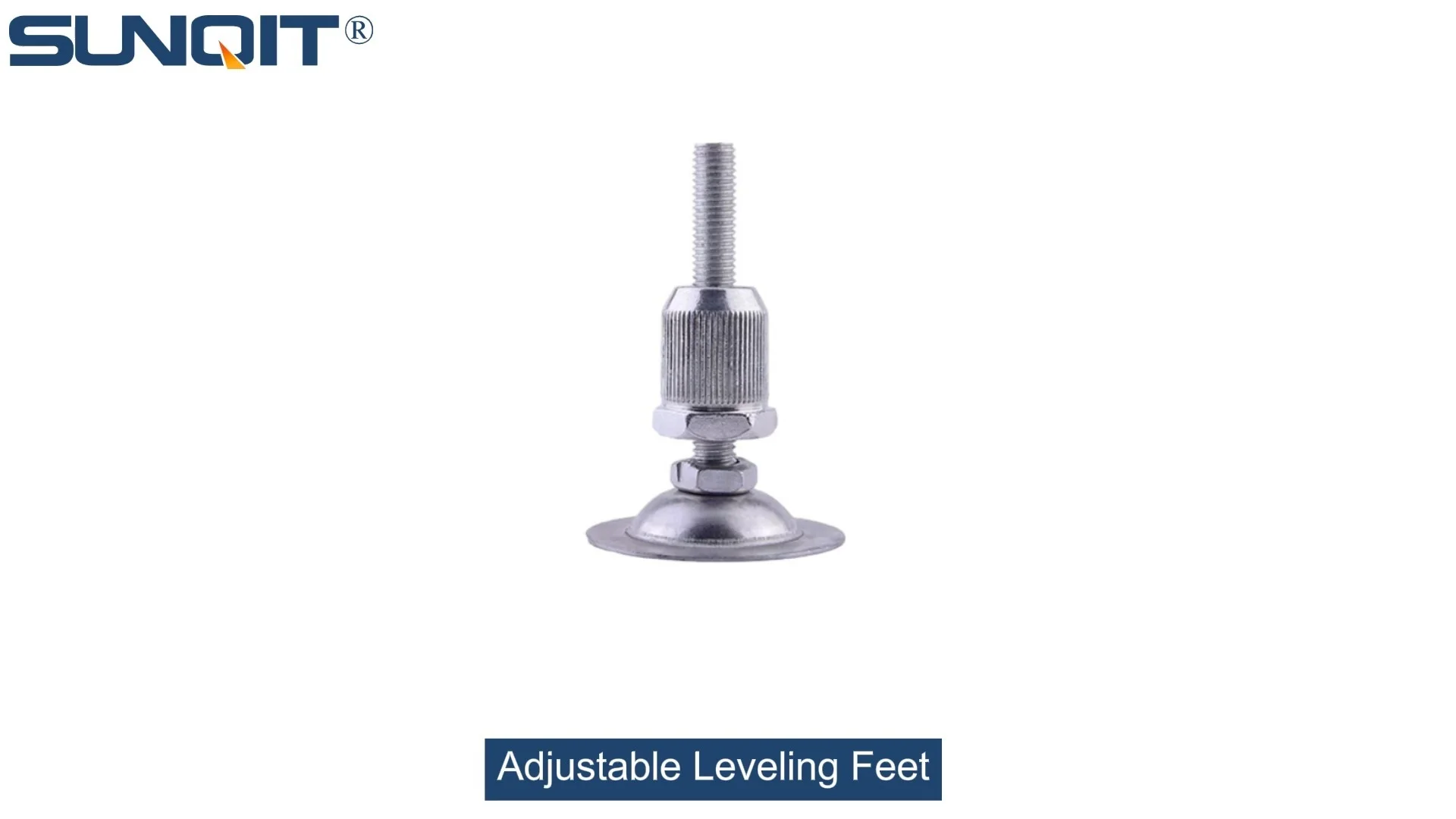
Adjustable leveling feet are designed to keep machines level when placed on uneven or sloped ground. Otherwise known as adjustable equipment feet, they are available to order in a wide variety of size and load capacity combinations.
Adjustable Leveling Feet Maintenance: Tips to Extend Lifespan in Flexible Production Lines
Walk into any bustling production facility, and your eyes might be drawn to the big machines—the conveyor belts humming, the robotic arms precision-moving parts, the towering aluminum profile racks stacked with components. But if you look closer, there's a quiet army of small, unassuming parts keeping everything running smoothly. Today, we're shining a light on one of those unsung heroes: adjustable leveling feet. These little devices, often no bigger than your palm, play a huge role in keeping workbenches stable, material racks balanced, and assembly lines free from wobbles. And in flexible production setups—where lean pipe workbenches get reconfigured, aluminum profiles get repurposed, and every second of downtime costs money—keeping your leveling feet in top shape isn't just "maintenance." It's a cornerstone of efficiency.
What Are Adjustable Leveling Feet, Anyway?
Let's start with the basics. Adjustable leveling feet are exactly what they sound like: small, threaded components attached to the bottom of equipment (think workbenches, material racks, or even heavy-duty trolleys) that let you "level" the item on uneven floors. Most have a threaded stem that screws into a base, with a foot pad (usually rubber, plastic, or metal) at the bottom to grip the floor. Twist the stem, and the foot raises or lowers—simple, but genius.
You've probably seen them without realizing it. That lean pipe workbench in your assembly area? The ones with the black rubber knobs under each leg? Those are leveling feet. The aluminum profile material rack that never sways, even when loaded with boxes? Yep, leveling feet are doing the heavy lifting (literally). They come in all shapes and sizes: some have suction cup bases for extra grip on smooth floors, others have metal plates for industrial settings, and a few even have anti-slip rubber pads to prevent scuffing on delicate surfaces.
But here's the thing: because they're small and "out of sight, out of mind," they're easy to neglect. And that neglect? It can turn a minor wobble into a major headache. A workbench that rocks slightly might not seem like a big deal—until a technician misaligns a part because the surface isn't steady, or a material rack tilts and sends components crashing to the floor. Suddenly, those tiny leveling feet are front and center, and you're wishing you'd paid them more attention.
Why Do Adjustable Leveling Feet Matter in Lean Systems?
If you're running a lean operation, you know the goal is to eliminate waste—whether it's time, materials, or motion. Adjustable leveling feet might not scream "lean," but they're critical to keeping that waste in check. Here's why:
Stability = Consistency:
Lean pipe workbenches, aluminum profile assembly stations, and even roller track setups rely on stability to keep processes consistent. A wobbly workbench means parts slide around, measurements get off, and rework piles up. Leveling feet ensure every surface stays flat, so your team can work efficiently without second-guessing their setup.
Preventing Downtime:
Imagine this: You're in the middle of a rush order, and a material rack suddenly tips because one of its leveling feet gave out. Now you're stopping production to clean up, fix the rack, and maybe even replace damaged parts. That's downtime—exactly what lean systems aim to avoid. Well-maintained leveling feet don't fail unexpectedly, so your line keeps moving.
Ergonomics for Your Team:
Lean isn't just about machines; it's about people. A workbench that's uneven forces technicians to hunch, strain, or overcompensate to keep parts steady. Over time, that leads to fatigue, mistakes, and even injuries. Leveling feet let you adjust heights to match your team's needs, keeping everyone comfortable and focused.
Protecting Your Investment:
Your equipment isn't cheap. A (wobbly aluminum profile workbench) can stress joints, loosen connections, and wear down components faster. Leveling feet distribute weight evenly, reducing strain on frames, casters, and other parts—so your lean pipe workbenches, material racks, and trolleys last longer.
Common Issues That Shorten Lifespan (And How to Spot Them Early)
Adjustable leveling feet might seem simple, but they face a lot of wear and tear. Let's break down the usual suspects that cut their lifespan short—and what to look for before they fail.
Overloading:
It's tempting to pile extra boxes on a material rack or set a heavy tool on the edge of a workbench, but leveling feet have weight limits. If you exceed them, the foot pad can crack, the threaded stem can bend, or the base can strip. Signs? A "sinking" feeling when you press down on the equipment, or the foot pad looking compressed or misshapen.
Corrosion:
If your facility deals with moisture (think food processing, washing stations, or even high humidity), metal stems or bases can rust. You'll spot this as orange/brown spots on the threading or flaking on the metal parts. Corrosion doesn't just look bad—it weakens the threads, making it hard to adjust the foot later.
Debris Buildup:
Production floors are messy. Sawdust, metal shavings, plastic pellets, or even spilled oil can get trapped between the leveling foot and the floor. Over time, this gunk acts like sandpaper, wearing down the rubber pad. It can also jam the threads, making it impossible to adjust the foot without force (which only makes things worse).
Improper Installation:
Ever tightened a leveling foot so hard the stem twisted? Or left it loose because "it seemed stable enough"? Both mistakes cause problems. Over-tightening can crack the base or strip the threads; under-tightening means the foot wobbles, leading to uneven wear on the pad.
Worn-Out Rubber Pads:
The rubber (or plastic) pad at the bottom is the leveling foot's "shoe." It grips the floor, absorbs vibrations, and prevents slipping. But constant friction, exposure to chemicals, or extreme temperatures can make it harden, crack, or peel. If you notice the pad is smooth (no texture left), has cracks, or is starting to separate from the metal base—it's time to replace it.
Pro Tip:
Make a habit of checking leveling feet during your regular "5S" audits. While you're sorting tools or sweeping the floor, take 30 seconds to wiggle each foot, look for cracks, and wipe away debris. Catching issues early saves you from bigger repairs later!
Essential Maintenance Tips to Keep Them Going Strong
Now that we know what can go wrong, let's talk about how to keep your adjustable leveling feet in prime condition. These tips are simple, don't require special tools, and take just a few minutes per week—but they'll add years to your feet's lifespan.
1. Inspect Regularly (Yes, Weekly!)
Set a calendar reminder: Every Monday morning, or during your pre-shift check, walk around your key equipment and inspect the leveling feet. Look for:
- Cracks or chips in the foot pad
- Rust or corrosion on metal parts
- Debris (dirt, oil, shavings) under the pad
- Loose stems (twist gently—if it moves easily, it needs tightening)
- Bent or stripped threads (if adjusting feels "gritty" or stuck)
2. Clean Them (It's Not Just for Floors)
Dirt and debris are enemy number one. Grab a stiff brush (a toothbrush works for tight spots) and sweep away any gunk under the foot pad. For sticky messes (like oil or adhesive), wipe the stem and base with a rag dampened with mild soap and water. Avoid harsh chemicals—they can break down rubber pads. After cleaning, dry the foot thoroughly to prevent rust.
3. Lubricate the Threads (But Go Easy)
Threaded stems need a little lubrication to adjust smoothly. Every 2-3 months, apply a small amount of silicone-based lubricant (WD-40 works, but avoid oil-based lubes—they attract dust) to the threads. Twist the foot up and down a few times to spread the lube evenly. This prevents the threads from seizing up, especially in humid or dusty environments.
4. Tighten (But Don't Overdo It)
Over time, vibration from machinery or regular use can loosen leveling feet. Grab a wrench (or just your hand, if it's not too tight) and gently tighten the stem until it's snug. The goal is to eliminate wobble, not to crank it so hard the base cracks. A good rule: Tighten until you feel resistance, then stop. If the stem spins without tightening, the threads are stripped—replace the foot ASAP.
5. replace Worn Pads (Before They Fail)
Rubber pads are replaceable—so don't wait for them to fall off! Most manufacturers sell replacement pads (look for "adjustable leveling foot accessories" or check with your lean pipe supplier). Swapping a pad takes 2 minutes: just unscrew the old one (some twist off, others have a small screw) and pop the new one on. It's cheaper than replacing the entire foot, and it ensures maximum grip.
6. Protect Against the Elements
If your leveling feet are in a wet or corrosive environment (like near a washing station or outdoors), add a protective layer. For metal stems, apply a thin coat of anti-rust spray (like Rust-Oleum). For rubber pads, use a UV-resistant treatment to prevent cracking from sunlight. You can even add a small plastic cap over the stem when the equipment isn't in use to keep dust out of the threads.
Quick Fixes: Common Problems and Solutions (In a Handy Table)
| Issue | What's Causing It | Quick Fix |
|---|---|---|
| Workbench wobbles when touched | Loose leveling foot or uneven floor | Check each foot—tighten any loose stems. If the floor is uneven, adjust the feet to level the bench. |
| Leveling foot won't adjust (stuck) | Debris in threads or rust | Clean threads with a brush, apply lubricant, and twist gently (don't force!) |
| Rubber pad peeling off | Adhesive failure or chemical exposure | replace the pad with a new one (use adhesive-backed pads for quick fixes) |
| Threaded stem is bent | Overloading or impact (e.g., dropping equipment) | replace the entire leveling foot—bent stems can't be fixed safely |
| Foot slides on the floor | Worn pad (no texture left) or smooth floor | replace the pad with a high-grip version (look for "anti-slip" or "textured" pads) |
Step-by-Step: A Monthly Deep Clean and Check
For critical equipment (like lean pipe workbenches used for precision assembly or heavy material racks), a quick weekly check isn't enough. Set aside 15-20 minutes once a month for a deep dive. Here's how:
Step 1: Unload the Equipment
Take everything off the workbench or rack—tools, parts, boxes. This lets you check the leveling feet without weight on them, so you can see if any are "sinking" under load.
Step 2: Inspect Each Foot Thoroughly
Get down on the floor (or use a flashlight) and look at each leveling foot from all angles. Check for:
- Cracks in the metal base or stem
- Rust or pitting (pay extra attention to the threads)
- The rubber pad: Is it flat? Any cracks, tears, or missing chunks?
- The connection to the equipment: Is the base loose where it attaches to the workbench leg?
Step 3: Clean the Threads and Pad
Use a wire brush to scrub debris from the threads (a pipe cleaner works for tight spaces). For the pad, wipe it with a damp rag and inspect the bottom—if it's covered in gunk, use a mild degreaser (like dish soap) to remove oil or grease. Rinse and dry completely.
Step 4: Test Adjustment
Loosen each foot by 2-3 turns, then screw it back up. It should move smoothly, with no sticking or grinding. If it's stiff, apply lubricant (as we discussed earlier) and work it back and forth until it glides.
Step 5: Relevel the Equipment
With the equipment unloaded, adjust the feet so the surface is perfectly level. Use a spirit level (the app on your phone works in a pinch!) to check side-to-side and front-to-back. Tighten each foot until the bubble is centered, then give the equipment a gentle shake—no wobbles means you're good to go.
Step 6: Reload and Recheck
Put the tools and parts back on, then check again for wobbles. Sometimes adding weight reveals a foot that wasn't tight enough. If it sways now, readjust that foot until it's stable.
Pro Move:
Keep a "maintenance kit" near your production line with essentials: replacement rubber pads, a small wire brush, silicone lubricant, a wrench, and a spirit level. That way, you can fix minor issues on the spot instead of letting them linger.
Choosing the Right Leveling Feet (Because Maintenance Starts with Selection)
Let's be real: Even the best maintenance can't save a leveling foot that was wrong for the job in the first place. So before we wrap up, let's talk about picking the right feet to start with—because an ounce of prevention (in selection) is worth a pound of cure (in maintenance).
Match the Weight:
Check the equipment's total weight (including maximum load) and choose leveling feet with a weight rating that exceeds it. For example, a lean pipe workbench that holds 500 lbs should have feet rated for at least 600 lbs (to be safe).
Consider the Floor Type:
Smooth concrete? A rubber pad with texture works best. Uneven floors? Look for feet with larger pads (more surface area = better stability). Slippery surfaces (like tile)? Suction cup bases or anti-slip pads are a must.
Material Matters:
In dry, clean areas, standard steel stems with rubber pads are fine. In wet or corrosive environments, go for stainless steel stems and chemical-resistant pads (like polyurethane). For food-grade facilities, choose feet with FDA-approved materials.
Adjustability Range:
Measure the floor unevenness first! If your production area has dips or bumps, pick feet with a longer threaded stem (more adjustability). A stem that adjusts 1-2 inches is standard, but some go up to 4 inches for really uneven floors.
Talk to Your Supplier:
Your lean pipe supplier or aluminum profile distributor knows their products best. Tell them what you're using the equipment for (assembly, storage, heavy tools), the environment (wet, dry, dusty), and the floor type. They'll point you to the right leveling feet—saving you from trial and error.
Final Thoughts: Small Parts, Big Impact
Adjustable leveling feet might not get the glory, but they're the backbone of stable, efficient production lines. In flexible setups where lean pipe workbenches are reconfigured overnight and aluminum profiles are repurposed to meet new demands, their role becomes even more critical. By taking 5 minutes a week to inspect, clean, and adjust them, you'll prevent costly downtime, extend the life of your equipment, and keep your team working safely and efficiently.
Remember: Maintenance isn't just about fixing things that break. It's about making sure the little things never stop the big things from moving forward. So next time you walk past that lean pipe workbench or material rack, take a second to check those leveling feet. They'll thank you—and so will your production schedule.