- Company Articles
- Products and Technology
- Product knowledge
- Adjustable Leveling Feet Thread Sizes: Choosing the Right Fit for Aluminum Pipe Joints

Adjustable Leveling Feet Thread Sizes: Choosing the Right Fit for Aluminum Pipe Joints
Related Product
Adjustable Leveling Feet
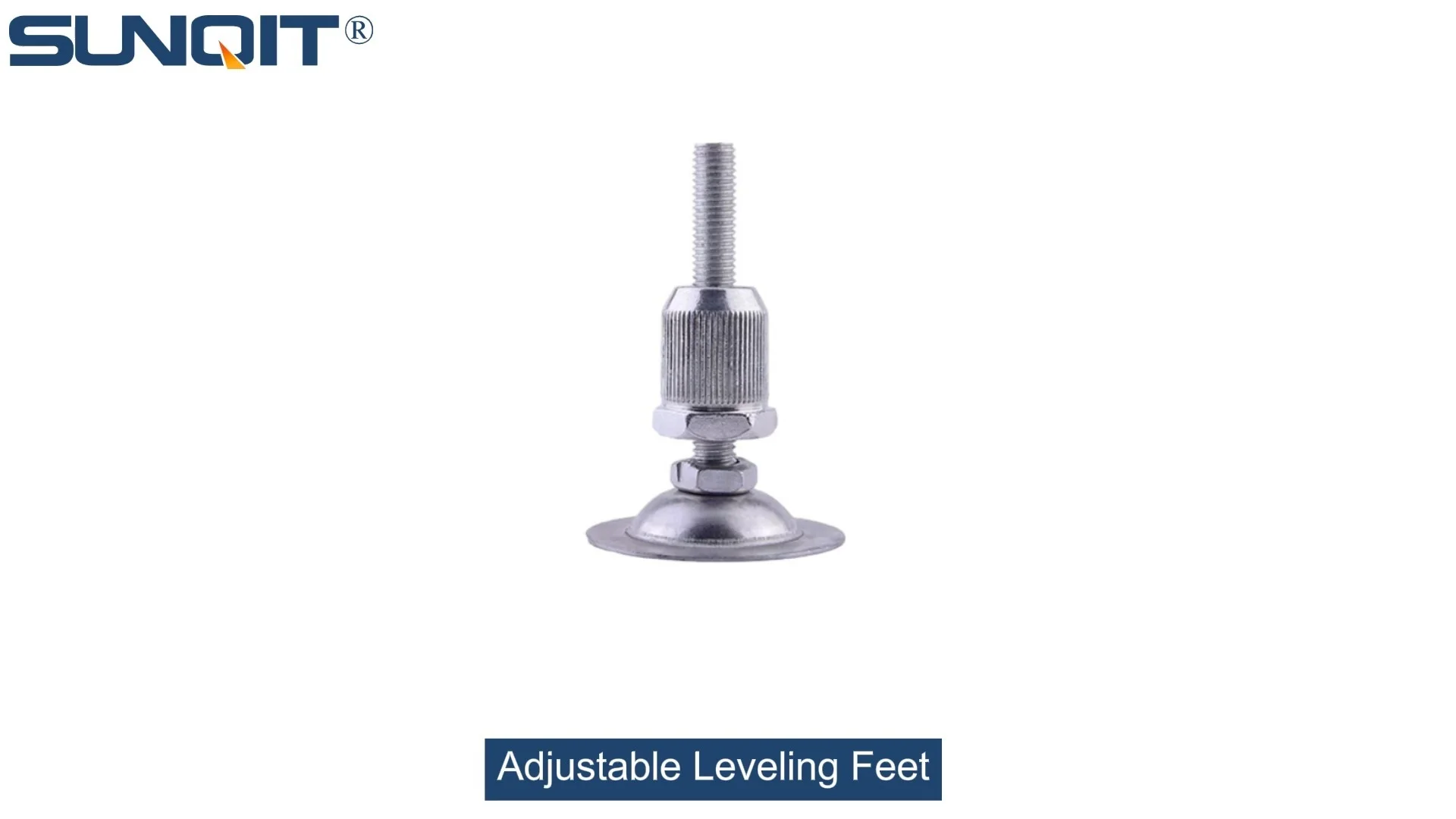
Adjustable leveling feet are designed to keep machines level when placed on uneven or sloped ground. Otherwise known as adjustable equipment feet, they are available to order in a wide variety of size and load capacity combinations.
If you've ever spent hours assembling an aluminum lean pipe workbench only to find it wobbles like a table with a missing leg, you know the frustration of a poorly leveled setup. That unsteady surface isn't just annoying – it can throw off your production line, slow down workflows, and even risk damaging materials. The culprit? Often, it's something small but critical: the thread size of your adjustable leveling feet. These unassuming components are the unsung heroes of stable workspaces, but choosing the wrong thread size can turn them from problem-solvers into productivity killers. In this guide, we'll walk through why thread size matters, how to match it to your aluminum pipe joints, and the key factors that ensure your next setup stays steady, efficient, and ready for whatever your production line throws at it.
What Are Adjustable Leveling Feet, Anyway?
Let's start with the basics. Adjustable leveling feet are small, threaded components designed to screw into the base of structures like workbenches, material racks, or turnover trolleys. Think of them as the "feet" of your aluminum pipe setup – they the floor, support the weight of the structure, and let you tweak the height to compensate for uneven surfaces. Most leveling feet have a threaded stem (the part that screws into the pipe joint) and a broad, flat base (the part that sits on the floor), often with a rubber or anti-slip pad to prevent sliding.
In aluminum lean pipe systems – those flexible, modular setups beloved in manufacturing and warehousing – these feet are especially crucial. Aluminum lean pipe is lightweight, corrosion-resistant, and easy to assemble, but its lightness means it's more prone to wobbling if not properly stabilized. That's where adjustable leveling feet step in: by screwing into aluminum pipe joints (the connectors that hold the pipes together), they let you fine-tune each leg's height, ensuring the entire structure sits perfectly level.
Why Thread Size Isn't Just a "Nice-to-Know" Detail
You might be thinking, "It's just a screw – how important can the thread size be?" Trust us: get this wrong, and you'll regret it. Thread size refers to two things: the diameter of the threaded stem (measured in millimeters, like M10 or M8) and the "pitch" (the distance between each thread). Both matter because they determine how well the leveling foot locks into the aluminum pipe joint.
Imagine trying to screw a garden hose onto a faucet with mismatched threads: it either won't catch at all, or it'll leak because the seal isn't tight. The same logic applies here. If the thread diameter is too small for the joint, the foot will wobble loose, even after you tighten it. Too large, and you'll strip the threads inside the aluminum joint – permanently ruining it and forcing you to replace the entire connector (not cheap, and definitely not fun mid-assembly).
Worst case? A stripped joint or loose foot can lead to the entire structure collapsing. We've heard horror stories: a material rack B (3 row and 3 floor) loaded with heavy components suddenly tipping because a leveling foot slipped, scattering parts across the factory floor. Or a workbench E (single deck-without caster) vibrating so badly during assembly that delicate electronics got damaged. These aren't just headaches – they're costly, time-consuming, and avoidable. All it takes is choosing the right thread size from the start.

Common Thread Sizes for Aluminum Pipe Joints
Aluminum pipe systems, whether they're basic aluminum tube, aluminum lean pipe, or rigid aluminum profile, rely on standardized thread sizes to keep things compatible. While there are exceptions (we'll get to custom setups later), most manufacturers stick to a few tried-and-true metric sizes. Let's break down the most common ones you'll encounter:
| Thread Size | Diameter (mm) | Best For | Max Load Capacity (Per Foot) | Typical Joint Compatibility |
|---|---|---|---|---|
| M8 | 8mm | Light-duty setups: mini aluminum roller track, small hand trolleys | Up to 150kg | Plastic or thin aluminum joints (e.g., 1.0mm pe coated lean pipe) |
| M10 | 10mm | Standard workbenches, material racks, aluminum profile frames | 150kg – 300kg | Internal rotary aluminum joint, 1.5mm aluminum lean pipe |
| M12 | 12mm | Heavy-duty racks, industrial workstations | 300kg – 500kg | Stainless steel or thick aluminum joints (e.g., 2.0mm stainless steel pipe series) |
M10 is by far the most versatile – it's the "goldilocks" size for most aluminum lean pipe and aluminum profile setups. It's strong enough to handle standard workbenches and material racks but not so large that it risks stripping thinner aluminum joints. If you're unsure where to start, M10 is a safe bet (we'll explain how to confirm later).

5 Factors That Dictate the Right Thread Size
Choosing a thread size isn't just about picking M10 and calling it a day. Your specific setup will influence what works best. Here are the key factors to weigh:
1. The Type of Aluminum Pipe You're Using
Not all aluminum pipes are created equal. Basic aluminum tube (thin-walled, often used for lightweight trolleys) has joints that can't handle large threads like M12 – the material is too soft, and the threads will strip. On the flip side, aluminum extrusion profile (thick-walled, rigid, with t-slots) can easily support M12, even under heavy loads.
Aluminum lean pipe, the flexible workhorse of factories, falls in the middle. Most 1.5mm pe coated lean pipe uses M10 threads, as it balances strength and flexibility. If you're using stainless steel pipe series (which is denser and stronger than aluminum), you might even go up to M14 – but that's rare in standard setups.
2. How Much Weight Will It Support?
A workbench holding a few hand tools needs less support than a material rack stacked with metal parts. As a rule of thumb: the heavier the load, the larger the thread size. For example, a material rack B (3 row and 3 floor) loaded with 50kg boxes per shelf (that's 450kg total!) needs M12 feet to distribute weight evenly. A small hand trolley A carrying lightweight components? M8 will do.
Pro tip: Always calculate the total load and divide by the number of leveling feet. If your rack has 4 feet and holds 400kg, each foot needs to support 100kg. M10 can handle that with room to spare – but M8 would be pushing it.
3. The Joint Design
Not all aluminum pipe joints are the same. Fixed lean pipe joints (like the 90° fixed lean pipe joint) have solid, threaded holes that can handle tighter tolerances. Internal rotary aluminum joints, which let pipes swivel, have more moving parts – so the thread size needs to be precise to avoid jamming the rotation.
If you're using a parallel lean pipe joint (which connects two pipes side-by-side), check if the joint has a reinforced threading area. Some cheaper plastic joints skimp here, so even M10 might be too much. Stick to metal joints for larger threads – your future self will thank you.
4. Environmental Conditions
If your setup is in a wet or corrosive environment (think food processing or automotive shops with oil and coolant), you'll need leveling feet with corrosion-resistant coatings (like zinc-plated or stainless steel). But here's the catch: these coatings add a tiny bit of thickness to the threads. So, if you're using M10 feet in a humid area, you might need to size up to M10 with a slightly smaller pitch (the distance between threads) to ensure a tight fit – otherwise, rust and corrosion can build up in the gaps, locking the foot in place or causing it to loosen over time.
5. Future Flexibility
Are you likely to reconfigure your setup later? If you think you might upgrade from a small workbench to a larger production line, opt for a slightly larger thread size than you need now. For example, if M8 works for your current trolley, but you might add shelves later, go with M10. It's easier to downsize (using adapters) than to replace all your joints and feet later.

How to Find Your Joint's Thread Size (Without Guesswork)
The best way to avoid mismatched threads is to measure the existing joint (or the specifications from your aluminum pipe supplier). Here's how:
- Check the supplier's specs: Most reputable lean pipe suppliers list thread sizes on their product pages. If you bought an internal rotary aluminum joint, the spec sheet should say something like "Thread: M10 x 1.5mm" (1.5mm is the pitch). Save yourself time – start here.
- Use a thread gauge: This cheap tool (you can find one for $10 online) has metal pins with different thread sizes. Simply screw a pin into the joint – the one that fits snugly (no wobble, no forcing) is your size.
- Measure with calipers: If you don't have a gauge, measure the diameter of the threaded hole with digital calipers. For M10, it should be ~10mm across. But remember: diameter alone isn't enough – pitch matters too! A 10mm hole with a 1.0mm pitch won't fit a 10mm foot with a 1.5mm pitch.
- Test with a spare foot: If you're still unsure, buy one M8, one M10, and one M12 foot (most suppliers sell singles). Test-screw each into the joint. The right size will screw in smoothly by hand for 2-3 turns, then need a wrench for final tightening. If it spins freely or jams immediately, it's the wrong size.
Pro hack: If your joint is brand new and unthreaded (some aluminum profile accessories come this way), check the profile's t-slot size. 2020 aluminum profile usually uses M5-M8 threads, 3030 uses M8-M10, and 4040 uses M10-M12. It's not foolproof, but it's a quick starting point.
Installation Tips: Get It Right the First Time
Even with the right thread size, poor installation can ruin your setup. Follow these steps to ensure a tight, stable fit:
- Clean the threads: Dust, oil, or metal shavings in the joint can cause cross-threading. Wipe the hole with a clean cloth and blast it with compressed air if you have it.
- Hand-tighten first: Always start by screwing the foot in by hand. If it feels rough or catches, stop! You're either using the wrong size or cross-threading. Back out and try again – forcing it will strip the joint.
- Don't over-tighten: Aluminum is soft – until the foot is snug, then give it a 1/4 turn with a wrench. Any more, and you'll stretch the threads.
- Use thread locker (if needed): For high-vibration setups (like near a conveyor), add a drop of blue thread locker (never red – it's permanent!) to keep the foot from loosening. Let it dry before adjusting the height.
- Check level after installation: Use a spirit level to ensure the structure is flat. Adjust the feet by turning them clockwise (to lower) or counterclockwise (to raise) until the bubble is centered.
Troubleshooting: When Things Go Wrong
Even with careful planning, issues can pop up. Here's how to fix the most common problems:
Problem: The foot spins freely and won't tighten.
Cause: Thread size is too small, or the joint's threads are stripped.
Fix: If it's too small, switch to the next size up. If stripped, you have two options: 1) Use a thread repair kit (like a helicoil) to re-thread the joint, or 2) replace the joint entirely (the better choice for load-bearing structures).
Problem: The foot jams halfway in and won't turn.
Cause: Cross-threading (the threads aren't aligned) or wrong pitch.
Fix: Back the foot out completely, then try again – slowly, with gentle pressure. If it still jams, check the pitch (e.g., M10x1.0 vs. M10x1.5). They look similar but won't fit.
Problem: The structure still wobbles after leveling.
Cause: Uneven floor, bent pipe, or one foot is longer than the others.
Fix: Use shims under the feet if the floor is uneven. Check for bent pipes (replace if warped). Measure each foot's height with a ruler – they should all be within 1-2mm of each other.
Final Thoughts: Small Threads, Big Impact
Adjustable leveling feet might seem like an afterthought in your aluminum pipe setup, but they're the foundation of a stable, efficient workspace. Choosing the right thread size isn't about overcomplicating things – it's about saving time, avoiding frustration, and ensuring your production line runs smoothly.
Remember: Start by checking your aluminum pipe type (aluminum lean pipe? Aluminum profile?), calculate your load, and measure the joint threads. When in doubt, test with a few sizes. And always hand-tighten first – your joints (and your sanity) will thank you.
So the next time you're assembling that workbench or material rack, take an extra minute to confirm the thread size. It's a small step that makes a world of difference between a wobbly mess and a setup that stands strong – shift after shift, day after day.