- Company Articles
- Products and Technology
- Product knowledge
- Adjustable Leveling Feet vs. Casters: When to Use Each on Lean Pipe Mobile Carts

Adjustable Leveling Feet vs. Casters: When to Use Each on Lean Pipe Mobile Carts
Related Product
Adjustable Leveling Feet
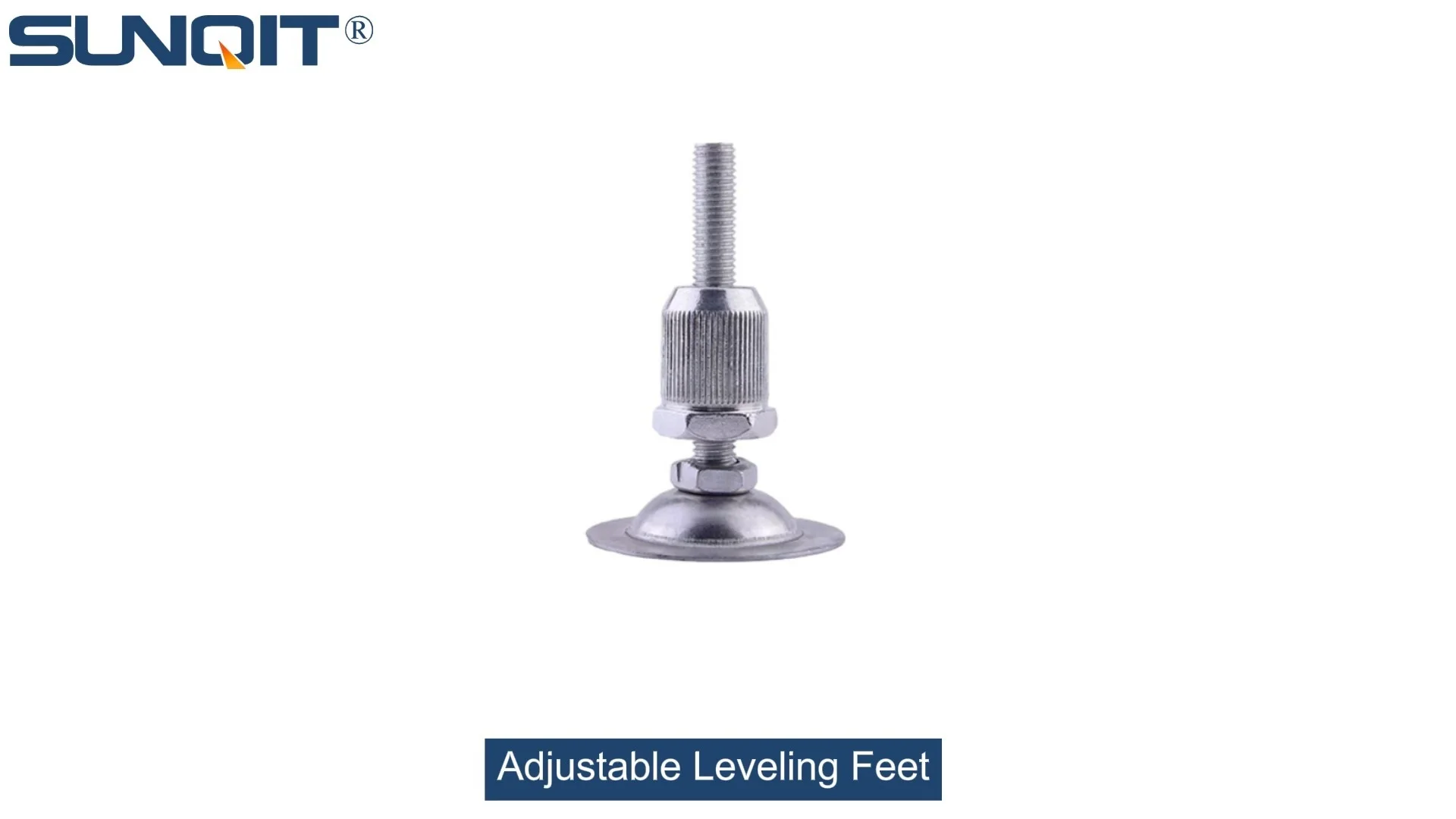
Adjustable leveling feet are designed to keep machines level when placed on uneven or sloped ground. Otherwise known as adjustable equipment feet, they are available to order in a wide variety of size and load capacity combinations.
Walk onto any busy factory floor, and you'll spot them: lean pipe mobile carts zipping between workstations, holding everything from circuit boards to heavy machinery parts. But here's the thing—some carts glide effortlessly, while others seem stuck in place. Some wobble when you load them up, others stand firm as a rock. The secret? It often comes down to two tiny but mighty components: adjustable leveling feet and casters. Choosing between them isn't just about preference; it's about making your workflow smoother, safer, and more efficient. Let's dive into when to pick one over the other, and how they can transform your lean pipe mobile carts from simple tools into productivity powerhouses.
What Are Lean Pipe Mobile Carts, Anyway?
Before we jump into the feet vs. casters debate, let's make sure we're all on the same page about the star of the show: lean pipe mobile carts. These carts are the workhorses of lean manufacturing, designed to reduce waste, improve workflow, and adapt to your team's changing needs. At their core, they're built using lean pipe (sometimes called "lean tube"), a lightweight but durable material—often aluminum or steel—that's easy to cut, shape, and assemble. Add in a few joints, shelves, and accessories, and you've got a custom cart tailored to carry specific tools, parts, or products.
What makes them so popular? Flexibility. Unlike fixed shelving or rigid workbenches, lean pipe carts can be reconfigured in minutes. Need an extra shelf? Just add a few more pipes and joints. Switching from carrying small electronics to heavy automotive parts? Swap out the lightweight aluminum lean pipe for a sturdier steel version. And because they're mobile (thanks to, you guessed it, casters or leveling feet), they bring materials right to where your team needs them, cutting down on time wasted walking back and forth.
Meet the Players: Adjustable Leveling Feet Explained
What Are Adjustable Leveling Feet?
Imagine a cart leg with a screw-on "foot" at the bottom. That's essentially an adjustable leveling foot. These small, unassuming components screw into the base of the cart's legs, allowing you to tweak their height by turning them clockwise or counterclockwise. Most have a rubber or plastic pad at the bottom to grip the floor, and some even come with anti-slip or ESD (electrostatic discharge) properties—critical for sensitive work environments like ESD workstations .
How Do They Work?
The magic is in the threads. When you twist the leveling foot, it extends or retracts, raising or lowering that corner of the cart. This might sound simple, but it's a game-changer on uneven floors—a common issue in older warehouses or factories with cracked concrete. A cart with unadjustable legs might rock back and forth, risking spills or damage to fragile items. With leveling feet, you can "level" the cart (hence the name), making it stable even on bumpy surfaces.
The Pros: Why Choose Leveling Feet?
Stability First: If your cart needs to stay put while workers load, unload, or assemble items, leveling feet are your best bet. They anchor the cart to the floor, preventing unwanted movement. Think about an ESD workstation where technicians are assembling delicate circuit boards—one wrong nudge to a wobbly cart could send tiny components scattering, or worse, damage sensitive parts with static. Leveling feet keep the cart steady, so your team can focus on precision, not balancing.
Uneven Floor? No Problem: Warehouses and factories aren't known for perfect floors. Cracks, dips, and uneven concrete are par for the course. Leveling feet let you compensate for these imperfections, ensuring your cart stands straight. This isn't just about convenience—it's about safety. A tilted cart is more likely to tip over when loaded, putting workers and products at risk.
Height Customization: Sometimes, you need the cart to match the height of a workbench or conveyor. Leveling feet let you adjust each leg by fractions of an inch, so materials slide smoothly from the cart to the next step in the process. No more awkward bending or lifting to reach items that are too high or too low.
ESD Compatibility: For environments where static control is a must (like ESD workstations), many leveling feet are made with conductive materials. These feet dissipate static electricity from the cart into the floor, protecting sensitive electronics from damage. It's a small detail, but it can save you from costly defects and rework.
The Cons: When Leveling Feet Fall Short
No Mobility: The biggest downside? Once you set those leveling feet, the cart isn't going anywhere—unless you physically lift it. If your workflow requires moving materials from one end of the factory to the other, a cart with only leveling feet will slow you down. You'll end up relying on forklifts or manually carrying items, defeating the purpose of a "mobile" cart.
Limited Flexibility: While leveling feet adjust height, they don't help with movement. If you need to reposition the cart slightly (say, to make room for a new machine), you'll have to unscrew the feet, move the cart, and readjust—hardly a quick fix.

The Other Contender: Casters and Their Role
What Are Casters?
If leveling feet are the "anchors," casters are the "wheels" of the cart world. A caster is a wheel mounted on a swivel bracket, attached to the bottom of the cart's legs. They come in all shapes and sizes: small, lightweight ones for light loads, heavy-duty ones for hundreds of pounds, and everything in between. And while they all share the same basic job—making the cart mobile—there are endless variations to fit different needs.
Types of Casters: More Than Just Wheels
Not all casters are created equal. Here are the most common types you'll find on lean pipe mobile carts:
- Swivel Casters: These have a rotating bracket that lets the wheel turn 360 degrees, making the cart super maneuverable. Perfect for tight spaces where you need to pivot around corners or obstacles.
- Rigid Casters: These don't swivel—they only roll forward and backward. Great for carts that move in straight lines, like along assembly lines or between fixed workstations.
- Locking Casters: Many swivel or rigid casters come with brakes (often called "locks") that press down on the wheel to stop it from moving. This gives you the best of both worlds: mobility when you need it, stability when you don't.
- ESD-Safe Casters: Similar to ESD leveling feet, these casters are made with conductive materials to dissipate static, making them ideal for ESD workstations or electronics manufacturing.
The Pros: Why Casters Are a Workflow Win
Mobility at Your Fingertips: This is the big one. With casters, a single worker can push a loaded cart across the factory floor with minimal effort. No more straining to lift heavy items or waiting for a forklift. Need to move materials from the storage room to the assembly line? Just wheel the cart over. Done with a task? Roll it out of the way to free up space. It's like giving your cart a pair of legs—suddenly, it can go wherever it's needed.
Flexibility to Adapt: Factories change fast. New orders come in, workflows shift, and workstations move. Casters let your carts keep up. Rearranging your production line? No problem—just wheel all your carts to their new spots. Hosting a training session and need extra seating? Convert a cart into a table by locking the casters. Casters turn static tools into dynamic assets that grow with your business.
Reduced Physical Strain: Let's talk about ergonomics. Carrying heavy boxes or pushing unbalanced carts can lead to back injuries, muscle strains, and fatigue. Casters take the pressure off. A well-designed cart with good casters glides smoothly, even when fully loaded, so your team can focus on their work—not on fighting with equipment.
The Cons: When Casters Might Not Be the Best Fit
Stability Issues on Uneven Floors: Casters rely on smooth movement, and uneven floors can throw a wrench in that. A cart with swivel casters might veer off course on a cracked floor, or a heavy load could make it tip if the wheels hit a bump. While locking casters help, they're not as stable as leveling feet for long-term stationary use.
Noise and Floor Damage: Metal casters on concrete floors can be loud—imagine a factory with 20 carts rolling around, and you'll get the picture. They can also scratch or scuff delicate floors, like polished concrete or tile. Rubber or polyurethane caster wheels help with noise and floor protection, but they're not always an option for heavy loads.
Locking Limitations: Locking casters are great, but they're not foolproof. If the floor is slippery or the lock is worn, the cart might still shift slightly when bumped. For tasks that require pinpoint precision (like assembling microchips on an ESD workstation), even a tiny movement can cause errors.

The Great Debate: When to Choose Leveling Feet
Now that we know the basics, let's get practical. When should you opt for adjustable leveling feet on your lean pipe mobile cart?
Scenario 1: Stationary Workstations (Like ESD Workstations)
If your cart rarely moves—say, it's parked next to an assembly line as a dedicated parts station—leveling feet are the way to go. Take ESD workstations , for example. When technicians are soldering tiny components or testing circuit boards, they need a stable surface. A cart that shifts, even a little, could cause a misplaced solder joint or a static discharge that fries a $500 chip. Leveling feet keep the cart anchored, and ESD-safe models ensure static is dissipated, protecting both the product and the worker.
Another example: quality control (QC) stations. Inspectors need to examine products closely, measuring dimensions or checking for defects. A wobbly cart would make it hard to get accurate readings, leading to missed flaws or false rejects. Leveling feet keep the cart steady, so inspectors can trust their measurements.
Scenario 2: Heavy, Unbalanced Loads
Carts carrying extremely heavy or unevenly distributed loads are prone to tipping—especially with casters. Imagine a cart loaded with a 500-pound motor on one side and a few light tools on the other. Casters might let it roll, but hit a small bump, and the whole thing could topple. Leveling feet distribute the weight evenly across the cart's base, lowering the center of gravity and reducing the risk of tipping. They're also better for loads that need to stay perfectly aligned, like stacked pallets or fragile glass panels.
Scenario 3: Uneven or Slippery Floors
If your factory floor looks like a war zone—cracks, potholes, or oil spills—casters might not be your friend. A cart with casters could get stuck in a crack, or its wheels might slip on a greasy spot, sending the load sliding. Leveling feet, with their grippy rubber pads, dig into the floor (even uneven surfaces) and stay put. They're also a safer bet in wet environments, like food processing plants or car washes, where slippery floors increase the risk of casters sliding.

When Casters Steal the Show
Now, let's flip the script. When are casters the clear winner for your lean pipe mobile cart?
Scenario 1: Frequent Material Transport
If your cart spends more time moving than sitting still, casters are non-negotiable. Think about a warehouse where orders come in, and pickers need to gather items from different shelves. A cart with casters lets them roll from aisle to aisle, collecting products without stopping to lift or carry heavy boxes. Or consider a hospital supply cart—nurses need to move quickly between patient rooms, and casters let them do that without slowing down.
Even in factories, casters shine for "point-to-point" transport. For example, a cart that carries parts from the storage area to the assembly line, then takes finished products to packaging. With casters, this loop happens in minutes, not hours. And if you add locking casters, workers can stop, unload, and reload without the cart rolling away.
Scenario 2: Dynamic Workflows
Lean manufacturing is all about adaptability. If your team is constantly reconfiguring workstations, shifting production lines, or testing new processes, casters let your carts keep up. Let's say you're launching a new product and need to set up a temporary assembly area. With caster-equipped lean pipe carts, you can wheel in all the tools and materials you need, set up shop, and then break it down just as easily when the project ends. No bolts, no tools, no hassle—just quick, flexible adjustments.
Scenario 3: Collaborative Workspaces
Modern factories and warehouses are moving away from siloed workstations and toward collaboration. Teams huddle around a central area to problem-solve, share ideas, or work on a shared project. Casters let you bring the cart to the conversation. Need to show a prototype to the design team? Wheel the cart into the meeting room. Working on a cross-departmental task? Gather all the necessary materials on a caster cart and roll it to the collaborative space. Suddenly, your cart isn't just a storage tool—it's a communication tool, too.
Can You Have Both? Hybrid Solutions
What if you can't decide? What if you need your cart to be both mobile and stable? Good news: hybrid solutions exist. Many lean pipe cart designs combine adjustable leveling feet and casters to get the best of both worlds. Here are a few common setups:
- Two Casters + Two Leveling Feet: Attach casters to two legs and leveling feet to the other two. When you need to move the cart, tilt it back onto the casters and roll. When you need stability, lower the leveling feet to the floor. This is great for carts that stay mostly in one place but need occasional repositioning.
- Retractable Casters: These casters can be raised or lowered with a lever or pedal. When you want to move, step on the pedal to lower the casters and lift the leveling feet off the floor. When you're done, step again to raise the casters and let the leveling feet anchor the cart. It's like having a "mobile mode" and "stationary mode" in one cart.
- Locking Casters + Leveling Feet: Some carts have both casters (with locks) and leveling feet that can be screwed down for extra stability. Use the casters to move, lock them in place, then tweak the leveling feet to ensure the cart is perfectly steady—ideal for ESD workstations or precision tasks where even a locked caster might shift slightly.
A Side-by-Side Comparison: Leveling Feet vs. Casters
| Feature | Adjustable Leveling Feet | Casters |
|---|---|---|
| Primary Function | Anchor the cart for stability; adjust height on uneven floors | Enable mobility; allow easy movement across the floor |
| Best For | Stationary workstations (e.g., ESD workstations), heavy/unbalanced loads, uneven floors | Frequent transport, dynamic workflows, collaborative spaces |
| Stability | High (anchors to floor; minimal movement) | Medium to high (locking casters add stability, but still risk slight shifts) |
| Mobility | Low (requires lifting to move) | High (rolls easily, even with heavy loads) |
| ESD Compatibility | Yes (ESD-safe models available) | Yes (ESD-safe caster wheels available) |
| Floor Impact | Low (rubber pads protect floors) | Medium to high (metal wheels may scratch; rubber/polyurethane wheels reduce impact) |
| Installation | Simple (screw onto cart legs) | Simple to moderate (brackets may require drilling or bolting) |
Choosing Wisely: A Step-by-Step Guide
Still not sure which to pick? Ask yourself these questions to narrow it down:
- How often does the cart move? If it moves more than once a day, casters are probably better. If it stays in one spot 90% of the time, go with leveling feet.
- What's the load weight? For loads over 500 pounds or unevenly distributed loads, leveling feet reduce tipping risk. Lighter, balanced loads work well with casters.
- What's the floor like? Cracked, uneven, or slippery floors? Leveling feet. Smooth, flat floors? Casters (or a hybrid).
- Is precision important? For tasks like ESD workstation assembly or QC inspections, stability trumps mobility—lean toward leveling feet (or locking casters with leveling feet backup).
- What's your team's biggest pain point? If workers complain about "wasting time carrying materials," casters will solve that. If they grumble about "wobbly carts ruining parts," leveling feet are the fix.
Conclusion: The Right Tool for the Job
At the end of the day, there's no "better" option—only the right option for your workflow. Adjustable leveling feet and casters each bring unique strengths to the table: leveling feet anchor your cart for stability and precision, while casters turn it into a mobile asset that keeps up with your team's pace. And with hybrid solutions, you don't have to choose—you can have stability and mobility in one cart.
So, take a look at your lean pipe mobile carts. Are they working as hard as they could? Maybe swapping out a few leveling feet for casters (or vice versa) could cut down on wasted time, reduce errors, or make your team's day a little easier. After all, lean manufacturing is about the details—and sometimes, the smallest components (like a humble leveling foot or caster) make the biggest difference.