- Company Articles
- Products and Technology
- Product knowledge
- Adjustable Leveling Feet vs. Fixed Feet: Which Suits Your Material Rack Better?

Adjustable Leveling Feet vs. Fixed Feet: Which Suits Your Material Rack Better?
Related Product
Adjustable Leveling Feet
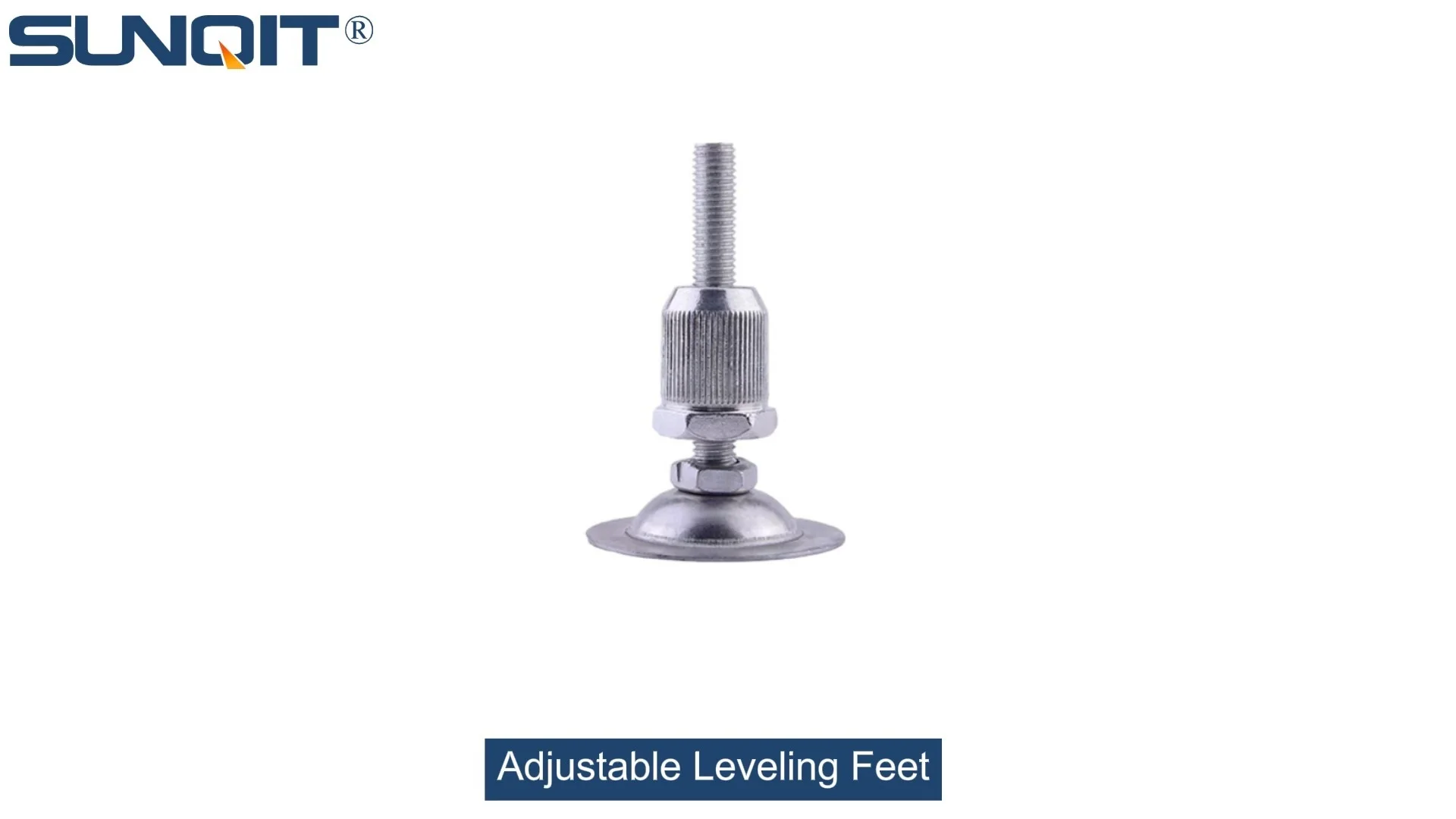
Adjustable leveling feet are designed to keep machines level when placed on uneven or sloped ground. Otherwise known as adjustable equipment feet, they are available to order in a wide variety of size and load capacity combinations.
Walk into any manufacturing plant, warehouse, or workshop, and you'll notice something that often goes unnoticed but keeps everything running smoothly: material racks. These silent workhorses hold raw materials, tools, and finished products, forming the backbone of your operation. But here's the thing—even the sturdiest rack is only as good as the feet it stands on. That's where the debate between adjustable leveling feet and fixed feet comes in. It's not just a small detail; it's a decision that impacts stability, safety, and even the efficiency of your entire workflow. Let's dive into this underrated but critical choice, and figure out which option makes sense for your material rack, whether it's a simple shelf or a fully loaded material rack b (3 row and 3 floor).
First Things First: What Are Leveling Feet, Anyway?
Before we pick sides, let's get clear on what we're talking about. Leveling feet are the unsung heroes bolted (or welded) to the bottom of your material rack. Their job? Three big things: support the weight of the rack and its contents, keep the rack stable so it doesn't wobble or tip, and level the rack on uneven floors. Think of them as the foundation of your foundation—without solid, well-chosen feet, even the best rack can become a hazard or a hassle.
Now, not all feet are created equal. Fixed feet are exactly what they sound like: fixed in height, permanently attached, and rigid. Adjustable leveling feet, on the other hand, have a threaded stem that lets you twist them up or down, fine-tuning the height to adapt to whatever floor they're on. It's like choosing between a pair of solid work boots and a pair of shoes with adjustable laces—both have their uses, but one might fit your "terrain" better.
Fixed Feet: The No-Nonsense, Sturdy Option
Let's start with the classic: fixed feet. These are the OG of rack support—simple, reliable, and built to stay put. They're usually made of heavy-duty steel or cast iron, with a rubber or plastic pad on the bottom to grip the floor and prevent scratches. Once installed, they don't move. No knobs to twist, no threads to adjust—just a solid base that's as steady as a rock.
The Pros of Going Fixed
- Rock-solid stability (on flat floors): When your workshop has perfectly level concrete (lucky you!), fixed feet shine. Since they don't adjust, there's no risk of them "slipping" or loosening over time. They lock the rack into place, so even with heavy loads, it stays steady.
- Budget-friendly: Fixed feet are almost always cheaper than adjustable ones. If you're outfitting a whole warehouse with racks, those savings add up fast. For small businesses or static storage areas, this alone can make them the go-to choice.
- Low maintenance: No moving parts means no parts to wear out or break. You bolt them on once, and unless the floor shifts (which is rare in new buildings), you can forget about them. No need to check for loose threads or tighten knobs—set it and forget it.
- Simple installation: You don't need any special tools or skills. Just line up the rack, drill a few holes, bolt the feet on, and you're done. No measuring, no adjusting—perfect for teams that need to set up racks quickly.
The Cons: When Fixed Feet Fall Short
- No adaptability to uneven floors: Here's the big one. If your workshop has old, cracked concrete, or even a slight slope (and let's be real, most do), fixed feet can't compensate. The result? A wobbly rack that might lean to one side, risking damage to your materials or even a collapse.
- Zero height adjustment: Need to raise the rack by an inch to fit a pallet underneath? Or lower it to align with a conveyor? With fixed feet, you're out of luck. They're stuck at one height, which can throw off your workflow if you need flexibility.
- Risk of floor damage: Without adjustable padding, fixed feet can scratch or dent soft floors (like painted concrete or wood). And if the floor isn't perfectly flat, the feet might dig into the higher spots over time, worsening the unevenness.

Adjustable Leveling Feet: The Flexible Problem-Solvers
Now, let's meet the newer kid on the block (though they've been around long enough to prove their worth): adjustable leveling feet. These are the Swiss Army knives of rack feet. Instead of a solid base, they have a threaded metal stem that screws into a base plate. Twist the stem, and the foot extends or retracts, letting you tweak the height by fractions of an inch. Many also have rubber or plastic pads on the bottom that grip the floor and absorb vibrations.
At first glance, they might seem like overkill—why adjust when you can just fix? But once you've dealt with a workshop floor that looks like a rollercoaster, you'll appreciate the genius of adjustability.
The Pros: Why Adjustable Feet Are a Game-Changer
- Conquers uneven floors like a champ: This is their superpower. Got a floor with a half-inch dip near the corner? No problem. Just twist the adjustable feet on that side to raise the rack and level it out. Suddenly, that wobbly material rack b (3 row and 3 floor) becomes a steady, reliable storage unit—even on the most uneven terrain.
- Precise height control: Need to align your rack with a conveyor belt? Or raise it to make room for a caster wheel later? Adjustable feet let you dial in the exact height you need, down to a millimeter. This is a lifesaver in lean system setups, where every inch of space and alignment counts for efficiency.
- Shock absorption: Many adjustable feet come with rubber or polyurethane pads that act like tiny shock absorbers. This is huge if you're storing fragile materials or electronics—less vibration means less damage to your goods over time.
- Future-proofing your setup: Workshops change. Maybe you'll rearrange the layout next year, or move the rack to a different part of the floor. With adjustable feet, you're not stucking to one spot—you can adapt the rack to new floors or new needs without buying a whole new set of feet.
The Cons: Where Adjustable Feet Might Let You Down
- Higher cost: You'll pay more for the adjustability—sometimes double the price of fixed feet. For small racks or tight budgets, this can be a dealbreaker, even if the benefits are tempting.
- Potential for loosening: The threaded stem can vibrate loose over time, especially if the rack is in a high-traffic area or holds heavy, shifting loads. You'll need to check and tighten them periodically to keep the rack stable—a small hassle, but easy to forget.
- More complex installation: You can't just bolt them on and walk away. You'll need a level tool to check the rack as you adjust each foot, which takes extra time. Get it wrong, and you'll end up with a rack that's still wobbly (but now with expensive adjustable feet).

The Ultimate Comparison: Fixed vs. Adjustable Feet
Still on the fence? Let's put them head-to-head with a side-by-side comparison. This should help you see which one aligns with your specific needs:
| Factor | Fixed Feet | Adjustable Leveling Feet |
|---|---|---|
| Best For | Flat, even floors; static storage; tight budgets | Uneven floors; dynamic workspaces; precise alignment needs |
| Stability | Excellent (on flat floors); no risk of loosening | Excellent (when properly adjusted); needs periodic tightening |
| Floor Adaptability | Poor—can't adjust to slopes or dips | Excellent—adapts to most floor unevenness |
| Cost | Lower (typically $5–$15 per foot) | Higher (typically $10–$30 per foot) |
| Maintenance | Almost none—set it and forget it | Moderate—check for loose stems every 3–6 months |
| Installation Time | Fast (10–15 minutes per rack) | Slower (20–30 minutes per rack, including leveling) |
| Flexibility | Low—fixed height, can't move to uneven areas | High—adjustable height, portable between floor types |

Real-World Scenarios: Which Feet Make Sense for You?
Enough theory—let's talk about real situations. Here are a few common workshop setups and which foot option works best:
Scenario 1: New Warehouse with Polished Concrete Floors
You've just moved into a brand-new facility with perfectly level, smooth concrete. You need to set up 10 material racks, including a material rack b (3 row and 3 floor) for bulk storage. Your budget is tight, and the racks won't be moved anytime soon. Go with fixed feet. The floor is flat, so you won't miss the adjustability, and you'll save money that can go toward other equipment.
Scenario 2: Old Factory with Cracked, Sloped Floors
Your workshop is in a 50-year-old building with floors that have seen better days—there's a slight slope near the loading dock, and a few cracks that make the floor uneven. You're using a lean system, so you might rearrange racks seasonally to optimize workflow. Adjustable feet are a must here. They'll level out the slope, keep your materials safe, and let you move racks to new spots without worrying about wobbles.
Scenario 3: Small Workshop with Mixed Storage Needs
You run a small machine shop with two racks: one for heavy steel parts (static, rarely moved) and one for small tools and components (moved often to different workstations). Mix and match! Use fixed feet for the heavy, static rack (it's cheaper and sturdier for the load), and adjustable feet for the mobile tool rack (so you can level it wherever you park it).
Scenario 4: ESD Workbench or Sensitive Electronics Storage
You're storing circuit boards or delicate instruments that can't handle vibration or tilting. Even a tiny wobble could damage them. Adjustable feet with rubber pads are your best bet. They'll level the rack perfectly and absorb vibrations, keeping your sensitive gear safe.
Pro Tips for Choosing (and Using) the Right Feet
Still not sure? Here are a few extra pointers to help you decide:
- Check your floor first: Grab a 4-foot level and test the area where the rack will go. If the bubble stays centered, fixed feet are an option. If it slides to one side, adjustable feet are worth the investment.
- Think about the future: Will you ever move the rack? Expand your workshop? Switch to a lean system? If yes, adjustable feet will save you headaches later, even if they cost more now.
- Don't skimp on quality: If you go with adjustable feet, buy ones with metal stems (not plastic) and thick rubber pads—they'll last longer and hold up better to heavy loads.
- Mark the floor: If you use adjustable feet, mark the position of each foot with tape after leveling. If you ever need to move the rack back, you'll know exactly where to place the feet to get the same level.
Final Verdict: It's All About Your Workshop's Needs
At the end of the day, there's no "better" option—only the right option for your space. Fixed feet are the practical choice for flat floors, tight budgets, and static storage. Adjustable leveling feet are the flexible, future-proof choice for uneven floors, lean system setups, and anyone who values adaptability.
So, take a walk around your workshop, grab that level, and ask yourself: "What does my rack need to do, and where will it live?" The answer will point you to the feet that will keep your materials safe, your workflow smooth, and your rack standing strong for years to come—whether it's a simple shelf or that hardworking material rack b (3 row and 3 floor) holding the backbone of your business.