- Company Articles
- Products and Technology
- Product knowledge
- Adjustable Leveling Feet vs. Floor Mats: Which Stabilizes Workbenches Better?

Adjustable Leveling Feet vs. Floor Mats: Which Stabilizes Workbenches Better?
Related Product
Adjustable Leveling Feet
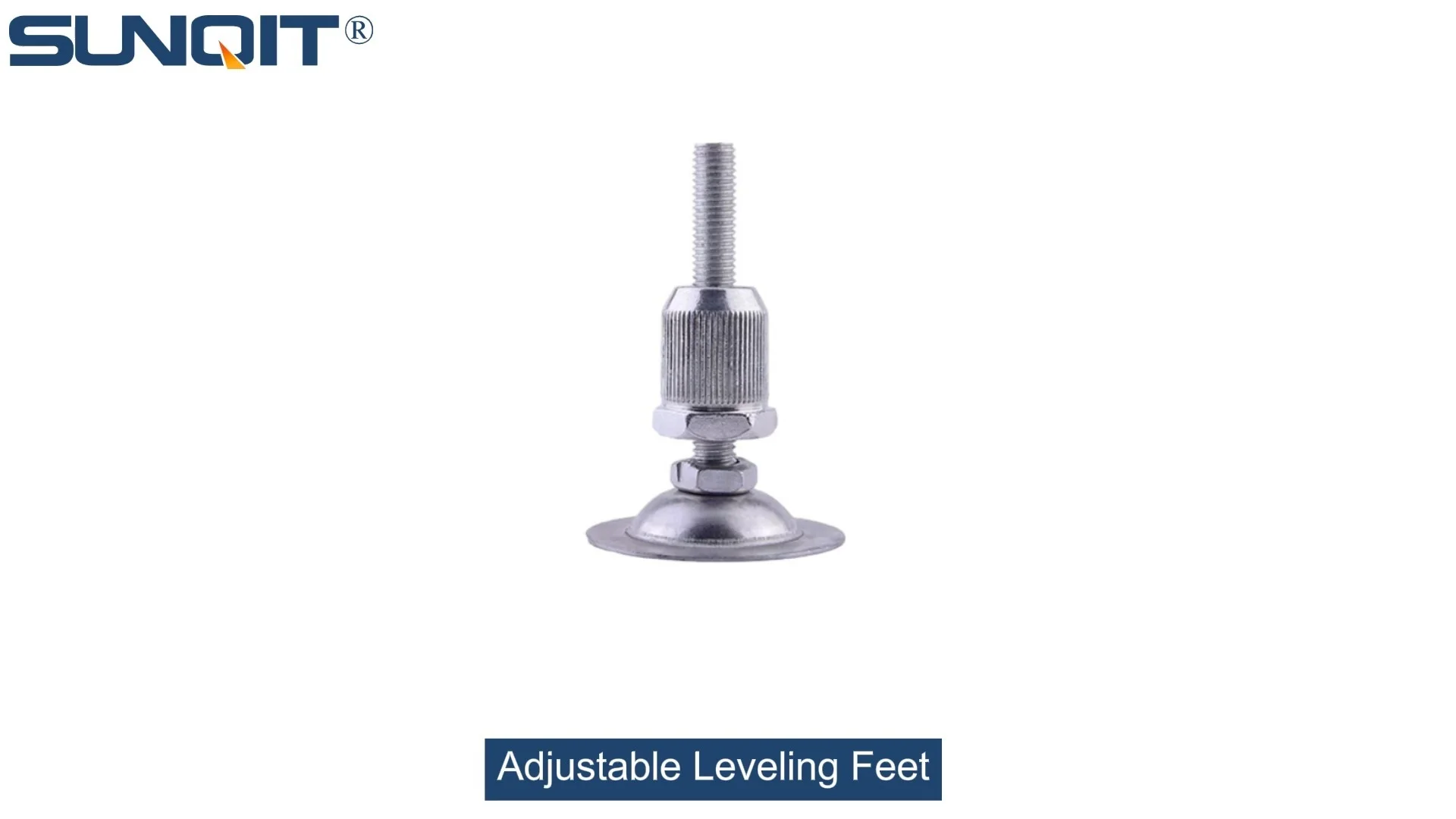
Adjustable leveling feet are designed to keep machines level when placed on uneven or sloped ground. Otherwise known as adjustable equipment feet, they are available to order in a wide variety of size and load capacity combinations.
If you've ever spent an afternoon hunched over a wobbly workbench, you know the frustration. A screwdriver slips mid-turn, a measuring tape skitters across the surface, or worse—your project teeters and scrapes against the floor. Whether you're assembling electronics, woodworking, or running a small manufacturing line, a stable workbench isn't just a nice-to-have; it's the backbone of efficiency, safety, and precision. But when your workspace floor is less than perfect (and let's be real, most are), how do you fix that annoying wobble? Two common solutions bubble to the top: adjustable leveling feet and floor mats. Both promise stability, but they work in wildly different ways—and choosing the right one depends on your unique setup. Let's dive in.
Why Workbench Stability Matters More Than You Think
Before we compare the tools, let's talk about why stability is non-negotiable. A (wobbly workbench) isn't just an annoyance—it's a productivity killer. Imagine trying to solder tiny components onto a circuit board while the surface shifts with every breath. Or cutting a straight line with a saw when the bench rocks back and forth. Precision goes out the window, and so does your confidence in the final product. Then there's safety: a unstable workbench increases the risk of tools sliding off, heavy materials tipping, or even repetitive strain injuries from overcompensating for the movement.
And let's not forget the little things. A steady workbench reduces noise (no more clanking tools as the bench shifts), protects your tools (less jostling means fewer scratches or misalignments), and even makes the workday feel smoother. Think about it: when you're not fighting the bench, you can focus on the task at hand. So, whether you're a hobbyist in a garage or a manager at a lean pipe workbench facility, getting stability right is step one.
First Up: Adjustable Leveling Feet—The Precision Problem-Solvers
Let's start with adjustable leveling feet. If you've ever looked under a heavy appliance or industrial workbench, you've probably seen these: small, threaded devices with a rubber or plastic base that screw into the bottom of the bench legs. Their job? To bridge the gap between uneven floors and your workbench, one twist at a time.
What Are Adjustable Leveling Feet, Exactly?
At their core, adjustable leveling feet are simple tools with a big purpose. Most consist of three parts: a threaded stem that screws into the workbench leg, a base (usually rubber, nylon, or metal) that touches the floor, and a locking nut to hold the height in place once adjusted. Twist the base clockwise, and the foot extends, raising that corner of the bench; twist counterclockwise, and it retracts, lowering it. It's like giving your workbench tiny, customizable stilts.
Materials matter here. Rubber bases are popular because they grip floors well and dampen vibrations, while metal bases (often with a rubber pad) work better for heavy-duty setups where weight could compress softer materials. Some even come with anti-slip adjustable leveling feet —a game-changer for smooth floors like tile or polished concrete, where standard feet might slide.
How They Stabilize: Targeted Adjustment for Uneven Floors
The magic of adjustable leveling feet lies in their precision. Floors are rarely perfectly flat. Maybe your garage has a slight slope for drainage, or your workshop's concrete has settled into small dips over the years. Instead of trying to "fix" the entire floor, leveling feet let you zero in on the problem spots. If the front left leg of your workbench is hovering ½ inch above the floor, you twist the foot until it touches, and suddenly—no more wobble.
This targeted approach is why they're a staple in industrial settings. For example, in electronics manufacturing, where even a millimeter of misalignment can ruin a batch of circuit boards, workbench legs are outfitted with heavy-duty leveling feet. Technicians can tweak each foot until a spirit level reads perfectly flat, ensuring delicate tools like oscilloscopes or soldering stations stay steady.
Real-Life Win: Mark, a small-batch furniture maker, once told me about his "eureka" moment with leveling feet. His garage floor sloped slightly toward the door, making his woodworking bench lean enough that clamps would slide off mid-project. He installed adjustable feet on each leg, spent 10 minutes tweaking them with a bubble level, and hasn't had a slip since. "It's like the bench grew roots," he said. "Now I can focus on sanding instead of babysitting the clamps."
Pros of Adjustable Leveling Feet
- Precision Adjustment: Dial in stability to the millimeter—ideal for tasks where flatness is critical (think 3D printing, electronics assembly, or machining).
- Firm Grip: Rubber or non-slip bases reduce movement, even under heavy loads. Some models can support hundreds of pounds without shifting.
- Compatibility with Most Floors: Work on concrete, wood, tile, or even uneven asphalt (though you might need longer stems for bigger gaps).
- Longevity: Made from metal or durable plastics, they stand up to oil, grease, and daily wear better than many floor mats.
Cons to Consider
- Fixed Position: Once installed, your workbench is stuck. If you need to move it (say, to clean behind it or reconfigure your space), you'll have to adjust the feet again—or remove them entirely.
- Floor Scratches: Metal bases (without rubber pads) can scratch hardwood or polished floors. Always opt for rubber or add adhesive pads if needed.
- Limited to Legs: They only stabilize the points where the bench touches the floor. If the bench itself is warped (e.g., a wooden top that's bowed), leveling feet can't fix that—you'll need to address the top separately.

Floor Mats: The Cushioned Alternative
Now, let's shift to floor mats. Unlike leveling feet, which target the bench's legs, floor mats take a broader approach: they cover the area under and around the workbench, creating a uniform, cushioned surface. Think of them as a "shock absorber" for your floor's imperfections.
What Are Floor Mats, Anyway?
Floor mats come in all shapes, sizes, and materials, but the ones used for workbench stability are typically thick, dense, and grippy. Common options include:
- Rubber Mats: Heavy-duty and oil-resistant, these are favorites in garages and mechanic shops. They're thick (often ¼ to ½ inch) and compress slightly under weight, filling in small cracks or dips.
- Foam Mats: Lighter and more affordable, foam mats are popular for home workshops. They're soft underfoot (great for standing long hours) but less durable than rubber.
- Vinyl Mats: Water-resistant and easy to clean, vinyl is a good middle ground—softer than rubber but more rigid than foam.
Most are designed with a textured top surface to prevent slipping, and some have a non-slip bottom to keep the mat itself from sliding on smooth floors. For industrial use, you might even see "anti-fatigue" mats that combine stability with comfort—a nice bonus if you're on your feet all day.
How They Stabilize: Smoothing Out the Floor, Not the Bench
Floor mats work by creating a buffer between the uneven floor and your workbench. Imagine your floor has a small pebble or a hairline crack—something that would make a single bench leg wobble. A thick rubber mat will compress around that imperfection, so the leg sits on a flat, uniform surface instead of teetering over the bump. It's like (laying down a thick carpet) over a lumpy mattress—suddenly, the bumps disappear.
This "blanket" approach is why mats are popular in spaces with minor floor issues. If your floor is generally flat but has a few dips here and there (common in older buildings or garages with settling concrete), a mat can even things out without the need for precise adjustments.
Real-Life Win: Sarah runs a small bakery with a home kitchen-turned-workshop. Her tiled floor, while clean, had a few uneven grout lines that made her rolling pastry bench wobble. She tried leveling feet first, but the bench needed to move daily (to sweep crumbs), and readjusting the feet became a chore. A ½-inch thick rubber mat solved the problem: the mat compressed over the grout lines, the bench rolled smoothly, and cleanup was a breeze—she just swept under the mat once a week. "No more stopping mid-roll to tweak feet," she laughed. "Now I can focus on croissants, not carpentry."
Pros of Floor Mats
- Portable and Flexible: Move the mat (or the bench) anytime. Great for workbenches on casters or spaces that need reconfiguring (like pop-up workshops or shared garages).
- Covers a Wide Area: Stabilizes not just the bench, but also the floor around it—reducing slips for you, too. A bonus if you're standing or rolling caster wheel-equipped tools nearby.
- Floor Protection: Mats shield floors from scratches, dents, or chemical spills (like oil or paint). This is a big plus if you're renting or have nice hardwood floors.
- Easy Installation: No tools required—just unroll and trim to size. Perfect for DIYers who don't want to drill into bench legs.
Cons to Consider
- Limited to Minor Unevenness: Mats can't fix major slopes or large gaps (think a 2-inch dip in the floor). They compress under weight, but they can't "lift" a bench leg like leveling feet can.
- Compression Over Time: Foam or soft rubber mats may flatten in high-traffic areas (like under the bench legs), creating new uneven spots over months of use.
- Shifting Risk: Even with non-slip bottoms, mats can slide on very smooth floors (like polished concrete) if the bench moves or if you drag heavy tools across them.
- Thickness Issues: Thick mats can make it harder to roll caster wheel-equipped tools (like tool chests) up to the bench. You might need a ramp or a thinner mat in those cases.

Head-to-Head: Adjustable Leveling Feet vs. Floor Mats
To make the choice clearer, let's break down how they stack up across key categories. Use this as a cheat sheet for your workspace.
| Factor | Adjustable Leveling Feet | Floor Mats |
|---|---|---|
| Best For | Precision tasks (electronics, machining), heavy workbenches, major floor unevenness, fixed workstations | Minor floor dips/cracks, portable workbenches, spaces needing floor protection, anti-fatigue needs |
| Adjustability | High—tweak individual legs to the millimeter | Low—relies on mat compression to smooth floors |
| Installation | Requires tools (drilling, screwing) and basic DIY skills | Tool-free—unroll and trim (if needed) |
| Portability | Poor—bench is fixed once adjusted | High—mat can be moved or rolled up |
| Durability | Excellent—metal/rubber lasts years with minimal wear | Good to fair—foam/rubber may compress or tear over time |
| Cost | Moderate ($10–$50 per foot, depending on quality) | Low to moderate ($20–$100 for a 4x6 ft mat) |
| Floor Protection | Depends on base (rubber pads = good; metal = risky for soft floors) | Excellent—covers and cushions floors from scratches/spills |

When to Choose Which: Scenarios That Tip the Scale
The table helps, but real-world choices are rarely black and white. Here are common scenarios where one solution shines brighter than the other.
Choose Adjustable Leveling Feet If…
Your workbench is fixed in place. If you're setting up a permanent workstation (like a lean pipe workbench in a factory or a home workshop bench bolted to the wall), leveling feet are a no-brainer. Once installed, they'll keep the bench steady for years without maintenance.
You need pinpoint precision. Tasks like 3D printing (where bed leveling is critical), jewelry making, or circuit board assembly demand a perfectly flat surface. Leveling feet let you dial in that flatness, ensuring measurements are accurate and tools don't slip.
Your floor has major unevenness. If there's a 1-inch gap under one leg or a slope across the room, a mat can't bridge that. Leveling feet extend to fill those gaps, giving you a stable base even on rough terrain.
Choose Floor Mats If…
Your workbench moves regularly. If you roll the bench out of the way to park a car or reconfigure your space (common in home garages), adjusting leveling feet every time is a hassle. A mat stays put (or rolls up) and works wherever you place the bench.
You want floor protection. If you're working on a nice hardwood floor or renting and can't risk scratches, a mat acts as a shield. Spilled paint, dropped tools, or oil leaks won't damage the floor underneath.
Comfort matters as much as stability. Anti-fatigue mats kill two birds: they smooth out minor floor bumps and reduce foot/back pain from standing. Great for workshops where you're on your feet 8+ hours a day.
The Wildcard: Combining Both
Here's a pro tip: you don't have to choose! In some setups, pairing adjustable leveling feet with a thin floor mat gives you the best of both worlds. For example, in a garage with a sloped floor and oil stains, install leveling feet to fix the slope, then lay a thin rubber mat on top to protect the floor and add a non-slip surface. The feet handle the big unevenness, and the mat handles the small stuff (like oil drips or tiny cracks) while keeping the bench legs from scratching the floor.
Beyond the Basics: Other Tools That Boost Stability
While adjustable leveling feet and floor mats are the stars, a few other tools can enhance stability—especially if you're working with specialized setups like aluminum profile workbenches or mobile carts.
Caster Wheels with Brakes: For Mobile Workbenches
If your workbench has caster wheels (those small, swiveling wheels that let you roll it around), stability can be tricky. Even locked brakes might slip on smooth floors. Here's where leveling feet meet mobility: look for caster wheel systems with built-in leveling feet. These have a small foot that drops down (via a lever or screw) to lock the bench in place, lifting the wheel off the floor. It's like having a portable leveling foot—perfect for workbenches that need to move but stay steady when in use.
Aluminum Profile Frames: A Stable Foundation
The workbench itself plays a role, too. Flimsy particleboard legs won't stay stable, no matter how good your leveling feet are. That's why industrial workbenches often use aluminum profile frames—think sturdy, extruded aluminum beams with T-slots for attaching accessories. Aluminum is lightweight but rigid, so it resists warping. Pair that with adjustable leveling feet, and you've got a setup that can handle heavy tools, vibrations, and daily use without wobbling.
Maintenance Tips to Keep Stability in Check
Whichever solution you choose, a little maintenance goes a long way. Here's how to keep things steady for years:
For Adjustable Leveling Feet:
- Clean the Threads: Dust, dirt, and oil can gunk up the threaded stems, making adjustment hard. Wipe them down with a rag and spray a little WD-40 if they start sticking.
- replace Worn Pads: Rubber bases wear thin over time. If you notice the bench slipping, swap in new pads—they're cheap and easy to find at hardware stores.
- Check Tightness: Over time, the locking nuts can loosen. Give them a quick twist with a wrench every few months to keep the feet from shifting.
For Floor Mats:
- Clean Regularly: Sweep or vacuum the mat to prevent dirt from grinding into the surface (which can cause premature wear). For rubber mats, hose them off outside if they get oily or stained.
- Rotate if Needed: If one area (like under the bench legs) starts compressing, flip or rotate the mat to distribute wear evenly.
- Patch Small Tears: Use rubber cement or a repair kit to fix tiny rips before they grow. For foam mats, replace individual tiles instead of the whole mat.
Final Verdict: Which Should You Pick?
At the end of the day, there's no "best" option—only the best option for you . Start by asking yourself three questions:
- Is my workbench fixed or mobile? Fixed = leveling feet; mobile = mat (or caster-leveling combo).
- How uneven is my floor? Major slopes/gaps = leveling feet; minor dips/cracks = mat.
- What's my top priority: precision, portability, or floor protection? Precision = feet; portability/protection = mat.
If you're still on the fence, start small. Grab a set of affordable adjustable leveling feet (you can find basic ones for $10–$15 per foot) and test them on one bench leg. Or pick up a cheap foam mat and see if it smooths out the wobble. You might be surprised how much a $20 fix transforms your workflow.
Remember: a stable workbench isn't just about tools and materials—it's about peace of mind. When you don't have to fight the bench, you can focus on what matters: creating, building, and getting the job done right. So go ahead—level up your setup, and say goodbye to the wobble for good.