- Company Articles
- Products and Technology
- Product knowledge
- Adjustable Leveling Feet vs. Shims: Which Fixes Wobbly Workbenches Faster?

Adjustable Leveling Feet vs. Shims: Which Fixes Wobbly Workbenches Faster?
Related Product
Adjustable Leveling Feet
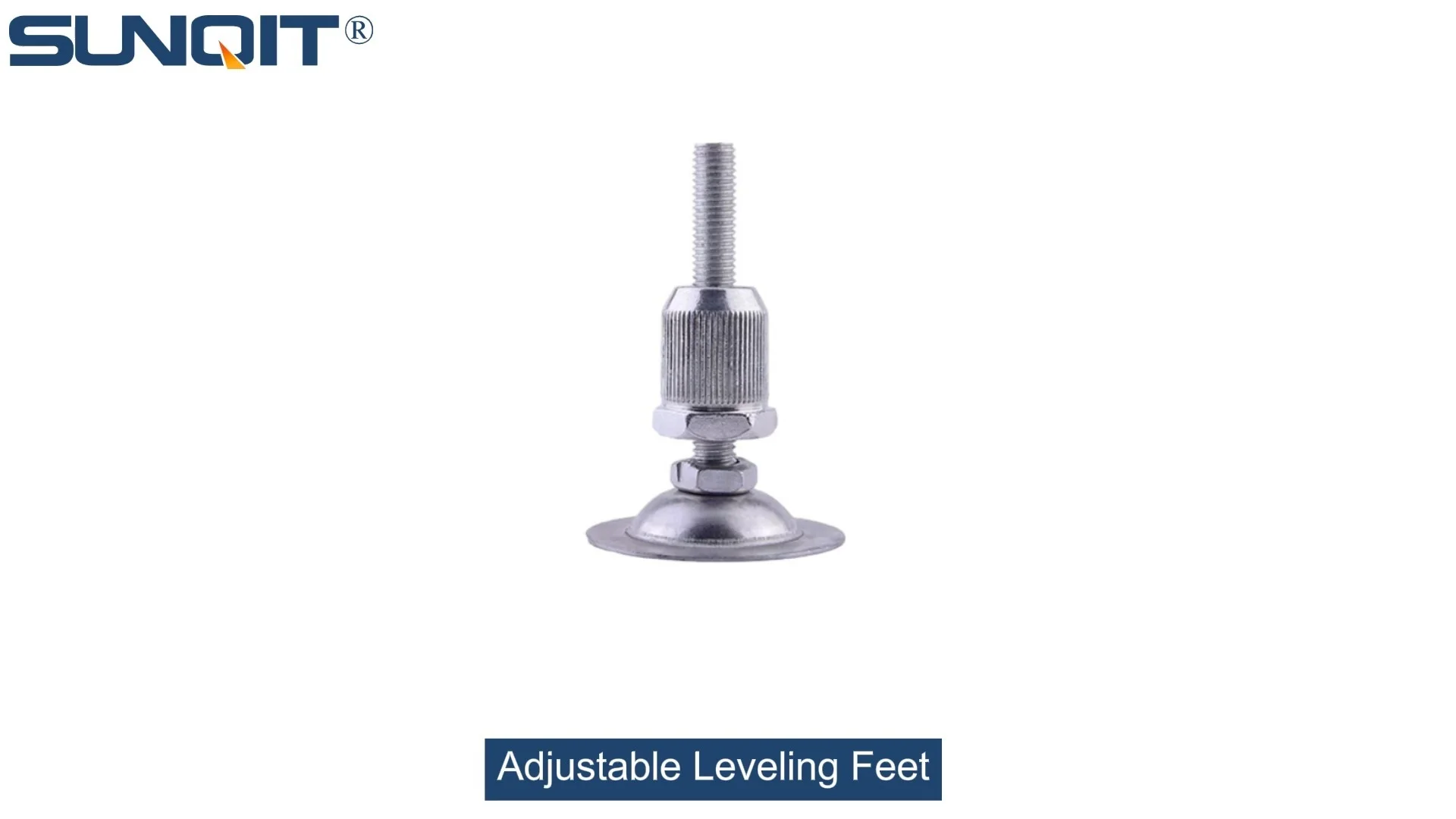
Adjustable leveling feet are designed to keep machines level when placed on uneven or sloped ground. Otherwise known as adjustable equipment feet, they are available to order in a wide variety of size and load capacity combinations.
Let's set the scene: It's Monday morning, and you're standing in front of your workbench, coffee in hand, ready to tackle the day. You set down a sensitive circuit board—part of a custom project you've been sweating over for weeks—and reach for your soldering iron. But as you lean in, the whole bench wobbles. Your coffee sloshes. The circuit board teeters. You catch it just in time, but your heart's racing. "Not again," you mutter. That wobbly leg has been a thorn in your side for months, and today, you're finally done with it. The question is: Do you grab a pack of shims from the toolbox, or do you install adjustable leveling feet? Which one will get you back to work faster?
Wobbly workbenches aren't just annoying—they're productivity killers. In a home garage, they slow down DIY projects. In a factory, they throw off precision assembly, especially on specialized setups like an ESD workbench where even a millimeter of instability can risk static damage to electronics. And let's not forget safety: A bench that shifts mid-task can send tools crashing or parts sliding. So, when the wobble strikes, speed matters. Let's dive into the two most common fixes, break down how they work, and figure out which one gets your workbench steady in record time.
First, Let's Talk About the Problem: Why Do Workbenches Wobble?
Before we compare solutions, it helps to understand the root cause. Workbenches wobble for two main reasons: uneven floors or loose legs. Floors, even in "level" buildings, can slope or have dips—especially in older spaces or garages where concrete might have settled over time. Legs, meanwhile, can loosen from heavy use (think clamping down 50-pound vices or slamming tools) or wear out, especially if the bench is moved frequently. Even a lean pipe workbench, built with modular, sturdy components, isn't immune—those lightweight aluminum pipes and joints are great for flexibility, but a single loose connector or uneven foot can throw the whole thing off-kilter.
The fix needs to address these issues quickly. Shims and adjustable leveling feet both aim to "level the playing field," but their approaches are worlds apart. Let's start by understanding each tool.
What Are Adjustable Leveling Feet, Anyway?
If you've ever from a flat pack, you've probably seen the small, threaded discs that screw into table legs. Those are the basic version of adjustable leveling feet. But in industrial or workshop settings, they're far more robust. These devices attach to the bottom of workbench legs (or casters, if your bench has wheels) and let you tweak the height of each leg with a simple twist. Most have a rubber or plastic base to grip the floor (hello, anti-slip adjustable leveling feet—more on those later) and a lock nut to keep the setting in place once you're done.
Think of them as "precision adjusters" for your workbench. Instead of adding or removing material (like shims), you're fine-tuning the leg itself. They come in all shapes and sizes: some are short and stubby for fixed benches, others are taller for benches that need to clear uneven floor drains. Many are made of steel or aluminum for durability, and some even have ESD-safe bases—critical if you're working on static-sensitive gear, like that ESD workbench we mentioned earlier.
"We switched all our production line benches to adjustable leveling feet three years ago, and I haven't had to send a technician out to 'shim duty' since," says Maria, a production supervisor at a mid-sized electronics plant. "Our lean pipe workbenches take a beating—operators lean on them, we roll heavy bins under them—and the feet just… adapt. One quick twist, and they're steady again. Even the new interns can do it without asking for help."

And Shims? The Old-School Alternative
Shims, on the other hand, are the OG fix for wobbles. They're thin, flat pieces of material—wood, plastic, metal, even cardboard in a pinch—slid under a wobbly leg to prop it up. You've probably used them without realizing it: maybe you folded a piece of paper under a table leg as a kid, or stacked coins to stop a chair from squeaking. In workshop settings, they're often pre-cut (wooden shims are common) or custom-cut from scrap material.
The appeal is obvious: they're cheap, easy to find, and require no special tools. A $5 pack of wooden shims from the hardware store can last for years. But here's the catch: shimming is a "trial and error" process. You slide one in, check if the bench still wobbles, add another, trim the excess with a utility knife, and hope they don't slip out when you lean on the bench. It's a classic "band-aid" fix—and like most band-aids, it works… until it doesn't.
"I used shims for years in my home garage," admits Jake, a hobbyist woodworker. "They're great for quick fixes, but last month, I had a disaster. I'd stacked three wooden shims under my bench leg to level it, and when I clamped a heavy oak board down, the shims compressed. The bench tilted, the board slipped, and I ended up with a 2-inch gash in my workpiece. I spent two hours sanding it out—time I could've saved if I'd just installed leveling feet."

The Showdown: Speed
Now, the million-dollar question: Which one gets your workbench steady faster? Let's break it down step by step, using a real-world scenario. Say you've got a standard 4-legged workbench (could be a basic home model or an industrial ESD workbench) with one wobbly leg. Here's how each fix plays out.
| Step | Adjustable Leveling Feet | Shims |
|---|---|---|
| 1. Diagnose the Problem | Rock the bench gently to identify which leg is short. (30 seconds) | Rock the bench to find the wobbly leg. (30 seconds) |
| 2. Gather Tools | You might need a wrench to loosen the lock nut (if equipped). If not, just your hands. (1 minute) | Find shims (wooden, plastic, or metal), a utility knife, sandpaper, and maybe glue/tape to secure them. (5-10 minutes, if you have to hunt for materials) |
| 3. Make the Adjustment | Loosen the lock nut (if present), twist the foot clockwise to raise the leg or counterclockwise to lower it. Check level with a bubble level. Tighten the lock nut. (2-3 minutes) | Slip a shim under the leg. Check level. If still wobbly, add another shim. Trim excess shim with a knife. Sand rough edges. If shims are loose, tape or glue them down. (15-25 minutes) |
| 4. Test and Tweak | Give the bench a firm shake. If it's steady, you're done. If not, the foot another 1/4 turn. (1 minute) | Shake the bench. If it still wobbles, repeat the process with more shims. If shims slip out, start over. (5-10 minutes) |
| Total Time | 4-5 minutes | 25-45 minutes |
The numbers speak for themselves: Adjustable leveling feet take less than 10 minutes from start to finish, while shims can eat up nearly an hour—especially if you're fumbling with materials or trimming. And that's for a simple, single-leg wobble. If your bench has multiple uneven legs (common in older workshops), shims become a logistical nightmare: you're balancing multiple stacks, trimming each to size, and praying none of them shift. With leveling feet, you just adjust each leg individually, one at a time, until the bubble level reads "perfect."

Durability: Does "Faster" Mean "Temporary"?
Speed is great, but what about the long haul? A fix that takes 5 minutes isn't useful if it falls apart next week. Let's compare how each solution holds up over time, especially in high-use environments (think industrial workbenches or ESD workbenches where stability is non-negotiable).
Adjustable Leveling Feet: These are built to last. Most are made of metal (steel or aluminum) with a rubber or plastic base that resists wear. The threaded design means you can re-adjust them if the floor shifts (say, after a heavy rainstorm in a garage with a concrete slab) or if the bench legs loosen over time. Anti-slip adjustable leveling feet, in particular, are a game-changer—their grippy bases prevent the bench from sliding, even on smooth floors. And since they're screwed into the leg, there's no risk of them falling out or compressing like shims.
Shims: Durability here depends on the material. Wooden shims, the most common type, absorb moisture, warp, and compress under heavy loads. Plastic shims are better, but they can crack or slip on smooth surfaces. Metal shims (like brass or steel) hold up, but they're hard to trim and can scratch floors. Even if you glue them down, shims are prone to "settling"—over time, the pressure of the bench can crush them, leaving you right back where you started: with a wobbly workbench.
Scenario: The Busy Factory Floor
Imagine a production line with 20 lean pipe workbenches, each used by 3 shifts of workers daily. The floor, made of polished concrete, has minor dips from years of heavy machinery rolling over it. If each bench used shims, the maintenance team would spend hours every month replacing compressed or slipped shims. With adjustable leveling feet? A technician can walk the line, tweak a few feet in 2 minutes per bench, and be done. No more downtime, no more frustrated workers, and no more wasted materials.
Practicality: When Might Shims Still Make Sense?
To be fair, shims aren't useless. They have their place—like when you're in a pinch and don't have leveling feet on hand, or for a temporary fix (e.g., a workbench you're borrowing for a weekend project). They're also cheap: a pack of 100 wooden shims costs $5, while a set of 4 adjustable leveling feet might run $20-$50 (depending on quality). For someone on a tight budget, shims can feel like the "smart" choice—until you factor in the time and frustration of re-shimming every few months.
But here's the thing: adjustable leveling feet are an investment. A good set will last for years, even decades, and save you countless hours of hassle. If you use your workbench regularly—whether it's for woodworking, electronics, or industrial assembly—the upfront cost pays for itself in productivity. And for specialized setups like ESD workbenches, where stability directly impacts product quality, the cost is a no-brainer.
Expert Take: What the Pros Use
We talked to three professionals who deal with workbenches daily: a factory maintenance manager, a commercial electrician, and a custom furniture builder. All three had the same verdict: adjustable leveling feet are the way to go for speed and reliability.
"In my shop, we build custom workbenches for labs and tech companies—many of which need ESD protection," says Carlos, the furniture builder. "I used to include shims as a 'free bonus' with every bench, but customers kept complaining about them slipping. Now, I standardize on adjustable leveling feet. They're more expensive, but I get zero callbacks. Customers love that they can tweak the height themselves if their floor isn't perfect."
The maintenance manager, Lisa, put it bluntly: "Shims are for emergencies. If a bench leg breaks at 2 a.m. and I can't get parts, I'll use a shim to hold it until morning. But for everyday use? Adjustable feet are non-negotiable. They save my team hours of work, and that translates to lower costs for the company."
Final Verdict: Adjustable Leveling Feet Win (Hands Down)
When it comes to fixing a wobbly workbench quickly, adjustable leveling feet are the clear champion. They take minutes to install, require minimal tools, and last for years. Shims, while cheap and accessible, are slow, temporary, and prone to failure—especially in high-use or precision settings like ESD workbenches or lean pipe workbenches.
So, back to that Monday morning scenario: If you'd installed adjustable leveling feet, you'd be soldering that circuit board by now. Instead of fumbling with shims, you'd have twisted a few knobs, tightened a lock nut, and been back to work in 5 minutes. No coffee spills, no near-misses, just a steady bench and a productive day.
The next time your workbench wobbles, do yourself a favor: Skip the shims. Invest in a set of adjustable leveling feet. Your sanity (and your projects) will thank you.