- Company Articles
- Products and Technology
- Product knowledge
- Adjustable Leveling Feet with Anti-Slip Pads: For Workbench E Height Alignment

Adjustable Leveling Feet with Anti-Slip Pads: For Workbench E Height Alignment
Related Product
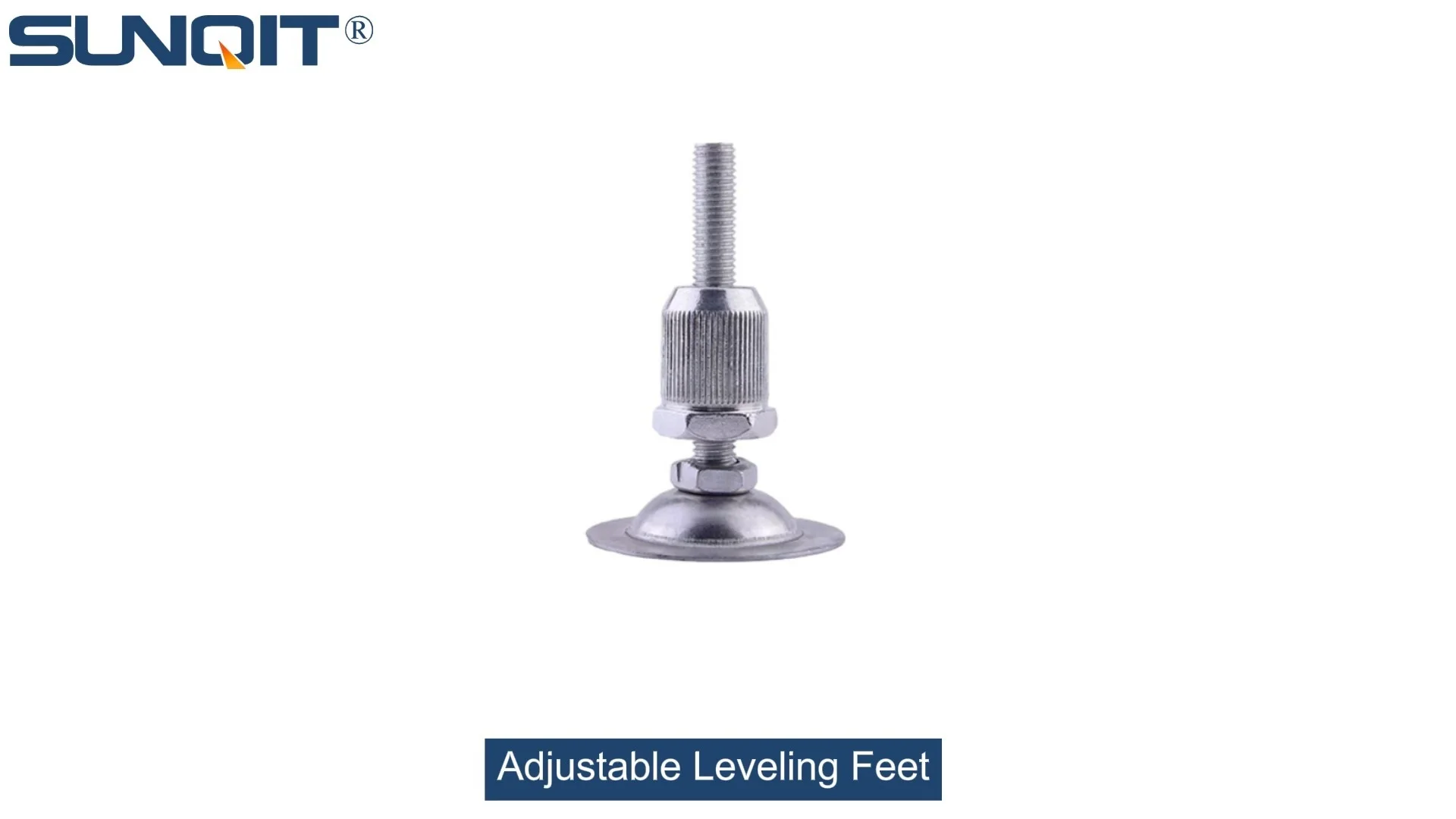
Adjustable Leveling Feet
Adjustable leveling feet are designed to keep machines level when placed on uneven or sloped ground. Otherwise known as adjustable equipment feet, they are available to order in a wide variety of size and load capacity combinations.
Walk into any manufacturing facility, warehouse, or assembly plant, and you'll notice one piece of equipment that's as essential as the tools workers hold in their hands: the workbench. It's where products take shape, where precision meets productivity, and where the rhythm of production hums along—when everything works as it should. But what happens when that rhythm gets disrupted by a wobbly surface, uneven legs, or a workbench that just won't stay put? For teams relying on Workbench E —the single-deck, caster-free workhorse of lean production lines—the answer often lies in a small but mighty component: adjustable leveling feet with anti-slip pads .
In this article, we're diving deep into why these unassuming feet matter, how they transform the functionality of Workbench E, and why they've become a cornerstone for businesses invested in lean pipe workbench systems. We'll also touch on how they interact with materials like aluminum profile and why they're a smarter choice than caster wheels in certain settings. By the end, you'll understand why something as simple as leveling feet can turn a frustrating, error-prone workspace into a model of efficiency and stability.
The Hidden Cost of an Unstable Workbench
Let's start with a scenario we've all encountered, even if we don't realize it. Imagine a technician named Raj, who assembles small electronic components on Workbench E. His workspace looks tidy: tools hanging neatly, parts organized in bins, and a well-lit surface. But there's a problem: the concrete floor in his section of the factory slopes slightly—a common issue in older facilities. As a result, his Workbench E rocks back and forth, just enough to make his hands waver when soldering tiny wires. At first, it's a minor annoyance. But over time, those tiny wobbles lead to:
- Wasted Time: Raj spends extra seconds steadying the workbench before each task, adding up to minutes (or hours) lost weekly.
- Defects: A slight tremor during soldering creates a cold joint, which later fails quality checks—costing the team rework time and materials.
- Ergonomic Strain: To compensate for the wobble, Raj leans awkwardly, straining his lower back and shoulders. Over weeks, this leads to fatigue and even missed shifts.
These aren't just anecdotes—they're the hidden costs of instability. A 2023 study by the Manufacturing Productivity Institute found that uneven work surfaces contribute to a 12% increase in assembly errors and a 15% rise in worker fatigue. For companies running lean operations, where every second and every part counts, these numbers sting.
"We used to replace circuit boards weekly because of soldering mistakes," says Maya, a production supervisor at a mid-sized electronics firm. "We blamed operator error until we noticed the same issues cropping up at the same workbenches. When we swapped out the fixed feet for adjustable leveling ones, defects dropped by 40% in a month. It was like night and day."
What Are Adjustable Leveling Feet with Anti-Slip Pads?
At their core, adjustable leveling feet are threaded components that attach to the bottom of workbench legs, allowing users to raise or lower each leg independently. The "anti-slip pad" is a rubber or polyurethane disk at the base, designed to grip floors and prevent sliding. But to call them "simple" would be a disservice—modern versions are engineered with precision, durability, and user-friendliness in mind.
For Workbench E, which is designed without casters (hence "single deck-without caster" in its specs), these feet aren't optional—they're essential. Unlike mobile workbenches with caster wheels , which prioritize mobility, Workbench E is built for stationary tasks where stability is non-negotiable. Think: heavy part assembly, precision measuring, or tasks requiring tools to stay anchored (like drills or sanders). In these cases, caster wheels would be a liability—even locked casters can shift under pressure, and their small contact points with the floor offer less stability than a broad, anti-slip pad.
The magic of these feet lies in their adjustability. Most models let you twist the foot to raise or lower the leg by up to 1.5 inches—a range that's more than enough to compensate for uneven floors, warped concrete, or even minor dips in warehouse surfaces. The anti-slip pad, usually made of oil-resistant rubber, adds another layer of security: it won't scratch floors (unlike metal feet) and stays put even when the workbench is loaded with heavy tools or materials.

Why Aluminum Profile Makes the Perfect Partner
Workbench E doesn't exist in a vacuum—it's part of a larger ecosystem of lean tools, often built with aluminum profile frames. Aluminum profile, with its lightweight strength and modular design, is a favorite for lean systems because it's easy to assemble, reconfigure, and repair. But here's the kicker: aluminum's precision manufacturing makes it the ideal match for adjustable leveling feet.
Aluminum extrusion profiles are produced with tight tolerances, meaning each leg of Workbench E is the same length, and each mounting hole aligns perfectly. This consistency ensures that when you attach adjustable leveling feet, you're starting with a solid foundation. Unlike steel, which can warp under heavy loads, aluminum maintains its shape, so the adjustments you make to the feet stay accurate over time.
Another advantage? Aluminum's natural resistance to corrosion. In factories where spills (oil, water, cleaning solutions) are common, steel feet might rust, seize up, or lose their threading. Aluminum profile legs, paired with leveling feet made from zinc-plated steel or stainless steel, stand up to harsh environments, ensuring the feet keep turning smoothly for years.
For example, a food packaging plant using Workbench E to assemble labeling machines might deal with frequent floor cleanings. Aluminum profile legs won't rust, and the anti-slip pads on the leveling feet won't degrade when exposed to sanitizing chemicals. It's a partnership that keeps the workbench functional, even in tough conditions.

Lean Manufacturing Loves Stability: Why Leveling Feet Fit the Lean Pipe Workbench Model
Lean manufacturing is all about eliminating waste—whether it's wasted time, materials, or effort. A wobbly workbench is a silent waste generator: it wastes time on rework, wastes materials on defects, and wastes energy as workers compensate for instability. That's why lean pipe workbench systems, which are designed to optimize workflow and minimize waste, rely so heavily on stable, adjustable components like leveling feet.
Here's how adjustable leveling feet support lean principles:
- Standardization: In lean systems, consistency is key. Adjustable feet ensure every Workbench E in the facility sits at the same height, so workers can move between stations without readjusting their posture or tools.
- Ergonomics: Lean isn't just about efficiency—it's about respecting people. A workbench that's too low forces workers to hunch; too high, and they strain their shoulders. Leveling feet let teams adjust the height to match the average elbow level of their workers, reducing fatigue and injury risk.
- Flexibility: Lean environments change fast—new products, new processes, new team members. Adjustable feet make it easy to repurpose Workbench E for different tasks: lower it for detailed assembly, raise it for heavy lifting, or tweak it to fit a new operator's needs.
"We redesigned our production line last year using lean pipe workbench systems, and the first thing we upgraded was the leveling feet," says Tom, a plant manager at a automotive parts supplier. "Before, operators would prop up wobbly legs with scrap wood or cardboard—talk about waste! Now, with adjustable feet, setup time for new workbenches dropped by 50%, and we haven't had a single defect traced to instability since."

Leveling Feet vs. Caster Wheels: When to Choose Which
We've mentioned that caster wheels aren't ideal for Workbench E, but that doesn't mean they're bad—they're just different tools for different jobs. To help you decide when to use adjustable leveling feet versus caster wheels, let's break down their pros and cons in a real-world context.
| Feature | Adjustable Leveling Feet with Anti-Slip Pads | Caster Wheels |
|---|---|---|
| Stability | High: Broad anti-slip pad distributes weight evenly; no movement once set. | Low to Moderate: Even with locks, casters can shift under heavy loads or vibrations. |
| Mobility | None: Workbench stays fixed unless manually moved (requires lifting). | High: Easy to roll across floors; ideal for workbenches that need to move between stations. |
| Height Adjustment | Precise: Adjust each leg independently to compensate for uneven floors. | Limited: Most caster wheels have fixed heights; some have small adjustments, but not enough for major unevenness. |
| Floor Protection | Excellent: Rubber pads won't scratch or mark floors, even under heavy loads. | Good to Fair: Soft rubber casters protect floors, but hard plastic or metal casters can cause scratches. |
| Best For | Stationary tasks requiring precision (e.g., electronics assembly, quality inspection, heavy part work). | Mobile workbenches (e.g., material transport, temporary workstations, tasks requiring frequent relocation). |
For Workbench E, which is designed as a "single deck-without caster," the choice is clear: adjustable leveling feet are the way to go. They turn a basic workbench into a stable, adaptable tool that fits seamlessly into lean workflows.
Installation and Maintenance: Keeping Your Workbench E Stable for Years
Installing adjustable leveling feet on Workbench E is straightforward, but a little care goes a long way. Here's a step-by-step guide to getting it right:
- Prep the Workbench: Flip Workbench E onto its top (use a helper—aluminum profile is light, but safety first!). Clean the bottom of the legs to remove dust or debris.
- Attach the Feet: Most leveling feet screw into pre-drilled holes on the legs (a perk of aluminum profile's modular design). Hand-tighten first, then use a wrench to secure—don't over-tighten, as this can strip the threads.
- Level the Workbench: Flip the workbench upright. Place a bubble level on the surface. Twist the feet to raise or lower each leg until the bubble is centered. For extra precision, measure the height of each leg with a tape measure to ensure they're even.
- Test for Stability: Push gently on each corner of the workbench. It shouldn't rock or shift. If it does, readjust the feet until it's solid.
Maintenance is just as simple. Every month or so, check the feet for:
- Loose Threads: Tighten any feet that have worked loose from vibration.
- Worn Pads: If the anti-slip pad is cracked, flattened, or losing grip, replace it (most suppliers sell replacement pads separately).
- Rust or Corrosion: Wipe down metal parts with a dry cloth; if you notice rust, apply a light coat of anti-corrosion spray.
With minimal upkeep, a good set of adjustable leveling feet should last 5–7 years—longer than the workbench itself in some cases!
Choosing the Right Leveling Feet for Your Workbench E
Not all adjustable leveling feet are created equal. To find the best fit for Workbench E, consider these key factors:
Load Capacity: Workbench E can hold up to 500 lbs (depending on the model), so choose feet rated for at least that weight. Look for "static load capacity" in the specs—this is the maximum weight the foot can support without failing.
Adjustment Range: If your floors are very uneven, opt for feet with a larger adjustment range (1–1.5 inches is standard). For relatively flat floors, 0.5–1 inch should suffice.
Pad Material: Rubber pads are great for general use, but if you work with oils or chemicals, go for polyurethane—it's more resistant to degradation. For cleanrooms or labs, silicone pads are non-marking and easy to sanitize.
Thread Size: Aluminum profile legs typically use standard thread sizes (M10 or M12), but double-check your workbench's specs to avoid buying the wrong fit.
When in doubt, ask your lean pipe workbench supplier for recommendations. They'll know which feet pair best with Workbench E and can even bundle them with the workbench for a seamless setup.
Final Thoughts: Small Parts, Big Impact
At the end of the day, adjustable leveling feet with anti-slip pads are a reminder that in manufacturing, the smallest components often have the biggest impact. They don't make headlines or win design awards, but they make Raj's soldering steadier, reduce Maya's defect rates, and help Tom's team stay true to lean principles. For Workbench E—a workhorse built for precision and stability—they're not just an accessory; they're the foundation of a productive, efficient workspace.
So the next time you walk past a stable, level workbench, take a second to appreciate the feet holding it up. They might be out of sight, but they're always hard at work—keeping your team, your products, and your bottom line on solid ground.