- Company Articles
- Products and Technology
- Product knowledge
- Adjustable Leveling Feet with Brake Function: Securing Mobile Carts in Busy Factories

Adjustable Leveling Feet with Brake Function: Securing Mobile Carts in Busy Factories
Related Product
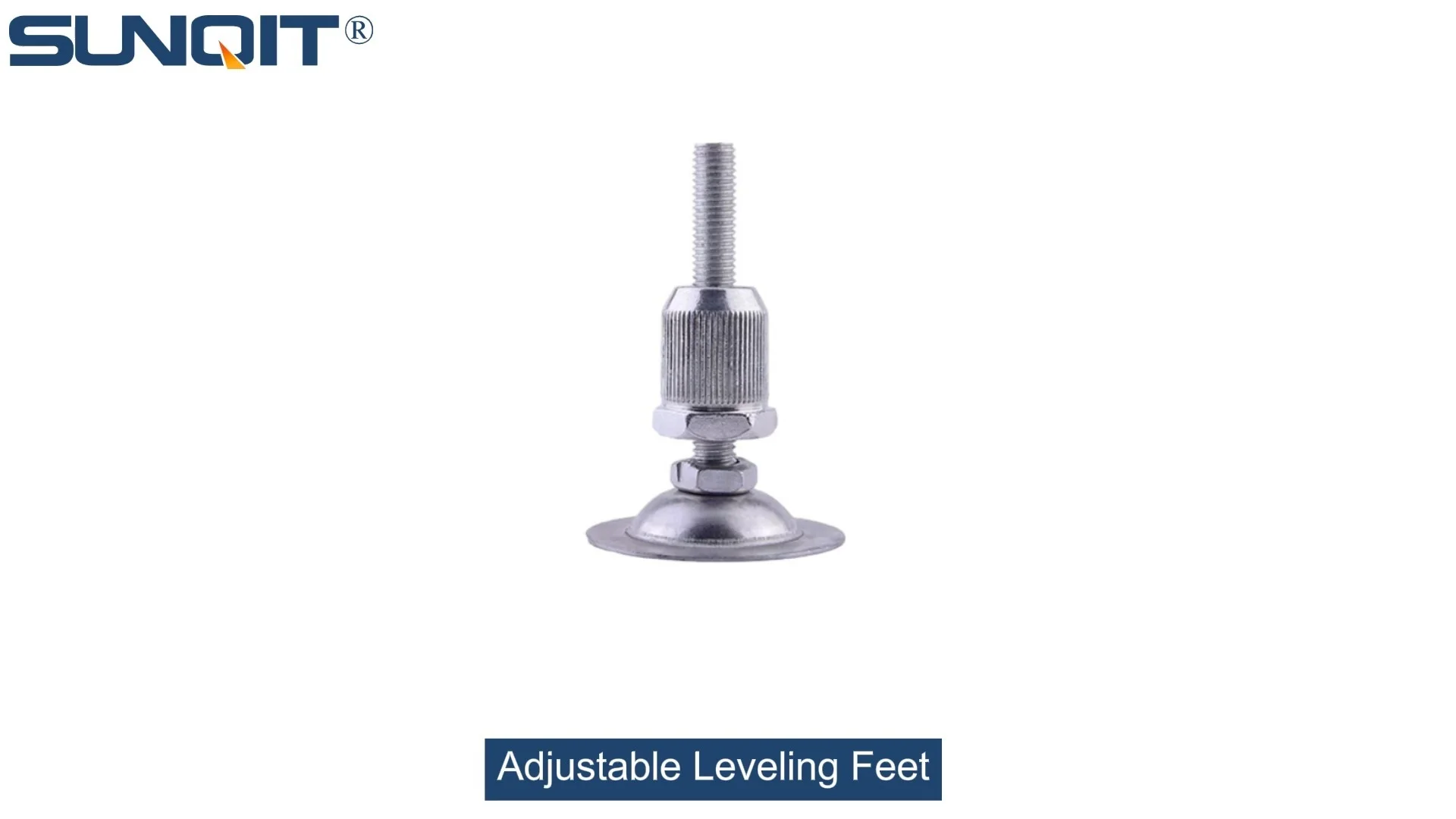
Adjustable Leveling Feet
Adjustable leveling feet are designed to keep machines level when placed on uneven or sloped ground. Otherwise known as adjustable equipment feet, they are available to order in a wide variety of size and load capacity combinations.
It's 8:30 on a Tuesday morning at PrecisionWorks Manufacturing, and the factory floor is already humming. Assembly line workers are prepping workbenches, forklifts glide past stacked pallets, and turnover trolleys loaded with circuit boards weave between stations. But then—*clatter*. A trolley near the electronics section has tipped slightly, spilling a handful of small components onto the floor. Two workers pause to clean it up, the line slows for 10 minutes, and frustration simmers. "Again?" sighs Maria, the floor supervisor. "We need these carts to move *and* stay put—why is that so hard?"
If you've spent any time in a manufacturing or warehouse setting, you know Maria's pain. Mobile equipment like turnover trolleys, workbenches on casters, and material racks are the backbone of daily operations—they keep materials flowing, reduce manual lifting, and make spaces adaptable. But their mobility is a double-edged sword. When they roll unexpectedly, shift under load, or wobble on uneven floors, the result is more than just a messy spill. It's wasted time, damaged parts, and even safety risks. That's where adjustable leveling feet with brake function come in—a small component with a huge impact on keeping busy factories running smoothly.
The Hidden Cost of "Good Enough" Mobility
For years, many factories have relied on basic caster wheels and fixed-height feet to balance mobile equipment. It seems simple: casters let you move the cart, and feet keep it steady when parked. But in reality, this setup often falls short. Let's break down the costs of settling for "good enough":
- Wasted Time: A trolley that drifts when loading forces workers to prop it against a wall or hold it steady—adding 30 seconds per use. Multiply that by 50 uses a day across 20 trolleys, and you're losing over 500 minutes (8+ hours) of productive time weekly.
- Damaged Inventory: A wobbly workbench might seem harmless until a technician assembling sensitive electronics bumps into it, misaligning components and rendering a $200 circuit board useless. Over a year, these "small" damages can add up to tens of thousands in scrap.
- Safety Risks: Unstable carts are a trip hazard. A study by the National Institute for Occupational Safety and Health (NIOSH) found that 25% of warehouse injuries involve unstable mobile equipment—from strained backs to falls. Even minor incidents mean workers miss shifts, and insurance costs rise.
- Lean System Disruptions: In lean manufacturing, every second counts. When a cart fails to stay in place during a "5S" organization sweep or causes delays in a just-in-time (JIT) delivery, it throws off the entire workflow. Lean systems thrive on predictability, and unstable equipment is the opposite of predictable.
The problem isn't just about "moving" vs. "staying still"—it's about control . Workers need equipment that moves effortlessly when needed, locks firmly when parked, and adjusts to uneven floors to prevent rocking. That's where adjustable leveling feet with brake function bridge the gap.
What Are Adjustable Leveling Feet with Brake Function?
At first glance, they might look like just another piece of hardware—small, metallic, and unassuming. But adjustable leveling feet with brake function are engineered to solve three critical problems: stability, adjustability, and mobility control. Let's break down their design:
The Basics: Most models consist of three main parts: a threaded stem, a base plate (often with anti-slip rubber), and an integrated brake mechanism. The stem screws into the bottom of a cart or workbench, allowing you to twist it up or down to adjust height. The base plate distributes weight evenly, while the brake—usually a pedal or lever—locks the caster wheel (or the foot itself) in place when engaged.
Adjustability: Factories rarely have perfectly flat floors. Concrete slabs settle, forklifts leave ruts, and thresholds create small bumps. Adjustable feet let you "level" the equipment by raising or lowering individual feet by 10–50mm, ensuring the cart sits solidly, even on uneven surfaces. No more rocking, no more tilting.
The Brake Function: Here's where the magic happens. Unlike standard leveling feet (which only adjust height) or standalone caster brakes (which only lock wheels), these hybrid components combine both. When you press the brake pedal, two things happen: the caster wheel locks to prevent rolling, and the leveling foot extends slightly to lift the cart off the wheel, transferring weight to the anti-slip base plate. This dual action eliminates "creep" (slow rolling even with locked wheels) and ensures the cart stays exactly where you park it.
Think of it like a car's parking brake, but smarter. A car's brake holds it from rolling, but if you park on a hill, it might still lean. These feet? They not only lock the wheels but also "level" the cart, so it's stable *and* stationary.

How They Work: A Closer Look at the Mechanics
Let's get a little technical—without the jargon. Imagine you're pushing a turnover trolley loaded with plastic bins (a common sight in factories). The trolley has four casters, each paired with an adjustable leveling foot with brake function. Here's what happens step by step:
- Moving the Trolley: When the brake is disengaged, the leveling foot is retracted, so the caster wheel touches the floor. You push the trolley, and the wheels roll smoothly—no dragging, no resistance. The feet stay out of the way, letting the trolley glide like a well-oiled machine.
- Parking on an Uneven Spot: You stop near the assembly line, but the floor here dips slightly—common near doorways or under heavy equipment. Without adjustable feet, the trolley would rock back and forth on its casters. Instead, you twist the stem of the foot nearest the dip, extending it until the base plate touches the floor. Now the trolley sits flat, no rocking.
- Locking It in Place: Next, you press the brake pedal. Inside the mechanism, a small cam or lever clamps down on the caster wheel, preventing it from spinning. At the same time, the leveling foot extends a fraction more, lifting the wheel slightly off the floor. Now the trolley's weight rests on the anti-slip base plates, not the wheels—so even if someone bumps it, it won't budge.
- Unlocking to Move Again: When you're ready to go, you release the brake pedal. The wheel clamp retracts, the leveling foot lifts, and the trolley is ready to roll. No wrestling with stuck brakes, no bending to adjust feet—just a quick tap of the pedal.
The key innovation here is integration. Instead of separate "casters for moving" and "feet for stability," these components work as a team. It's like having a Swiss Army knife for factory mobility—one tool that handles multiple jobs.
| Feature | Traditional Caster + Fixed Foot | Adjustable Leveling Foot with Brake |
|---|---|---|
| Stability on Uneven Floors | Poor—rocks or tilts | Excellent—adjusts to floor irregularities |
| Locking Mechanism | Wheel-only lock (prone to creep) | Dual-action: locks wheel + lifts to base plate |
| Setup Time | Manual shimming (5–10 minutes per cart) | Twist-to-adjust (30 seconds per foot) |
| Damage Risk to Floors | High—metal feet scratch floors | Low—rubber or plastic base plates prevent scratches |
| Compatibility | Works with specific caster models | Universal fit for most standard casters and accessories |

Why Lean Systems Depend on This Small but Mighty Component
Lean manufacturing isn't just a buzzword—it's a philosophy centered on eliminating waste, improving flow, and empowering workers. Every tool, process, and piece of equipment is evaluated through the lens of "Does this add value, or create waste?" For lean system managers, adjustable leveling feet with brake function are a no-brainer because they directly tackle three types of waste:
1. Motion Waste: In lean terms, "motion waste" is any unnecessary movement by workers. Think of a technician who has to kneel down to wedge a piece of wood under a wobbly cart, or a warehouse worker who struggles to push a trolley that keeps drifting. Adjustable leveling feet cut this waste by letting workers adjust and lock equipment with a quick twist and pedal press—no extra steps, no wasted motion.
2. Defect Waste: Defects (damaged parts, incorrect assemblies) are a major lean enemy. Unstable workbenches or trolleys increase defects by causing misalignments, spills, or dropped items. By keeping equipment steady, these feet reduce defects—saving time, materials, and the frustration of rework.
3. Waiting Waste: When a cart tips and spills parts, the line stops. When a workbench rocks and a worker pauses to steady it, the clock keeps ticking. Adjustable leveling feet minimize waiting by ensuring equipment stays put and operational, keeping the flow of work uninterrupted.
Take Toyota's famous "Andon cord" system, where workers can stop the line to fix problems. In a lean facility using traditional carts, the Andon cord might get pulled multiple times a day for spilled parts or unstable equipment. With adjustable leveling feet? Those stops become rare—freeing up workers to focus on value-adding tasks, not fixing preventable issues.

Real-World Applications: From Turnover Trolleys to Workbenches
These feet aren't just for "big" equipment—they shine in everyday factory tools. Let's look at three common applications where they make a tangible difference:
1. Turnover Trolley and Rack Systems
Turnover trolleys (those open-frame carts used to move parts between stations) are workhorses in factories. But they're also prone to tipping when loaded unevenly or rolling on rough floors. A turnover trolley and rack system fitted with adjustable leveling feet becomes far more reliable. For example, in a food packaging plant, trolleys carry delicate glass jars—one wobble, and jars crack. With leveling feet, workers adjust the height to match conveyor heights, lock the trolley, and unload jars smoothly. No spills, no broken glass, no downtime.
2. Workbenches with Caster Wheels
Mobile workbenches are a staple in flexible manufacturing—they let teams reconfigure workstations on the fly. But a workbench that moves mid-assembly is a disaster, especially for precision tasks like electronics or medical device assembly. Adjustable leveling feet solve this by letting workers park the bench, level it to the floor, and lock it. Now, soldering components or measuring parts is done on a rock-solid surface, improving accuracy and reducing errors.
3. Material Racks in High-Traffic Areas
Material racks loaded with heavy parts (like automotive components) need to stay put, even when forklifts zoom past. Traditional racks with fixed feet might shift slightly over time, creating gaps or instability. With adjustable leveling feet, maintenance teams can tweak the height quarterly to account for floor settling, ensuring racks stay aligned and safe. And the brake function? It prevents accidental movement if a forklift bumps the rack—critical for avoiding collapses.
Choosing the Right Adjustable Leveling Feet: Key Considerations
Not all adjustable leveling feet with brake function are created equal. To get the most value, you'll need to match the foot to your factory's needs. Here's what to look for:
Load Capacity
Start with the basics: how much weight will the equipment carry? A small workbench might need feet rated for 200kg, while a heavy-duty turnover trolley could require 500kg+ per foot. Always check the manufacturer's load rating—overloading leads to bent stems or failed brakes.
Floor Type
Concrete floors? Go for rubber base plates to prevent slipping. Polished warehouse floors? Consider plastic or polyurethane bases to avoid scratches. Some models even come with suction-cup bases for extra grip on smooth surfaces.
Adjustment Range
Factories with very uneven floors need feet with larger adjustment ranges (e.g., 30–50mm). For relatively flat floors, 10–20mm might be enough. Measure your floor's irregularities first—you can do this with a laser level or a simple straightedge and ruler.
Brake Type
Foot pedals are the most common (easy to use with work boots), but some models have hand levers for tight spaces. Look for brakes that require minimal force to engage—workers shouldn't have to stomp or strain to lock the cart.
Caster Compatibility
Most feet are designed to fit standard caster stems (16mm, 20mm, etc.), but double-check the thread size and mounting plate dimensions. Mixing incompatible parts leads to wobbly installations and premature wear.
Material Durability
Stainless steel stems resist corrosion (great for wet or chemical-heavy environments like food processing). Aluminum is lighter (good for mobile equipment that's moved often). Avoid plastic stems for heavy loads—they can crack under pressure.
Installation and Maintenance: Tips for Long-Term Reliability
Even the best equipment fails if installed or maintained poorly. Follow these tips to get the most out of your adjustable leveling feet:
Installation: Get It Right the First Time
- Align Feet Properly: Install feet at the corners of the cart or workbench—never off-center. This ensures even weight distribution and prevents tipping.
- Tighten Securely: Use a wrench to tighten the stem into the mounting plate (don't over-tighten—you'll strip the threads). For mobile equipment, add thread-locking compound to prevent loosening from vibration.
- Test Adjustment Range: After installation, twist each foot to its maximum and minimum height to ensure smooth movement. If a foot sticks, check for debris in the threads.
Maintenance: Keep Them Working Like New
- Clean Regularly: Factory floors are dusty—wipe base plates and stems monthly to remove grit that can scratch floors or jam threads.
- Lubricate Brakes: Every 3 months, apply a drop of machine oil to brake pedals and levers to keep them moving freely. Avoid heavy greases—they attract dirt.
- Inspect for Wear: Check base plates for cracks, brake pads for wear, and stems for bending. replace worn parts immediately—don't wait for a failure.
- Retighten Periodically: Vibration from daily use can loosen stems. Do a quick check every 6 months and retighten as needed.
Pro tip: Train your maintenance team to include leveling feet in their regular equipment checks. A 5-minute inspection during a monthly cart service can prevent costly breakdowns later.
Small Component, Big Impact: The Bottom Line
Back at PrecisionWorks Manufacturing, Maria's team installed adjustable leveling feet with brake function on their turnover trolleys and mobile workbenches six months ago. The results? Spilled parts are down 90%, assembly line stops for "cart issues" have dropped from 12 to 1 per week, and workers report feeling less stressed about equipment stability. "It's amazing how something so small can make such a big difference," Maria says. "We're saving time, reducing scrap, and even had a safety audit where the inspector called out our 'exemplary mobile equipment setup.'"
Adjustable leveling feet with brake function aren't just "another tool"—they're an investment in efficiency, safety, and lean manufacturing success. They turn frustrating, unstable equipment into reliable partners that keep your factory moving forward. So the next time you see a wobbly trolley or a worker struggling to steady a cart, remember: the solution might be smaller than you think. Sometimes, the most powerful innovations come in the form of a well-designed foot.