- Company Articles
- Products and Technology
- Product knowledge
- Adjustable Leveling Feet with Locking Nuts: Preventing Loosening in High-Vibration Environments

Adjustable Leveling Feet with Locking Nuts: Preventing Loosening in High-Vibration Environments
Related Product
Adjustable Leveling Feet
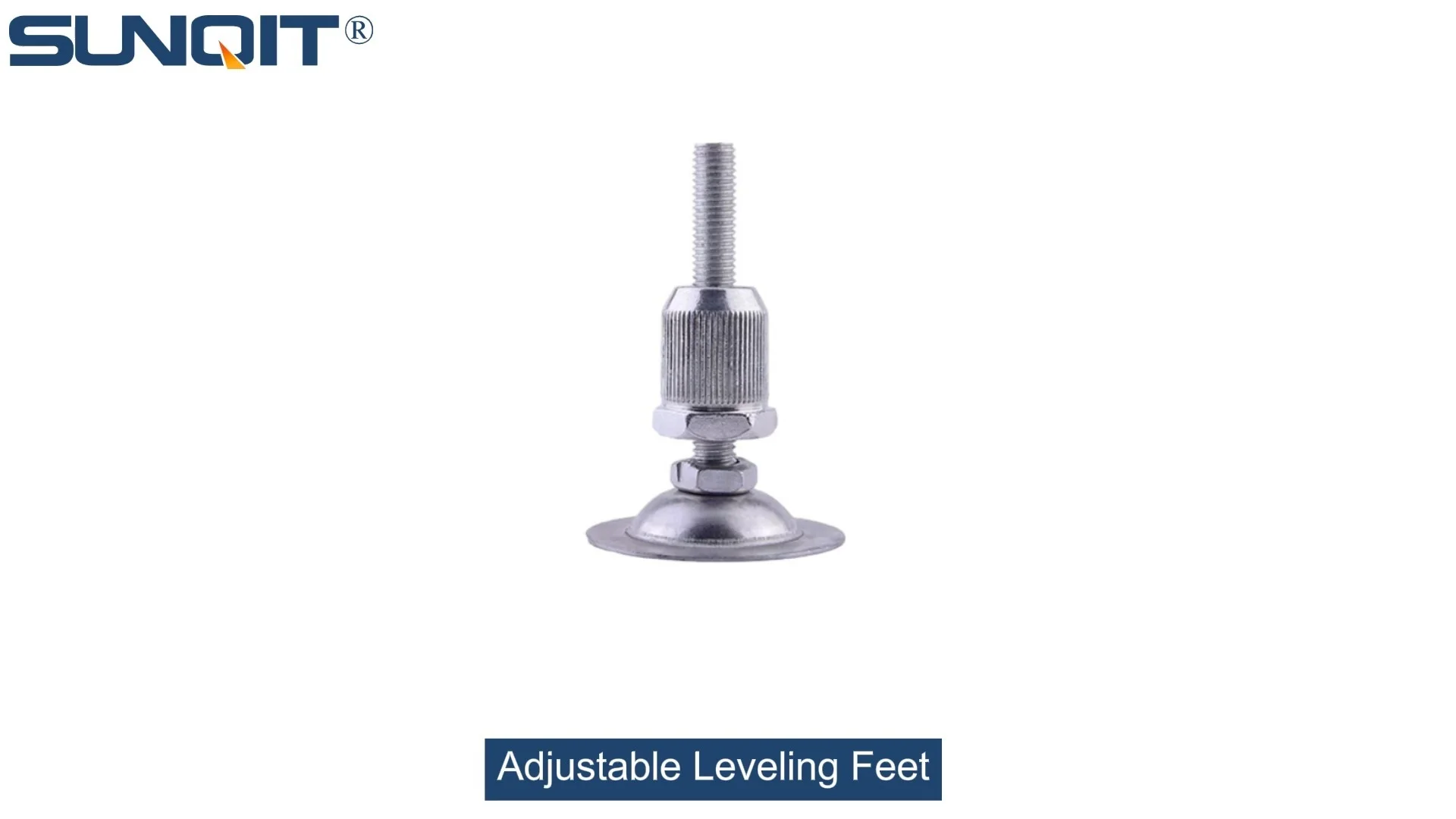
Adjustable leveling feet are designed to keep machines level when placed on uneven or sloped ground. Otherwise known as adjustable equipment feet, they are available to order in a wide variety of size and load capacity combinations.
Walk into any busy manufacturing plant, and you'll feel it—the constant hum of machinery, the rhythmic movement of conveyor belts, the steady thud of assembly line tools. These vibrations are the heartbeat of production, but they're also a silent threat. Over time, they can rattle equipment loose, destabilize workbenches, and turn even the most carefully organized lean system into a hazard zone. That's where adjustable leveling feet with locking nuts come in. These unassuming components are the unsung heroes of stable, efficient operations, especially in high-vibration environments. In this article, we'll dive into why they matter, how they work, and how to choose the right ones to keep your workspace safe, productive, and aligned with lean principles.
The Hidden Danger of High-Vibration Environments
Vibration is more than just a background noise—it's a force that chips away at stability. In factories where production assemble lines run 24/7, or warehouses with heavy-duty conveyor systems, the energy from constant motion travels through floors, walls, and directly into equipment. Think about a workbench holding sensitive electronic components: a loose leg could cause tools to slide, parts to misalign, or worse, the entire structure to tip. Material racks stacked with inventory might shift, leading to spills or collapses. Even something as simple as a caster wheel on a turnover trolley can loosen, making it harder to maneuver and increasing the risk of workplace accidents.
The consequences aren't just physical. Unstable equipment disrupts workflows, forces workers to slow down to avoid mistakes, and creates unnecessary downtime for repairs. In a lean system, where every second counts and waste is the enemy, these disruptions eat into profits and undermine the very efficiency lean aims to achieve. Worse, they compromise safety. A 2023 report from the Occupational Safety and Health Administration (OSHA) noted that over 15% of workplace injuries in manufacturing are linked to unstable equipment—many of which could have been prevented with proper leveling and locking mechanisms.
Adjustable Leveling Feet: The Foundation of a Stable Lean System
Lean system principles revolve around creating value with minimal waste, and stability is the bedrock of that mission. A lean system relies on predictable workflows, consistent processes, and equipment that stays where it's supposed to. Adjustable leveling feet are the first line of defense in building that stability. Unlike fixed feet, they allow you to fine-tune height and balance, compensating for uneven floors or warped surfaces—common issues in older facilities or areas with heavy foot traffic.
But adjustability alone isn't enough. In high-vibration settings, even a perfectly adjusted foot can back out over time. That's why locking nuts are non-negotiable. These specialized nuts lock the foot in place once adjusted, resisting the relentless shaking that would otherwise loosen standard hardware. When paired with anti-slip features—like rubberized bases or textured pads—they create a triple layer of security: adjustability to level, locking nuts to stay tight, and anti-slip grip to prevent sliding. It's a combination that turns wobbly workbenches into rock-solid platforms and rickety material racks into reliable storage solutions.
Consider the example of a lean pipe workbench in an automotive parts plant. This workbench might hold power tools, torque wrenches, and small components, all of which need to stay within arm's reach for assembly line workers. Without adjustable leveling feet with locking nuts, the bench could tilt slightly, causing tools to roll off or parts to misalign during assembly. Over time, vibration would loosen the feet further, leading to more frequent adjustments and increased risk of error. With the right feet, though, the bench stays level, tools stay put, and workers can focus on their tasks—exactly what a lean system is designed to support.

Key Features to Look for in Quality Adjustable Leveling Feet
Not all adjustable leveling feet are created equal. To stand up to high vibrations, they need specific features that balance durability, grip, and ease of use. Here's what to prioritize when evaluating options:
1. Material Matters: Strength and Resistance
The best adjustable leveling feet are built from materials that can handle heavy loads and resist corrosion—two common challenges in industrial settings. Stainless steel is a top choice for its strength and rust resistance, especially in environments with moisture or chemicals. For lighter-duty applications, aluminum might suffice, though it's less durable for heavy workbenches or material racks. Avoid plastic feet for high-vibration use; they can crack or deform under stress, compromising stability.
2. Locking Nut Design: Beyond Basic Threads
A locking nut isn't just a regular nut with extra threading. Look for designs with nylon inserts, serrated edges, or prevailing torque features. Nylon insert nuts (often called "nyloc" nuts) create friction against the threads, preventing backspin from vibration. Serrated nuts bite into the foot's base, adding an extra layer of resistance. Whatever the design, ensure the nut is easy to tighten with standard tools—you don't want to need specialized equipment for adjustments during a busy shift.
3. Anti-Slip Bases: Grip That Won't Let Go
Anti-slip adjustable leveling feet take stability a step further with bases designed to grip floors. Rubber or polyurethane pads are ideal, as they conform slightly to uneven surfaces and create friction that resists sliding. Some models even feature suction-cup-like designs for extra hold on smooth floors like concrete or tile. This is especially important for workbenches or turnover trolleys that aren't bolted down, as it reduces the risk of accidental movement during use.
4. Load Capacity: Matching Feet to Your Needs
Every foot has a maximum load it can support, and exceeding that limit is a recipe for failure. Calculate the total weight of your equipment (including tools, materials, and workers, if applicable) and divide by the number of feet to find the minimum load capacity per foot. For example, a workbench E (single deck-without caster) holding 500 lbs with four feet needs feet rated for at least 125 lbs each. Always err on the side of higher capacity—vibration amplifies stress, so a buffer ensures longevity.
| Feature | Standard Adjustable Feet | Anti-Slip Adjustable Feet with Locking Nuts |
|---|---|---|
| Material | Often plastic or low-grade steel | Stainless steel or high-grade aluminum |
| Locking Mechanism | None or basic nut (prone to loosening) | Nylon insert or serrated locking nut |
| Base Design | Smooth metal or plastic (poor grip) | Rubber/polyurethane anti-slip pad |
| Typical Load Capacity | Up to 50 lbs per foot | 100–500 lbs+ per foot |
| Suitable Environments | Low-vibration, light-duty (e.g., office furniture) | High-vibration, industrial (e.g., manufacturing, warehouses) |

Installation and Maintenance: Keeping Feet Tight and Effective
Even the best adjustable leveling feet won't perform if installed incorrectly. Proper setup and regular maintenance are key to ensuring they stay tight and functional. Here's a step-by-step guide to getting it right:
Installation Steps:
- Prepare the Surface: Clean the area where the feet will be mounted, removing debris, oil, or rust that could interfere with grip. For uneven floors, use a level to identify high spots—you may need to shim or grind down areas to create a stable base.
- Align and Attach: Screw the feet into the equipment's mounting points by hand, ensuring they're straight. For workbenches or material racks, start with all feet slightly loose, then use a level to adjust height until the surface is perfectly flat.
- Lock It Down: Once level, hold the foot steady with one wrench and tighten the locking nut against the equipment frame with another. Aim for a torque of 20–30 ft-lbs (check the manufacturer's specs—over-tightening can strip threads).
- Test Stability: Push gently on all corners of the equipment to check for wobble. If it moves, readjust the feet and retighten the locking nuts until it's solid.
Maintenance Tips:
- Inspect Regularly: In high-vibration areas, check locking nuts weekly for looseness. Use a wrench to retighten if needed—don't rely on hand-tightening alone.
- Clean the Base: Dirt, oil, or debris can reduce anti-slip grip. Wipe the base with a damp cloth monthly, and use a mild detergent for stubborn grime.
- Lubricate Threads: Every 6 months, apply a small amount of anti-seize lubricant to the threads (avoid getting it on the anti-slip pad). This prevents rust and makes future adjustments easier.
- replace Worn Parts: If the anti-slip pad is cracked or the locking nut no longer holds, replace the foot immediately. Don't wait for it to fail—this is where many accidents start.

Real-World Impact: How the Right Feet Transform Workspaces
To understand the difference adjustable leveling feet with locking nuts can make, let's look at a real case study. A mid-sized electronics manufacturer was struggling with frequent delays on their production assemble line. Workers reported that their lean pipe workbenches would wobble by mid-shift, causing small circuit boards to slip during soldering—a problem that led to rework, wasted materials, and missed deadlines. The plant manager initially blamed the old concrete floor, but a closer inspection revealed the benches were using basic plastic feet with no locking nuts. Vibration from nearby conveyor systems was loosening the feet daily, throwing the workbenches off balance.
The solution? Upgrading to anti-slip adjustable leveling feet with stainless steel locking nuts. Within a week, workers noticed a difference: benches stayed level all shift, soldering errors dropped by 35%, and rework time decreased by 20 hours per week. The plant also saw a reduction in minor injuries—no more tools sliding off wobbly surfaces. "It's like night and day," one assembler noted. "I don't have to second-guess if my workspace is stable anymore. I can just focus on getting the job done right."
Another example comes from a warehouse using a lean system to manage inventory. Their material rack B (3 row and 3 floor) held boxes of packaged goods, but vibration from forklift traffic was causing the rack to shift, leading to boxes toppling off the top shelf. After installing adjustable leveling feet with locking nuts and anti-slip bases, the rack stayed anchored. Over six months, there were zero spills, and workers reported feeling safer when restocking. "We used to avoid the top shelf because we were worried about boxes falling," said a warehouse supervisor. "Now it's just another part of the job—no stress, no mess."
Choosing a Supplier: Why Quality and Expertise Matter
Not all suppliers are equipped to provide the high-quality adjustable leveling feet your lean system needs. When shopping around, look for a supplier that specializes in industrial components and understands the demands of high-vibration environments. Here are a few key questions to ask:
- What materials do you use? Avoid suppliers who can't specify the grade of steel or aluminum—this is a red flag for low-quality products.
- Do your feet come with locking nuts as standard? Some suppliers charge extra for this critical feature; prioritize those who include it.
- Can you provide load capacity testing data? Reputable suppliers will have third-party testing to back up their load claims.
- Do you offer technical support? Installation questions or custom needs (like extra-tall feet for uneven floors) require expert guidance.
A good supplier will also understand lean system principles, helping you choose feet that align with your efficiency goals. For example, if you're using aluminum lean pipe for lightweight workbenches, they might recommend aluminum feet to match, reducing overall weight without sacrificing strength. Or, if you need feet for a stainless steel pipe series in a food-processing plant, they'll ensure the materials meet FDA standards for corrosion resistance.
Conclusion: Small Components, Big Results
Adjustable leveling feet with locking nuts might not be the most glamorous part of your lean system, but they're among the most essential. In high-vibration environments, they're the difference between a workspace that hums with efficiency and one that's plagued by delays, accidents, and waste. By prioritizing features like stainless steel construction, anti-slip bases, and reliable locking nuts, you're investing in stability—and stability is the foundation of every successful lean operation.
So, the next time you walk through your facility, take a moment to look down. Are your workbenches steady? Do your material racks stand firm? If not, it might be time to upgrade your feet. The workers on your production line, the efficiency of your lean system, and the bottom line will all thank you.