- Company Articles
- Products and Technology
- Product knowledge
- Adjustable Saddle Pipe Clamps: Ideal for Dynamic Production Line Modifications

Adjustable Saddle Pipe Clamps: Ideal for Dynamic Production Line Modifications
Related Product
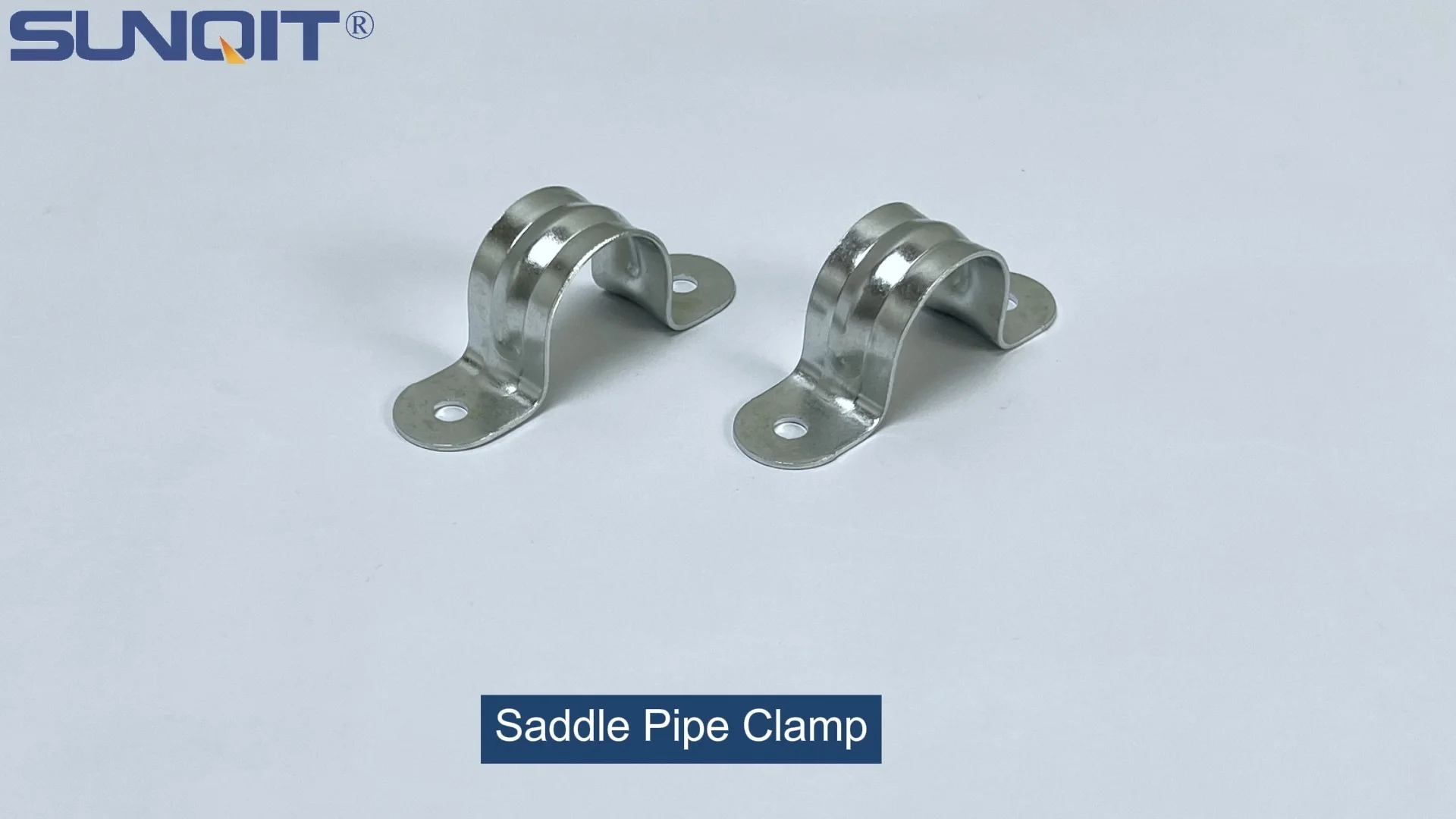
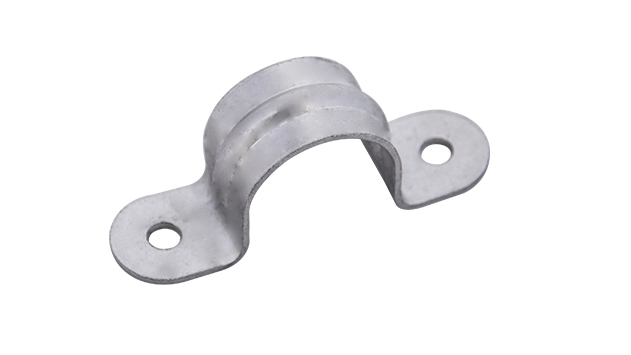
Saddle Pipe Clamp
Saddle pipe clamp, used for board connect with pipe, usually for table top installation.
In today's fast-paced manufacturing world, the only constant is change. Whether it's shifting product designs, scaling up production to meet sudden demand, or adapting to new workflow efficiencies, production lines can't afford to stay static. The ability to reconfigure workspaces, adjust material flow, and repurpose equipment on the fly has become a make-or-break factor for staying competitive. Yet, for many facilities, the physical infrastructure—those metal frames, fixed racks, and rigid workbenches—often feels like a straightjacket, slowing down innovation and forcing teams to work around outdated setups rather than with them. That's where adjustable saddle pipe clamps come in: a simple, unassuming component that's quietly revolutionizing how manufacturers build, adapt, and grow their production lines.
The Problem with Rigid Setups: Why Traditional Clamps Fall Short
Think about the last time your team needed to modify a workbench. Maybe you added a new tool, expanded the assembly area, or rearranged the line to reduce bottlenecks. If you're like most manufacturers, that process probably involved more than a few frustrations: hunting down wrenches, waiting for maintenance to drill new holes, or even replacing entire sections of the frame because the old clamps just wouldn't budge. Traditional pipe clamps—those fixed, bolt-on or welded components—are designed for stability, not flexibility. They lock pipes and profiles into place permanently, which works great… until your needs change.
Take, for example, a standard workbench in an electronics assembly plant. Let's say it's built with rigid steel clamps holding the frame together. When the team introduces a larger circuit board, suddenly the workbench surface is too small. To add an extension, you'd need to drill new holes in the frame, potentially weakening it, or replace the entire bench altogether. That's hours of downtime, not to mention the cost of new materials. And if next month you need to shrink it back down? You're stuck with a Frankenstein setup that's more of a hazard than a help.
Or consider material handling: those turnover trolleys and racks that move parts from station to station. If the caster wheels are mounted with fixed clamps, adjusting the height or width of the trolley to fit a new container size means taking it offline, disassembling the frame, and reassembling with new hardware. In a lean system where every minute of downtime eats into profits, this isn't just inconvenient—it's a direct hit to your bottom line.
Adjustable Saddle Pipe Clamps: A Game-Changer for Dynamic Workflows
What Are Adjustable Saddle Pipe Clamps?
At their core, adjustable saddle pipe clamps are exactly what the name suggests: clamps designed to grip pipes (like lean pipes or aluminum profiles) securely, but with a critical twist—they can be loosened, repositioned, and retightened in minutes, no special tools required. Unlike traditional clamps, which rely on fixed bolts or welding, these clamps use a saddle-shaped design that conforms to the pipe's curvature, distributing pressure evenly to prevent slippage while still allowing for quick adjustments. Most models feature ergonomic knobs or levers that can be tightened by hand, making them accessible to anyone on the team, not just maintenance experts.
Key Features: Design That Prioritizes Adaptability
What makes these clamps so effective? Let's break down their design: First, the saddle itself is often lined with a non-slip material (like rubber or textured plastic) that grips the pipe without scratching or damaging it. This is crucial for preserving the integrity of lean pipes and aluminum profiles, which are often reused or repurposed. Second, the adjustment mechanism is intuitive—twist a knob to loosen, slide the clamp to the desired position, then twist again to lock it in place. No drilling, no welding, no fumbling with tiny screws.
Many adjustable saddle pipe clamps also come with variable size compatibility, meaning they can fit multiple pipe diameters (think 1-inch lean pipes, 0.8mm stainless steel pipes, or even aluminum profiles with T-slots). This versatility eliminates the need to stock dozens of clamp sizes, simplifying inventory and reducing costs. And because they're typically made from high-grade steel or aluminum, they're built to handle the wear and tear of daily use, supporting heavy loads without bending or breaking.
Benefits of Using Adjustable Saddle Pipe Clamps in Production
Rapid Reconfiguration Without Downtime
The biggest advantage of adjustable saddle pipe clamps is speed. Let's go back to that workbench example: with traditional clamps, modifying the height or adding a shelf might take 2-3 hours (including waiting for tools and maintenance). With adjustable clamps, a line worker could do it in 15 minutes—no help needed. Loosen the knobs, slide the vertical pipes to the new height, reposition the crossbars, tighten, and you're done. That's a 90% reduction in downtime, which adds up quickly when you're making multiple adjustments a month.
This speed is a game-changer for agile manufacturing. If a customer places a rush order and you need to reconfigure three workstations to double production, adjustable clamps let you do it between shifts, not over a weekend. If a new product design requires a wider material rack, you can adjust the spacing of the rollers on a flow rack in minutes, ensuring parts glide smoothly without jamming. In short, they turn "we can't do that yet" into "we can do that now."
Compatibility with Lean Pipes and Aluminum Profiles
Lean manufacturing is all about eliminating waste—whether it's time, materials, or space. Lean pipes (also called "lean tubes") are a cornerstone of this philosophy: lightweight, modular pipes that let teams build custom structures (racks, workbenches, trolleys) with minimal effort. But even the most modular lean pipe system is only as flexible as its clamps. Traditional clamps lock lean pipes into fixed positions, limiting how much you can adapt. Adjustable saddle pipe clamps, on the other hand, work seamlessly with lean pipes, turning them into truly dynamic building blocks.
The same goes for aluminum profiles—those sleek, T-slot extrusions used in everything from machine guards to conveyor frames. Aluminum profiles are prized for their strength-to-weight ratio and versatility, but connecting them often requires specialized brackets or fixed clamps. Adjustable saddle pipe clamps bridge the gap, allowing you to attach profiles at any angle or height without drilling into the T-slots. This means you can mix and match lean pipes and aluminum profiles in the same structure, combining the lightweight flexibility of lean pipes with the rigidity of aluminum for heavy-duty applications.
Enhanced Durability for Heavy-Duty Use
There's a common misconception that "adjustable" equals "flimsy." That couldn't be further from the truth with adjustable saddle pipe clamps. Modern designs are engineered to handle serious weight: many can support up to 500 pounds per clamp, making them suitable for everything from loaded material racks to heavy-duty workbenches. The secret is in the saddle design: by wrapping around the pipe and distributing pressure evenly, they create a secure grip that won't slip, even under vibration or constant movement (like on a conveyor line).
Take stainless steel versions, for example. Used in food processing or pharmaceutical plants where hygiene is critical, these clamps resist corrosion from cleaning chemicals and stand up to daily washdowns. Similarly, aluminum clamps are ideal for lightweight applications where rust is a concern, like outdoor or humid environments. No matter the material, adjustable saddle pipe clamps are built to last, outperforming traditional clamps in both longevity and reliability.
Cost-Effectiveness Over Time
At first glance, adjustable saddle pipe clamps might cost a bit more than basic fixed clamps. But that initial investment pays off fast. Let's do the math: Suppose a traditional clamp costs $5, and an adjustable one costs $15. If you need to reconfigure a workbench twice a year, and each reconfiguration with traditional clamps requires replacing $50 in parts (new clamps, bolts, maybe even sections of pipe) plus 2 hours of maintenance labor ($60/hour), that's $50 + $120 = $170 per reconfiguration. With adjustable clamps, you reuse the same clamps, no new parts needed, and labor is 15 minutes ($15). So $15 per reconfiguration. Over two years (4 reconfigurations), traditional clamps cost $680, adjustable cost $60. The adjustable clamps have already saved you $620—and that's just for one workbench.
Add in the savings from reduced downtime (fewer hours of lost production) and the ability to repurpose existing equipment instead of buying new, and adjustable saddle pipe clamps quickly become one of the most cost-effective investments in your production line.

Real-World Applications: Where Adjustable Saddle Pipe Clamps Shine
Workbench Customization: From Single-Deck to Multi-Functional Stations
Workbenches are the heart of any production line—the place where assembly happens, tools are stored, and workers spend most of their day. But a "one-size-fits-all" workbench rarely works for long. Adjustable saddle pipe clamps turn static workbenches into customizable hubs that grow with your needs. Let's say you start with a simple single-deck workbench (like "Workbench E" in many catalogs)—no casters, just a flat surface on a fixed frame. With adjustable clamps, you can: raise the height to accommodate taller workers, add a second deck for tool storage, mount a shelf above for parts bins, or even attach casters later for mobility. When the project ends, you can strip it back down to a basic bench or repurpose it for another task.
One electronics manufacturer we worked with took this a step further: they built modular workbenches using lean pipes and adjustable saddle clamps, with interchangeable tops (wood for assembly, ESD-safe surfaces for sensitive components, metal for heavy tools). When a new product line launches, they swap out the top, adjust the shelf heights, and reposition the tool hooks—all in under an hour. Workers love it because the bench fits their workflow, not the other way around, and management loves it because they haven't bought a new workbench in three years.
Material Handling with Caster Wheels: Smooth Mobility, Secure Stability
Caster wheels are essential for moving materials around the shop, but mounting them securely while keeping the option to adjust is tricky—until now. Adjustable saddle pipe clamps make it easy to attach caster wheels to trolleys, racks, or even workbenches, with the added benefit of being able to tweak the height or angle for better stability. For example, if a trolley tends to tip when loaded with heavy boxes, you can adjust the caster position (wider apart) using the clamps, improving balance without rebuilding the entire frame.
Consider a turnover trolley used to transport circuit boards between stations. With fixed clamps, the casters are locked in place, so if the floor is uneven, the trolley might wobble, risking damage to the boards. With adjustable clamps, you can slightly raise or lower individual casters to level the trolley, ensuring a smooth ride. And when the trolley needs to be repurposed for larger components, you can swap out the small casters for heavy-duty ones in minutes—no drilling new holes, just loosen, remove, and reattach.
Integrating with Lean Systems: Streamlining Workflow Efficiency
Lean systems are all about creating a seamless flow—parts move from one station to the next with minimal effort, and waste is eliminated at every step. Adjustable saddle pipe clamps are a natural fit here because they let you fine-tune that flow in real time. Take a flow rack, for example: a sloped rack with roller tracks that use gravity to feed parts to the assembly line. If parts are moving too fast (risking damage) or too slow (causing bottlenecks), you can adjust the angle of the roller track by loosening the clamps holding it to the frame, tilting it slightly, and retightening. No need to rebuild the rack—just a quick tweak, and the flow is optimized.
Another example: kanban systems, where visual cues trigger restocking. With adjustable clamps, you can easily add or remove bins on a material rack, adjust the height of labels, or reposition the rack closer to the assembly line to reduce walking time. It's small changes like these that add up to big gains in efficiency—exactly what lean manufacturing is all about.
Aluminum Profile Assemblies: Building Modular Structures with Ease
Aluminum profiles are a favorite in manufacturing for their strength, light weight, and versatility—think of them as industrial Legos for adults. But connecting them often requires specialized brackets or T-slot nuts, which can be time-consuming to adjust. Adjustable saddle pipe clamps simplify this by gripping the profile's outer edges, allowing you to attach crossbars, shelves, or accessories at any point along the length. This is especially useful for building custom enclosures, machine guards, or inspection stations, where dimensions might change based on the equipment inside.
A automotive parts supplier we know used this to great effect: they build custom racks for storing dies using aluminum profiles and adjustable saddle pipe clamps. When a new die comes in with different dimensions, they adjust the spacing between the vertical supports by sliding the clamps, then add or remove horizontal bars as needed. The entire process takes 30 minutes, and the same rack can store 10 different die sizes over its lifetime. Before, they'd build a new rack for each die—costing time, money, and warehouse space.

Comparing Traditional vs. Adjustable Saddle Pipe Clamps: A Practical Table
| Feature | Traditional Fixed Clamps | Adjustable Saddle Pipe Clamps | Key Advantage |
|---|---|---|---|
| Reconfiguration Time | 2-3 hours (requires tools, disassembly) | 10-15 minutes (hand-tightened, no tools) | 90% faster setup, minimal downtime |
| Compatibility with Pipe Sizes | Limited to one pipe diameter per clamp | Fits multiple diameters (e.g., 0.5-1 inch lean pipes, aluminum profiles) | Reduced inventory costs, one clamp for multiple uses |
| Load Capacity | High, but only in fixed positions | Equally high (up to 500 lbs/clamp), with secure grip in any position | Durable enough for heavy loads, even when adjusted |
| Installation Complexity | Requires drilling, welding, or specialized tools | Tool-free; can be installed by any team member | Eliminates reliance on maintenance teams |
| Long-Term Cost | Low upfront cost, but high replacement/modification costs | Higher upfront cost, but 70-80% savings on reconfigurations over time | Significantly lower total cost of ownership |
| Flexibility for Future Changes | None; requires full replacement for modifications | Unlimited; can be reused and repositioned indefinitely | Future-proofs your infrastructure against changing needs |
Case Study: How a Manufacturing Plant Reduced Changeover Time by 40%
To put these benefits into perspective, let's look at a real example: a mid-sized automotive parts manufacturer with a production line building brake components. Like many manufacturers, they struggled with frequent changeovers—switching between different brake caliper models required reconfiguring workbenches, material racks, and conveyor guides. Before adjustable saddle pipe clamps, each changeover took 4 hours (two hours of downtime, plus two hours of overtime to catch up). With 12 changeovers per month, that added up to 48 hours of lost production—nearly a full workweek.
The team decided to test adjustable saddle pipe clamps on three critical areas: the assembly workbench, the material rack (a 3-row, 3-floor setup similar to "Material Rack B"), and the roller track conveyor feeding parts to the line. Here's what happened:
- Workbench: Instead of replacing the entire bench, they used adjustable clamps to add/remove shelves and adjust the height. Changeover time dropped from 1 hour to 15 minutes.
- Material Rack: Adjustable clamps let them reposition the dividers between rows to fit different caliper sizes, eliminating the need to swap out entire rack sections. Time saved: 1.5 hours per changeover.
- Conveyor Guides: By using adjustable clamps to modify the roller track width, they could adapt the conveyor to different part sizes in 10 minutes, down from 1 hour.
Total changeover time went from 4 hours to 2.25 hours—a 43% reduction. Over a month, that's 12 changeovers × 1.75 hours saved = 21 hours of recovered production time. With an average output of 50 parts per hour, that's 1,050 additional parts per month—worth over $50,000 in revenue. The clamps paid for themselves in less than two months, and the team has since rolled them out to all 10 production lines.
Future-Proofing Your Production Line: Why Adjustable Clamps Are Here to Stay
As manufacturing continues to evolve—with trends like small-batch production, customization, and lights-out factories—flexibility will only become more critical. Adjustable saddle pipe clamps aren't just a temporary fix; they're a long-term investment in adaptability. They empower teams to experiment, iterate, and innovate without being held back by their infrastructure. Want to test a new workflow layout? Do it tomorrow. Need to scale up for a seasonal rush? Adjust the line this weekend. Have a worker with specific ergonomic needs? Modify their bench in 10 minutes.
Moreover, as more manufacturers adopt lean and agile principles, the demand for modular, reconfigurable tools will grow. Adjustable saddle pipe clamps fit perfectly into this future, complementing other modular components like lean pipes, aluminum profiles, and quick-connect joints. They're not just a tool—they're a mindset shift: from "this is how we've always done it" to "what if we tried this instead?"
Conclusion: The Small Component That Makes a Big Difference
Adjustable saddle pipe clamps might not be the most glamorous part of your production line, but they're one of the most impactful. They turn rigid, static setups into dynamic, responsive systems that keep up with the pace of modern manufacturing. They save time, reduce costs, and empower workers to take ownership of their workspace. And in a world where adaptability is the key to survival, that's not just an advantage—it's essential.
So the next time you're stuck with a workbench that's too small, a rack that's too tall, or a conveyor that won't fit the new parts, ask yourself: What could my team accomplish if they could adjust it themselves, right now? With adjustable saddle pipe clamps, the answer is simple: anything they set their minds to.