- Company Articles
- Products and Technology
- Application Cases
- Advanced Applications: Turning Angle Code 2020 in Conveyor System Design

Advanced Applications: Turning Angle Code 2020 in Conveyor System Design
Related Product
Urning Angle Code 2020
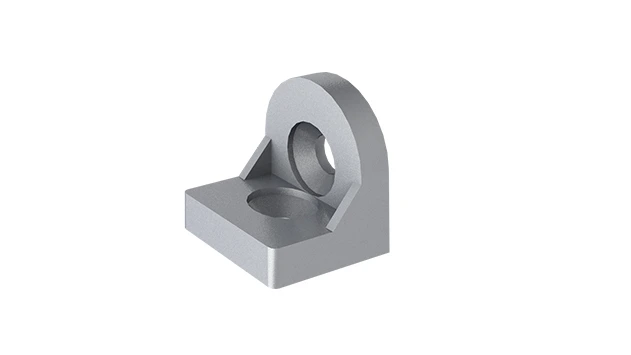
The turning angle aluminum profile connector provides a 90 degree hidden corner connection. 2020 it is means this size is used for 20 series aluminum profile.The corner code comes with set screws that allow for quick, easy connections.
In the fast-paced world of manufacturing and logistics, where every second counts and efficiency is the backbone of productivity, conveyor systems stand as silent workhorses. These intricate networks of belts, rollers, and frames move materials, components, and finished products with precision, ensuring that production lines flow seamlessly from start to end. Yet, behind the smooth operation of these systems lies a world of small but critical components—connectors, brackets, and fasteners—that hold everything together. Among these unsung heroes, the Turning Angle Code 2020 has emerged as a game-changer, redefining how conveyor systems are designed, built, and adapted to meet evolving industrial needs. In this article, we'll explore the role of the Turning Angle Code 2020 in modern conveyor system design, its compatibility with essential components like aluminum profile and roller track , and how it enhances the flexibility, durability, and efficiency of these vital industrial setups.
Understanding the Basics: What is Turning Angle Code 2020?
Before diving into its applications, let's clarify what the Turning Angle Code 2020 is and why it matters. At its core, this component is a specialized connector designed for use with 2020 aluminum profile —a popular type of extruded aluminum framing widely used in lean manufacturing, automation, and material handling systems. The "2020" designation refers to the profile's cross-sectional dimensions (20mm x 20mm), making it lightweight yet surprisingly strong, ideal for building modular structures like workbenches, racks, and, importantly, conveyor frames.
The Turning Angle Code 2020, sometimes called a "corner bracket" or "angle connector," is engineered to join two or more 2020 aluminum profiles at precise angles—typically 90 degrees, but with adaptability for other configurations like 45 degrees or 135 degrees, depending on the design. Unlike traditional welding or bulky bolt-on brackets, this code is designed for quick assembly, tool-less adjustments, and repeated reconfiguration. Made from high-grade aluminum alloy, it balances strength and weight, ensuring that conveyor frames can support the load of moving materials without adding unnecessary bulk.
What sets the Turning Angle Code 2020 apart is its precision. The connector features pre-drilled holes and slots that align perfectly with the T-slots of 2020 aluminum profiles, allowing for secure fastening with bolts or T-nuts. This precision eliminates the guesswork in assembly, ensuring that conveyor sections are aligned correctly—a critical factor in preventing jams, reducing wear on roller track components, and maintaining smooth material flow.
The Challenge: Designing Conveyor Systems for Modern Industry
Conveyor systems are not one-size-fits-all. From automotive plants moving heavy engine parts to electronics factories transporting delicate circuit boards, each application demands unique specifications: varying load capacities, speeds, layouts, and adaptability to changing production needs. These demands create several design challenges for engineers and facility managers:
- Misalignment Risks: Even minor misalignment between conveyor sections can cause materials to jam, damage products, or wear down roller track components prematurely. Traditional brackets often rely on imprecise drilling or welding, leading to inconsistencies.
- Rigidity vs. Flexibility: Many manufacturing facilities need to reconfigure production lines to accommodate new products or processes. Rigid, welded frames make this time-consuming and costly, while flimsy connectors risk structural instability.
- Durability Under Stress: Conveyor systems operate 24/7 in harsh environments—exposed to dust, vibrations, and constant load. Connectors must withstand these conditions without loosening or deforming over time.
- Compatibility with Components: Conveyors integrate with various elements, from roller track and belt drives to sensors and workbenches. Connectors must work seamlessly with these components to avoid compatibility issues.
It's here that the Turning Angle Code 2020 shines. By addressing these challenges head-on, it has become a cornerstone of modern conveyor system design, offering solutions that traditional brackets simply can't match.

Turning Angle Code 2020 in Action: Key Applications in Conveyor Design
Let's explore how the Turning Angle Code 2020 transforms conveyor system design across three critical areas: structural integrity, modular flexibility, and integration with essential components like roller track and workbenches.
1. Building Strong, Lightweight Frames with Aluminum Profile
The backbone of any conveyor system is its frame, which supports the roller track , motors, and the weight of materials being transported. For decades, frames were built using steel—strong but heavy, difficult to modify, and prone to rust in humid environments. Today, aluminum profile has emerged as a superior alternative, thanks to its lightweight nature, corrosion resistance, and modularity. And the Turning Angle Code 2020 is the key to unlocking its full potential.
When constructing a conveyor frame with 2020 aluminum profiles, the Turning Angle Code 2020 serves as the "glue" that holds the structure together. Unlike welding, which permanently fixes the frame and requires skilled labor, the code allows for tool-free assembly: simply slide the connector into the T-slots of the aluminum profiles, secure it with a T-nut and bolt, and the joint is tight and stable. This not only speeds up installation but also allows for easy disassembly and reconfiguration. For example, if a facility needs to shorten a conveyor line to make space for a new workbench , the frame can be taken apart, modified, and reassembled in hours—not days.
The strength of these joints is surprising. High-grade aluminum alloy and precision engineering ensure that the Turning Angle Code 2020 can handle significant loads. In tests, a properly assembled 2020 aluminum frame with Turning Angle Code 2020 connectors has supported up to 50kg per linear meter—more than enough for most light to medium-duty conveyor applications, such as moving small electronic components or packaged goods.
2. Integrating Roller Track for Smooth Material Flow
While the frame provides structure, the roller track is what makes the conveyor "move." Roller tracks consist of parallel rails fitted with rotating rollers, allowing materials to glide along the system using gravity or minimal motorized force. For the track to work effectively, it must be perfectly aligned with the frame—any tilt or misalignment can cause products to stick or slide off course. Here, the Turning Angle Code 2020 plays a critical role in ensuring precision.
Roller tracks are often mounted directly to the conveyor frame's aluminum profiles. The Turning Angle Code 2020 helps position the profiles that support the track, ensuring they are level and parallel. For example, in a gravity-fed roller conveyor, the frame must have a slight incline (typically 1-3 degrees) to allow materials to flow forward. Using the Turning Angle Code 2020, engineers can adjust the angle of the supporting profiles with pinpoint accuracy, ensuring consistent flow without over-tilting, which could damage fragile items.
Moreover, the code's compatibility with T-slots makes it easy to attach accessories like side guides or stoppers to the roller track. These accessories prevent materials from veering off track and can be repositioned quickly using the same T-slot system—no drilling or welding required. For instance, if a facility switches from moving small boxes to longer, narrower components, the side guides can be adjusted in minutes using the Turning Angle Code 2020 and additional bolts, ensuring the new products stay centered on the roller track.
3. Adapting to Workbench Integration and Material Handling
Conveyor systems rarely operate in isolation. They are often connected to workbench stations where workers assemble, inspect, or package products. For example, in an electronics manufacturing plant, a conveyor might transport circuit boards to a workbench where technicians install components, then carry the assembled boards to the next stage. In such setups, the conveyor and workbench must be aligned to ensure a smooth transfer of materials—another area where the Turning Angle Code 2020 excels.
Since both the conveyor frame and many modern workbenches are built with 2020 aluminum profiles, the Turning Angle Code 2020 can be used to connect the two systems seamlessly. For instance, a workbench can be bolted directly to the conveyor frame using the code, ensuring that the work surface is at the same height as the roller track. This eliminates gaps or steps between the conveyor and workbench, reducing the risk of materials getting stuck or workers straining to reach items.
This integration also enhances flexibility. If production needs change—say, the workbench needs to be moved 30cm to the left to accommodate a new machine—the connection can be loosened, the workbench repositioned, and the Turning Angle Code 2020 retightened. This adaptability is a far cry from traditional fixed workbenches, which would require major renovations to reposition.

Comparing Traditional vs. Modern: The Turning Angle Code 2020 Advantage
To truly appreciate the impact of the Turning Angle Code 2020, it's helpful to compare it with traditional conveyor frame connectors. The table below highlights key differences in installation, flexibility, durability, and cost-effectiveness:
| Feature | Traditional Steel Brackets/Welding | Turning Angle Code 2020 + Aluminum Profile |
|---|---|---|
| Installation Time | Slow (requires welding or drilling; skilled labor needed) | Fast (tool-free assembly; can be installed by general staff) |
| Flexibility | Low (permanent joints; difficult to reconfigure) | High (easily disassembled and modified; modular design) |
| Weight | Heavy (steel adds bulk, increasing structural load) | Lightweight (aluminum profile reduces frame weight by 40-50%) |
| Durability | Prone to rust (steel requires painting/coating); welded joints may weaken over time | Corrosion-resistant (aluminum profile); joints maintain tightness with minimal maintenance |
| Cost Over Time | Higher (expensive initial labor; costly modifications) | Lower (cheaper installation; reusable components; easy upgrades) |
As the table shows, the Turning Angle Code 2020, when paired with aluminum profile, offers significant advantages over traditional methods. Its modularity alone can save facilities thousands of dollars in reconfiguration costs over time, while its lightweight design reduces the load on floors and simplifies transportation of components during installation.
Real-World Success: A Case Study in Automotive Parts Manufacturing
To put these benefits into context, let's look at a real-world example: a mid-sized automotive parts manufacturer that recently upgraded its conveyor systems using Turning Angle Code 2020, aluminum profile, and roller track. Prior to the upgrade, the facility relied on outdated steel conveyor frames with welded joints. The system was heavy, difficult to modify, and prone to jams due to misaligned roller tracks. When the company introduced a new line of smaller, more delicate components, the old conveyors struggled to handle the lighter loads without damaging parts, and reconfiguring the lines to accommodate the new products took weeks of downtime.
The solution? The manufacturer replaced the steel frames with 2020 aluminum profiles joined by Turning Angle Code 2020 connectors, paired with lightweight roller track. The results were transformative: installation took just three days (down from two weeks for the old steel systems), and the new conveyors were 40% lighter, reducing strain on the facility's floors. The modular design allowed the team to adjust the roller track angles and add side guides in hours, not days, when switching between product types. Most importantly, the precision of the Turning Angle Code 2020 joints eliminated misalignment issues, cutting jams by 90% and reducing product damage by nearly 80%.
"The difference is night and day," said the facility's production manager. "We used to spend hours fixing jams and reworking damaged parts. Now, the conveyors run smoothly, and when we need to change things up, we can do it in a morning. The Turning Angle Code 2020 might seem small, but it's made a huge impact on our bottom line."
Future Trends: Turning Angle Code 2020 in Smart Conveyor Systems
As manufacturing evolves toward Industry 4.0—with smart factories, IoT integration, and automated material handling—the role of components like the Turning Angle Code 2020 will only grow. Smart conveyor systems, equipped with sensors, cameras, and automated guided vehicles (AGVs), require even greater flexibility and precision than their traditional counterparts. For example, a conveyor line might need to adjust its speed based on real-time production data or re route materials to different workbenches based on sensor inputs. The modularity of aluminum profile frames joined by Turning Angle Code 2020 makes it easier to integrate these smart technologies.
Imagine a conveyor system where sensors are mounted directly to the aluminum profile using T-slot accessories. If a sensor needs to be repositioned to better track product flow, the Turning Angle Code 2020 allows for quick adjustments without disrupting the entire system. Similarly, as facilities adopt collaborative robots (cobots) to work alongside human operators, the ability to reconfigure conveyor lines and workbenches on the fly becomes essential—and the Turning Angle Code 2020 makes this possible.
Another emerging trend is sustainability. Aluminum is 100% recyclable, and modular systems built with Turning Angle Code 2020 generate less waste than traditional welded steel frames, which often end up in landfills when outdated. As companies prioritize eco-friendly practices, the recyclability and reusability of aluminum profile systems will become an even bigger selling point.
Conclusion: The Small Component Making a Big Difference
In the grand scheme of industrial manufacturing, the Turning Angle Code 2020 might seem—a small metal connector lost among the gears, motors, and rollers of a conveyor system. But as we've explored, its impact is anything but minor. By enabling the use of lightweight, modular aluminum profile frames, it transforms conveyor systems from rigid, one-size-fits-all setups into adaptable, efficient tools that can keep pace with the demands of modern industry. Its compatibility with roller track ensures smooth material flow, while its ease of assembly and reconfiguration reduces downtime and costs.
Whether you're designing a new conveyor system from scratch or upgrading an existing one, the Turning Angle Code 2020 deserves a spot on your list of essential components. Paired with aluminum profile and roller track, it offers a winning combination of strength, flexibility, and durability that can help your facility stay competitive in an ever-changing industrial landscape. As the automotive parts manufacturer discovered, sometimes the smallest components are the ones that drive the biggest improvements in productivity and profitability.
In the end, conveyor systems are about more than moving materials—they're about moving businesses forward. And with the Turning Angle Code 2020, that movement has never been smoother, faster, or more adaptable.