- Company Articles
- Products and Technology
- Product knowledge
- Advantages of Anodized 3060 National Standard Profile A: Durability & Aesthetics

Advantages of Anodized 3060 National Standard Profile A: Durability & Aesthetics
Related Product
3060 National Standard Profile A
Workbench, production line, logistic rack, warehouse rack Industry: Manufacturer workshop, Automobile, Electronic, Assembling, logistic
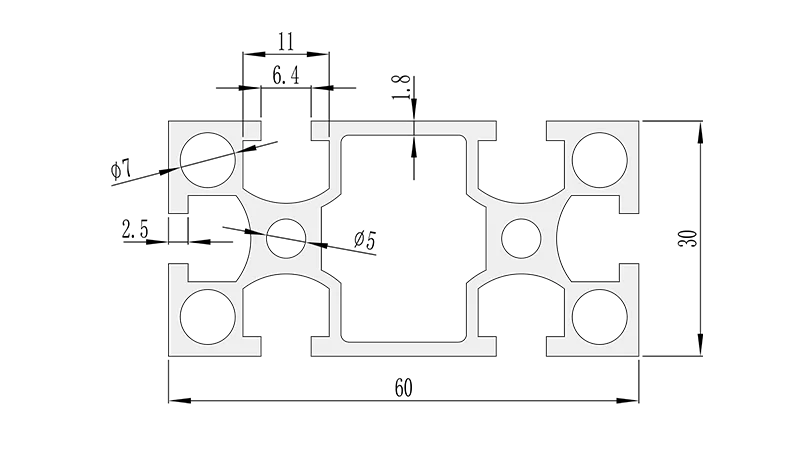
In the world of industrial design and manufacturing, the right materials don't just support operations—they elevate them. From the workbenches where products take shape to the material racks that keep workflows moving, every component plays a role in efficiency, safety, and even employee morale. Today, we're shining a spotlight on a material that's quietly revolutionizing workshops and factories: the Anodized 3060 National Standard Profile A. More than just a piece of aluminum extrusion profile, it's a blend of strength and style that addresses two critical needs in any workspace: durability that stands the test of time and aesthetics that make even the busiest environments feel intentional and professional. Let's dive into why this profile has become a go-to choice for engineers, workshop managers, and small business owners alike.
What Is the Anodized 3060 National Standard Profile A?
Before we jump into its advantages, let's start with the basics. The 3060 National Standard Profile A is a type of aluminum extrusion profile—meaning it's created by forcing heated aluminum through a die to form a specific cross-sectional shape. The "3060" refers to its dimensions: 30mm in width and 60mm in height, a size that strikes a perfect balance between stability and versatility. As a "national standard" profile, it adheres to strict manufacturing guidelines, ensuring consistency in size, strength, and quality across every piece.
But what truly sets this profile apart is its anodized finish. Anodization is an electrochemical process that (thickens) the natural oxide layer on the aluminum's surface, creating a hard, protective coating. Unlike painting or powder-coating, which sits on top of the metal, anodization becomes part of the aluminum itself—making it far more resistant to chipping, peeling, or fading. This process doesn't just boost durability; it also gives the profile a sleek, uniform appearance that can be tailored to fit any workspace's aesthetic.
Think of it as the industrial equivalent of a well-tailored suit: it's functional, built to last, and looks polished without trying too hard. And when paired with the right aluminum profile accessories—like internal rotary aluminum joints, flat adjustable swivel castor wheels, or aluminum honeycomb panels—it becomes a building block for almost any structure you can imagine, from workbenches to conveyor systems.
Durability: Built to Outlast the Toughest Work Environments
Let's start with the first half of the equation: durability. In a workshop, "tough" isn't just a buzzword—it's a requirement. Equipment gets bumped, chemicals spill, heavy loads are stacked, and humidity or temperature fluctuations are par for the course. The Anodized 3060 National Standard Profile A doesn't just "handle" these conditions; it thrives in them. Here's why:
1. The Strength of Aluminum Extrusion
Aluminum is already known for its impressive strength-to-weight ratio, but the extrusion process takes it a step further. When aluminum is extruded, its internal grain structure aligns with the direction of the extrusion, creating a material that's stronger and more resistant to bending or warping than cast aluminum. For the 3060 Profile A, this means it can support heavy loads—think stacks of raw materials on a material rack or the constant weight of tools and components on a workbench—without compromising its shape over time.
To put it in perspective: a single length of 3060 Profile A can easily support up to 200kg when properly mounted, making it ideal for everything from shelving units to assembly line workstations. And because it's lightweight compared to steel, it's easier to transport, install, and reconfigure—all without sacrificing stability.
2. Anodization: A Shield Against Wear and Tear
While aluminum itself is corrosion-resistant, its natural oxide layer is thin—only about 0.01 microns thick. Anodization (thickens) this layer to between 5 and 20 microns, creating a barrier that's up to 200 times more protective. This isn't just about preventing rust (though aluminum doesn't rust, it can corrode in acidic or salty environments); it's about standing up to daily abrasion, chemical exposure, and even UV rays.
Consider a typical manufacturing floor: oils, coolants, and cleaning agents are part of the daily routine. Spills happen, and over time, these substances can eat away at unprotected metal. But the anodized layer on the 3060 Profile A is non-porous and chemically resistant, meaning it won't stain, discolor, or degrade when exposed to common industrial fluids. Even repeated scrubbing with harsh cleaners won't dull its finish—a far cry from painted steel, which can chip or fade after just a few months of heavy use.
And let's not forget about scratches. In a busy workshop, tools get dropped, parts get dragged across surfaces, and carts bump into racks. The anodized coating on the 3060 Profile A has a hardness rating of up to 500 HV (Vickers hardness), which is comparable to some types of steel. That means it can withstand accidental scrapes or impacts without showing unsightly marks—keeping your workspace looking professional even after years of use.
3. Resistance to Environmental Extremes
Whether your workshop is in a humid coastal area, a dry desert climate, or a factory with fluctuating temperatures, the 3060 Profile A holds its own. Unlike steel, which can rust in high humidity, or wood, which swells or warps with moisture, anodized aluminum is impervious to water damage. Its protective layer prevents moisture from seeping into the metal, so you won't have to worry about pitting, corrosion, or structural weakening over time.
UV resistance is another bonus. If your workspace has windows or is partially outdoors, sunlight can fade painted surfaces or cause plastic components to become brittle. The anodized finish on the 3060 Profile A, however, is UV-stable—meaning its color won't fade, and its structural integrity won't degrade, even with prolonged exposure to sunlight. This makes it a great choice for outdoor workstations or warehouses with large skylights.
Real-World Test: A Automotive Workshop's Experience
Take the example of a small automotive repair shop in Michigan. Before switching to the Anodized 3060 Profile A, they used steel workbenches and wooden shelving. Within a year, the steel had rusted from exposure to oil and road salt, and the wood had warped from humidity. They replaced the setup with workbenches built from 3060 Profile A and aluminum honeycomb panels, paired with material racks made from the same profile. Five years later, the owner reports, "The workbenches still look like new. We spill oil on them, tools get dropped, and they just wipe clean. The racks haven't bent, even with heavy engine parts stacked on them. It was an upfront investment, but we haven't had to replace a single component since—saving us time and money in the long run."
Aesthetics: More Than Just "Looking Good"—It's About Workspace Culture
Now, let's talk about aesthetics. In industrial settings, "pretty" is often an afterthought—but that's a mistake. Studies have shown that a clean, organized, and visually appealing workspace can boost employee productivity by up to 15% and reduce stress levels. The Anodized 3060 National Standard Profile A doesn't just perform—it elevates the look of your workspace in ways that matter. Here's how:
1. A Sleek, Consistent Finish
Anodization gives the 3060 Profile A a matte, metallic finish that's both modern and understated. Unlike painted aluminum, which can have uneven coloration or brush marks, anodized profiles have a uniform appearance across every piece. This consistency is key when building larger structures—like a row of workbenches or a multi-tiered material rack—where mismatched finishes would stand out like a sore thumb.
And while the classic silver anodized finish is the most popular, the process allows for custom colors too. Want to match your brand's logo? Or color-code workstations by department? Anodization can produce shades like black, gold, or blue, all with the same durable, fade-resistant properties. This flexibility means your workspace doesn't have to be a sea of generic gray—you can infuse it with personality without sacrificing longevity.
2. Easy to Clean, Easy to Maintain
Let's be honest: workshops get dirty. Grease, dust, metal shavings, and spills are part of the job. But with the 3060 Profile A's anodized finish, cleaning is a breeze. Unlike porous materials like wood or uncoated aluminum, which can trap dirt and stains, the non-porous anodized layer wipes clean with a damp cloth and mild detergent. No scrubbing, no harsh chemicals, no endless polishing—just a quick wipe, and it's back to looking fresh.
This isn't just about appearances, either. A clean workspace is a safer workspace. When surfaces are easy to clean, employees are more likely to keep them tidy, reducing the risk of slips, trips, or tool misplacement. It also creates a sense of pride in the workplace—if the tools and equipment look cared for, people are more likely to treat them with care.
3. Design Flexibility with Aluminum Profile Accessories
One of the most overlooked aspects of aesthetics is versatility. The 3060 Profile A isn't a one-trick pony; it plays well with others. Thanks to its T-slot design—a groove running along its length—it can be easily paired with aluminum profile accessories like internal rotary joints, aluminum guide rails, or roller track placon mounts. This means you can build structures that are not only functional but also visually cohesive.
For example, imagine a workbench built with 3060 Profile A frames, topped with an aluminum honeycomb panel for a smooth, modern surface, and equipped with adjustable shelving using 90° aluminum crossing joints. Add a few flat adjustable swivel castor wheels, and it becomes a mobile workstation that looks as good as it performs. Or picture a material rack with 3060 Profile A uprights and plastic roller track guide rails in yellow—adding a pop of color while keeping materials flowing smoothly.
The T-slot system also means you can reconfigure these structures as your needs change. Need to add a shelf? Just slide in a new bracket. Want to move a workbench to a different area? Swap out fixed feet for casters. This adaptability ensures your workspace can evolve without sacrificing its clean, put-together look.
How It Stacks Up: Comparing 3060 Profile A to Other Materials
To truly appreciate the 3060 National Standard Profile A, it helps to see how it compares to other common materials used in workshops. Let's break it down in a side-by-side comparison:
| Feature | Anodized 3060 National Standard Profile A | Traditional Steel Profile | Unanodized Aluminum Profile | Wooden Framing |
|---|---|---|---|---|
| Corrosion Resistance | Excellent (anodized layer prevents rust/oxidation) | Poor (requires painting; rusts easily in humid/chemical environments) | Good (natural oxide layer, but less durable than anodized) | Poor (swells/warps with moisture; prone to rot) |
| Wear Resistance | High (hard anodized layer resists scratches/abrasion) | High (but scratches show easily; paint chips) | Medium (prone to scratching; finish can fade) | Low (dents, scratches, and water damage) |
| Aesthetics | Sleek, uniform finish; customizable colors; easy to clean | Dull, industrial look; paint chips/fades; rust spots | Bright, but prone to fingerprints; finish can discolor | Warm, but inconsistent; stains easily; warps over time |
| Weight | Lightweight (easy to install/reconfigure) | Heavy (requires tools/helpers to move) | Lightweight (similar to anodized aluminum) | Medium (heavier than aluminum; can splinter when moved) |
| Maintenance | Low (wipe clean with damp cloth; no repainting) | High (repaint every 1-2 years; rust removal) | Medium (polishing needed to maintain shine; prone to stains) | High (sanding, staining, waterproofing) |
As the table shows, the Anodized 3060 Profile A outperforms traditional materials in almost every category. It offers the strength of steel without the weight or maintenance, the lightweight flexibility of wood without the vulnerability to moisture, and the corrosion resistance of aluminum with the added bonus of a durable, attractive finish.
Practical Applications: Where the 3060 Profile A Shines
We've talked a lot about durability and aesthetics, but let's get concrete: where exactly can you use the Anodized 3060 National Standard Profile A? The short answer: almost anywhere in your workspace. Here are a few of the most common (and creative) applications:
1. Workbenches and Assembly Stations
Workbenches are the heart of any workshop, and the 3060 Profile A is the perfect foundation. Its 30x60mm dimensions provide a stable base for heavy-duty tasks, while its T-slot design allows for easy attachment of accessories like tool hangers, LED light strips, or monitor mounts. Pair it with an aluminum honeycomb panel top for a lightweight, rigid work surface, and add flat adjustable swivel castor wheels for mobility—you've got a workstation that's as functional as it is good-looking.
One popular configuration is the "Workbench E (single deck-without caster)" setup, which uses 3060 Profile A frames to support a single, sturdy deck. It's simple, affordable, and can be customized with shelves or drawers using aluminum profile accessories.
2. Material Racks and Storage Systems
Material racks need to be strong, accessible, and space-efficient—and the 3060 Profile A checks all three boxes. Whether you're storing raw materials, finished products, or tools, a rack built with 3060 Profile A can handle the load. For example, the "Material Rack B (3 row and 3 floor)" design uses 3060 uprights and crossbars to create a multi-tiered storage system that maximizes vertical space. Add plastic roller track guide rails (in yellow or grey) to the shelves, and you've got a gravity-fed system that makes retrieving materials a breeze—no more reaching or straining.
3. Conveyor Systems and Flow Racks
In manufacturing, efficiency is everything, and conveyor systems are the backbone of efficient workflows. The 3060 Profile A's strength and T-slot design make it ideal for building custom conveyor frames, while its lightweight nature keeps energy costs low (no need for heavy-duty motors to move the system). Pair it with roller track placon mounts and swivel roller balls (1 inch or 0.5 inch) to create smooth, reliable material flow—whether you're moving small components or larger assemblies.
4. Trolleys and Mobile Carts
Need to move materials from one end of the workshop to the other? A trolley built with 3060 Profile A is durable, lightweight, and easy to maneuver. Add 360° swivel expanding stem casters with brakes for stability, and you've got a cart that can handle rough floors, tight corners, and heavy loads—all while looking sharp.
The Bottom Line: Why Invest in Anodized 3060 National Standard Profile A?
At the end of the day, choosing materials for your workspace is about balance: balancing cost with quality, function with form, short-term needs with long-term goals. The Anodized 3060 National Standard Profile A isn't the cheapest option on the market—but it's one of the smartest. Here's why:
- Longevity: It outlasts steel, wood, and unanodized aluminum, meaning fewer replacements and lower long-term costs.
- Productivity: Its durability and ease of maintenance reduce downtime, while its clean, organized look boosts employee morale and focus.
- Flexibility: With aluminum profile accessories, it can adapt to changing needs—no need to start from scratch when your workflow evolves.
- Aesthetics: It transforms cluttered, utilitarian spaces into environments people are proud to work in—because how a workspace looks affects how people feel, and how they feel affects how they work.
Whether you're a small business owner upgrading your first workshop or a large manufacturer revamping a production line, the Anodized 3060 National Standard Profile A is more than a material—it's an investment in your workspace, your team, and your future. It's durable enough to keep up with the chaos of daily operations and stylish enough to make that chaos feel manageable. And in the end, that's the real advantage: a workspace that works with you, not against you.