- Company Articles
- Products and Technology
- Product knowledge
- Advantages of Reusable Three Way Lean Pipe Joint Chrome in Lean Production

Advantages of Reusable Three Way Lean Pipe Joint Chrome in Lean Production
Related Product
Three Way Lean Pipe Joint Chrome
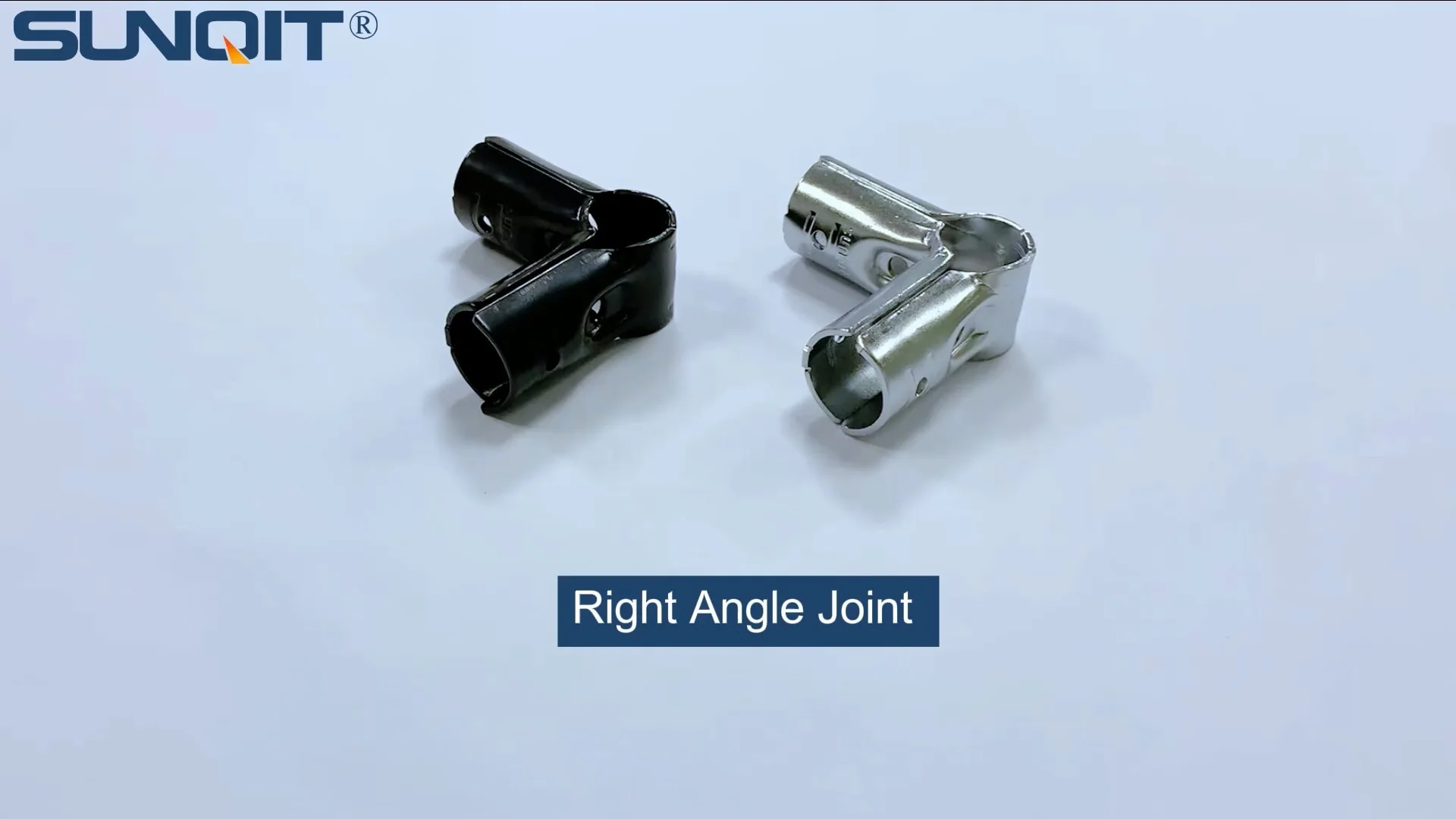
Three way lean pipe joint for 3 pcs 28MM lean pipe connection in straight angle, which used widely in workbench, flow rack, hand trolley frame connection.
Introduction: The Backbone of Lean Production Systems
In the fast-paced world of manufacturing and production, efficiency isn't just a buzzword—it's the lifeblood of staying competitive. Lean production, a philosophy centered on eliminating waste and maximizing value, has become the gold standard for businesses aiming to streamline operations. But here's the thing: lean principles can't thrive in a rigid environment. To truly embrace "continuous improvement," the tools and systems that power production lines need to be as adaptable as the processes they support. That's where modular solutions like lean pipe systems come into play—and at the heart of these systems lies a small but mighty component: the reusable three way lean pipe joint chrome.
If you've ever walked through a well-organized factory floor, you've likely seen the fruits of lean pipe systems: sturdy workbenches tailored to specific tasks, flow racks that guide materials seamlessly from one station to the next, and turnover trolleys that glide smoothly across the shop floor. What you might not have noticed are the joints holding these structures together. Unlike traditional welded or fixed connections, the three way lean pipe joint chrome is designed to be disassembled, reconfigured, and reused—making it a cornerstone of flexible, waste-free production. Let's dive into why this unassuming component is revolutionizing how teams build, adapt, and optimize their lean systems.
If you've ever walked through a well-organized factory floor, you've likely seen the fruits of lean pipe systems: sturdy workbenches tailored to specific tasks, flow racks that guide materials seamlessly from one station to the next, and turnover trolleys that glide smoothly across the shop floor. What you might not have noticed are the joints holding these structures together. Unlike traditional welded or fixed connections, the three way lean pipe joint chrome is designed to be disassembled, reconfigured, and reused—making it a cornerstone of flexible, waste-free production. Let's dive into why this unassuming component is revolutionizing how teams build, adapt, and optimize their lean systems.
What Is a Reusable Three Way Lean Pipe Joint Chrome?
Before we explore its advantages, let's clarify what a three way lean pipe joint chrome actually is. At its core, it's a connector designed to join lean pipes (hollow metal tubes, often made of steel or aluminum) at three intersecting points, allowing for the creation of T-shaped, Y-shaped, or multi-directional structures. The "chrome" in its name refers to its plating—a thin layer of chromium applied to the surface, which enhances durability and resistance to corrosion.
Unlike one-way or two-way joints, the three way design adds a critical layer of versatility: it lets you branch out from a single pipe in three directions, opening up endless possibilities for custom configurations. Whether you're building a workbench with overhead shelving, a flow rack with multiple levels, or a material trolley with side rails, this joint acts as the "hub" that holds everything together. And crucially, it's engineered for reusability : no welding, no permanent adhesives, just a simple tightening mechanism (usually a hex key or wrench) that allows for quick assembly and disassembly.
To put it simply, think of lean pipe systems as the "LEGOs of manufacturing"—and the three way lean pipe joint chrome is the special brick that lets you build upwards, sideways, and outwards without starting over.
Unlike one-way or two-way joints, the three way design adds a critical layer of versatility: it lets you branch out from a single pipe in three directions, opening up endless possibilities for custom configurations. Whether you're building a workbench with overhead shelving, a flow rack with multiple levels, or a material trolley with side rails, this joint acts as the "hub" that holds everything together. And crucially, it's engineered for reusability : no welding, no permanent adhesives, just a simple tightening mechanism (usually a hex key or wrench) that allows for quick assembly and disassembly.
To put it simply, think of lean pipe systems as the "LEGOs of manufacturing"—and the three way lean pipe joint chrome is the special brick that lets you build upwards, sideways, and outwards without starting over.

Advantage 1: Reusability—Eliminating Waste, One Joint at a Time
Lean production's first rule? Eliminate waste (or "muda," as it's known in Japanese). And one of the biggest sources of waste in traditional manufacturing setups is
inflexible infrastructure
. Welded steel frames, fixed shelving, and permanent workbenches might work for a time, but when production needs change—whether due to a new product line, increased demand, or a layout redesign—those structures become obsolete. Tearing them down means scrapping materials, wasting labor, and generating unnecessary landfill waste.
The reusable three way lean pipe joint chrome flips this script. Because it's designed to be taken apart and reassembled, it turns your production infrastructure into a reusable resource . Let's say your team needs to reconfigure a workbench to accommodate a larger assembly component. With traditional welded joints, you'd either have to modify the bench with cutting and welding (risking structural integrity) or build a brand-new one. With chrome three way joints? Simply loosen the bolts, disassemble the old structure, and rebuild it with the new dimensions. The joints, pipes, and accessories can all be repurposed—no waste, no extra cost for new materials.
This reusability isn't just good for the bottom line—it aligns with modern sustainability goals. By reducing the need for new steel or aluminum, companies cut down on raw material extraction and carbon emissions associated with manufacturing new components. It's lean production at its greenest.
The reusable three way lean pipe joint chrome flips this script. Because it's designed to be taken apart and reassembled, it turns your production infrastructure into a reusable resource . Let's say your team needs to reconfigure a workbench to accommodate a larger assembly component. With traditional welded joints, you'd either have to modify the bench with cutting and welding (risking structural integrity) or build a brand-new one. With chrome three way joints? Simply loosen the bolts, disassemble the old structure, and rebuild it with the new dimensions. The joints, pipes, and accessories can all be repurposed—no waste, no extra cost for new materials.
Real-World Example:
A small electronics manufacturer recently shifted from producing smartphones to tablets. Their existing workbenches, built with lean pipe systems and three way chrome joints, were too narrow for the larger tablet assemblies. Instead of ordering new workbenches (which would have cost $15,000+), they disassembled the old ones, added longer lean pipes, and reconnected the joints to widen the surfaces. The entire process took two technicians just one day, saving time, money, and materials.
This reusability isn't just good for the bottom line—it aligns with modern sustainability goals. By reducing the need for new steel or aluminum, companies cut down on raw material extraction and carbon emissions associated with manufacturing new components. It's lean production at its greenest.

Advantage 2: Flexibility—Adapting to Your Team's Unique Needs
No two production lines are identical, and even within the same facility, different teams have different needs. A quality control station might require a workbench with integrated tool holders and ESD (electrostatic discharge) protection, while a packaging area needs a flow rack with roller tracks to move boxes efficiently. The three way lean pipe joint chrome thrives in this diversity because it's not tied to a single design.
Its three-way connectivity lets you create structures that bend, branch, and adjust to fit specific tasks. Need a material rack with three vertical columns and three horizontal shelves (like "Material Rack B (3 Row and 3 Floor)" from many lean suppliers)? The three way joint makes it easy to connect the vertical and horizontal pipes at precise intervals. Want to add a side rail to a roller track for guiding small parts? The joint can anchor the rail at exactly the right angle. Unlike fixed joints that lock you into 90-degree angles, the chrome three way joint often features adjustable rotation (some models offer up to 180 degrees of internal rotation), letting you fine-tune angles for optimal workflow.
This flexibility also extends to scalability . As your business grows, you don't need to replace existing structures—just expand them. Adding a new shelf to a flow rack? Attach more pipes with three way joints. Extending a conveyor system to reach a new workstation? Use joints to connect the new roller track segments. It's like building with blocks that grow with you, ensuring your infrastructure never lags behind your ambitions.
Its three-way connectivity lets you create structures that bend, branch, and adjust to fit specific tasks. Need a material rack with three vertical columns and three horizontal shelves (like "Material Rack B (3 Row and 3 Floor)" from many lean suppliers)? The three way joint makes it easy to connect the vertical and horizontal pipes at precise intervals. Want to add a side rail to a roller track for guiding small parts? The joint can anchor the rail at exactly the right angle. Unlike fixed joints that lock you into 90-degree angles, the chrome three way joint often features adjustable rotation (some models offer up to 180 degrees of internal rotation), letting you fine-tune angles for optimal workflow.
This flexibility also extends to scalability . As your business grows, you don't need to replace existing structures—just expand them. Adding a new shelf to a flow rack? Attach more pipes with three way joints. Extending a conveyor system to reach a new workstation? Use joints to connect the new roller track segments. It's like building with blocks that grow with you, ensuring your infrastructure never lags behind your ambitions.
Advantage 3: Durability—Chrome Plating for the Toughest Environments
Reusability and flexibility are useless if the joint can't stand up to the rigors of daily factory life. Manufacturing floors are tough: heavy loads, constant vibration, exposure to oils, coolants, and humidity. The three way lean pipe joint chrome addresses this with its chrome plating—a protective layer that offers two key benefits:
corrosion resistance
and
wear resistance
.
Chrome plating creates a barrier between the underlying metal (usually steel) and the environment, preventing rust and degradation even in damp or chemical-exposed areas. Compare this to unplated or painted joints, which might start to corrode after a few months of use, weakening the structure and requiring replacement. The chrome finish also holds up against scratches and dents from tools, materials, and regular handling—ensuring the joint maintains its grip on the pipes over thousands of assembly/disassembly cycles.
But durability isn't just about the plating. The best three way chrome joints are made from high-grade steel with precision machining, ensuring a tight, wobble-free fit with lean pipes. This structural integrity is critical for safety: a loose joint could lead to a collapsing workbench or a toppling material rack, putting workers at risk. Chrome three way joints are designed to maintain their clamping force even under heavy loads (some can support up to 500 lbs per connection), giving teams peace of mind that their structures are built to last.
Chrome plating creates a barrier between the underlying metal (usually steel) and the environment, preventing rust and degradation even in damp or chemical-exposed areas. Compare this to unplated or painted joints, which might start to corrode after a few months of use, weakening the structure and requiring replacement. The chrome finish also holds up against scratches and dents from tools, materials, and regular handling—ensuring the joint maintains its grip on the pipes over thousands of assembly/disassembly cycles.
But durability isn't just about the plating. The best three way chrome joints are made from high-grade steel with precision machining, ensuring a tight, wobble-free fit with lean pipes. This structural integrity is critical for safety: a loose joint could lead to a collapsing workbench or a toppling material rack, putting workers at risk. Chrome three way joints are designed to maintain their clamping force even under heavy loads (some can support up to 500 lbs per connection), giving teams peace of mind that their structures are built to last.
Advantage 4: Quick Assembly—Minimizing Downtime, Maximizing Productivity
In manufacturing, downtime is the enemy. Every minute spent setting up or reconfiguring equipment is a minute not spent producing goods. Traditional welded structures require skilled labor, heavy machinery, and hours (or days) of work. Even bolted joints with fixed angles can be time-consuming to align and secure. The three way lean pipe joint chrome, by contrast, is engineered for
speed
.
Most models feature a simple "clamp and tighten" design: slide the joint onto the lean pipe, position it at the desired angle, and tighten the bolt with a hex key or wrench. No welding, no drilling, no measuring—just intuitive assembly that any team member can learn in minutes. This drastically reduces setup time: a basic workbench that might take a welder 4 hours to build can be assembled with chrome three way joints in under an hour by two unskilled workers.
This speed is a game-changer during layout changes . When production demands shift, your team can quickly disassemble old structures and rebuild new ones without halting operations for days. For example, a automotive parts supplier recently needed to rearrange their assembly line to accommodate a rush order. Using their existing lean pipe system with three way chrome joints, they reconfigured three workbenches and two flow racks in just one evening, ensuring production resumed on time the next morning.
Most models feature a simple "clamp and tighten" design: slide the joint onto the lean pipe, position it at the desired angle, and tighten the bolt with a hex key or wrench. No welding, no drilling, no measuring—just intuitive assembly that any team member can learn in minutes. This drastically reduces setup time: a basic workbench that might take a welder 4 hours to build can be assembled with chrome three way joints in under an hour by two unskilled workers.
This speed is a game-changer during layout changes . When production demands shift, your team can quickly disassemble old structures and rebuild new ones without halting operations for days. For example, a automotive parts supplier recently needed to rearrange their assembly line to accommodate a rush order. Using their existing lean pipe system with three way chrome joints, they reconfigured three workbenches and two flow racks in just one evening, ensuring production resumed on time the next morning.
Advantage 5: Cost-Effectiveness—Investing in Long-Term Value
At first glance, chrome-plated lean pipe joints might seem more expensive than basic plastic or unplated steel alternatives. And it's true: the initial cost is higher. But lean production teaches us to look at
total cost of ownership
(TCO)—not just the upfront price tag. When you factor in reusability, durability, and reduced downtime, the three way chrome joint becomes one of the most cost-effective options on the market.
Let's break it down: A plastic joint might cost $2, but it can only be used once or twice before cracking under heavy loads. An unplated steel joint might cost $5, but it rusts quickly in humid environments, requiring replacement every 6–12 months. A chrome three way joint, by contrast, might cost $10, but it can be reused dozens of times over 5+ years. When you calculate the cost per use, the chrome joint wins hands down.
Add in the savings from avoiding new material purchases (thanks to reusability) and reduced labor costs (thanks to quick assembly), and the ROI becomes even clearer. A mid-sized manufacturer we worked with estimated that switching to chrome three way joints reduced their annual infrastructure costs by 35% within the first two years—savings that went straight to the bottom line.
Let's break it down: A plastic joint might cost $2, but it can only be used once or twice before cracking under heavy loads. An unplated steel joint might cost $5, but it rusts quickly in humid environments, requiring replacement every 6–12 months. A chrome three way joint, by contrast, might cost $10, but it can be reused dozens of times over 5+ years. When you calculate the cost per use, the chrome joint wins hands down.
Add in the savings from avoiding new material purchases (thanks to reusability) and reduced labor costs (thanks to quick assembly), and the ROI becomes even clearer. A mid-sized manufacturer we worked with estimated that switching to chrome three way joints reduced their annual infrastructure costs by 35% within the first two years—savings that went straight to the bottom line.
| Feature | Traditional Welded Joints | Basic Plastic Joints | Reusable Three Way Chrome Joints |
|---|---|---|---|
| Reusability | None (permanent) | Low (breaks after 1–2 uses) | High (reusable 50+ times) |
| Installation Time | 4–8 hours (requires welding) | 1–2 hours (simple but fragile) | 30–60 minutes (tool-free assembly) |
| Durability | High (but fixed) | Low (prone to cracking) | Very high (chrome-plated steel, 5+ year lifespan) |
| Cost Over 5 Years* | $500 (initial + replacement) | $300 (frequent replacements) | $150 (one-time purchase + reuse) |
| Flexibility | None (fixed angles) | Medium (limited angles) | High (adjustable angles, multi-directional) |
*Estimated cost for a single joint used in average production conditions.
Advantage 6: Safety—Protecting Your Team and Products
A safe workplace is a productive workplace, and the three way lean pipe joint chrome prioritizes safety in ways that many alternatives don't. First, its chrome plating creates a smooth, burr-free surface, eliminating sharp edges that could cut or snag workers' clothing. This is especially important in high-traffic areas where employees are constantly moving around structures.
Second, the joint's secure clamping mechanism ensures a tight fit with lean pipes, preventing wobbling or shifting during use. Loose structures are a major safety hazard—they can tip over, drop materials, or jam conveyor systems. Chrome three way joints maintain their grip even under vibration and heavy loads, reducing the risk of accidents.
For specialized environments, like electronics manufacturing, some chrome joints are compatible with ESD workbench setups. By connecting ESD-safe lean pipes and accessories, they help dissipate static electricity, protecting sensitive components from damage. This versatility makes them a safe choice across industries, from automotive to aerospace.
Second, the joint's secure clamping mechanism ensures a tight fit with lean pipes, preventing wobbling or shifting during use. Loose structures are a major safety hazard—they can tip over, drop materials, or jam conveyor systems. Chrome three way joints maintain their grip even under vibration and heavy loads, reducing the risk of accidents.
For specialized environments, like electronics manufacturing, some chrome joints are compatible with ESD workbench setups. By connecting ESD-safe lean pipes and accessories, they help dissipate static electricity, protecting sensitive components from damage. This versatility makes them a safe choice across industries, from automotive to aerospace.
Real-World Applications: Where Chrome Three Way Joints Shine
To truly appreciate the three way lean pipe joint chrome, let's look at how it's used in everyday production systems:
1. Workbenches: A standard "Workbench E (Single Deck—Without Caster)" relies on three way joints to connect the vertical legs, horizontal rails, and overhead shelves. The joints allow for custom height adjustments (critical for ergonomics) and the addition of accessories like tool hooks or monitor mounts.
2. Flow Racks: Material Rack B (3 Row and 3 Floor) uses three way joints to create vertical columns and horizontal shelves, with roller tracks (like "38 Aluminum Roller Track Yellow") attached via the joints to enable smooth material flow. The joints' adjustability ensures the roller tracks are angled for optimal gravity-fed movement.
3. Turnover Trolleys: Trolleys used to transport materials around the factory often feature three way joints at the corners, connecting the frame, handle, and caster mounts. The joints' durability ensures the trolley can withstand heavy loads and rough floor conditions.
4. Conveyor Systems: Roller track systems (like "40 Steel Roller Track Yellow Wheel") use three way joints to connect track segments, add side guides, and support the structure. The joints' quick assembly lets teams extend or reconfigure conveyors as production lines grow.
1. Workbenches: A standard "Workbench E (Single Deck—Without Caster)" relies on three way joints to connect the vertical legs, horizontal rails, and overhead shelves. The joints allow for custom height adjustments (critical for ergonomics) and the addition of accessories like tool hooks or monitor mounts.
2. Flow Racks: Material Rack B (3 Row and 3 Floor) uses three way joints to create vertical columns and horizontal shelves, with roller tracks (like "38 Aluminum Roller Track Yellow") attached via the joints to enable smooth material flow. The joints' adjustability ensures the roller tracks are angled for optimal gravity-fed movement.
3. Turnover Trolleys: Trolleys used to transport materials around the factory often feature three way joints at the corners, connecting the frame, handle, and caster mounts. The joints' durability ensures the trolley can withstand heavy loads and rough floor conditions.
4. Conveyor Systems: Roller track systems (like "40 Steel Roller Track Yellow Wheel") use three way joints to connect track segments, add side guides, and support the structure. The joints' quick assembly lets teams extend or reconfigure conveyors as production lines grow.
Conclusion: The Small Joint That Powers Lean Success
In the world of lean production, success lies in the details. The reusable three way lean pipe joint chrome might seem like a small component, but its impact is enormous. By prioritizing reusability, flexibility, durability, and speed, it empowers teams to build infrastructure that adapts to change, eliminates waste, and supports continuous improvement.
Whether you're a small manufacturer just starting your lean journey or a large enterprise looking to optimize existing systems, investing in quality chrome three way joints is an investment in your team's productivity, your company's sustainability, and your ability to stay agile in an ever-changing market. After all, lean production isn't just about making things better—it's about making things adaptable . And with the right joints, the possibilities are endless.
Whether you're a small manufacturer just starting your lean journey or a large enterprise looking to optimize existing systems, investing in quality chrome three way joints is an investment in your team's productivity, your company's sustainability, and your ability to stay agile in an ever-changing market. After all, lean production isn't just about making things better—it's about making things adaptable . And with the right joints, the possibilities are endless.