- Company Articles
- Products and Technology
- Product knowledge
- Advantages of Using End Support for Roller Track Placon Mount with Stop in Material Flow Optimization

Advantages of Using End Support for Roller Track Placon Mount with Stop in Material Flow Optimization
Related Product
End Support for Roller Track Placon Mount with Stop
Roller track placon mount work as a connector for roller track and pipe or aluminum profile in rack syetem, it is a necessary parts in rack system which widely used in industrial plant and logistic,warehouse storage.
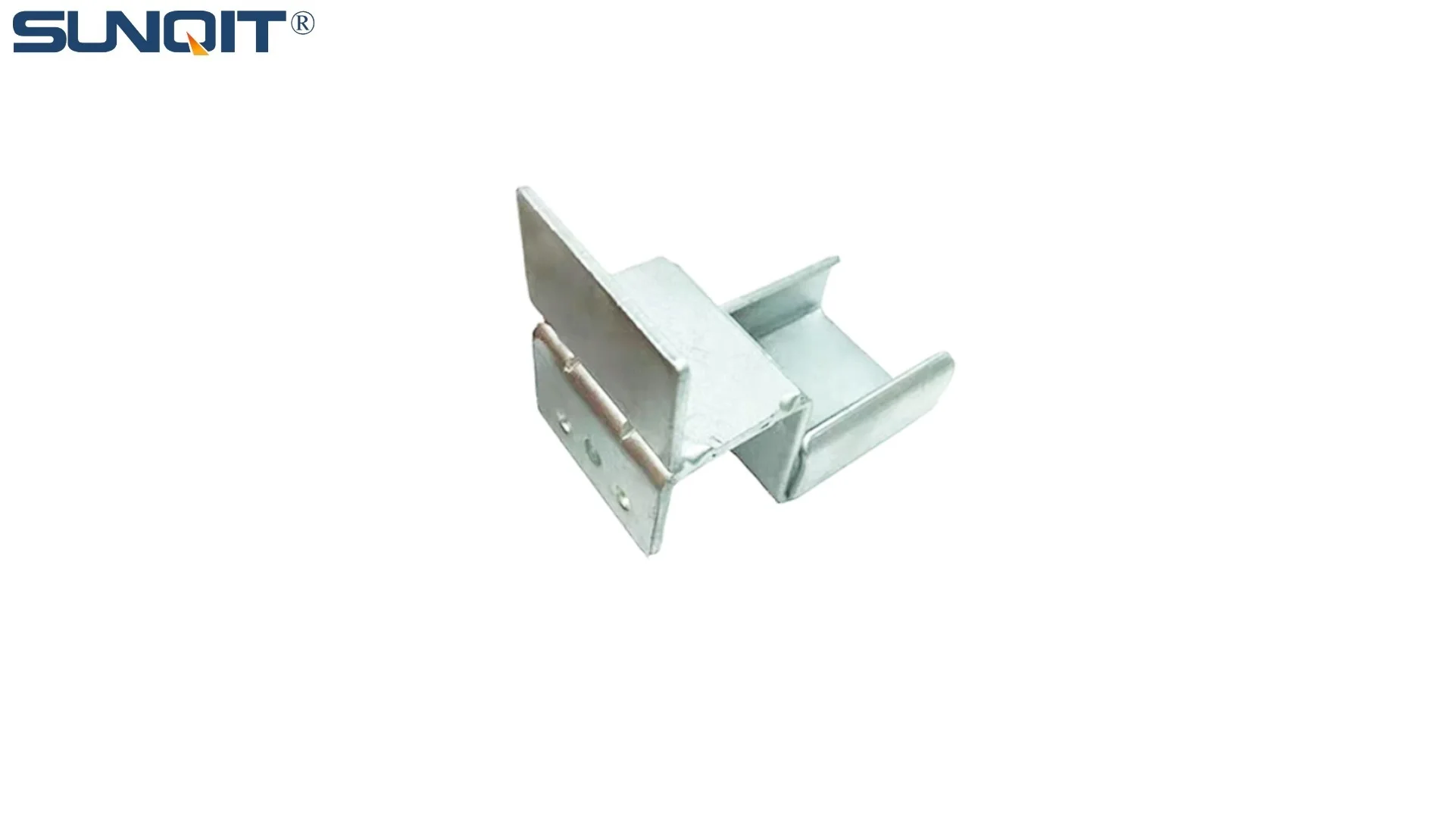
In the fast-paced world of manufacturing, where every minute of downtime can translate to lost opportunities, the efficiency of material flow stands as a cornerstone of success. From the smallest components in 3C assembly lines to heavy parts in automotive workshops, how materials move through production stations directly impacts productivity, product quality, and ultimately, a company's bottom line. Among the many tools designed to streamline this process, roller track systems have long been a favorite for their ability to facilitate smooth, automated material transfer. Yet, even the most well-designed roller tracks can fall short without the right supporting components. Enter the End Support for Roller Track Placon Mount with Stop —a seemingly simple addition that transforms good material flow into exceptional, reliable, and safe operations. Let's explore why this component has become a game-changer for manufacturers aiming to optimize their workflows.
Understanding the Role of Roller Tracks in Modern Manufacturing
Before diving into the specifics of end supports with stops, it's important to grasp why roller tracks are so integral to modern manufacturing. Roller tracks, often part of a broader lean solution , are designed to move materials—whether small electronic parts, bulky automotive components, or medical devices—from one workstation to another with minimal manual effort. They reduce physical strain on workers, cut down on transfer time, and create a predictable flow that aligns with lean principles of eliminating waste. However, their effectiveness hinges on stability, precision, and adaptability. A roller track that wobbles under weight, allows materials to slip off the edges, or fails to withstand constant use can quickly become a bottleneck rather than a solution.
This is where specialized components like the End Support for Roller Track Placon Mount with Stop come into play. Unlike generic supports, this design is engineered to address three critical challenges: keeping materials on track, maintaining structural integrity during heavy use, and adapting to the diverse needs of different industries. It's not just a "part"—it's a strategic tool that enhances the entire roller track system's performance.
Key Advantages of End Support with Stop: Beyond Basic Stability
1. Unmatched Stability for Heavy-Duty Operations
One of the most immediate benefits of the End Support with Stop is its ability to boost the stability of roller track systems, especially when handling heavy or unevenly distributed loads. In industries like automotive manufacturing, where engine parts or chassis components can weigh tens of kilograms, a standard roller track might flex or shift over time, leading to misalignment. Misalignment, in turn, causes materials to jam, slow down, or even damage the track itself. The End Support with Stop addresses this by reinforcing the track's endpoints, creating a rigid foundation that resists bending under pressure.
Consider a scenario in a medical device factory, where delicate equipment parts are transported on roller tracks. These parts are not only heavy but also require precise positioning to avoid damage. With the End Support's robust design—often made from high-grade aluminum or steel—it anchors the track firmly to the floor or workbench, ensuring that even during peak production hours, the track remains steady. This stability translates to smoother material flow, fewer interruptions, and a significant reduction in the risk of costly equipment damage.
2. Preventing Material Slips: The "Stop" Feature That Saves the Day
Perhaps the most distinctive feature of this end support is the integrated "stop" mechanism—a small but powerful addition that prevents materials from sliding off the end of the roller track. In high-speed production lines, especially those using gravity-fed roller tracks, materials can gain momentum as they move, making it easy for them to overshoot their intended workstation. This is more than just an inconvenience; in sectors like 3C assembly, where components are often small, fragile, or sensitive to electrostatic discharge (ESD), a single slip can result in scratched circuit boards, damaged sensors, or even complete product failure.
The stop feature acts as a gentle yet firm barrier, bringing materials to a controlled halt exactly where they need to be. Imagine a lean pipe workbench in a smartphone assembly plant: workers rely on roller tracks to deliver small camera modules to their stations. Without a stop, a module might slide off the track, hit the floor, and become unusable. With the End Support's stop, the module stops precisely at the edge of the workbench, ready for the worker to pick up—no delays, no damage, no waste. This level of control is invaluable for maintaining product quality and reducing scrap rates.
3. Adaptability to Diverse Industry Needs
Manufacturing is not a one-size-fits-all endeavor. A roller track system that works perfectly for medical device assembly may need adjustments for the heavier loads of automotive manufacturing, or the precision requirements of consumer electronics. The End Support for Roller Track Placon Mount with Stop shines here, thanks to its versatile design that integrates seamlessly with various roller track types and industry-specific setups.
For example, in warehouses where flow racks are used to store and retrieve goods, roller tracks are often installed at an incline to leverage gravity. In such cases, the end support's stop feature prevents boxes or packages from sliding out of the rack when not in use, keeping inventory organized and reducing the risk of workplace accidents. In contrast, in a conveyor system that connects multiple production stages, the end support can be adjusted to align with different track heights or angles, ensuring a continuous, smooth flow between stations—whether it's a conveyor moving circuit boards or a roller track feeding parts to a robotic arm.
| Industry | Material Flow Challenge | How End Support with Stop Helps | Key Outcome |
|---|---|---|---|
| 3C Assembly | Small, fragile components prone to slipping | Stop feature prevents overshooting; stable base reduces vibration | 90% reduction in component damage during transfer |
| Automotive Manufacturing | Heavy parts causing track flex and misalignment | Reinforced end support stabilizes track under load | 25% fewer production delays due to track jams |
| Medical Device Production | Precision parts requiring exact positioning | Stop ensures materials halt at exact workstation | Improved assembly accuracy and compliance with safety standards |
| Warehouse Logistics | Inventory sliding off flow racks | Stop feature secures goods when not in use | 30% reduction in misplaced or damaged inventory |
4. Extending Equipment Lifespan Through Reduced Wear and Tear
In manufacturing, equipment durability is a major factor in long-term cost management. Roller tracks, like any mechanical system, are subject to wear and tear—especially at their endpoints, where materials enter and exit, creating repeated impact and stress. Without proper support, these areas can bend, crack, or loosen over time, leading to costly repairs or premature replacement. The End Support for Roller Track Placon Mount with Stop addresses this by absorbing much of the impact and distributing stress evenly across the track's structure.
Made from durable materials like aluminum or steel, the end support acts as a buffer, protecting the roller track's main frame from the daily grind of material transfer. For instance, in a busy consumer electronics plant running two shifts a day, a roller track without proper end support might need replacement every 12–18 months. With the end support, that lifespan can extend to 3–4 years, significantly lowering maintenance costs and reducing downtime for repairs. This aligns perfectly with the lean manufacturing principle of "sustainable improvement" —investing in components that not only work well today but also stand the test of time.
5. Enhancing Workplace Safety: A Priority for Every Manufacturer
Beyond efficiency and cost savings, workplace safety is a non-negotiable aspect of manufacturing operations. Loose or unstable roller tracks pose serious risks: materials can slip off and injure workers, track components can detach and cause accidents, or misaligned tracks can lead to jams that require manual intervention in dangerous areas. The End Support with Stop plays a crucial role in mitigating these risks.
The stop feature, for example, ensures that materials stay within the track's boundaries, eliminating the hazard of falling objects. The reinforced support also reduces the likelihood of track collapse, even when handling heavier-than-usual loads—a common scenario during peak production periods. In environments where workers are constantly moving around machinery, this added stability creates a safer, more predictable workspace, reducing the number of workplace incidents and fostering a culture of care.

Synergy with Other Lean Components: A Holistic Approach to Flow Optimization
While the End Support for Roller Track Placon Mount with Stop is powerful on its own, its true potential shines when integrated with other lean manufacturing tools. For instance, when paired with a lean pipe workbench , it creates a seamless transition from material storage to assembly—workers can easily slide components from the roller track directly onto the workbench, minimizing manual lifting and streamlining the production process. Similarly, in a fully customized lean system, this end support can be combined with conveyors, flow racks, and ESD workstations to create a unified material flow ecosystem that adapts to changing production needs.
Consider a manufacturer specializing in medical devices that decides to expand its product line. With a modular lean system that includes adjustable roller tracks and compatible end supports, they can reconfigure their material flow path in hours, not days—adding new stations, adjusting track angles, or integrating new conveyors without overhauling the entire setup. This flexibility is key in today's manufacturing landscape, where adaptability to market demands often determines competitive advantage.

Conclusion: Small Component, Big Impact on Material Flow
In the grand scheme of manufacturing, the End Support for Roller Track Placon Mount with Stop might seem like a minor detail. But as we've explored, its impact is anything but minor. From stabilizing roller tracks and preventing material slips to enhancing safety and extending equipment lifespan, this component addresses some of the most pressing challenges in material flow optimization. It embodies the lean philosophy of "continuous improvement" —finding smarter, more efficient ways to do things with the right tools.
For manufacturers looking to stay ahead in a competitive market, investing in components like the End Support with Stop is not just about upgrading equipment—it's about investing in reliability, productivity, and the well-being of their teams. In the end, smooth material flow isn't just a goal; it's the foundation upon which successful manufacturing operations are built. And with the right support, that foundation becomes stronger, more adaptable, and ready to handle whatever the future of manufacturing brings.