- Company Articles
- Products and Technology
- Product knowledge
- Aerospace Manufacturing: 2.0mm Stainless Steel Pipe Lightweight Strength

Aerospace Manufacturing: 2.0mm Stainless Steel Pipe Lightweight Strength
Related Product
2.0mm Stainless Steel Pipe
Stainless steel pipe, lean pipe, diameter is 28mm, material is SS201 or SS304, SS201 is normally used in the market. It knows a KARAKURI, KAIZEN material for industrial plant to improve efficiency, save labor cost, standard management.
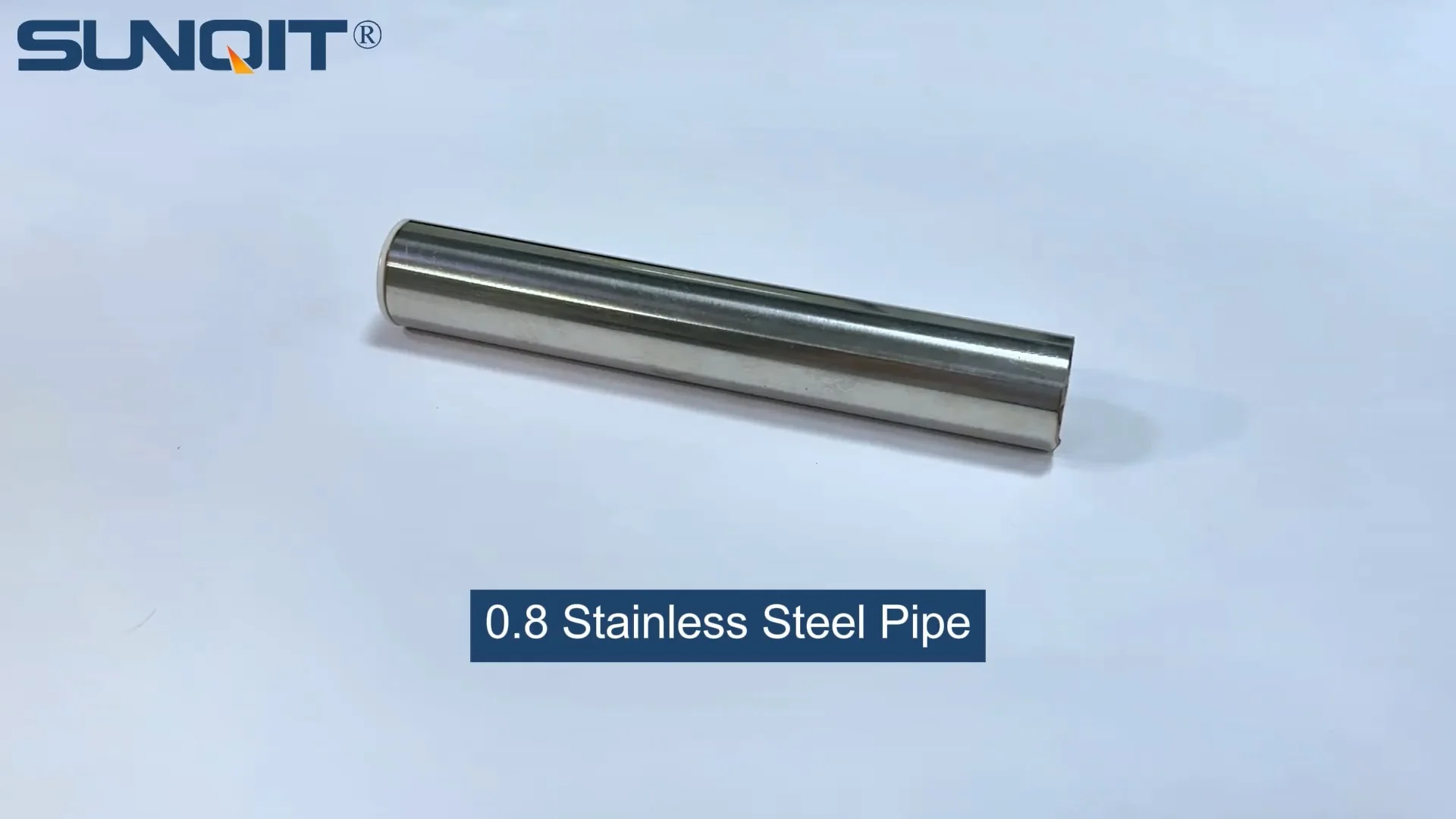
In the high-stakes world of aerospace manufacturing, every component tells a story of precision. From the tiniest screw to the largest fuselage panel, each part must balance two seemingly opposing demands: featherlight agility and tank-like durability. It's a dance of physics and engineering that leaves no room for error. And in this intricate ballet, one material has quietly emerged as a unsung hero: the 2.0mm stainless steel pipe. More than just a length of metal, it's a testament to how innovation in materials science can transform the way we build the machines that defy gravity.
The Aerospace Challenge: Why "Good Enough" Never Is
Walk through any aerospace manufacturing facility, and you'll feel the intensity immediately. The air hums with the low whir of machinery, while workers in crisp uniforms move with deliberate focus, handling components that could spell disaster if mishandled. Here, "lightweight" isn't just a buzzword – it's a mandate. Every extra gram on an aircraft increases fuel consumption, reduces range, and strains engines. But trim too much weight, and you risk sacrificing the structural integrity that keeps passengers safe at 35,000 feet.
Corrosion is another silent enemy. Aircraft components face extreme conditions: humidity in tropical airports, salt spray near coastal runways, and rapid temperature changes at altitude. Even a tiny rust spot can weaken a part over time, turning a minor flaw into a catastrophic failure. And then there's the demands of the manufacturing process itself – equipment must withstand constant cleaning, heavy loads, and the repetitive motion of assembly lines.
For decades, manufacturers walked a tightrope between aluminum (light but less durable) and thicker steel (strong but heavy). It was a compromise that left room for improvement – until the 2.0mm stainless steel pipe stepped into the spotlight.
2.0mm Stainless Steel Pipe: The Sweet Spot of Strength and Thinness
The Science Behind the "Magic" 2.0mm
At first glance, 2.0mm might seem arbitrary – just another number on a spec sheet. But that thickness is the result of years of engineering refinement. Stainless steel, already prized for its chromium-rich alloy that resists corrosion, becomes something extraordinary when rolled into a 2.0mm wall. The key lies in the balance between tensile strength and flexibility. This pipe can bend without breaking, support heavy loads without warping, and yet weigh up to 30% less than a traditional 3.0mm steel pipe of the same diameter.
Manufacturers achieve this through cold-drawing – a process where the steel is pulled through a die at room temperature, aligning its molecular structure for enhanced strength. The result? A pipe that can withstand up to 500 MPa of pressure (that's roughly 50 times the force of a car crash) while remaining lightweight enough to be integrated into everything from assembly line workbenches to component transport systems.
Corrosion Resistance: Built to Outlast the Elements
In aerospace, "outlast" isn't just about years – it's about decades. A commercial aircraft has a lifespan of 25-30 years, and its components must endure thousands of takeoffs, landings, and weather cycles. The 2.0mm stainless steel pipe, part of the broader stainless steel pipe series, is designed with this longevity in mind. Its high chromium content forms a thin, invisible oxide layer on the surface, acting as a shield against moisture, salt, and chemicals. Unlike aluminum, which can corrode if its protective coating is scratched, stainless steel self-heals – the oxide layer reforms when damaged, ensuring the pipe stays strong for the long haul.
This resistance isn't just for the skies, either. On the factory floor, where cleaning agents and lubricants are part of daily life, stainless steel pipe series components stand up to spills and splashes that would rust lesser materials. "We used to replace our old steel workbenches every two years because of rust," says Maria Gonzalez, a production supervisor at a leading aerospace supplier. "Since switching to 2.0mm stainless steel, they've lasted five years and counting. It's saved us time, money, and the hassle of constant repairs."

Stainless Steel Pipe Series: More Than Just Pipes – A Ecosystem of Efficiency
The 2.0mm stainless steel pipe doesn't work alone. It's part of a larger stainless steel pipe series that includes joints, connectors, and accessories, all designed to work in harmony. This ecosystem turns a simple pipe into a versatile building block for everything from workbenches to roller tracks – the unsung heroes of material handling in aerospace facilities.
Take roller tracks, for example. These systems use a series of wheels to glide components across the factory floor, reducing the need for manual lifting and speeding up assembly. When built with stainless steel pipe series components, roller tracks become more than just conveyors – they're precision tools. The 2.0mm pipes provide a rigid frame that keeps the track stable, even when loaded with heavy engine parts, while stainless steel swivel roller balls (often 1 inch or 0.5 inch in size) ensure smooth, scratch-free movement. "We handle turbine blades that cost $50,000 each," says James Chen, a materials handler at an aerospace plant. "A single scratch could ruin one. With stainless steel roller tracks, we never worry about jams or rough spots – the parts glide like they're on ice."

Lean Systems: Building Smarter, Not Harder
Aerospace manufacturing isn't just about making parts – it's about making them efficiently. That's where lean systems come in. Lean manufacturing is all about eliminating waste: wasted time, wasted space, wasted effort. And the 2.0mm stainless steel pipe is a lean system's best friend. Its lightweight nature makes it easy to reconfigure workstations as production needs change, while its strength ensures those configurations stay stable.
Consider the humble workbench. In a traditional setup, workbenches are heavy, fixed structures that take hours to move or modify. But with stainless steel pipe series components, a workbench can be assembled, disassembled, or rearranged in minutes. Need to add a shelf for tools? Snap on a few joints. Want to lower the height for a shorter worker? Adjust the pipe lengths. "We used to have to call maintenance every time we wanted to tweak a workstation," says Gonzalez. "Now, the team does it themselves. It's cut setup time by 60%."
Lean systems also thrive on consistency, and the stainless steel pipe series delivers that in spades. Every pipe, joint, and roller track connector is precision-manufactured to tight tolerances, ensuring that a workstation built in California is identical to one built in Germany. This standardization reduces errors, simplifies training, and makes it easy to scale production up or down as demand shifts.
How Does It Stack Up? A Material Comparison
| Material | Thickness | Weight (per meter) | Tensile Strength | Corrosion Resistance | Best For |
|---|---|---|---|---|---|
| 2.0mm Stainless Steel Pipe | 2.0mm | 1.8 kg | 500-600 MPa | Excellent (self-healing oxide layer) | Workstations, roller tracks, lean systems |
| 3.0mm Carbon Steel Pipe | 3.0mm | 2.7 kg | 400-500 MPa | Poor (requires painting/coating) | Heavy-duty, indoor-only structures |
| Aluminum Pipe (6061-T6) | 2.0mm | 0.9 kg | 276 MPa | Good (but scratches compromise protection) | Light, low-load applications |
As the table shows, 2.0mm stainless steel pipe strikes a rare balance: it's lighter than carbon steel, stronger than aluminum, and far more corrosion-resistant than both. For aerospace manufacturers, that means safer, more efficient operations – and ultimately, better aircraft.
From Factory Floor to Flight: The Ripple Effect of Better Materials
It's easy to overlook the impact of a single pipe in the grand scheme of aerospace manufacturing. But ask any worker on the floor, and they'll tell you: the right tools make all the difference. When a roller track glides smoothly, when a workbench stays stable under heavy loads, when a workstation can be adjusted in minutes instead of hours – these small improvements add up to big results.
Take Chen, the materials handler, who no longer worries about damaging $50,000 turbine blades. Or Gonzalez, the supervisor, who's seen production output rise 15% since switching to lean systems built with stainless steel pipe series components. "It's not just about the parts we make," she says. "It's about the people making them. When your tools work with you, not against you, everyone's happier – and happier workers make better products."
And those better products? They're the ones that carry millions of passengers safely across oceans every day. The 2.0mm stainless steel pipe might never leave the factory floor, but its influence soars high above the clouds.
The Future of Stainless Steel Pipe in Aerospace
As aerospace manufacturing continues to evolve – with electric aircraft, supersonic travel, and even space tourism on the horizon – the demands on materials will only grow. And the stainless steel pipe series is ready to rise to the challenge. Researchers are already experimenting with new alloys that could make 2.0mm pipes even stronger or more lightweight, while manufacturers are developing smarter joints and connectors that make reconfiguring lean systems even faster.
One thing is clear: the 2.0mm stainless steel pipe isn't just a trend. It's a fundamental shift in how we think about building the future of flight. It's proof that sometimes, the most powerful innovations aren't the flashy ones – they're the ones that quietly, reliably, make everything else work better.
Conclusion: The Pipe That Helps Us Reach for the Stars
Aerospace manufacturing is a pursuit of perfection. It's about pushing the limits of what's possible, one component at a time. In that pursuit, the 2.0mm stainless steel pipe has earned its place as a critical tool – not because it's glamorous, but because it's dependable. It's strong when it needs to be, light when it counts, and resilient in the face of whatever the factory or the sky throws at it.
So the next time you board a plane, take a moment to appreciate the unseen heroes that make your flight possible. The engines, the wings, the avionics – they're all remarkable. But so too is the humble 2.0mm stainless steel pipe, quietly holding the manufacturing process together, one lean system, one roller track, one workbench at a time. In the end, it's not just a pipe. It's a bridge between the factory floor and the future of flight.