- Company Articles
- Products and Technology
- Product knowledge
- Aerospace Manufacturing: Lightweight Gusset Alp 3030 for Precision Assemblies

Aerospace Manufacturing: Lightweight Gusset Alp 3030 for Precision Assemblies
Related Product
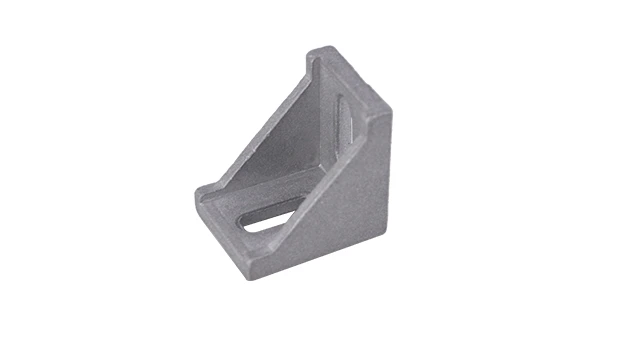
Gusset ALP 3030
The 3030 bracket/Gusset is an external fastening method that creates a 90 degree connection. 3030 means this size is used for 30 series aluminum profile with a quick connection by bolt and nut.
In the high-stakes world of aerospace manufacturing, where a fraction of a millimeter can alter performance and safety, the tools and components that shape production lines matter as much as the aircraft themselves. Every nut, bolt, and bracket plays a role in ensuring that when a jetliner takes flight or a satellite orbits Earth, it does so with unwavering reliability. Yet, for decades, many manufacturers grappled with a hidden challenge: rigid, outdated assembly systems that slowed progress, limited adaptability, and introduced unnecessary margin for error. Enter the era of modular, lightweight solutions—where components like the gusset alp 3030 and aluminum profile are redefining what's possible in precision assembly.
The Hidden Cost of Rigidity in Aerospace Production
Walk into a traditional aerospace manufacturing facility ten years ago, and you'd likely encounter a maze of heavy steel workbenches bolted to the floor, fixed roller tracks that couldn't be adjusted without welding, and material racks that seemed designed for a single aircraft model. These systems, while sturdy, came with a steep price: inflexibility. When an order for a new aircraft variant came in, reconfiguring the line meant days of downtime—cutting steel, rewelding frames, and recalibrating tools. Worse, the weight of steel components added stress to production floors, increased energy use for material handling, and made even small adjustments feel like Herculean tasks.
Consider the story of a mid-sized aerospace supplier in Colorado that specialized in engine nacelle components. In 2018, they landed a contract to produce parts for a next-gen fuel-efficient engine. Their existing steel workbenches, however, were too low to accommodate the new nacelle's taller design. Raising them required cutting the steel legs, welding on extensions, and reinstalling the entire structure—taking three full shifts and delaying production by a week. "We lost nearly $150,000 in downtime alone," recalls the plant manager. "And even after the, the benches wobbled because the welds introduced micro-imperfections. We had to add extra braces just to meet our precision requirements."
This isn't an isolated case. Across the industry, manufacturers were realizing that rigidity wasn't just a logistical headache—it was a barrier to innovation. As aircraft designs evolved to be lighter, more aerodynamic, and packed with advanced technology, production systems needed to keep pace. The solution? Lean system principles paired with modular, lightweight components that could adapt as quickly as the blueprints changed.
Lean Systems: More Than a Buzzword—A Manufacturing Revolution
Lean manufacturing, born from the Toyota Production System, has long been about eliminating waste—whether in time, materials, or effort. But in aerospace, "lean" takes on a deeper meaning. It's about creating production lines that can pivot with minimal disruption, reduce human error through intuitive design, and maintain the microscopic tolerances that aerospace demands. And at the heart of this revolution are materials that align with lean goals: strong yet lightweight, durable yet flexible, and precise to the core.
Aluminum has emerged as a star player here. Unlike steel, aluminum offers a rare combination of high strength-to-weight ratio, corrosion resistance, and machinability. When shaped into aluminum profile—extruded into standardized, T-slotted beams— it becomes a building block for modular systems. These profiles can be connected, extended, or reconfigured using simple fasteners, no welding required. But even the best aluminum profile needs reinforcement at critical joints to handle the stresses of aerospace assembly—enter the gusset alp 3030.

Gusset Alp 3030: The Unsung Hero of Precision Joints
If aluminum profile is the backbone of modular assembly systems, then the gusset alp 3030 is the spine that keeps it strong. A gusset, for the uninitiated, is a triangular bracket used to reinforce right-angle joints—think of it as the "cornerstone" that prevents a frame from wobbling or bending under load. In aerospace, where workbenches might hold 500-pound engine components or roller tracks need to glide with sub-millimeter precision, the gusset isn't just a support piece; it's a guardian of accuracy.
Traditional steel gussets, while strong, are bulky and unforgiving. They add unnecessary weight, require precise welding (which can warp the frame), and corrode over time—even with protective coatings. The gusset alp 3030, by contrast, is engineered for the demands of modern aerospace. Made from high-grade 6061-T6 aluminum alloy—used in aircraft wings and fuselages for its strength and fatigue resistance—it's 40% lighter than steel equivalents. Its design is equally clever: precision-machined to fit snugly into the T-slots of 3030 aluminum profile, with pre-drilled holes that align perfectly with standard fasteners. No welding, no guesswork, just a secure, rattle-free joint that maintains tolerance within ±0.1mm.
But what truly sets the gusset alp 3030 apart is its versatility. Unlike fixed steel gussets, it can be easily removed and reused when a workbench or roller track needs to be reconfigured. Imagine a production line switching from assembling cockpit avionics to landing gear components: with traditional steel, you'd need new gussets and a welder. With the gusset alp 3030, you loosen a few bolts, adjust the aluminum profile, and reattach the gusset—done in under an hour. This adaptability isn't just convenient; it's a lifeline for manufacturers juggling multiple aircraft programs.

From Workbench to Roller Track: Real-World Applications
To understand the impact of the gusset alp 3030, let's look at its most common applications in aerospace manufacturing—each a testament to how small components drive big change.
Workbenches: Stability Where It Counts
Aerospace assembly workbenches are more than just tables. They're workstations where technicians install wiring harnesses, attach sensors, or align turbine blades—tasks that demand a surface so stable, even the vibration from a nearby drill doesn't disrupt measurements. Traditional steel workbenches often struggled here: over time, welds would loosen, legs would bend, and the surface would develop "soft spots" that threw off precision tools.
Modular workbenches built with aluminum profile and gusset alp 3030 solve this. The gusset reinforces every corner joint, distributing weight evenly across the frame. A 6-foot workbench using 3030 aluminum profile and gusset alp 3030 can support up to 1,200 pounds without flexing—more than enough for engine components—while weighing just 85 pounds (compared to 140+ pounds for a steel equivalent). This lightweight design also makes the workbench mobile; add locking casters, and it can be moved to where it's needed, then locked down with rock-solid stability.
Take the example of a California-based manufacturer that produces satellite antenna dishes. Their old steel workbenches weighed 160 pounds each, making them impossible to move. When they switched to aluminum profile workbenches with gusset alp 3030, they cut the weight to 90 pounds. "Now, we can roll a workbench right up to the testing chamber instead of carrying delicate antennas across the floor," says their lead engineer. "We've reduced handling errors by 22% and cut setup time for new antenna models by 40%."
Roller Tracks: Smooth Flow, Consistent Results
Material flow is the lifeblood of aerospace production. Parts need to glide from one workstation to the next with minimal friction, maintaining alignment so that when a technician picks up a component, it's in exactly the right position. Roller tracks—lines of rotating rollers that carry parts—are critical here. But traditional steel roller tracks had a flaw: their frames, held together with heavy gussets, would warp under the constant stress of rolling loads, leading to uneven movement and parts that "jammed" or shifted off course.
Aluminum roller tracks, reinforced with gusset alp 3030, eliminate this issue. The gusset ensures the track's aluminum profile frame stays square, even under the weight of repeated impacts (like a 200-pound toolbox being rolled into place). The aluminum itself is smoother than steel, reducing friction between the rollers and the track. And because the gusset allows for easy adjustments, tracks can be angled slightly to control flow speed—critical for delicate parts like composite panels that can't be jostled.
A major aerospace tier-1 supplier in Texas recently upgraded their wing panel assembly line with aluminum roller tracks and gusset alp 3030. Previously, their steel tracks required weekly maintenance to fix warped sections, and parts would shift by up to 2mm during transport—enough to require rework. After the upgrade? "We haven't had a single jam in six months," reports their production supervisor. "The panels glide straight every time, and we've cut rework time by 35%. The gusset keeps the track rigid, so even when a panel hits a roller at an angle, the frame doesn't budge."
Material Racks: Secure Storage, Easy Access
Aerospace parts—whether titanium fasteners or composite fairings—need to be stored securely, yet accessible. Material racks must withstand the weight of stacked components without sagging, while allowing technicians to grab parts quickly. Steel racks often overdelivered on strength but underdelivered on flexibility; adjusting shelf heights meant drilling new holes or welding new supports.
Aluminum profile racks with gusset alp 3030 strike the perfect balance. The gusset reinforces the vertical joints, preventing shelves from tilting under heavy loads, while the T-slotted aluminum profile lets shelves be repositioned in seconds using sliding brackets. A typical 5-shelf rack can hold 800 pounds per shelf, yet weighs 60% less than a steel rack of the same size. This not only saves floor space but also makes the rack easy to relocate if storage needs change.
The Numbers Speak: A Comparison of Traditional vs. Modular Components
Still skeptical that a small bracket like the gusset alp 3030 can make a difference? Let's look at the data. Below is a comparison of traditional steel components and their modular aluminum counterparts, including the gusset alp 3030 and aluminum profile.
| Feature | Traditional Steel Components | Modular Aluminum Components (Aluminum Profile + Gusset Alp 3030) |
|---|---|---|
| Weight (per 6-foot assembly) | 140 lbs (workbench frame) | 85 lbs (workbench frame) – 40% reduction |
| Assembly Time | 2–3 hours (welding, drilling, painting) | 30–45 minutes (bolt-on, no special tools) |
| Corrosion Resistance | Prone to rust; requires annual coating | Naturally corrosion-resistant; no coating needed |
| Tolerance Accuracy | ±0.5mm (varies with welding/installation) | ±0.1mm (precision-machined components) |
| Reusability | Limited (permanent welds; damage during disassembly) | 100% reusable (modular design; no permanent bonds) |
| Maintenance Cost (annual) | $300–$500 per assembly (repairs, coatings, replacements) | $50–$100 per assembly (occasional fastener tightening) |
The savings add up quickly. A manufacturer with 20 workbenches, 10 roller tracks, and 15 material racks could reduce annual maintenance costs by over $25,000, cut assembly time by hundreds of hours, and free up floor space by using lighter, more compact systems. And in aerospace, where every dollar and minute counts, these gains translate directly to competitive advantage.
The Road Ahead: Why Modular Components Are Here to Stay
As aerospace manufacturing continues to evolve—with electric aircraft, hypersonic vehicles, and reusable rockets on the horizon—production systems will face even greater demands. These next-gen programs will require production lines that can switch between prototypes and full-scale production, adapt to new materials like carbon fiber, and maintain tolerances that make today's standards look lenient.
Modular components like the gusset alp 3030 and aluminum profile are perfectly positioned to meet these challenges. Their lightweight design aligns with the industry's push for sustainability (aluminum is 100% recyclable, with 95% less energy used to recycle than to produce new metal). Their adaptability ensures manufacturers can prototype quickly, scale up production, and pivot to new designs without overhauling entire lines. And their precision ensures that even as aircraft become more complex, the tools building them remain reliable.
Perhaps most importantly, these components empower the people behind the machines. Technicians no longer have to work around rigid, outdated systems; instead, they can shape their workspaces to fit the task at hand. As one aerospace technician put it: "With the old steel benches, I felt like the line was in control. Now, with these aluminum workbenches and gussets, I'm in control. I can adjust the height, add a shelf, or move the bench—whatever helps me do the job better. And when I'm happier, I'm more precise. It's that simple."
Conclusion: Small Components, Big Dreams
Aerospace manufacturing is a industry of big dreams—of breaking the sound barrier, reaching Mars, or connecting the world through faster, greener flight. But behind every dream is a million small details: the bolts that hold a wing together, the sensors that guide a rocket, and yes, the gussets that keep a workbench stable. The gusset alp 3030 may be small in size, but its impact is enormous. By combining the strength of aluminum profile with the precision of lean system principles, it's helping manufacturers build the future—one joint, one workbench, one aircraft at a time.
So the next time you look up at the sky and see a plane soaring by, remember: somewhere on the ground, there's a production line built with components that value adaptability as much as strength, precision as much as durability, and progress as much as tradition. And in that line, you'll find the quiet power of the gusset alp 3030—proof that even the smallest parts can lift the industry to new heights.