- Company Articles
- Products and Technology
- Product knowledge
- Agile Workstations: Flat Swivel Castor Wheel with Brake for Flexible Manufacturing Layouts

Agile Workstations: Flat Swivel Castor Wheel with Brake for Flexible Manufacturing Layouts
Related Product
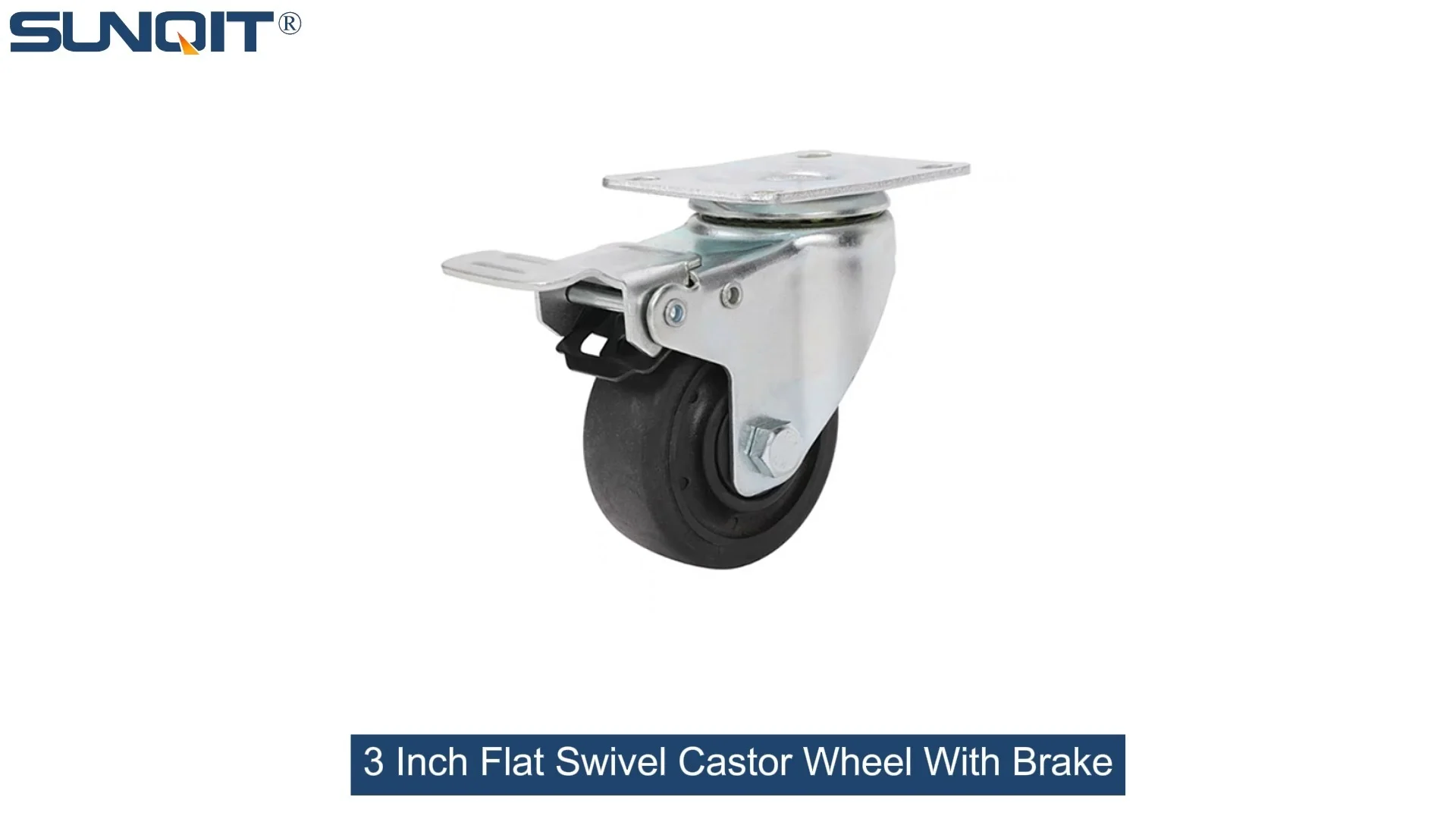
Flat Swivel Castor Wheel With Brake
Chair Casters Ball Bearing Wheels Rubber Base with brake design. Resistant to abrasion, impact and corrosion. Heavy payload can hold 70Kgs per pcs,which can make it works at a stable and smooth status.
How a small component is transforming the way factories adapt, collaborate, and thrive
The Manufacturing Revolution No One Saw Coming
Walk into any modern factory today, and you'll notice something different. Gone are the days of static production lines bolted to the floor, where reconfiguring a workspace meant weeks of planning, heavy machinery, and lost productivity. Instead, you'll find teams rearranging workbenches like puzzle pieces, moving materials with effortless glides, and adapting layouts in hours—not months—to meet sudden shifts in demand. This isn't magic. It's the rise of agile workstations, and at the heart of this transformation lies a component so, it's often overlooked: the flat swivel castor wheel with brake .
In an era where customers demand customization, where product lifecycles shrink from years to months, and where "just-in-time" isn't just a buzzword but a survival strategy, flexibility isn't optional anymore. It's the difference between a factory that adapts and one that gets left behind. And while flashy robots and high-tech software grab headlines, the real workhorses of flexibility are the tools that let teams move, adjust, and collaborate without friction. That's where the right castor wheel comes in.
What Makes a Workstation "Agile"?
Agile workstations aren't just tables on wheels. They're ecosystems designed to support the chaos of modern manufacturing. Think of them as the Swiss Army knives of the factory floor: adaptable, multi-functional, and ready to tackle whatever the day throws at them. But what really sets them apart is mobility. A workstation that can't move is a workstation stuck in the past—and in today's world, "stuck" equals obsolete.
Consider this scenario: A electronics manufacturer gets a rush order for a new gadget. The production team needs to shift from assembling smartwatches to fitness trackers. If their workbenches are fixed, they might spend days disassembling, rearranging, and reconnecting equipment. With agile workstations? They unlock the brakes, roll the benches into a new U-shape to optimize workflow, lock them in place, and start production—all before lunch. That's the power of mobility, and it's only possible with reliable, durable castors that can handle the demands of the factory floor.
But not all castors are created equal. A cheap, flimsy wheel might work for a office chair, but on a workstation loaded with tools, parts, and machinery? It's a disaster waiting to happen. That's why the flat swivel castor wheel with brake has become the gold standard for agile workstations. It's not just a wheel—it's a promise of stability when you need it, and freedom to move when you don't.
Why the Right Castor Wheel Matters More Than You Think
Let's talk about the problems factories face without good castors. Imagine pushing a loaded workbench across the floor, only to have it veer off course because the swivel mechanism is sticky. Or worse, trying to stop it, but the brake is weak, and it slides into a machine. Now multiply that frustration across an entire shift, every day. Suddenly, "flexibility" becomes a source of stress, not efficiency. Workers waste energy fighting with equipment, deadlines get missed, and morale plummets.
Then there's safety. A workstation that rolls unexpectedly can cause injuries—pinched fingers, trips, or collisions. In a lean system, where every second counts, downtime due to accidents is the last thing anyone needs. The flat swivel castor wheel with brake addresses these issues head-on. Its flat design ensures stability, even with heavy loads. The swivel mechanism is smooth, so changing direction is effortless. And the brake? It's robust enough to lock the wheel in place, even on uneven floors, giving workers confidence that their workstation won't budge until they want it to.
| Castor Type | Swivel Smoothness | Brake Reliability | Load Capacity (Max) | Best For |
|---|---|---|---|---|
| Flat Swivel Castor with Brake | Excellent (360° effortless rotation) | High (dual-lock mechanism) | 500-800 lbs | Agile workstations, heavy-duty trolleys |
| Standard Rigid Castor | None (fixed direction) | Basic (wheel lock only) | 300-600 lbs | Static storage racks |
| Stem Swivel Castor (No Brake) | Good (but prone to sticking over time) | None | 200-400 lbs | Light office furniture |
The table above tells the story: when it comes to agile workstations, the flat swivel castor with brake outperforms other options in every critical category. It's not just a upgrade—it's a necessity for factories serious about flexibility.

Inside the Design: What Makes This Castor a Game-Changer
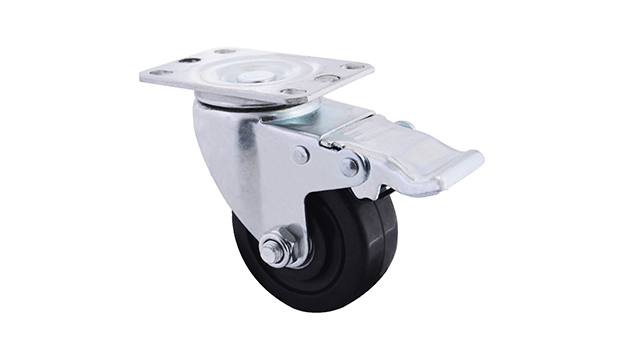
Let's get technical—without getting boring. The flat swivel castor wheel with brake might look simple, but every part is engineered for performance. Start with the "flat" part: unlike stem castors, which mount via a rod, flat castors attach directly to the bottom of the workstation with a plate. This distributes weight evenly, reducing stress on the workstation frame and preventing wobbling, even when loaded unevenly. It's like the difference between standing on one foot and two—stability matters.
Then there's the swivel mechanism. Inside the castor housing, precision ball bearings allow the wheel to rotate 360° with minimal effort. No more grunting to turn a corner—even a single worker can maneuver a fully loaded workstation with one hand. This is a game-changer for small teams, where every pair of hands counts.
The brake is where the magic really happens. Most cheap castors have a "wheel lock" that only stops the wheel from spinning. But this castor uses a "total lock" brake: when engaged, it locks both the wheel and the swivel mechanism. That means the workstation can't roll or turn—perfect for tasks that require precision, like assembly or quality control. Disengaging the brake is just as easy: a simple foot pedal that even workers in heavy boots can operate without bending down.
Materials matter too. The wheel itself is often made of polyurethane, which balances durability with floor protection. Unlike hard rubber or metal wheels, polyurethane glides smoothly over concrete, tile, or even uneven factory floors without leaving scuffs or marks. The housing is typically steel or aluminum, coated to resist rust and corrosion—essential in environments where spills or humidity are common.

Supporting Lean Systems: From Waste Reduction to Worker Empowerment
Agile workstations and lean systems go hand in hand. Lean is all about eliminating waste—whether it's time, materials, or motion. And nothing wastes more motion than a worker walking back and forth between a fixed workstation and a distant storage area. With a mobile workstation on flat swivel castors, tools and materials come to the worker, not the other way around. That's "motion waste" reduced to zero.
Take 5S, a cornerstone of lean methodology: Sort, Set in Order, Shine, Standardize, Sustain. An agile workstation makes "Set in Order" a breeze. At the end of a shift, workers can roll their workbench to a cleaning station, lock the brakes, wipe it down, and reposition it for the next day's tasks—no more bending under tables or stretching to reach far corners. And because the workstation stays organized (thanks to built-in tool holders and storage), "Sustain" becomes second nature.
Just-in-time (JIT) production is another area where mobility shines. In JIT, materials arrive exactly when they're needed, reducing inventory costs. But if your workstation can't move to the delivery point, you're stuck storing materials temporarily—wasting space and risking damage. With a mobile workstation, you meet the delivery truck at the dock, load up, and roll directly to the production line. It's seamless, efficient, and quintessentially lean.
Perhaps the biggest impact, though, is on worker empowerment. When teams can rearrange their workspace to fit their workflow—not the other way around—they take ownership of their productivity. A study by the Manufacturing Institute found that factories with agile workstations reported 23% higher employee engagement scores. Why? Because workers feel heard. They're not just following orders; they're designing the space where they spend most of their day. And when employees are engaged, quality and efficiency soar.
Beyond Workstations: Turnover Trolleys and Racks
The flat swivel castor wheel with brake isn't just for workbenches. It's a versatile component that transforms other equipment too—like turnover trolley and rack systems. Turnover trolleys are used to transport materials between departments: from storage to production, production to packaging, packaging to shipping. Without good castors, these trolleys become cumbersome, especially when loaded with heavy parts or fragile goods.
Imagine a warehouse where turnover trolley and rack units are equipped with these castors. A worker can load a trolley with circuit boards, swivel it around a tight corner, lock the brakes at the assembly line, unload, and then roll it back—all without breaking a sweat. No more waiting for a forklift, no more struggling with uncooperative wheels. It's a small change that adds up to hours of saved time every week.
Racks, too, benefit from mobility. Traditionally, storage racks are fixed, meaning you have to design your warehouse layout around them. With mobile racks on flat swivel castors, you can reconfigure storage on the fly. Need more space for a new product line? Roll the racks to the side. Seasonal demand spike? Bring extra racks out of storage and lock them in place. It's like having a warehouse that can shrink or grow as needed—without construction.
Keeping the Wheels Turning: Maintenance and Care
Even the best castors need a little TLC to keep performing. The good news is, maintaining flat swivel castor wheel with brake units is simple—no special tools or expertise required. Here's a quick checklist to keep them in top shape:
- Clean Regularly: Wipe down the castor housing and wheel with a damp cloth to remove dust, debris, and oil. Built-up grime can gum up the swivel mechanism, making rotation stiff.
- Lubricate the Swivel Joint: Every 3-6 months (more often in dusty environments), apply a few drops of lubricating oil to the swivel bearings. This keeps rotation smooth and prevents rust.
- Inspect the Brake: Check the brake pedal and linkage for wear. If the brake feels loose or doesn't engage fully, tighten the adjustment screws (most castors have them) or replace worn parts. Caster accessories like replacement brake pads are cheap and easy to install.
- Check Wheel Condition: Look for cracks, flat spots, or excessive wear on the wheel. If the wheel is damaged, replace it immediately—damaged wheels can cause wobbling and increase stress on the swivel mechanism.
By following these steps, you can extend the life of your castors from 2-3 years to 5-7 years—saving money on replacements and reducing downtime.
The Future of Manufacturing: Where Mobility Meets Innovation
As manufacturing continues to evolve, one thing is clear: flexibility will only become more important. The rise of Industry 4.0, with its smart factories and interconnected systems, is often seen as the next frontier. But even the smartest factory can't reach its full potential if its workstations are stuck in place. Mobility is the foundation upon which these innovations will be built.
Imagine a future where AI algorithms suggest optimal workstation layouts based on real-time production data—and workers can implement those changes in minutes, thanks to agile workstations on flat swivel castors. Or where collaborative robots ("cobots") work alongside mobile workstations, moving in sync to assemble products. It's not science fiction; it's the logical next step.
But even as technology advances, the basics will remain. A castor wheel might not have sensors or software, but it enables the flexibility that makes all those high-tech tools useful. It's a reminder that innovation isn't always about the newest gadget—it's about solving everyday problems in smarter ways.
The Bottom Line: Invest in Mobility, Invest in Success
At the end of the day, factories are about people. People designing, building, and delivering products that improve lives. The tools they use should make their jobs easier, not harder. The flat swivel castor wheel with brake does exactly that. It turns static workstations into agile, adaptable hubs of productivity. It reduces waste, boosts efficiency, and empowers workers to take control of their workspace.
So if you're looking to transform your factory into a lean, flexible powerhouse, don't overlook the little things. Start with the wheels. Invest in castors that can keep up with your team's ambition. Because in the world of modern manufacturing, the ability to move isn't just a luxury—it's the key to staying ahead.
"The greatest innovations often come from solving the smallest problems." — Unknown (but definitely a manufacturing genius)