- Company Articles
- Products and Technology
- Technology Sharing
- Aligning Three Way Lean Pipe Joint with Lean Manufacturing Principles

Aligning Three Way Lean Pipe Joint with Lean Manufacturing Principles
Related Product
Three Way Lean Pipe Joint
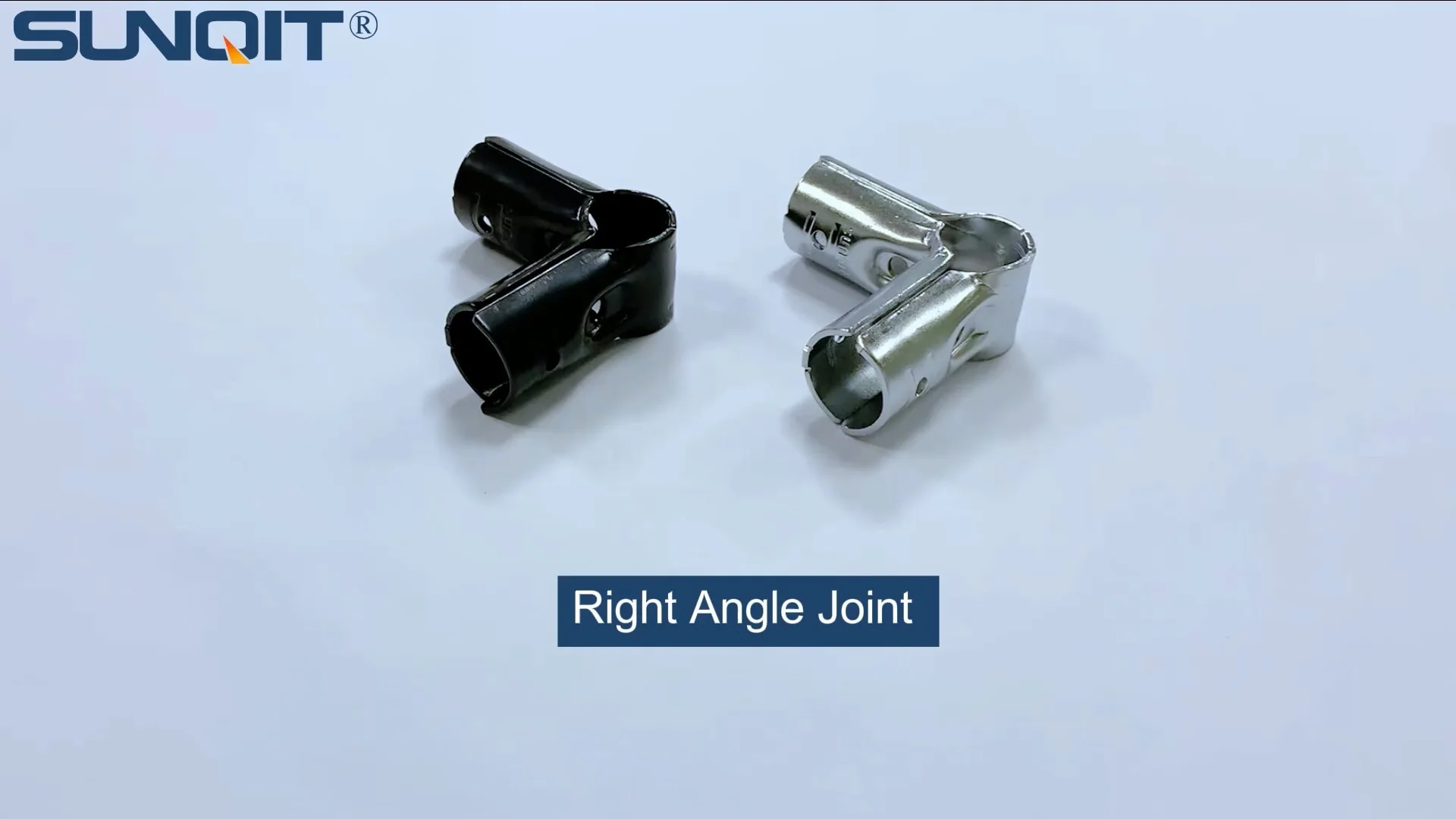
Three way lean pipe joint for 3 pcs 28MM lean pipe connection in straight angle, which used widely in workbench, flow rack, hand trolley frame connection.
In the fast-paced world of manufacturing, where efficiency, adaptability, and waste reduction are not just goals but necessities, Lean Manufacturing has emerged as a guiding philosophy. At its core, Lean is about creating more value with fewer resources—eliminating waste, streamlining processes, and empowering teams to continuously improve. While Lean principles often focus on workflows and mindset, the physical tools and systems that support these processes play an equally critical role. Among these tools, lean pipe systems stand out for their ability to transform static workspaces into dynamic, flexible environments. And at the heart of these systems lies a small but mighty component: the three way lean pipe joint. In this article, we'll explore how this unassuming connector aligns seamlessly with Lean principles, becoming a cornerstone for businesses striving to build more efficient, responsive, and human-centered production lines.
Understanding Lean Manufacturing: Beyond the Buzzword
Before diving into the specifics of the three way lean pipe joint, let's ground ourselves in what Lean Manufacturing truly entails. Born from the Toyota Production System (TPS) in the mid-20th century, Lean is built on two foundational pillars: jidoka (automation with a human touch) and just-in-time (JIT) production. But its practical application revolves around eliminating seven types of waste, or muda : overproduction, waiting, transportation, overprocessing, inventory, motion, and defects. Beyond waste reduction, Lean emphasizes flexibility—adapting quickly to changing customer demands—and continuous improvement, or kaizen , where small, iterative changes lead to significant long-term gains.
In today's manufacturing landscape, where product lifecycles shrink and customization demands grow, rigidity is the enemy. A production line that can't adjust to new product specs, fluctuating order volumes, or team feedback becomes a bottleneck, driving up costs and stifling innovation. This is where lean pipe systems—often called "flexible tubing systems"—shine. Made from materials like steel (often with a polyethylene coating, or "pe coated lean pipe") or aluminum, these systems use modular pipes and joints to build everything from workbenches and flow racks to turnover trolleys and material racks. And among the many components that make these systems flexible, the three way lean pipe joint is a unsung hero.
The Basics of Lean Pipe Systems: Building Blocks of Flexibility
Lean pipe systems are designed around simplicity and modularity. Imagine a set of building blocks for adults: pipes (lean tubes), joints, and accessories that snap together without welding, drilling, or specialized tools. This modularity means that unlike traditional fixed workstations—built with custom metal frames or wood—lean pipe structures can be assembled, disassembled, and reconfigured in minutes. Need a taller workbench for a new operator? Adjust the pipes. Want to add a shelf to a flow rack to accommodate larger parts? Swap out a joint. This ease of modification is why lean pipe systems are a staple in industries ranging from automotive and electronics to pharmaceuticals and logistics.
At the core of these systems are the joints. Joints connect pipes at various angles, enabling the creation of complex structures from simple components. There are two-way joints for straight lines, four-way joints for cross-sections, swivel joints for adjustable angles, and more. But for many manufacturers, the three way lean pipe joint is the most versatile of all. As the name suggests, it connects three pipes at once, typically at 90-degree angles (though some designs allow for adjustability). This ability to branch off in multiple directions makes it ideal for building sturdy, multi-functional structures—think a workbench with integrated shelving, a flow rack with multiple levels, or a turnover trolley with side rails.

Focus on the Three Way Lean Pipe Joint: Design and Functionality
Let's take a closer look at the three way lean pipe joint. Most designs feature a central body with three ports (openings) where pipes insert. The joint is secured to the pipes using a clamping mechanism—often a setscrew or a cam lever—that tightens against the pipe, creating a strong, stable connection. Many joints are made from die-cast zinc or aluminum, with finishes like chrome (as in "lean pipe joint chrome") for durability and corrosion resistance. This simple yet effective design means that even someone with minimal training can assemble a sturdy structure; no need for a team of engineers or welders.
What makes the three way joint so valuable? Its ability to create "nodes" in a lean pipe system. A node is a connection point where multiple components meet, and nodes are what give a structure its strength and versatility. For example, in a typical workbench, three way joints might be used at the corners to connect the vertical legs to the horizontal rails of the tabletop and the lower shelf. This creates a stable, rectangular frame that can support tools, parts bins, and even heavy equipment. In a flow rack—used to move materials from one workstation to another via gravity—three way joints might connect the side rails to the inclined roller tracks, ensuring the tracks are aligned at the perfect angle for smooth material flow.
Another key feature of many three way joints is their reusability. Unlike welded connections, which are permanent, the three way joint can be loosened, adjusted, and reused in new configurations. This not only reduces waste (no more scrapping an entire workstation because of a single design flaw) but also encourages experimentation. Teams can test new layouts, see what works, and tweak as needed—all without incurring significant costs. This aligns perfectly with Lean's emphasis on continuous improvement: if a workstation isn't optimizing motion (one of the seven wastes), the team can rearrange it using the same joints and pipes until it does.

Aligning with Lean Principles: How the Three Way Joint Drives Efficiency
Now, let's connect the dots: how does the three way lean pipe joint specifically support Lean Manufacturing principles? Let's break it down through the lens of key Lean concepts.
1. Eliminating Waste (Muda): Time, Material, and Effort
Waste reduction is the cornerstone of Lean, and the three way joint excels here. Consider the traditional approach to building a workstation: a design engineer drafts plans, a fabrication shop cuts and welds metal, the finished product is shipped to the plant, and if it's not right? Back to the drawing board. This process can take weeks and cost thousands of dollars—all while the team waits, contributing to the waste of "waiting." With a three way lean pipe joint, that timeline shrinks to hours. A supervisor and two operators can sketch a design, gather pipes and joints, and assemble a basic workbench in an afternoon. If it's too short, too tall, or missing a shelf? They can adjust it on the spot, no waiting, no extra costs.
Material waste is also reduced. Traditional fixed workstations are often overbuilt—using thicker steel or more supports than necessary—because they can't be modified later. Lean pipe systems, by contrast, use only the materials needed for the current task. Pipes and joints can be repurposed when needs change, so nothing goes to the scrap heap. Even the pe coated lean pipe itself is designed for durability; the polyethylene coating resists scratches and corrosion, extending the life of the system and reducing the need for replacements.
Finally, the three way joint eliminates the waste of "motion." A well-designed workstation minimizes the steps an operator takes to reach tools, parts, or documents. With three way joints, teams can customize workbench layouts to keep frequently used items within arm's reach. For example, a electronics assembly workstation might use three way joints to add a side shelf for a soldering iron, a lower shelf for parts bins, and a overhead rack for blueprints—all in a compact, ergonomic layout. This reduces unnecessary bending, stretching, or walking, keeping operators focused and reducing fatigue.
2. Flexibility and Adaptability: Responding to Change
In manufacturing, change is constant. Customer orders fluctuate, new regulations require updated processes, and new products demand different assembly steps. A rigid production line can't keep up, but a lean pipe system with three way joints can. Let's say a smartphone manufacturer needs to switch from assembling Model A to Model B, which has larger batteries. The existing flow rack—used to deliver batteries to the assembly line—has shelves spaced too close together for the new batteries. With three way joints, the team can quickly loosen the joints, adjust the shelf height, and retighten—all in 15 minutes. No need to order a new rack, no production downtime, and no disruption to the just-in-time (JIT) material flow that keeps inventory levels low.
This flexibility also supports "small batch production," a Lean strategy that reduces overproduction (another waste). Instead of building 1,000 units of the same product to justify the cost of retooling, manufacturers can switch between products quickly. For example, a furniture manufacturer using lean pipe workbenches with three way joints can adjust the workbench setup to assemble chairs in the morning and tables in the afternoon—no need for separate, dedicated workstations.
3. Continuous Improvement (Kaizen): Empowering Teams to Innovate
Kaizen, or continuous improvement, is about giving frontline teams the tools to identify and solve problems. In many factories, operators know best where inefficiencies lie—they're the ones using the workstations every day. But without the ability to make changes, their insights go unused. The three way lean pipe joint changes that. It puts the power to redesign workspaces directly in the hands of the people who use them. An operator might suggest, "If we angle this shelf down, parts will slide to the front, so I don't have to reach as far." With three way joints, the team can test that idea immediately. If it works, they keep it; if not, they adjust. This iterative process not only improves efficiency but also boosts morale—operators feel valued when their input leads to tangible change.
Consider a case study: a automotive parts supplier was struggling with high defect rates on a valve assembly line. Operators reported that the workbench was too low, causing them to hunch over, which led to shaky hands and misaligned parts. Using three way joints, the team raised the workbench by 6 inches and added a footrest. Within a week, defect rates dropped by 25%. This wasn't a costly engineering project—it was a simple, team-driven change enabled by modular lean pipe components.
4. Just-In-Time (JIT) Production: Streamlining Material Flow
JIT production is about delivering the right materials, in the right quantity, at the right time—no more, no less. This minimizes inventory waste and frees up floor space. Flow racks, a common lean pipe application, are critical for JIT: they use gravity to feed materials directly to operators as needed. And three way joints are essential for building effective flow racks. For example, a "material rack b (3 row and 3 floor)" (a common configuration) uses three way joints to connect vertical supports, horizontal rails, and inclined roller tracks. The joints ensure the tracks are angled correctly to let parts glide smoothly to the front, so operators never run out of materials (eliminating "waiting" waste) and excess inventory doesn't pile up (eliminating "inventory" waste).
Roller tracks, another key component, often work hand-in-hand with three way joints. A roller track guide rail (like "plastic roller track guide rail yellow" or "aluminum guide rail a") can be attached to a flow rack using three way joints, creating a seamless path for parts. This integration of joints and roller tracks ensures that materials move efficiently through the production line, supporting JIT's goal of "pull" production—where each workstation signals the previous one to send more materials only when needed.

Comparing Joint Types: Why Three Way Joints Stand Out
Not all lean pipe joints are created equal. To understand why three way joints are so valuable, let's compare them to other common joint types. Below is a table highlighting key differences in flexibility, applications, and alignment with Lean principles:
| Joint Type | Key Functionality | Flexibility Level | Typical Applications | Lean Principle Alignment |
|---|---|---|---|---|
| Two Way Lean Pipe Joint | Connects two pipes in a straight line or at a fixed angle (e.g., 90°). | Low-Medium: Limited to linear or L-shaped structures. | Simple frames, handrails, or straight sections of workbenches. | Supports basic modularity but lacks the branching needed for complex, multi-functional workspaces. |
| Three Way Lean Pipe Joint | Connects three pipes, often at 90° angles (e.g., vertical leg + two horizontal rails). | High: Enables branching, multi-level structures, and custom configurations. | Workbenches with shelves, flow racks, turnover trolleys, material racks with multiple levels. | Excels at waste reduction (via reconfiguration) and flexibility; ideal for Kaizen and JIT. |
| Four Way Lean Pipe Joint | Connects four pipes, typically in a cross or T-shape (e.g., horizontal and vertical intersections). | Medium-High: Good for cross-sections but bulkier than three way joints. | Large material racks, overhead conveyor supports, or structures needing central stability. | Useful for heavy-duty applications but may be overkill for smaller workstations, increasing material waste. |
| Swivel/Rotary Joint | Allows pipes to rotate or adjust angles (e.g., "internal rotatary aluminum joint"). | Very High: Enables dynamic, adjustable angles. | Tilting workbenches, adjustable shelves, or structures needing variable positioning. | Supports adaptability but may have lower load capacity than fixed three way joints. |
The table shows that while other joints have their uses, three way lean pipe joints strike a unique balance of flexibility, simplicity, and practicality. They're not overly complex (like some swivel joints), but they enable the multi-directional connections needed to build functional, customizable workspaces—exactly what Lean manufacturing demands.
Accessories and Complementary Components: Enhancing the System
The three way lean pipe joint doesn't work alone. To fully leverage its capabilities, it's paired with a range of accessories that enhance functionality and alignment with Lean principles. Let's explore a few key ones:
- Casters and Wheels: "Caster wheel" and "caster accessories" let lean pipe structures roll, turning static workbenches into mobile workstations or turnover trolleys. For example, adding casters to a flow rack with three way joints creates a mobile material delivery system that can be moved directly to the assembly line, reducing transportation waste.
- Roller Tracks and Balls: "Roller track" and "swivel roller balls" (like "stainless steel swivel roller balls 1 inch") transform shelves into gravity-fed flow paths. When paired with three way joints, they create flow racks that ensure materials are always at the front, supporting JIT production.
- Leveling Feet: "Adjustable leveling feet" or "suction cup anti-slip foot adjuster" stabilize workbenches on uneven floors, ensuring ergonomic alignment and reducing the risk of defects from wobbly surfaces.
- Workbench Tops: Materials like "aluminum honeycomb panel" or wood tops attach to lean pipe frames (built with three way joints) to create sturdy, customizable work surfaces. Some workbenches, like "workbench e (single deck-without caster)," rely on three way joints for their frame structure.
These accessories, combined with three way joints, turn basic lean pipe systems into comprehensive solutions for nearly any manufacturing need. For example, a "material rack b (3 row and 3 floor)" might use three way joints to connect vertical pipes and horizontal rails, with "plastic roller track guide rail yellow" on each shelf to enable smooth material flow. Add casters, and it becomes a mobile rack that can be positioned exactly where needed on the shop floor.
Choosing the Right Components: Quality Matters
To fully align with Lean principles, the quality of lean pipe components—especially three way joints—can't be overlooked. A poorly made joint might loosen over time, leading to unstable workstations, rework, or even safety hazards. That's why partnering with a reliable "lean pipe supplier" is critical. Look for suppliers that offer joints made from durable materials (like zinc alloy or aluminum), with strong clamping mechanisms (to prevent slippage) and corrosion-resistant finishes (like chrome, as in "lean pipe joint chrome"). A good supplier will also provide a range of pipe sizes (e.g., 28mm pe coated lean pipe or "basic aluminum tube"), accessories, and technical support to help teams design effective systems.
It's also worth considering material options. While traditional pe coated lean pipe is cost-effective and versatile, "aluminum lean pipe" is lighter and corrosion-resistant, making it ideal for cleanrooms or food processing facilities. Similarly, "stainless steel pipe series" offers durability in harsh environments. The three way joints for these materials are often designed to match, ensuring a secure fit regardless of the pipe type.
Conclusion: The Three Way Joint—A Catalyst for Lean Success
In the world of Lean Manufacturing, success lies in the details—the small, often overlooked components that make big improvements possible. The three way lean pipe joint is one such component. By enabling quick reconfiguration, reducing waste, supporting flexibility, and empowering teams to drive continuous improvement, it aligns perfectly with the core principles that make Lean so effective. Whether used in a simple workbench or a complex flow rack system, this humble joint transforms static workspaces into dynamic, adaptable environments that keep pace with the demands of modern manufacturing.
As manufacturers continue to face pressure to do more with less—fewer resources, less time, fewer errors—the three way lean pipe joint remains a symbol of what Lean is all about: simplicity, adaptability, and the belief that better is always possible. So the next time you walk through a manufacturing plant, take a closer look at the workbenches and flow racks. Chances are, you'll spot a three way joint holding it all together—quietly driving efficiency, one connection at a time.