- Company Articles
- Products and Technology
- Application Cases
- All Direction Roller Track in 3C Assembly: Boosting Production Efficiency

All Direction Roller Track in 3C Assembly: Boosting Production Efficiency
Related Product
All Direction Roller Track
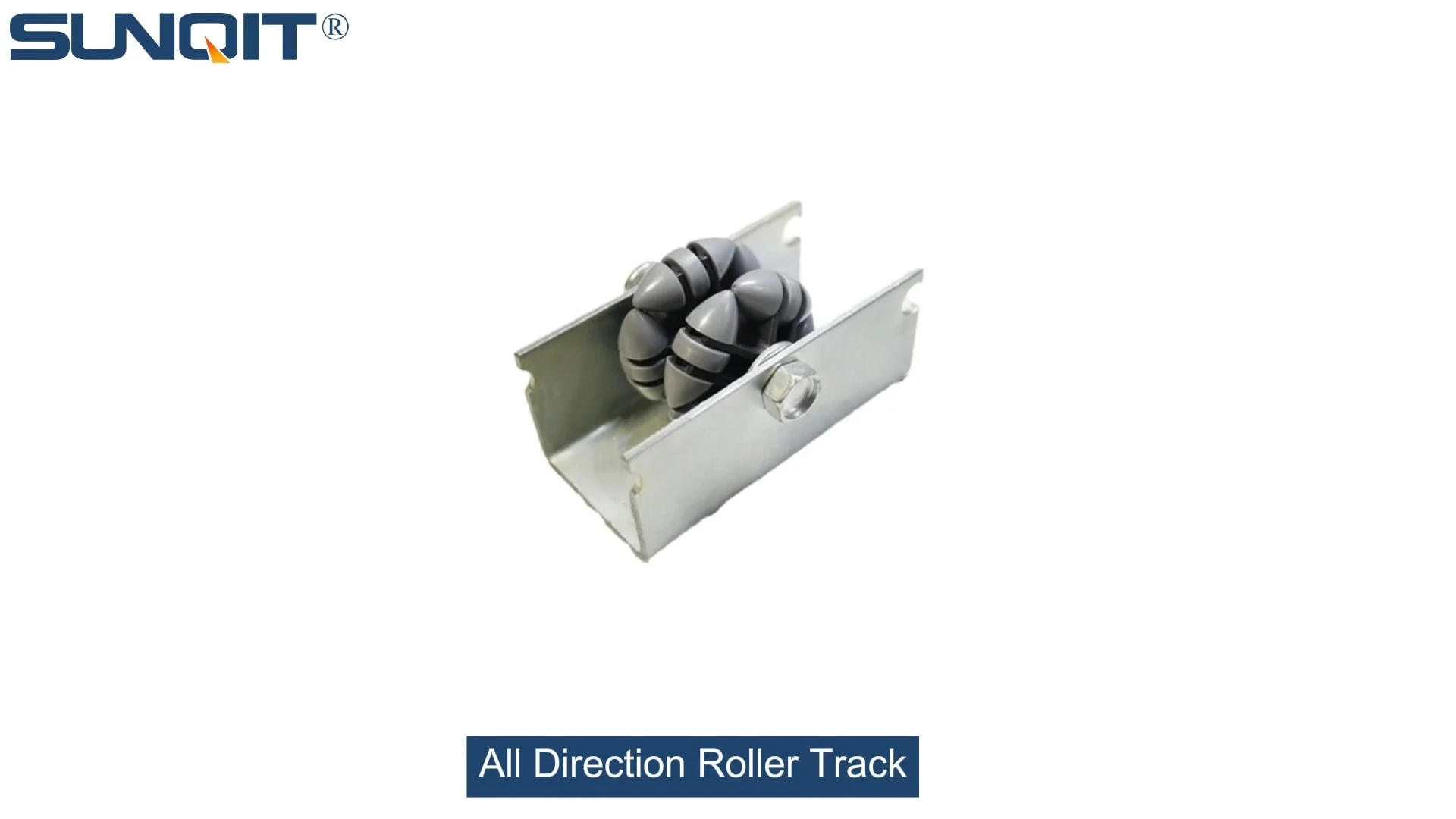
All direction roller track made of steel frame and multiple direction move wheel which will make boxes are always in contact with the rollers, reducing jams and enhancing flow reliability.
Walk into any modern 3C manufacturing plant today, and you'll feel the buzz of innovation in the air. Phones, laptops, smartwatches—these devices hit the market faster than ever, with new models boasting slimmer designs and smarter features every few months. But behind this rapid pace lies a hidden challenge: how do factories keep up? 3C assembly lines can't afford to be rigid. They need to adapt quickly, handle tiny, delicate components with care, and keep production flowing without a hitch. That's where lean manufacturing steps in—and at the heart of many lean setups? The unsung hero: All Direction Roller Track .
In this article, we'll dive into how all direction roller track transforms 3C assembly floors, making them more flexible, efficient, and ready to tackle the demands of today's fast-moving tech industry. We'll explore its unique benefits, real-world applications, and how it works hand-in-hand with other lean tools like lean pipe workbenches and ESD workstations to create a production ecosystem that doesn't just meet deadlines—it outperforms them.
What Exactly Is All Direction Roller Track?
Let's start with the basics. Imagine a track lined with small, smooth rollers that can spin 360 degrees. Unlike traditional roller tracks that only move materials back and forth, all direction roller track lets components glide in any direction—left, right, forward, backward, even diagonally. It's like giving your production line a set of "omnidirectional wheels" for materials, and in 3C assembly, where parts are often small, lightweight, and need precise handling, this flexibility is a game-changer.
Most all direction roller tracks are built with durable materials like aluminum (think aluminum profile and aluminum lean pipe ), making them strong yet lightweight. The rollers themselves? Often made of high-quality plastic or stainless steel, designed to minimize friction and resist wear—critical for 24/7 production environments where downtime is costly.
Why 3C Factories Can't Live Without It: Key Advantages
So, what makes all direction roller track stand out in the crowded world of manufacturing equipment? Let's break down its top benefits, especially for 3C assembly:
1. Unmatched Flexibility for Tiny, Tricky Parts
3C products are all about precision. A smartphone motherboard, for example, is packed with microscopic components. Trying to shuffle these delicate parts along a fixed-direction track? It's like trying to thread a needle with gardening gloves—cumbersome and risky. All direction roller track lets operators nudge, rotate, and position parts with minimal effort. Need to pivot a circuit board 90 degrees to align with a workbench? Just glide it. Want to pass a component from one worker to another across the line? Slide it sideways. No more lifting, no more awkward adjustments—just smooth, intuitive movement.
2. ESD Safety: Protecting Sensitive Electronics
Static electricity is the silent enemy of 3C manufacturing. A single static discharge can fry a microchip, turning a perfectly good component into scrap. That's why ESD workstations and ESD-safe equipment are non-negotiable. Many all direction roller tracks are designed with ESD properties, using materials that dissipate static charges harmlessly. Pair this with an ESD workbench , and you've got a production zone where even the most sensitive parts stay protected—no more costly mistakes, no more rework.
3. Built to Last (and Adapt)
3C factories don't slow down for equipment maintenance. All direction roller track is built tough, with corrosion-resistant aluminum frames and rollers that stand up to constant use. But here's the best part: it's not just durable—it's adaptable. Thanks to its modular design (a core principle of lean solution ), you can easily extend, shorten, or reconfigure the track as your production needs change. Launching a new phone model with a different assembly process? No problem—adjust the track layout in hours, not days.
4. Seamless Integration with Lean Systems
All direction roller track isn't a standalone tool—it's part of a larger lean ecosystem. Pair it with a lean pipe workbench , and you've got a workstation where materials flow directly to the operator, reducing reach and wasted motion. Add a flow rack at the start of the line, and raw components roll smoothly onto the track, ready for assembly. It's all about creating a "continuous flow" of work—one of the core pillars of lean manufacturing. When every piece of equipment works together, bottlenecks disappear, and efficiency skyrockets.

Real-World Applications: How 3C Lines Use It Every Day
Enough theory—let's talk about how this plays out on the factory floor. Here are three common scenarios where all direction roller track shines in 3C assembly:
Scenario 1: Motherboard Assembly Lines
Motherboards are the "brains" of 3C devices, and assembling them requires dozens of steps: placing chips, soldering, testing, and more. With all direction roller track, motherboards glide from station to station, where operators add components. If a tester spots a defect, the board can be quickly slid back to the previous workstation for rework—no need to lift or carry it. This cuts down on handling time and reduces the risk of damage.
Scenario 2: Final Product Testing Zones
After assembly, devices go through rigorous testing: screen checks, battery tests, software updates. All direction roller track makes this process a breeze. Phones or tablets can be moved between testing stations with a gentle push, and if a device fails a test, it's easy to divert it to a repair area without disrupting the entire line. In one case study we saw, a 3C manufacturer reduced testing time by 22% after installing all direction roller track—simply by making material flow more efficient.
Scenario 3: Kitting and Parts Distribution
Before assembly even starts, components need to be "kitted"—gathered into groups for each product. All direction roller track turns kitting into a smooth, fast process. Bins of screws, connectors, and buttons can be slid across the track to kitting stations, where workers sort them into kits. These kits then flow directly to the assembly line, ensuring operators always have the parts they need, exactly when they need them. No more hunting for missing components, no more production delays.

All Direction vs. Traditional Roller Track: A Quick Comparison
Still not sure if all direction roller track is right for your line? Let's compare it to traditional roller track and see how it stacks up—especially for 3C needs:
| Feature | Traditional Roller Track | All Direction Roller Track |
|---|---|---|
| Movement Direction | Fixed (forward/backward only) | 360° omnidirectional |
| Large, heavy items (e.g., appliances) | Small, delicate parts (e.g., 3C components) | |
| Low (hard to reconfigure) | High (easily adjusted for new products) | |
| Basic (good for bulk movement) | High (ideal for precise positioning) | |
| Limited (often not designed for electronics) | Excellent (paired with ESD workstations) |

Beyond the Track: Building a Complete Lean Solution
All direction roller track is powerful on its own, but it's even better when part of a customized lean solution . At SunQit (the team behind those lean pipe supplier and lean system wholesale offerings), we've seen firsthand how combining the track with other lean tools creates a production line that's greater than the sum of its parts. Here's how it all comes together:
Pair with Lean Pipe Workbenches for Ergonomic Workstations
Lean pipe workbenches are the backbone of many 3C assembly lines. They're adjustable, so operators can work at the perfect height, and modular, so you can add shelves, bins, or tool holders as needed. When you connect a lean pipe workbench to all direction roller track, materials flow right to the operator's fingertips. No more stretching, no more bending—just comfortable, efficient work. It's a small change that leads to big gains in productivity (and happier workers!)
Add ESD Workstations for Static Protection
We mentioned ESD earlier, but it's worth repeating: 3C parts hate static. ESD workstations (complete with grounded surfaces and anti-static mats) paired with all direction roller track (also ESD-safe) create a "static-free zone" where components stay safe. This isn't just about avoiding defects—it's about building trust with customers who expect flawless products.
Customize for Your Unique Needs
No two 3C factories are the same. Maybe you need a track that's extra narrow to fit between tight workstations. Or perhaps you require heavier-duty rollers for larger components like laptop screens. That's where custom solutions come in. Suppliers like SunQit don't just sell off-the-shelf tracks—they work with you to design a system that fits your space, your products, and your goals. It's lean manufacturing at its best: "sustainable, repeatable, and always improving."
The Bottom Line: Boosting Efficiency, One Roller at a Time
At the end of the day, manufacturing is about results. And all direction roller track delivers: fewer delays, less waste, happier workers, and faster production times. We've worked with 3C clients who've seen a 15-30% increase in line speed after installing all direction roller track, not to mention lower defect rates and reduced labor costs.
But beyond the numbers, it's about adaptability. In 3C, where trends shift overnight, you need equipment that can keep up. All direction roller track isn't just a tool—it's an investment in your factory's future. It lets you pivot quickly, scale production, and stay ahead of the competition, all while keeping costs in check.
Ready to Transform Your 3C Line?
If you're in 3C assembly, you know the pressure to deliver faster, better, and cheaper. All direction roller track won't solve every problem, but it's a powerful piece of the puzzle—one that works hand-in-hand with lean pipe systems , ESD workstations , and custom lean solutions to create a production line that's agile, efficient, and ready for whatever the future throws at it.
So, what's next? Reach out to a trusted lean pipe supplier (hint: check out SunQit's range of aluminum profiles, roller tracks, and custom designs) and start exploring how all direction roller track can fit into your operation. Your production line (and your bottom line) will thank you.